Field Note
A place doesn't have to be spectacular to mean something. It might be the streets where you first met, the pub you end up in most weekends, a stretch of coastline you return to whenever you need some space, or a chapel that connects generations of your family. To someone else, these places might look completely ordinary. To you, they're full of memories, and those memories are part of the life you're building together.
When you're planning a wedding, it's easy to get caught up in finding somewhere that looks incredible. There are beautiful venues, dramatic landscapes and countless photographs online showing what a wedding can look like. But there's another way to think about your location: instead of asking where would look best, ask yourself which places already mean something to you. We've photographed couples who planned entire walks around the streets where their relationship began, and couples who returned to places they had once hoped to get married. Those experiences have reinforced something we believe about wedding photography. A beautiful photograph can show you where you were, but a meaningful photograph can bring you back to why you were there. At Wildkin, we're interested in that connection between people and place. Not just finding somewhere beautiful to take photographs, but paying attention to the history, memories and moments that make a location part of your story.
If you're exploring places to celebrate in Norfolk, our Places: Norfolk guide is a really useful starting point for thinking beyond traditional venues and discovering the landscapes, villages and surroundings available here.
Your story doesn't begin on your wedding day.
A wedding is a significant day, but it's only one part of a much bigger story. By the time you get married, you've already shared years of experiences, built routines, met people who have shaped your lives and found places that have become part of who you are. Some of those places might be obvious. Perhaps it's where you met, where you had your first date or where you got engaged. Others might seem less significant at first. The streets you walked together at university, the local pub where you meet friends, the park you take a walk through after work, or the family home where everyone gathers at Christmas. These places hold memories that don't necessarily need to be explained to anyone else. You might remember a particular conversation, a difficult time you worked through together or the ordinary days when your relationship quietly became what it is today. The location is part of that memory, even if nothing about it would immediately stand out to somebody looking at a photograph. I think that's worth remembering when you choose where to get married or where to have your photographs taken. You don't have to find somewhere that looks like a wedding location. You can start with the places that already belong to your life, then work out how they might fit into the day you want to have. And if you haven't got a particular place in mind, that doesn't matter either. Sometimes a location becomes meaningful because of what happens there, rather than because of what happened there before.
Ellena and Jacob, a walk through their Norwich
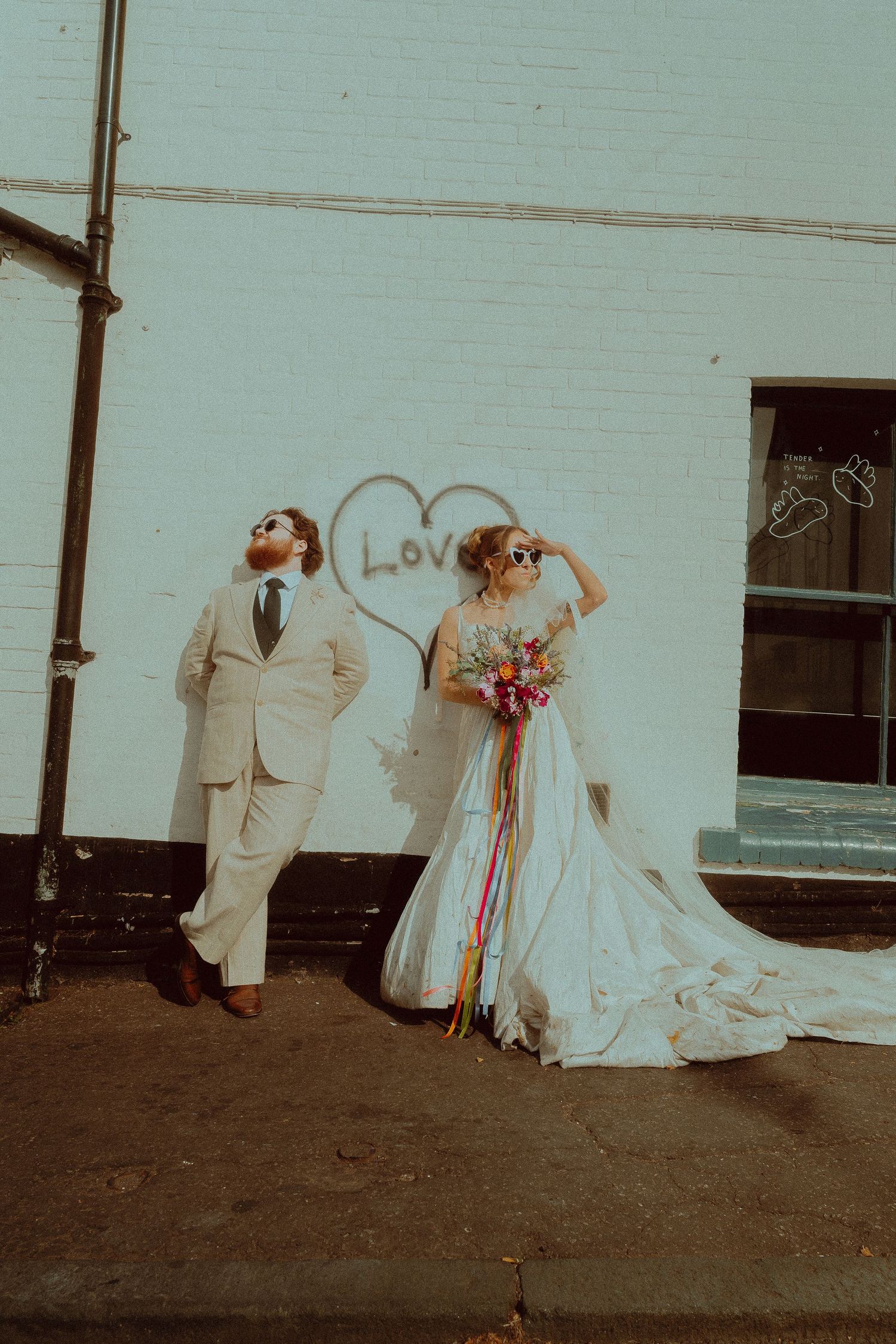
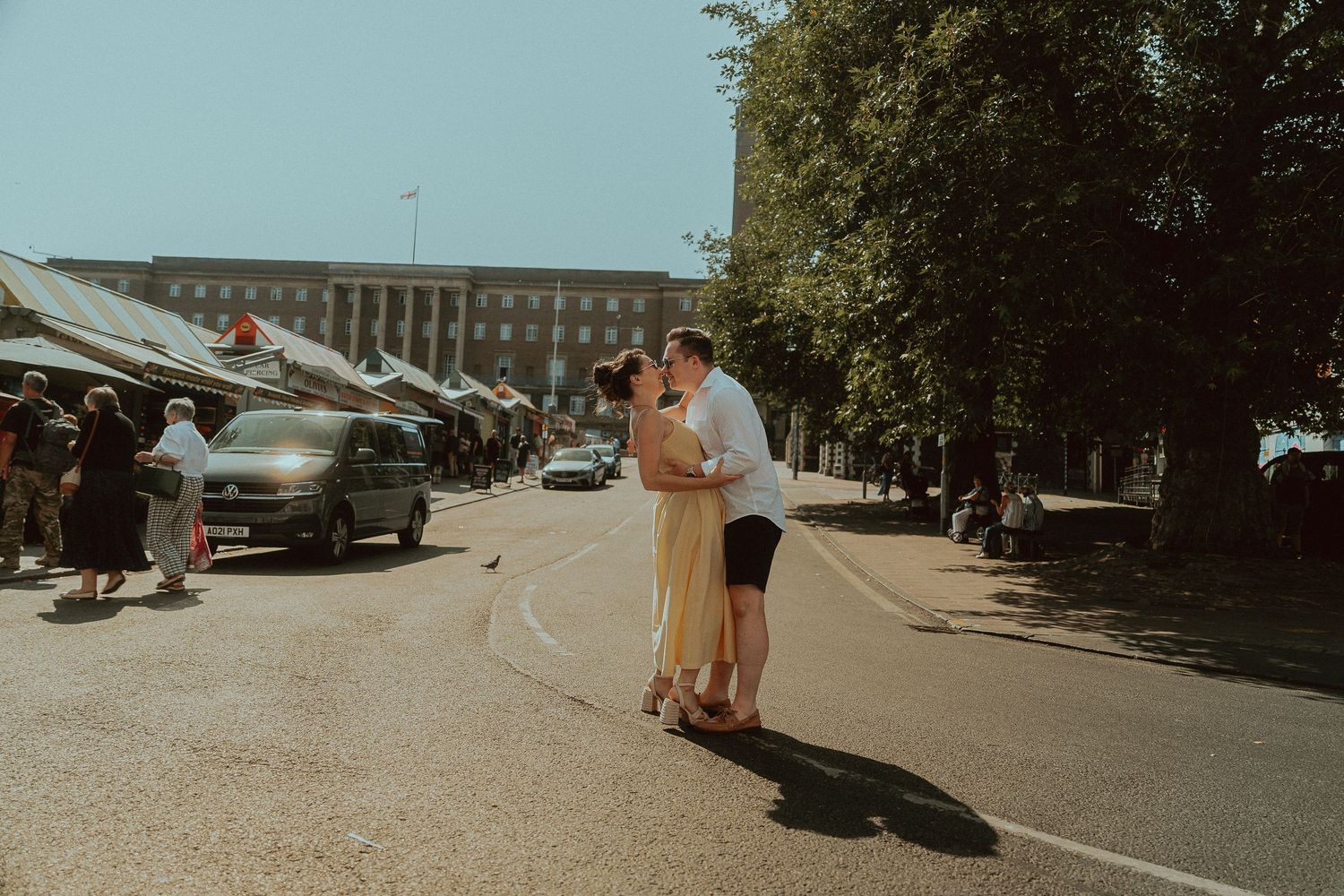
Ellena and Jacob met in Norwich while they were at university, and the city remained part of their lives. They still live and work there, so the streets around them weren't simply convenient places to take their wedding photographs. They were connected to how their relationship began and the life they continue to share.
They had already thought carefully about the locations they wanted to visit. They planned a map of meaningful places and worked out their route before the day, then told me where they wanted to go. Rather than wandering around looking for attractive backdrops, we followed a walk that had personal significance to them. I love that approach because it changes the purpose of the photographs. The streets aren't interchangeable settings chosen because they look good in a gallery. They're places Ellena and Jacob had actually walked together, including during their student years.
Their photographs could show not only what Norwich looked like that day, but something about their connection to the city. There's also something lovely about the fact that they didn't need to travel somewhere far away to create that experience. Their own city already had everything they needed. The history was there, the locations mattered, and the route gave the photographs a natural thread running through them.
If you're getting married somewhere you've lived for years, think about the places you move through without really noticing them anymore. Is there a street you always walk down together? Somewhere you spent time when you first met? A place that reminds you of an important chapter in your relationship? You might find that the locations you've taken for granted are the ones you most want to revisit.
You don't have to copy Ellena and Jacob and plan an entire route in advance. Their approach worked because they knew what they wanted to revisit. The important thing is to recognise that your surroundings can be personal to you, even when they're familiar to everyone else.
Amanda and Thomas, returning to the place they couldn't marry
Amanda and Thomas's story shows how a location can carry meaning across years, countries and different chapters of a relationship. Thomas grew up in the UK and has happy childhood memories of visiting his aunt and uncle in Blofield, Norfolk, before moving to the United States.
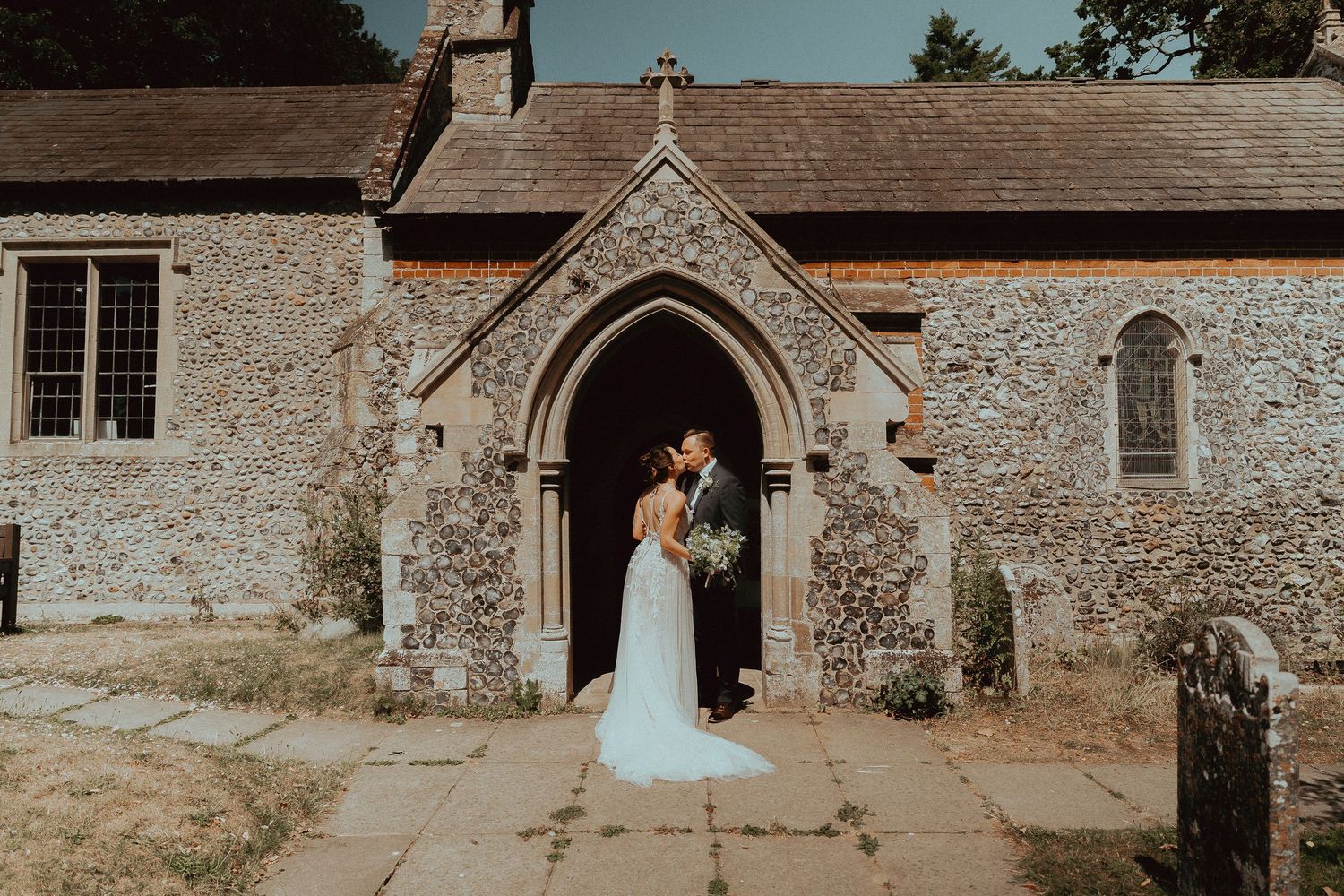
He and Amanda are from Boston, and when they planned to marry in 2021, they wanted to get married at Blofield Chapel. It was where members of Thomas's family had married, and where his grandparents were buried. COVID meant they couldn't have the wedding they had originally planned, so they married in Boston instead. The chapel remained connected to the wedding they had imagined, though, and five years later they decided to return. For their fifth wedding anniversary in 2026, they booked me for a hybrid elopement.
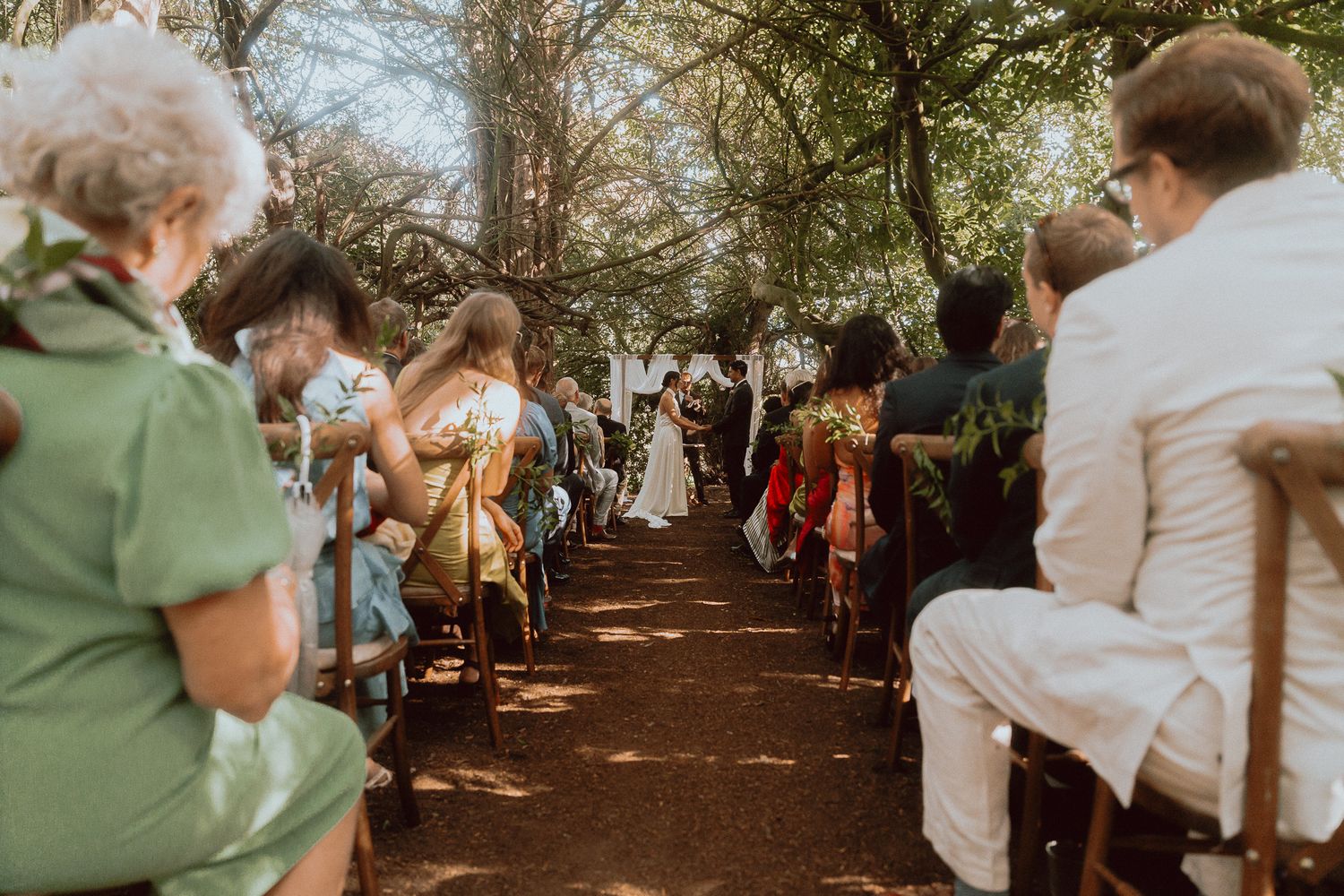
We began at the chapel, where they wore the same wedding dress and suit they had worn for their original wedding. They walked down the aisle, kissed at the front, celebrated with confetti and a champagne spray, and spent time together in the churchyard and beside Thomas's grandparents' graves.
It was just the two of them and me. The chapel wasn't simply an attractive building. It connected Thomas to his childhood, his family and the wedding he and Amanda had hoped to have there. Returning in their original wedding clothes made that connection even more personal. They weren't pretending their Boston wedding hadn't happened. They were creating a new experience in a place that had always mattered to them.
From Blofield, we went into Norwich and walked around places Thomas remembered from his childhood. Amanda got her first tour of the city alongside him, visiting the castle, the cathedral cloisters, the Arcade, the market and Elm Hill. We finished at the Maids Head Hotel with their vintage car, then headed to the Adam and Eve pub for a drink. It was a perfect summer hybrid elopement, moving between places that meant different things to them. The chapel connected them to Thomas's family history, while Norwich brought back childhood memories and gave Amanda the chance to experience those places with him.
The day wasn't built around a single venue or a traditional schedule. It was built around their story. That's what I find so compelling about meaningful locations. A place can connect different parts of your life, bringing memories into the present while giving you the chance to make new ones. Years from now, Amanda and Thomas can look back at those photographs and remember not only how they looked, but why they returned, who they were thinking about and what it felt like to share those places together. Their story also shows that your wedding doesn't have to happen exactly as you first imagined for you to return to the places that matter. Sometimes life changes the plan. You can still find your own way of making that connection part of your story.
Knowing Norfolk means knowing more than the landmarks
Norfolk is home for us. The longer we live, work and explore here, the more we learn about its places, its character and the details that make it what it is.
Knowing Norfolk isn't just about knowing where the famous landmarks are. It's understanding how the landscape changes through the seasons, how the weather behaves along different parts of the coast, and how a place can feel completely different depending on the time of day. It's knowing that somewhere busy can have quieter corners if you know when and where to look, and that a location which looks ordinary at first can reveal more when you spend time there.
I'm still discovering new places and learning more about the ones I already know. Every wedding, every walk and every adventure adds to that understanding. The more I explore, the more I learn about the stories held in Norfolk's towns, villages, coastline and countryside.
That knowledge can be useful when you're planning your wedding photographs. Perhaps you have a particular place in mind, but you're unsure how it will work for the day. We can think about the light, the time needed to get there, how busy it might be and whether there are quieter spots nearby.
If you're still looking for somewhere, we can explore locations that suit the atmosphere and experience you want, rather than simply choosing the most recognisable view. But I don't think knowing a place should mean turning it into a fixed backdrop. A location is more than a pin on a map. It changes with the weather, the season, the people who are there and what happens while you're visiting. Sometimes the unexpected conditions create the photographs you remember most.
If you're exploring where to get married in Norfolk, our Places: Norfolk guide brings together more of the landscapes and locations that make this part of the country special. It's worth thinking beyond how a place looks in a photograph, too, and considering how you want to feel when you're actually there.
The photo between photos
Of course, a meaningful location is only part of the story. What happens there matters just as much. One of the things I look for when photographing a wedding is what I call the photo between photos.
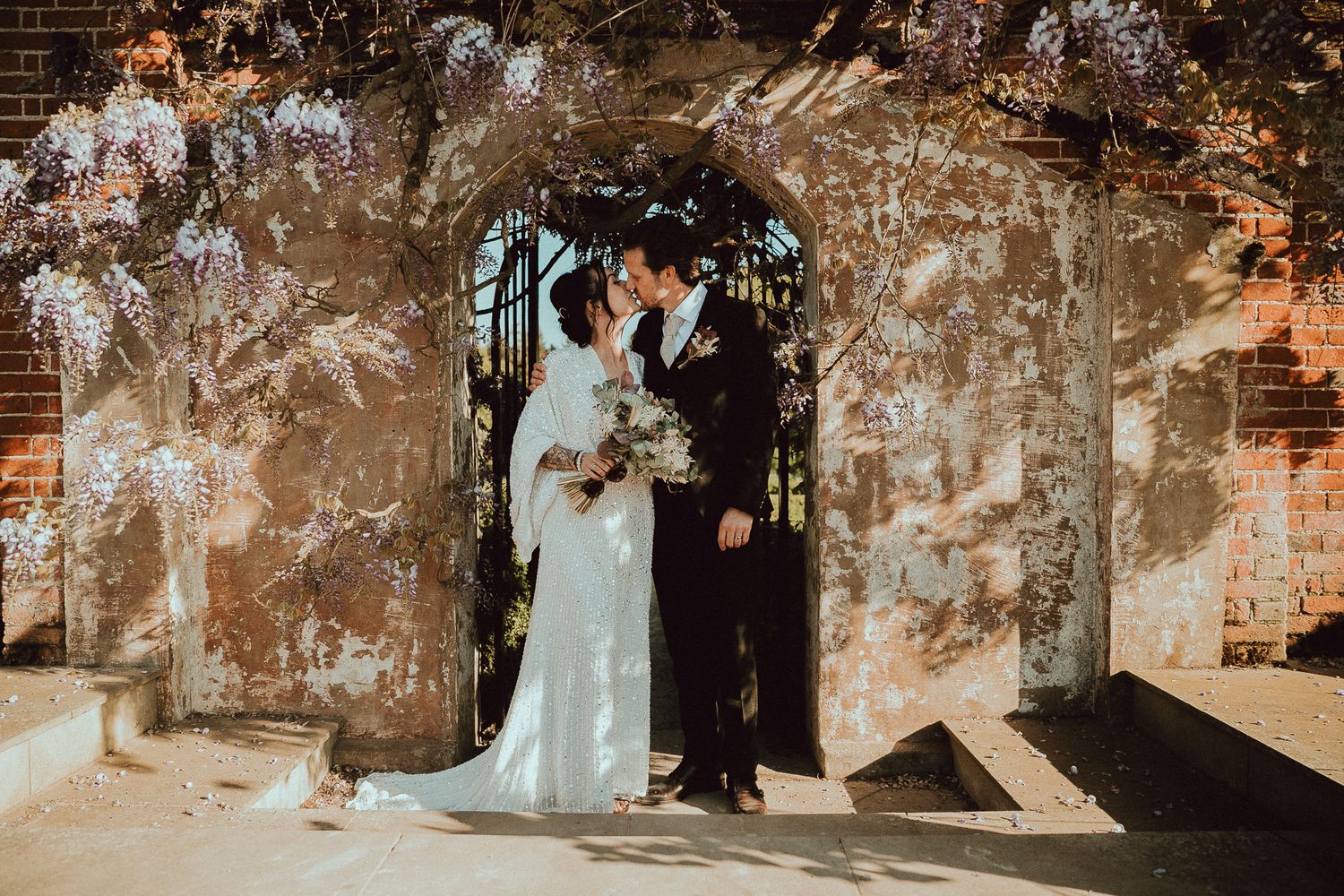
People can pose for a photograph, see the camera, prepare themselves and hold a position while I take the shot. There's nothing wrong with that, and sometimes a little direction is exactly what's needed. But there's often a split second afterwards when the pose falls away and people return to being themselves. Someone turns towards their partner. A hand reaches out. They share a look, a hug, a kiss or a laugh. For a moment, they're no longer thinking about how they look in the photograph. They're simply reacting to each other, and I'm ready to capture it.
I love those moments because they don't need to be manufactured. They happen in the gaps between the things people expect to be photographed. You might think the photograph is finished, relax your shoulders and share a little smile that you weren't planning to give anyone. That tiny change can make all the difference.
It's also why I don't want a wedding to become a long series of poses and locations, with every moment arranged for the camera. I want couples to have time to experience their day, talk to the people they love, wander around somewhere meaningful and enjoy being together. My job is to pay attention, find the light and compositions that work, and recognise the moments as they happen. When you're somewhere that matters to you, those photographs can carry another layer of feeling.
It might be a walk through the streets where you first met, a quiet moment in a family chapel or a drink in the pub where you always end up. The photograph doesn't have to explain the history of the place. The connection is already there, in the experience you're sharing. You don't need to look at the camera or perform a particular emotion. You can simply be there together. The photographs can hold the place, the atmosphere and the little interactions that make the experience yours.
Beautiful is one thing, meaningful is another
I can appreciate a beautiful wedding venue as much as anyone. A grand building, carefully designed grounds or an expansive view can provide incredible opportunities for photographs. But the appearance of a place doesn't automatically make the photographs personal. Sometimes, big, polished, corporate-style venues can feel disconnected from the people getting married there. Everything looks immaculate, the setting has been designed to impress, and the photographs might be beautiful. But if the location has no particular connection to the couple, it can be harder for the images to say something about their life beyond the wedding itself.
That doesn't mean those venues are wrong. For some couples, a grand venue is exactly what they've dreamed of, and it might hold a personal meaning of its own. Nor does a meaningful location automatically guarantee a great photograph. The people, the light, the moment and the way the day unfolds all matter. What interests me is what happens when those things come together. A place with personal significance gives the photographs another layer. It provides context, a reason for being there and a connection that can last long after the wedding day. A local pub might hold years of memories. A family garden might be where birthdays, summer evenings and countless conversations have happened. A familiar street might remind you of the early days of your relationship.
None of these places needs to look extraordinary to anyone else. Their value comes from what they mean to you. When you look back at those photographs, you're not simply seeing yourselves in a nice setting. You're remembering a part of your life. That's what turns a photograph from something you like looking at into something you want to hold on to.
Finding places that mean something to you
You don't need to arrive with a map of meaningful locations already planned. Ellena and Jacob knew exactly where they wanted to go, but every couple is different. If you're struggling to think of somewhere, start with your own life rather than a list of wedding venues. Where did you grow up? What's special about your relationship? Where do you go together on your days off, and where do you feel most comfortable? Think about the places, sounds, people and memories you associate with being together. Is there somewhere you wouldn't necessarily visit by yourself, but love going to with your partner? That last question is worth thinking about.
Sometimes a place becomes special because of the person you're with, rather than anything the place itself offers. It might be a particular walk, a favourite spot to sit, or a place you return to when you want to escape the noise of everyday life. You don't have to be able to explain exactly why it matters. If it feels like part of your relationship, that's a good place to start. You might also think about the people who have shaped your lives. Is there a family home, a church, a village or a local gathering place that connects you to someone important? You don't have to build your wedding around family history, but if a place holds memories you want to honour, it can be a lovely way to include that history in the day. And if no particular place comes to mind, don't worry. You don't need a lifelong connection to somewhere for it to become meaningful. You might choose a new place because it represents an adventure you want to share, or because it feels right for the next chapter of your lives. The significance can grow from the experience itself.
You can also combine familiar places with somewhere completely new. Visit the city where you met, then head out to the coast. Spend time in a family garden before exploring a stretch of countryside you've never visited together. There are no rules about how many locations you should visit or what they should look like. The practical side still matters. Think about travel, how much time you want to spend walking, who will be joining you and whether the location works for everyone involved. A place can mean the world to you, but you don't want getting there to turn the day into a stressful exercise. The aim is to make space for the experience, not squeeze as many locations as possible into a schedule.
Our guide to choosing the right wedding location in Norfolk explores how to balance the feeling you want from a place with the practical details of making your day work.
If you're planning something smaller or more adventurous, you might also find our guide on planning an intimate Norfolk elopement useful. An elopement can give you more freedom to explore places that matter to you, whether that's somewhere familiar or somewhere new.
Let the photographs become part of your history
The photographs you treasure most might not be the ones you expected to love when you first planned your wedding. You might have imagined a dramatic portrait in a beautiful setting, but find yourself returning to a photograph of the two of you walking down a familiar street, laughing outside a pub or sharing a quiet moment in a place connected to your family. That doesn't make the grand portrait any less valuable. It simply means that photographs can hold different kinds of meaning, and often that meaning becomes clearer with time.
A familiar street might change. A favourite pub might close. A family home might pass to someone else. The people who shared the day with you might not always be there. Your photographs can preserve a little piece of that time, not as a perfect recreation of the past, but as a reminder of what it felt like to be there. For Amanda and Thomas, returning to Blofield and Norwich connected their anniversary to family history, childhood memories and the wedding they had originally imagined. For Ellena and Jacob, the streets of Norwich were part of the story of how they met and the life they continue to share. Their locations meant something before I arrived with a camera, and that meaning gave the photographs a story to carry forward.
That's what I'd want for all the couples we photograph. Not just a gallery of images that look good today, but photographs that become part of your own history. Images that bring you back to the places you visited, the people who were there, the things you said and the moments you might otherwise have forgotten.
You don't have to choose the most impressive place in Norfolk, or make every moment look significant. Start with the places that matter to you, or somewhere new where you want to make memories together. Give yourselves the time to be there, and let the day unfold.
If your plans involve a longer walk, several locations or time to enjoy the surroundings without rushing, making space for the day to unfold can be just as important as choosing the right place.
The Wildkin lens.
I think there's a difference between photographing a place because it's beautiful and photographing it because it means something. The two can absolutely come together, and when they do, the result can be incredible. But the significance of a location doesn't depend on whether it looks impressive to somebody seeing it for the first time. Sometimes its meaning is known only to the people standing there.
That's what draws me to the relationship between people and place. A street can hold the memory of how you met. A chapel can connect you to generations of your family. A favourite pub can remind you of the ordinary evenings that became the foundation of your life together. These places carry something that can't be recreated simply by choosing a more spectacular backdrop. I don't want your wedding photographs to become a performance, with every location selected for how it will look in a gallery and every moment arranged for the camera. I want you to have the freedom to experience the day, to talk, wander, laugh, remember things and enjoy being together.
Our job is to pay attention, find the light and compositions that work, and recognise the moments as they happen. That's where the photo between photos comes in. You might think the photograph is finished, turn towards your partner and share a look or laugh without realising I'm still watching. For a moment, you're not thinking about how you look. You're simply with each other. Those are the moments I love finding, because they offer a glimpse of the relationship itself rather than a version of yourselves you've prepared for the camera.
Over time, I want those photographs to become more than a record of what your wedding looked like. I want them to bring you back to the places you visited, the people who were there and the feelings you carried that day. You might recognise a familiar street, remember why you chose a particular chapel, or suddenly recall a conversation you had while walking between locations. The photograph becomes a way back into that moment, even when the details around it have changed. You don't need a grand venue or a spectacular landscape to create that kind of meaning. Sometimes the most personal place is the one you've walked past a thousand times. Sometimes it's somewhere you've returned to after years away. And sometimes it's a completely new place that becomes important because of what happened there. I don't want to photograph only the places you visit. I want to photograph what it means for you to be there, together. That's the difference I'm looking for, and it's why we believe the most meaningful wedding photographs aren't always the ones you planned. They're the ones that bring you back.
→ Explore Norfolk
Discover the coastlines, woodlands, villages and landscapes that can shape a wedding day in Norfolk.
→ Choosing your location
A guide to finding a place that suits the atmosphere, scale and pace of your wedding day.
→ Making Space for the day
Why realistic timings, fewer journeys and room for the unexpected can help your wedding day unfold naturally.
→ Planning an intimate elopement
Explore ways to make a smaller wedding or elopement personal, adventurous and true to you.
→ Tell us what you're planning
Have a place in mind, or still figuring it out? Tell Wildkin what matters to you and let's start there.