Most people come to Norfolk for the coast. But once you spend time here, you start to notice what sits behind it. It doesn’t feel like a separate place. Just set back slightly, and used differently.
Moving inland
You leave the main roads and it changes quickly. Tracks narrow, buildings sit further apart, and you’re not passing through in the same way. You tend to be heading somewhere specific.
The places themselves
Inland Norfolk is made up of places that were built with a purpose.
At Godwick Great Barn, that’s still clear. A large agricultural barn set within what was once a working estate and village. The structure hasn’t been hidden. You can still read how it was used, in the scale of it, the way it holds space, the way it was built to carry and store. Elsewhere, it shifts.
At Happy Valley Norfolk, the structure isn’t just one building. Woodland, clearings, cabins, and smaller built elements are placed into the land. It’s still constructed, but it sits within the woodland rather than standing apart from it.
At The Keeper and the Dell, you get another version of that. An 18th-century barn, courtyard, and small chapel set into woodland, where different spaces have been added over time rather than replaced.
And then places like Wellington Wood, where the structure is the land itself. Woodland, meadow, open space shaped into something usable, but not separated from what it already was.
They’re different types of places. But they carry the same thing. They were made for something real.
What’s still visible
You don’t have to imagine what these places were.
At Godwick, it’s in the structure. The height of the barn, the timber, the way it was built to function.
At woodland venues like Happy Valley or Wellington Wood, it’s in how things are placed. Clearings, paths, spaces opened up rather than constructed from scratch.
At The Keeper and the Dell, it’s in the layering. Buildings added, adapted, reused. None of it is decorative. It’s all a result of how the place has been used.

How it’s used now
Most of these places weren’t built for weddings. But they hold them well. Because they were made to carry weight. To shelter, to work, to be used. That hasn’t gone anywhere.
Throughout the year
You notice the change in seasons more inland. Not as a feature, just in how the place behaves. The ground, the trees, and how access shifts. If you’re thinking about timing more broadly, there’s more on that here.
Being there
I’ve found you notice different things inland. Where people stand. How they move through a space. Where things settle. The place doesn’t try to direct anything. It already has a way of being used.
How a day unfolds
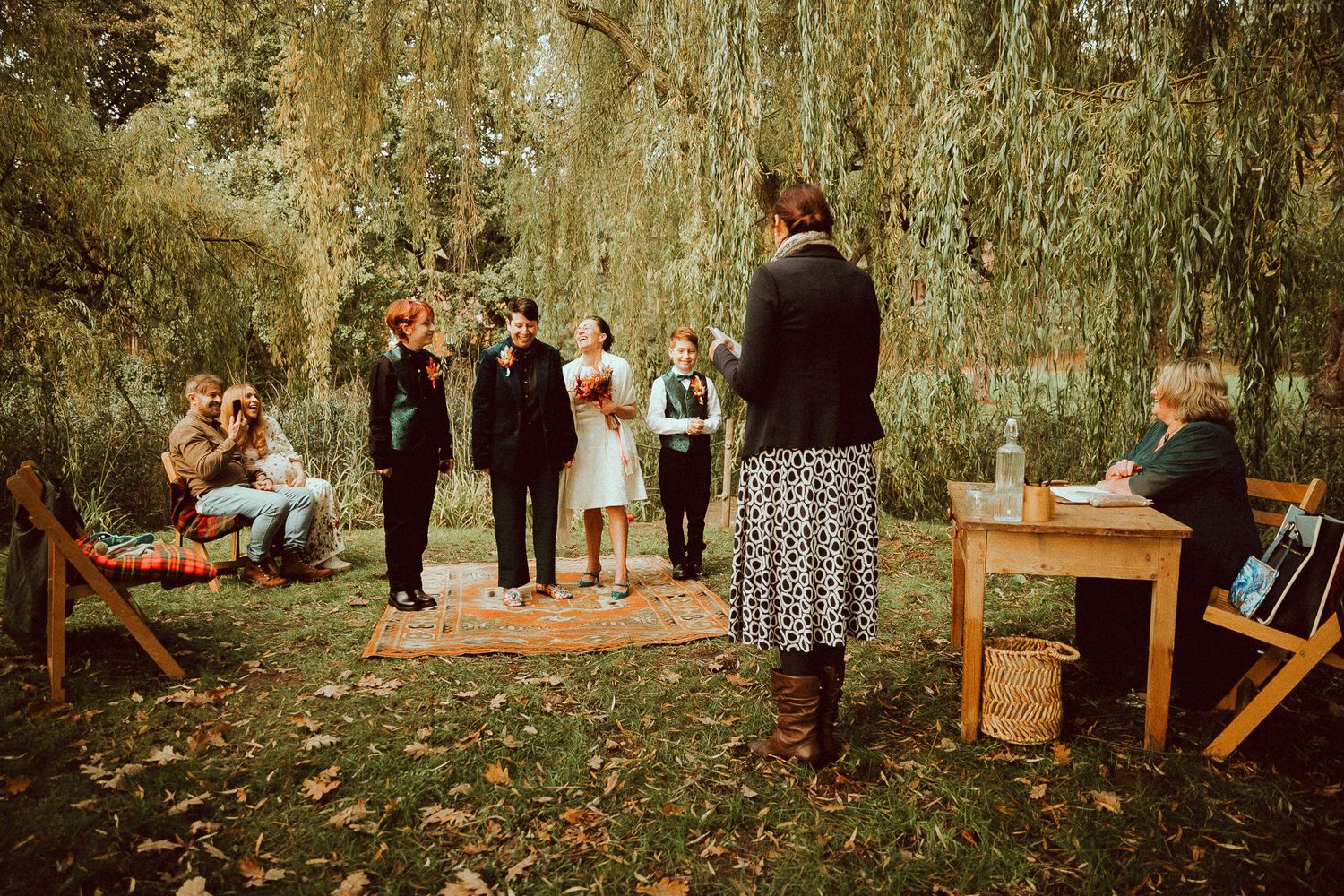
An elopement here tends to build from what’s already there. Getting ready nearby, moving through the space, stepping outside, then back in again. You’re not creating something from nothing. You’re working within something that already exists.
A place that carries on
Some places feel like they begin when you arrive. This isn’t really one of them. At places like Godwick, the building stayed while everything around it changed. At woodland sites, the land was already there, shaped over time rather than created for a single moment. The use shifts. The place doesn’t. The day sits inside that. If you’re looking across the coast more widely, there’s more here.