Field Note
The right wedding location isn't necessarily the grandest venue, the biggest estate, or the place with the most impressive photographs on its website. It is the place that makes sense for the kind of day you actually want to have. Norfolk gives you plenty of possibilities. A wedding can happen around a country house, in a barn, beside the coast, in a village, in a garden, in a pub, or somewhere that feels much more like a place you've discovered than a traditional wedding venue.
The difficult part isn't finding somewhere beautiful and there is a temptation when choosing a wedding location to start with the building. The windows. The gardens. The ceremony room. The photographs on the venue's website. And, of course, whether you can imagine yourselves standing there on the day.
But after photographing weddings in Norfolk, we've found that the places that work best aren't necessarily the ones that look most impressive when you first walk through the door. They're the places that give the day somewhere to happen. A path people naturally wander down. A garden everyone ends up standing in. A bit of coastline where you can disappear together for ten minutes. A room that fills up after dinner. A field where the children run around. A quiet corner where someone can catch their breath. Those things don't usually appear on a venue's brochure. But they're often what you'll remember.
So if you're trying to choose the right wedding location in Norfolk, we'd start with a slightly different question:
What do you want this place to let you do?
The short answer.
The right wedding location is the one that suits your people, your pace and the kind of day you want to have.
Think about:
- the landscape you naturally feel drawn towards
- how you want to spend the day
- whether you want everyone together or room to wander
- what your guests will actually do between the planned parts
- how the location changes with the season
- what the light and weather will do
- how much freedom you'll have to move around
- where everyone will stay
- and whether you genuinely enjoy being there
The photographs matter too. But they're partly a consequence of all those things. A place that gives people room to move, talk, explore and simply be together gives a photographer much more to work with than somewhere that only looks good from one particular angle. And more importantly, it gives you more of a day to remember.
Start with the kind of day you want
Before looking at venues, try imagining the day itself. Not the ceremony photograph. Not the confetti photograph. The whole day.
What are you actually doing? Are you outside with your friends? Are you sitting around a long table? Are you walking somewhere together? Are you staying in one place all weekend? Are you getting married somewhere small and then going to a pub? Are you somewhere wild and remote?
Are you somewhere your family already knows and loves? This matters because two beautiful places can create completely different weddings.
One might encourage everyone to stay together.
Another might give you lots of space to disappear into. One might feel formal. Another might feel like a weekend away with your favourite people. Neither is better. They're just different.
So before asking "Which venue should we book?", ask: "What do we actually want to be doing on our wedding day?" The answer will narrow things down surprisingly quickly.
Think about the landscape as part of the location
Norfolk can change character quite dramatically without you travelling very far. The open skies and farmland inland feel very different from the North Norfolk coast.
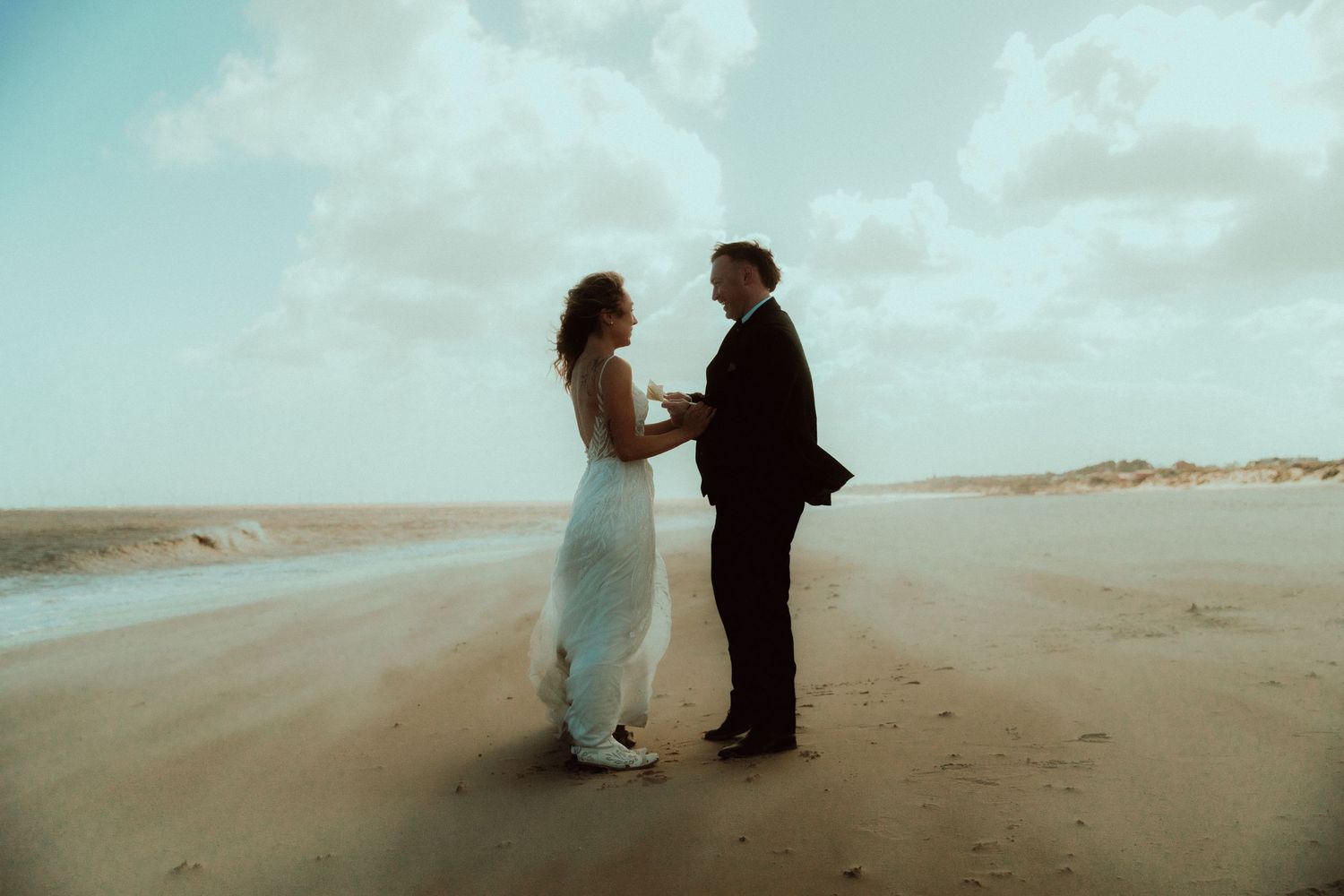
The coast itself changes again between wide beaches, salt marsh, dunes, pinewoods, villages and the more built-up stretches around places such as Cromer and Sheringham. Around Holkham, for example, you have an enormous sense of space.
Around Wells-next-the-Sea, the relationship between the town, harbour, beach and surrounding landscape creates a completely different feeling.
Around Blakeney and Cley, the marshes, wind and changing light become part of the experience.
These aren't simply backdrops. They affect how a day feels. And that's worth thinking about when you're choosing a location. If you're naturally drawn towards the coast, don't just ask whether the venue is near the sea. Ask what you actually want from being there.
Do you want the sea to be something you can walk to? Do you want open landscape? Do you like the feeling of wind and weather? Would you actually enjoy disappearing for a walk together? Or are you more drawn to somewhere enclosed, sheltered and surrounded by trees?
The landscape you choose says something about the kind of day you're imagining.
Our Places: Norfolk guide is the natural next step if you're still exploring where in Norfolk feels like you.
Look at the light
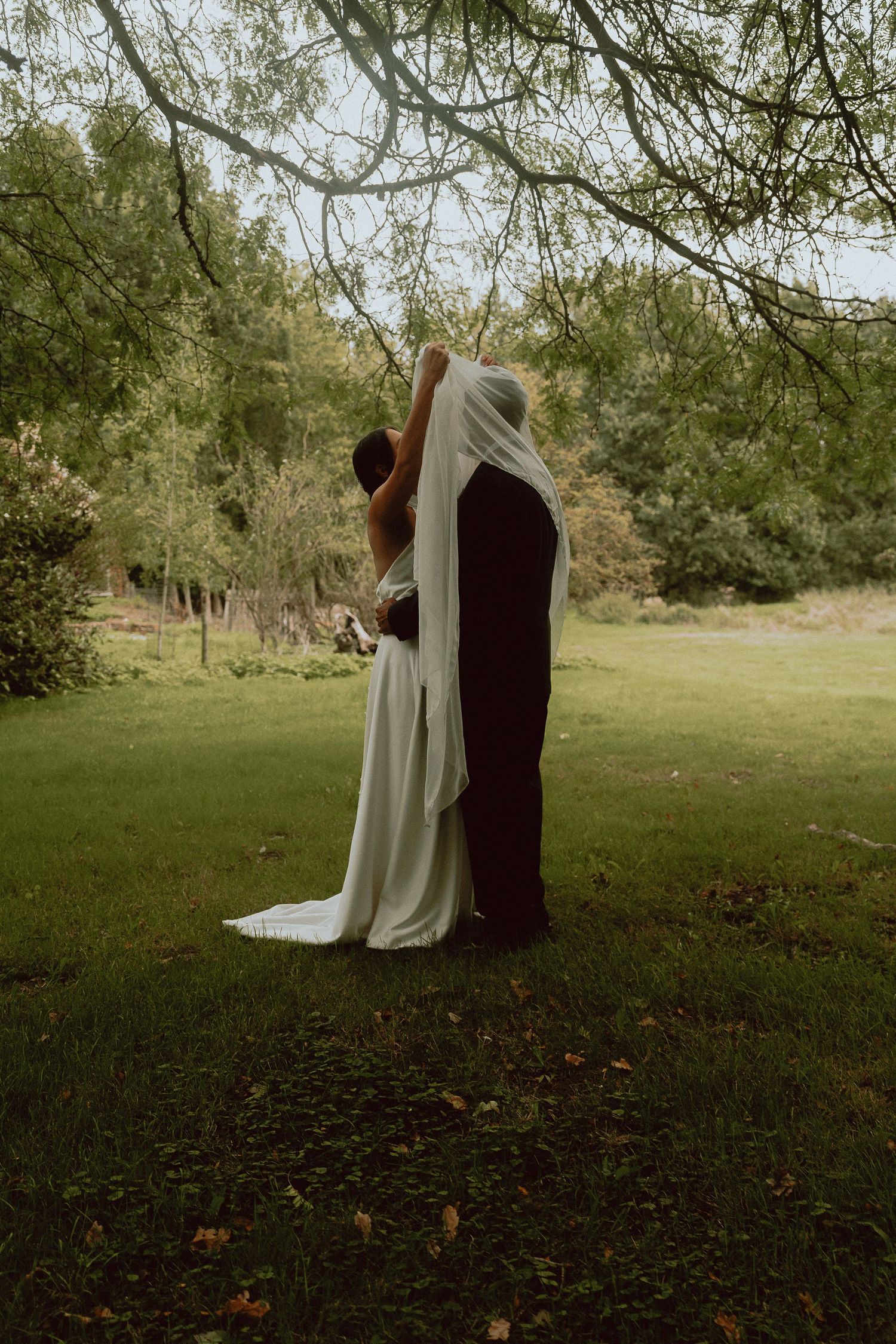
You don't need to know much about photography to notice good light. Just pay attention when you're visiting somewhere. Where does the afternoon light fall? What happens around sunset? Which rooms become darker? Where do you naturally want to stand outside?
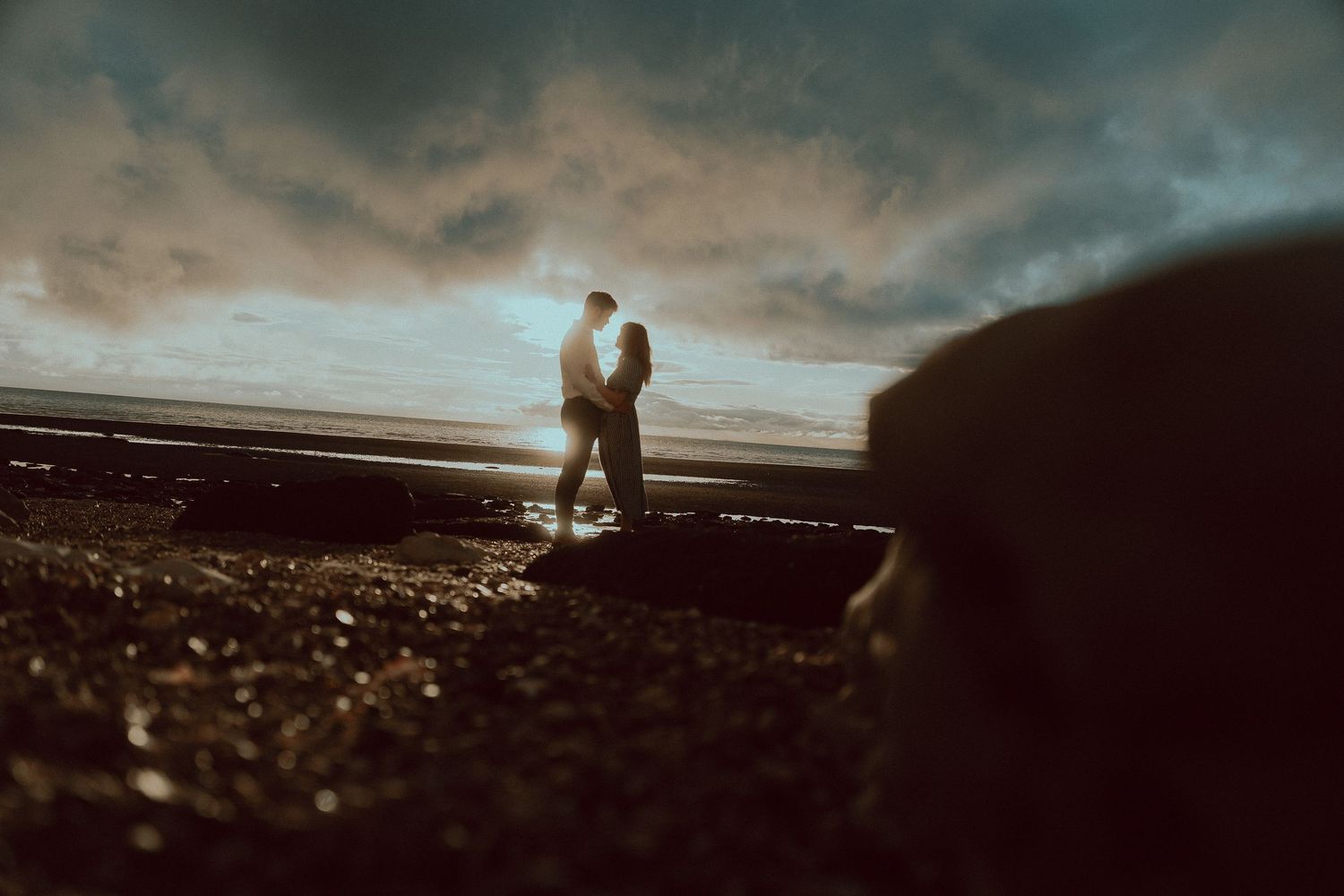
If you're near the coast, what happens when the sun drops lower over the landscape?
If you're surrounded by trees, how does the light move through them?
Places such as Cley and the wider North Norfolk coast can be particularly interesting because there is so much open landscape for the light to move across.
But you don't need a dramatic sunset to make a location work. Sometimes the best photographs happen because the light is quiet. A doorway. A window. A patch of shade. People standing outside after dinner. Someone walking across a field.
The point isn't to find a venue with "amazing photography opportunities". It's to notice whether the place gives the day different ways to unfold as the light changes.
Think about what the weather will do
This is particularly important in Norfolk. The coast can be windy. The light can change quickly. A calm afternoon can become very different once you're exposed to the weather. And that's not necessarily a bad thing.
Some of the character of Norfolk comes from the fact that the landscape isn't completely controlled. The sea doesn't stay still. The marshes change with the tide. The wind changes how a beach feels. The light can move across an open landscape incredibly quickly.
Rather than trying to plan a wedding around perfect weather, we'd ask a different question: Would we still enjoy this place if the weather wasn't perfect? If you're considering a coastal location, think about whether there are sheltered spaces as well as exposed ones.
If you're looking at somewhere rural, think about how people will move between the buildings and the landscape.
If you're planning something outdoors, understand what your alternatives actually look like.
A good wet-weather plan isn't just a room you can hide everyone in. Ideally, the location should still feel like your location when the weather changes.
Don't choose somewhere just because it photographs well
This is probably slightly strange advice coming from a wedding photographer. But a venue can photograph beautifully and still not be the right place for you.
We've seen how differently a location can work once a real wedding is happening there. The photographs on a venue's website might show you the best room, the best light and the most carefully composed view. They don't necessarily show you where everyone spends the other eleven hours.
So when you visit somewhere, look beyond the obvious. Walk around. Where would you actually want to sit? Where would your friends naturally gather? Where would children end up? Could you wander outside after dinner? Is there somewhere quiet? Can you move between spaces without constantly feeling like you're being told where to go?
And perhaps the simplest test: Could you imagine enjoying an ordinary hour here? If the answer is yes, that's a good sign. Because weddings contain an awful lot of ordinary hours. The ceremony might be thirty minutes. The speeches might be twenty. The first dance might be one song.
Everything else is people talking, eating, drinking, walking, laughing, waiting, sitting and being together. That's where a location really starts to matter.
Think about freedom and movement
This is one of the practical questions we'd definitely ask before booking. How much of the place can you actually use? Can you walk through the grounds? Can guests move outside? Can you take a short walk? Can you use different parts of the property? Can you spend time outside after dinner? Are there restrictions around photography? Can you leave the immediate venue and explore the surrounding area? None of this means you need a completely unrestricted wedding.
Some couples will be perfectly happy with a more contained day. But if you imagine your wedding involving wandering, exploring or spending time in the landscape, you need to know whether the location actually allows that.
This is particularly relevant if the landscape is one of the reasons you're choosing the place in the first place. There isn't much point in choosing somewhere because you love the countryside around it if you can't actually experience any of that countryside.
Think about your guests, but don't lose yourselves
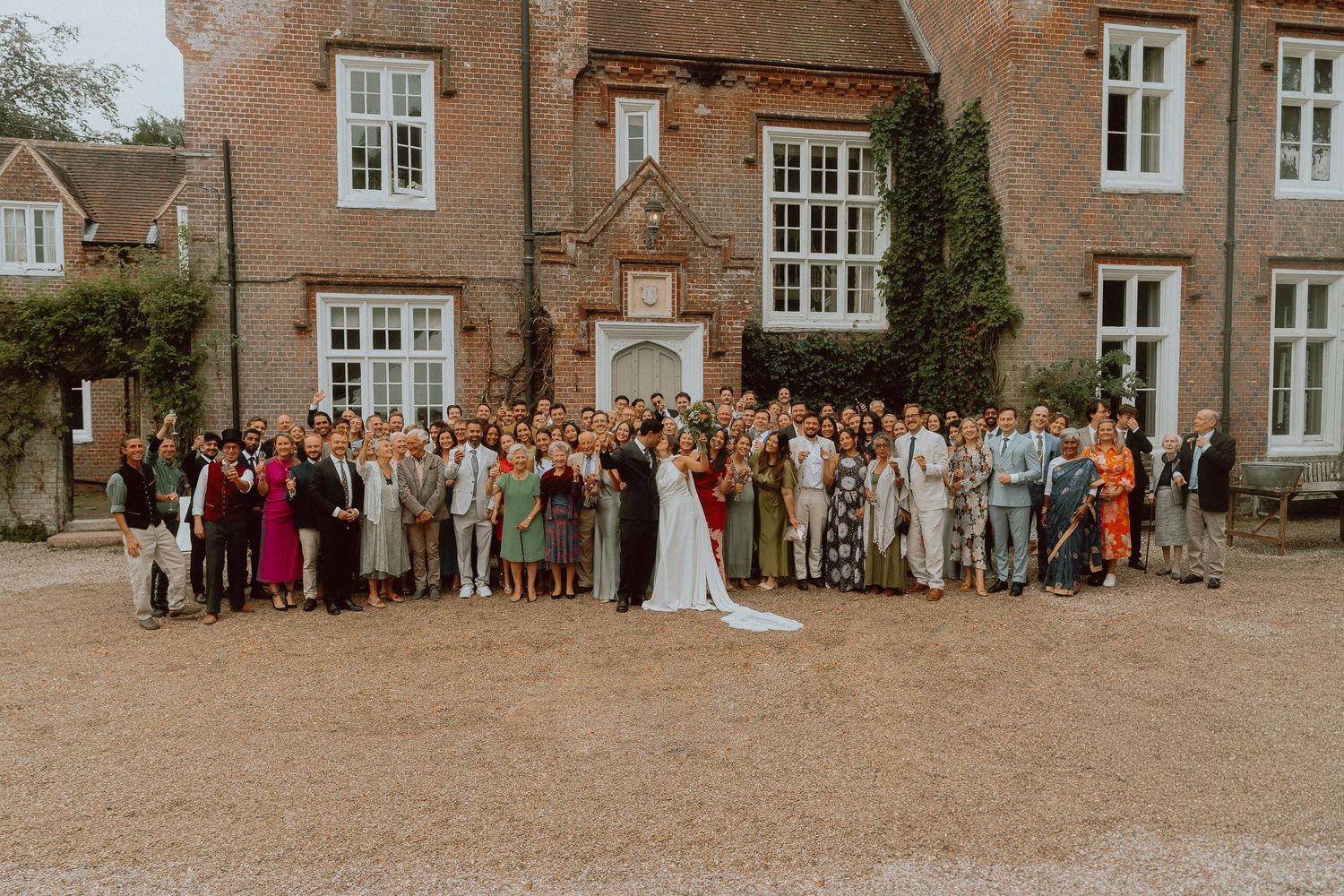
A wedding location needs to work for the people you're bringing with you. Think about where people will stay. How they'll get there. Whether older relatives can comfortably move around. Whether children have somewhere to play. Where people will go between the ceremony and reception. Whether everyone can stay nearby.
But don't let practicality completely take over. Sometimes the slightly inconvenient place is the one that creates the experience you actually want.
A wedding somewhere on the North Norfolk coast might involve more travel for some guests. A countryside location might mean arranging accommodation. A smaller venue might mean fewer people.
Those things aren't automatically reasons not to choose somewhere. They're things to understand.
The question is: Is the experience we're getting worth the logistics involved? Sometimes it will be.
Look beyond the venue itself
One of the things we like about photographing weddings in Norfolk is that the location doesn't always stop at the venue's boundary. The surrounding landscape can become part of the day.
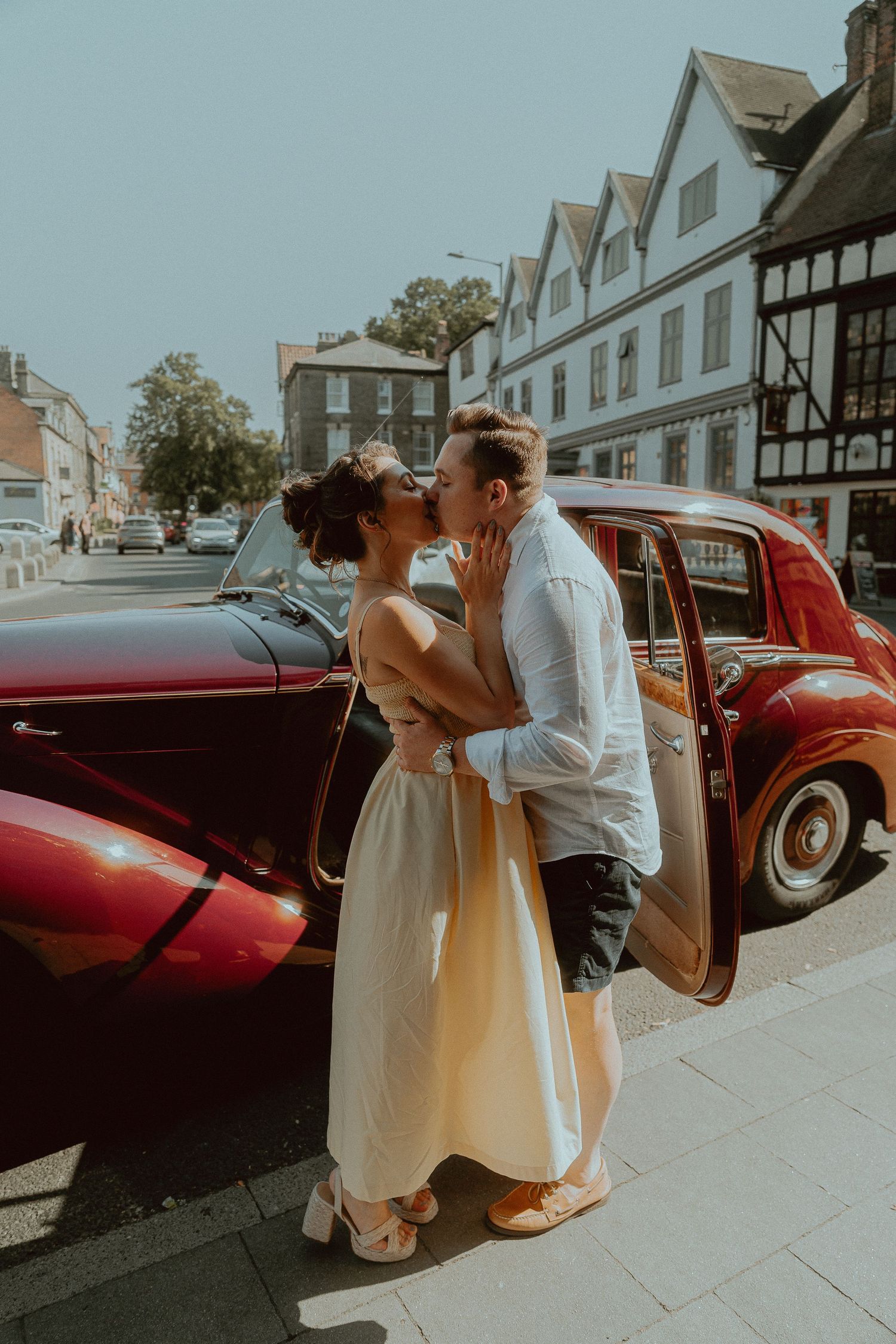
A village street. A nearby beach. A footpath. A field. A woodland. A harbour. The road between two places. The walk back after dinner.
If you're looking around Wells-next-the-Sea, Blakeney, Cley, Holkham, Cromer or Sheringham, for example, you're not only considering a building. You're considering an entire landscape and the relationship between the places within it. That can create a very different kind of wedding from one where everyone stays inside the same building from morning until midnight.
And you don't necessarily need to make a grand plan around it. Sometimes simply knowing that somewhere interesting is nearby is enough
Leave some room for the day to surprise you
This is probably the biggest thing we've learned from photographing weddings. You can plan the important things. You can decide where you're getting married. You can work out when dinner starts. You can organise the speeches. But you can't really plan the moments that happen around them.
Someone you haven't seen for years ends up talking to your dad outside. Your friends disappear down the garden. Someone gets emotional during a conversation nobody else hears. The children take over part of the venue. You and your partner sneak away for ten minutes. Everyone stays outside because the evening is too good to go back in. These moments need somewhere to happen.
That's why we're interested in space. Not empty space for the sake of it. Space for people to be people. A location that gives everyone somewhere to move, pause, gather and disappear into can create a very different wedding from one where every part of the day happens in a single room. And from a photography point of view, that freedom matters.
We're not trying to manufacture those moments. We're there to notice them.
The Wildkin lens.
When we photograph a wedding, we're constantly looking at the relationship between people, place and time. Where people gather. Where they move. What the weather is doing. How the light changes. What happens when nobody is paying attention. That's why the location matters to us. We're not particularly interested in making every wedding look like it happened at the same beautiful venue. We're interested in the fact that your wedding happened here. At this particular place. With these people. In this weather. At this point in your lives. That's what gives the photographs their connection to the day. And it's why we'd rather you choose a location that feels like somewhere you genuinely want to be than somewhere that simply looks impressive in photographs.
Before you book, ask these questions
Take these with you when you visit a potential wedding location.
The day
- Can we imagine spending a whole day here?
- Does this place suit the kind of wedding we actually want?
- Would we enjoy being here even if nothing was happening?
The landscape
- Do we genuinely like the surroundings?
- Is there somewhere we'd want to walk?
- Does the landscape feel like us?
- Is there anything nearby that we'd want to experience?
The people
- Where will everyone naturally gather?
- Is there somewhere quiet?
- Where will children go?
- Can older relatives comfortably enjoy the space?
The weather
- What happens if it rains?
- What happens if it is windy?
- Is there shelter?
- Would we still like this place in bad weather?
- The freedom Where can we actually go?
- Can guests move between spaces?
- Can we wander?
- Are there restrictions we should know about?
The photography
- Where does the light fall?
- Does the location offer different environments? Can we move naturally through the space?
- Is there somewhere we could disappear together for ten minutes?
And finally, ask yourselves:
Are we choosing this place because we genuinely love being here, or because it looks like the sort of place we're supposed to get married?
That's probably the question we'd take most seriously.
There isn't one right kind of Norfolk wedding location
You might fall in love with a country house. You might prefer a barn surrounded by fields. You might want the coast. You might want the marshes around North Norfolk. You might want a village. You might want somewhere small enough that everyone stays together. You might want somewhere you've known for years. There isn't a correct answer. The right location is the one that gives your people somewhere to be together, your day somewhere to unfold, and you somewhere you actually want to remember being. The photographs come from that. The memories come from that. And, eventually, the story comes from that too.
→ Explore Norfolk
Start with the places themselves, from the North Norfolk coast and its marshes to the countryside, villages and wider Norfolk landscape.
→ Norfolk WEDDING PHOTOGRAPHY
If you're looking for a Norfolk wedding photographer, you can explore how we photograph weddings across the county and beyond.
→ Documentary Weddings
Read more about our approach to documenting weddings as they actually unfold.
→ Emilie & Phil
See how this works in a real wedding, with real people, in a real place.
→ A guide to finding a place that suits the atmosphere, scale and pace of your day.
Keep exploring the practical questions that come with planning a wedding in Norfolk.
→ Enquire with us
If you're still working out what kind of place and day feels right, that's something we can talk through.