The Lake District, Between The Fells And The Lakes
Every part of the Lake District offers something different, from the wide waters of Windermere and Ullswater, the dramatic fells of Langdale and Wasdale, the quiet beauty of Buttermere, to the historic villages, old stone buildings and winding roads that connect them. It is a place where mountains, lakes, forests and centuries of history come together. The Lake District is a landscape of changing weather, deep valleys and quiet, unforgettable moments.
It is a landscape shaped by weather and history. Rain moves across the fells, mist settles over the lakes and old stone walls lead through fields that have been worked for generations. Beyond the natural scenery, there are ruined abbeys, historic houses, slate villages, ancient bridges and welcoming pubs that bring warmth and character to an otherwise wild setting.
For couples planning a wedding or elopement, the Lakes offers the chance to build a day around the things they genuinely enjoy. Some couples are drawn to the high fells, where the views stretch across the landscape and the weather becomes part of the experience. Others may feel more at home beside a lake, in a woodland, among old ruins or in a welcoming village pub after a day outside. For couples drawn to adventure, nature and a slower way of celebrating, the Lake District offers the freedom to shape a wedding around the landscape rather than simply fitting the day into a traditional format.
This guide explores the lakes, valleys, mountains, historic places and quieter corners that make the Lake District such a memorable setting for a wedding. Whether you are planning an intimate elopement or a relaxed celebration with the people closest to you, the aim is to help you find a version of the Lakes that feels like your own.
The lake District, in it's own way.
Why The Lakes District?
The Lake District has a particular kind of atmosphere. It can feel wild and expansive, especially when you are looking across a high fell or walking through a mountain valley, but it is also full of warmth, character and places that invite you to slow down.
The landscape is never far away. A village road can lead towards a lake, a woodland path can open onto a wide view and an old stone building can sit quietly beneath the fells. There is a natural rhythm here, shaped by the weather, the seasons and the simple pleasure of being outside.
A Landscape With Many Moods
The Lakes is not one single landscape. The open drama of Wasdale feels different from the softer surroundings of Grasmere, while the wooded shores of Windermere offer another experience entirely.
Some couples may be drawn to the rugged valleys and high mountain passes. Others may prefer the stillness of a lakeshore, the shelter of a forest or the character of a historic village.
The variety means that a wedding or elopement can be shaped around the atmosphere that feels most natural to you.
Adventure Without The Pressure
The Lake District is well suited to couples who want adventure to be part of the day, but who do not necessarily want the whole experience to feel like an expedition.
You could plan a longer fell walk, but you could just as easily choose a short route to a viewpoint, spend time beside the water, explore a woodland trail or take a scenic drive through the valleys.
The most meaningful adventure is not always the biggest one. It is the one that gives you time to enjoy being together.

A Wedding That Feels Like Your Own
For some couples, the Lake District will mean mountains, muddy boots and wide views. For others, it will mean a quiet lake, an old stone village, a historic setting or a relaxed gathering surrounded by the people they love.
There is no need to follow one particular version of a Lake District wedding. The landscape offers enough variety to create something adventurous, intimate, relaxed or a little bit of everything.
The best place to begin is with what you want the day to feel like, then find the part of the Lakes that makes that feeling possible.
A Place To Stay A While
The Lake District rewards taking your time. Rather than arriving for a ceremony and leaving immediately afterwards, you might stay in a cottage, a small inn or a characterful hotel and make the wedding part of a longer escape.
There is time for slow mornings, walks without a strict destination, good food, local pubs, changing weather and evenings spent by a warm open fire after a day outside. The celebration becomes more than a single event. It becomes a shared experience of the place itself.
History In The Landscape
The Lakes is also a place of old stone, working landscapes and stories that reach far beyond the present day. Farm buildings, stone walls, historic houses, ruined remains and traditional villages give the area a sense of continuity.
These details can bring a different kind of atmosphere to a wedding day.
Weathered stone, old doorways, quiet churchyards and the remains of earlier buildings offer texture and character, creating a connection between your own story and the many lives that have passed through the landscape before you.
The Lake District landscape.
The Lake District is a landscape of contrasts. High fells rise above deep valleys, open water sits beneath changing skies and narrow roads lead through forests, farmland and villages built from local stone. Each area has its own character, offering different possibilities for weddings and elopements.
Lakes & Waterside Places
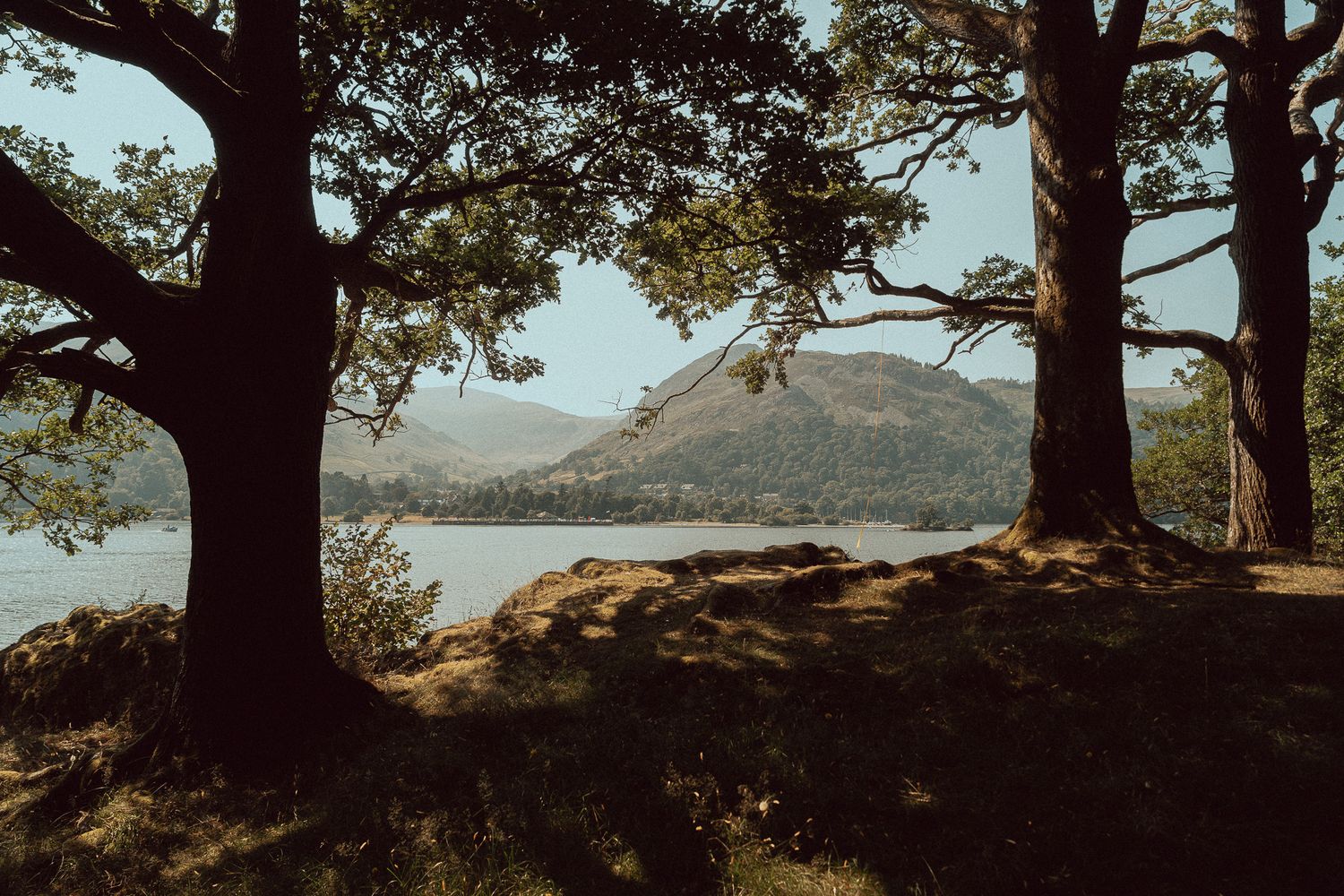
The lakes are at the heart of the region, but no two feel quite the same. Windermere brings a mixture of wooded shores, historic houses, villages and places to stay, while Ullswater feels more open and dramatic, surrounded by rugged mountains and long views.
Buttermere offers a quieter atmosphere, with a beautiful combination of water, woodland and rugged peaks. Derwentwater, Coniston Water and Grasmere each bring their own balance of landscape, accessibility and character.
A lakeside setting can be peaceful and intimate, whether you are planning a ceremony beside the water, a short walk before photographs or simply time to sit together and take in the view.
Fells, Mountains & Valleys
For couples drawn to adventure, the fells offer some of the most dramatic scenery in England. The landscapes around Langdale, Wasdale, Borrowdale and Great Langdale are shaped by steep slopes, rocky peaks, open paths and weather that can change quickly.
Helvellyn, Skiddaw, Scafell Pike and the surrounding mountain ranges bring a sense of scale, while lower valley routes can offer equally beautiful experiences without requiring a full mountain ascent.
You do not need to reach the highest summit to feel part of the landscape. A viewpoint, a valley path or a quiet stretch of fellside can provide the setting for a meaningful moment.

Forests & Woodland
The Lake District’s forests offer shelter, texture and a different pace from the open fells. Woodland paths can lead through ancient trees, beside streams and towards unexpected views across the surrounding landscape.
Places such as Grizedale Forest bring together walking routes, sculpture, woodland and wide views, while the wooded edges of the lakes create quieter spaces for exploring together.
Forests can be particularly appealing when the weather is unsettled, offering protection from the wind while still keeping the day connected to the outdoors.
Historic Ruins & Older Places
The Lakes is not only shaped by natural scenery. Its landscape also holds ruined abbeys, historic houses, old churches, stone farm buildings and the remains of earlier ways of life.
Places such as Furness Abbey offer a strong sense of atmosphere, with weathered stone and architectural remains that contrast beautifully with the surrounding countryside.
Other historic locations are less monumental, found in quiet churchyards, old buildings, bridges and forgotten corners along country lanes.
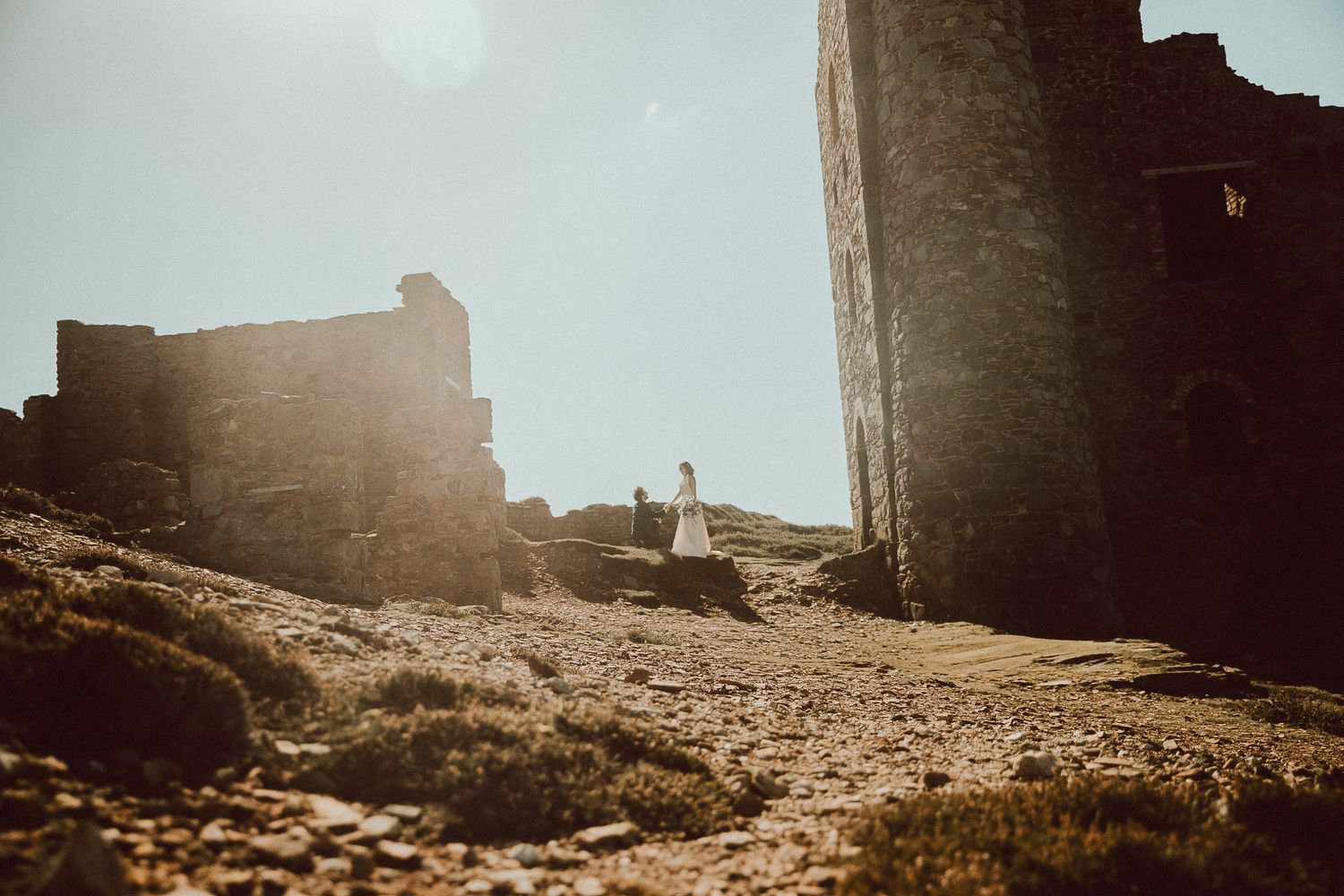
These places can offer something different from a mountain or lakeside setting. They bring a sense of age, stillness and story, creating a backdrop that feels connected to the history of the landscape.
Historic Villages & Stone Landscapes
The character of the Lake District is also found in its villages, farms and old stone buildings. Grasmere, Ambleside, Keswick, Hawkshead and Cartmel each offer a different atmosphere, from narrow lanes and traditional cottages to market squares, independent shops and welcoming places to eat.
Stone walls, slate roofs, old bridges and working farms give the landscape a sense of continuity.
These details can bring warmth and texture to photographs, especially when combined with the surrounding mountains and changing light.
For couples who want adventure without being far from comfort, a village can provide a natural base for a wedding day, with walks, food and accommodation close by.
Roads, Passes & Viewpoints
Some of the Lake District’s most memorable places are experienced while travelling between them. Winding roads pass through valleys, climb over mountain passes and open onto views that can change with the weather.
Routes through Kirkstone Pass, Honister Pass and the roads around Wrynose and Hardknott offer a sense of journey and discovery, while roadside viewpoints can provide dramatic settings without the need for a long walk.
For an elopement, the journey itself can become part of the day. A scenic drive, an unexpected stop or a quiet viewpoint may create some of the most natural and memorable moments.
A Landscape Shaped By Weather
The Lake District is known for its rain, but the weather is part of what gives the landscape its character. Mist can soften the mountains, low cloud can create atmosphere and sudden sunlight can transform the lakes and valleys.
Wind, rain, snow and changing light all bring something different to the experience. They can influence where you walk, how long you stay outside and which places feel most comfortable on the day.
Rather than treating the weather as something to overcome, it can be worth allowing it to shape the experience. The Lake District rarely looks exactly the same twice, and that unpredictability is part of its appeal.
Places to get married in The Lake District.
The Lake District offers many different ways to get married, from lakeside venues and historic estates to village churches, woodland settings and remote valleys. Some locations are suited to larger celebrations, while others are better for smaller gatherings or intimate elopements.
The right choice is not always the most famous view. It is the place that suits the way you want to spend the day, the people you want beside you and the amount of adventure you would like to include.
Windermere & The South Lakes
Windermere is one of the Lake District’s most established wedding areas, with a wide choice of hotels, country houses, lakeside venues and places to gather afterwards.
It suits couples who want beautiful scenery alongside the convenience of nearby accommodation, restaurants and transport. A wedding here might include a ceremony at a country house, photographs beside the lake, a boat journey or an evening spent in one of the surrounding towns and villages.
The wider South Lakes also gives couples access to Ambleside, Grasmere and Coniston, making it possible to combine a wedding with a longer stay and several different settings.
Ullswater & Patterdale
Ullswater is a natural choice for couples who want the lake and surrounding mountains to be central to the day. The eastern shore, Glenridding and Patterdale offer access to waterside settings, mountain routes and dramatic views.
A wedding here could begin at a lakeside venue before moving outdoors for photographs, or take the form of a smaller elopement with a walk, a scenic drive and time beside the water.
The area around Aira Force adds another possibility, with woodland paths and a waterfall creating a setting that feels very different from the open shoreline.

Buttermere & The Western Valleys
Buttermere offers a quieter and more intimate setting, with the lake, woodland and mountains gathered closely together.
It can suit couples who want to spend time away from the larger lakeside towns and keep the day simple. A ceremony or private moment could be followed by a walk beside the water, time taking in the views and a relaxed meal nearby.
The western valleys also provide access to routes such as Honister Pass, giving couples the option of including a scenic drive through some of the Lake District’s more dramatic surroundings.
Derwentwater, Keswick & Borrowdale
The area around Derwentwater brings together lake views, woodland, mountain scenery and access to Keswick. It can suit couples who want a day connected to the outdoors while still having a town nearby for accommodation, food and practical arrangements.
Keswick offers a useful base, while the surrounding lake and valley provide quieter settings for photographs and time together. Further into Borrowdale, the atmosphere becomes more secluded, with traditional stone buildings and routes leading deeper into the surrounding fells.
This area works particularly well for couples who want to make the wedding part of a wider weekend rather than treating it as a single event.
Langdale & The Central Valleys
Langdale offers a more rugged setting, with dramatic mountain scenery and a strong sense of being surrounded by the fells. It is particularly suited to smaller weddings and elopements where the landscape is an important part of the experience.
The valley combines mountain views, old stone buildings, country lanes and walking routes, allowing couples to decide how much of the day they want to spend outside.
A Langdale wedding does not have to involve a demanding ascent. A short walk, a quiet viewpoint or a place beneath the peaks can provide the atmosphere without making the day inaccessible to everyone attending.
Wasdale & Wastwater
Wasdale is suited to couples looking for a more remote and expansive setting. Wastwater, the surrounding valley and the mountains beyond create a powerful sense of scale, with fewer built-up surroundings than many other parts of the Lakes.
This is a location for couples who are comfortable with more careful planning. Travel times, weather, walking routes, parking and facilities all need to be considered, particularly if guests are joining the day. For an elopement, the remoteness can be part of the appeal. The ceremony becomes one moment within a much wider day spent exploring the valley.
Hawkshead & The Southern Villages
Hawkshead and the surrounding villages offer a different side of the Lake District, with narrow streets, whitewashed buildings, traditional inns and a strong sense of local character.
These settings can work well for couples drawn to village life, historic architecture and a slower pace. They also provide a useful base for exploring nearby lakes, woodland and countryside.
A wedding in this area could combine a village ceremony with time outdoors, followed by a meal in a traditional inn or a stay in a characterful rural property.
Grasmere, Rydal & The Central Villages
Grasmere offers a more intimate village setting, with traditional buildings, independent places to eat, nearby walking routes and easy access to the surrounding countryside.
It can suit couples who want a wedding with a strong sense of place but do not want to organise everything around a remote outdoor location. A ceremony might take place in or near the village, followed by photographs beside the lake, through the surrounding lanes or further into the nearby valleys.
The area around Rydal adds historic houses, woodland paths and quieter corners, creating opportunities for a day that moves naturally between village, garden and countryside settings.

Historic Buildings & Ruins
The Lake District’s historic settings range from grand estates and country houses to village churches, traditional inns and ruined buildings.
Lowther Castle, near Penrith, offers an estate setting with formal grounds, gardens and substantial historic architecture. It is suited to couples looking for a more structured celebration with space for guests and different parts of the day.
Rydal Mount and the surrounding Rydal estate offer a smaller-scale historic setting, with gardens and connections to the literary history of the Lakes.
Cartmel provides a village setting centred around its medieval priory, traditional buildings and established places to eat and stay. It can suit couples who want a celebration with a strong sense of local character.
For something more unusual, Furness Abbey offers one of the most distinctive historic backdrops in the wider Lake District area, with extensive medieval remains and dramatic architectural features.
Historic churches, country inns and private estates can also provide options for couples who want a traditional ceremony followed by time exploring the surrounding area.
Rivers, Waterfalls & River Valleys
The Lake District’s rivers offer a different kind of setting from its larger lakes. They move through wooded valleys, beneath stone bridges, past old mills and alongside villages, creating quieter and more intimate places to spend part of a wedding day.
The River Rothay flows through the landscapes around Grasmere and Rydal, while the River Brathay runs through the Langdale area before meeting the waters of Windermere. The River Derwent connects the northern lakes and valleys, passing through Keswick and Borrowdale, while the River Greta brings water, woodland and stone-built character through the town.
These river landscapes can be especially appealing for couples who want photographs with movement, texture and natural detail. A walk beside the water, a quiet bridge, a wooded path or the sound of a nearby waterfall can create a more intimate atmosphere than an open lakeshore.
Waterfalls such as Aira Force, Stock Ghyll Force and Lodore Falls also offer distinctive settings for exploring together, although access, footpaths and visitor numbers should be considered when planning a wedding-day visit.
For an elopement, a river valley can become part of a wider route through the Lakes, providing a natural change of pace between mountains, villages and lakeside locations.
Planning a Lake District Wedding
Planning a wedding in the Lake District does not have to mean creating an elaborate expedition.
It might mean waking up somewhere quiet, taking your time over breakfast, getting ready together and heading out into the landscape. It might mean bringing a small group of people with you, finding a place to exchange vows, walking beside a river and ending the day around a table with good food.
The details will depend on the kind of experience you want. The important thing is that the planning supports the day, rather than taking over from it.
Start With What Matters
Before choosing a venue, route or ceremony location, think about what you actually want to experience.
Do you want to spend most of the day outside? Would you like family and friends to be involved? Are you imagining a quiet elopement, a relaxed gathering or something between the two? Do you want to stay in one place, or make travelling through the Lakes part of the story?
There is no single correct way to plan a Lake District wedding. A day with two people and a day with twenty guests may look completely different, but both can feel equally intentional.
Starting with the experience makes the practical decisions much easier.
Keep The Shape Of The Day Simple
The Lake District is not always easy to move through quickly. Roads can be narrow, journeys can take longer than expected and a short walk may turn into an hour because you stop to take in the view.
A simple timeline often works best:
- Getting ready somewhere comfortable
- Travelling to the ceremony or first location
- Allowing time for the ceremony without rushing away
- Exploring on foot or travelling through the landscape
- Stopping for food, a drink or a quiet moment
- Ending somewhere warm and welcoming
This leaves space for the day to breathe. It also means that if you find somewhere beautiful, the weather changes or a moment takes longer than expected, you do not have to immediately move on.

Make Space For The Weather
The weather is one of the things that makes the Lake District what it is, but it also needs to be considered honestly.
Rain, wind, mist and sudden changes in temperature can affect how comfortable a location feels. Clothing, footwear, warm layers and somewhere sheltered to return to can make a significant difference.
It is worth having a flexible alternative rather than relying on one exact outdoor plan. That might mean changing the route, moving a walk to another part of the day or spending more time in a village, inn or accommodation.
A backup plan does not have to change the spirit of the wedding. It simply gives you another way to experience it.
Choose Locations That Work Together
You do not need to plan the day around a long list of separate places.
One meaningful location may be enough. Alternatively, you might choose a small group of places that naturally connect, such as a village, a lakeshore and a nearby walking route.
Think about the distance between each part of the day, how you will travel and whether the journey adds something to the experience. A scenic drive can be part of the adventure, but unnecessary travel can also make the day feel fragmented.
The strongest plans usually have a clear sense of place, rather than trying to include everything the Lake District has to offer.
Consider Who Is Coming
An elopement with just the two of you gives you considerable freedom, but a wedding involving family and friends needs a little more thought.
Consider the walking ability, confidence outdoors and comfort of everyone attending. Not every guest will want to walk across uneven ground, stand outside for a long period or travel along narrow mountain roads.
That does not mean the day has to be limited. You could choose an accessible ceremony location and explore further together afterwards, or divide the day so that some moments are shared with guests and others are just for you.
A thoughtful plan allows everyone to be part of the experience without asking everyone to do the same thing.
Understand Access And Permissions
A beautiful landscape is not automatically a suitable ceremony location.
Before making plans, check whether the place can legally and practically be used for the type of wedding you are considering. Requirements may differ between licensed venues, private land, churches and public outdoor spaces.
You should also consider:
- Parking and walking distances
- Access for guests
- Whether the location becomes busy at certain times
- Permission for gatherings or ceremonies
- Photography and drone restrictions
- Nearby facilities and shelter
- Seasonal road and weather conditions
The earlier these details are considered, the more freedom you will have to enjoy the day without worrying about avoidable problems.
Don't Overplan The Adventure
It can be tempting to build a Lake District wedding around a summit, a waterfall, a lake, a river, a mountain pass and a sunset viewpoint.
But an itinerary that looks beautiful on paper may leave very little time to actually enjoy it.
Choose the experiences that matter most. One walk taken slowly may be more meaningful than several rushed stops. Sitting beside the water, sharing a drink or watching the weather move across the hills may become more memorable than reaching another planned viewpoint.
Adventure does not need to be measured by distance, height or difficulty. It can simply mean doing something together that feels different from an ordinary day.
Let The Plan Support The Story
The best Lake District wedding plans leave room for both intention and uncertainty. You can decide where to begin, how far you want to travel and which places matter most, while still allowing the day to change naturally. Perhaps the rain arrives earlier than expected. Perhaps you find a quiet riverside path. Perhaps you decide to stay longer somewhere because it feels right.
Those changes are not necessarily problems to solve. They can become part of the story.
Plan enough to feel comfortable, but not so much that every moment has already been decided.

Leave Something For Tomorrow
A Lake District wedding does not have to end when the ceremony, photographs and evening meal are finished.
Staying for another day can give you time to enjoy the place without the expectations of the wedding itself. You might take a slower walk, visit somewhere you did not have time to see, have breakfast beside the lake or simply stay in and enjoy the view.
For guests, it can turn a wedding into a shared weekend rather than a single day of travel. For couples, it creates a little space after the excitement, allowing the experience to settle before returning home.
Sometimes the best part of choosing the Lake District is knowing that you do not have to fit everything into one day.
A Little Preparation Creates More Freedom
Thoughtful planning is not about controlling every detail. It is about removing the practical pressures that might otherwise distract from the experience.
When the route, access, weather, permissions and timing have been considered, you can spend more of the day being present.
You can listen to what is being said, notice the small moments, take the longer way back and enjoy being somewhere beautiful with the people who matter most.
The plan is there to make that possible. Not to make the day perfect, but to give you the freedom to experience it fully.
Choose A Base, Not Just A Venue
Where you stay can shape the experience as much as where the ceremony takes place.
A cottage beside the water, a traditional inn in a village or a quiet rural property can give the day a natural centre. It becomes somewhere to get ready, return to after exploring and spend time together without needing to travel constantly.
For couples bringing guests, choosing accommodation within easy reach of the ceremony can make the whole experience feel more relaxed.
For an elopement, a private cottage or characterful retreat may allow the wedding to become part of a longer escape.
Think about what you want around you when the photographs are finished. A peaceful view, a good pub, a kitchen to cook in, a fire to sit beside or a village you can walk into may all matter more than having the most impressive venue.
Walking routes in The Lake District.
Walking can become one of the defining parts of a Lake District wedding or elopement. It creates space between the formal moments of the day, allowing you to move through the landscape together rather than simply arrive at a viewpoint, take photographs and leave.
You might follow a lakeshore before the ceremony, take a woodland path after exchanging vows or spend most of the day travelling through the fells on foot. The route can be gentle, ambitious or somewhere between the two.
What matters is choosing a walk that belongs naturally within the day you want to have.
Grasmere & Rydal
The paths around Grasmere and Rydal bring together village character, open water, woodland and fell views.
You could begin in Grasmere, walk towards Rydal Water and follow the quieter paths beside the river before returning for food or an evening in the village. The area offers plenty of variety without requiring a high-level mountain route.
It suits couples who want to spend time outside while keeping accommodation, cafés, pubs and other parts of the day close at hand.
Derwentwater
Derwentwater offers a mixture of wooded shoreline, open lake views and mountain scenery around the water.
Rather than committing to the entire shoreline, you can choose a section that fits your plans, stopping at the water’s edge, following the woodland paths or taking a boat across the lake to continue elsewhere.
For couples staying near Keswick, the lake can form a substantial part of the day without the need to keep travelling between unrelated locations.

Tarn Hows
Tarn Hows provides a shorter route through woodland and around open water, with views across the surrounding countryside.
It can work well when walking is important but cannot take over the whole day. Couples may choose to spend time here before returning to a nearby village, venue or accommodation for the ceremony or evening celebration.
Its appeal lies in the atmosphere and setting, rather than the need to complete a demanding hike.
Buttermere
Buttermere feels enclosed by the surrounding fells, giving the walk a strong sense of being within the landscape rather than simply looking out across it.
The route around the lake passes through changing scenery, including woodland, open ground, traditional farmland and views towards the surrounding peaks. The atmosphere is particularly distinctive when mist or low cloud settles across the valley.
This is a good choice for couples who want the setting to feel quiet, immersive and removed from the busier parts of the Lakes.
Aira Force & Ullswater
The walk towards Aira Force follows woodland and rushing water before opening out towards the wider surroundings of Ullswater.
It offers a useful contrast within one area, moving from the enclosed atmosphere of the trees to the broader views around the lake.
The route can become one part of an elopement, followed by time beside the water or a longer drive through the surrounding landscape.
The combination of forest, waterfall and lake gives the experience a natural progression without needing to include several distant locations.
Walking With Guests
Not everyone attending your wedding will want the same level of adventure.
A short lakeside or woodland route may allow family and friends to share the experience, while a longer walk could be reserved for the two of you after the main celebration.
Some guests may prefer to remain near the ceremony, accommodation or reception. The day can include both.
A shared walk does not have to reach the same places as your private time together, and an elopement does not have to exclude every comfortable or accessible part of the landscape.
Langdale Valley
The Langdale Valley offers a more pronounced mountain setting, with dramatic peaks, open fields, stone buildings and paths leading deeper into the surrounding landscape.
There are options for a shorter valley walk, as well as routes that become more demanding as they rise towards the fells. Deciding between them depends on whether walking is one element of the day or the main experience around which everything else is planned.
A valley route can provide the scale of the mountains without requiring a summit. For experienced hikers, it may also be the starting point for a longer elopement on higher ground.
When The Walk Becomes The Day
A longer fell route needs to be treated differently from a short walk between two wedding locations.
Navigation, footwear, clothing, daylight, food, water and changing weather all become important.
Wedding outfits may need to be carried or adapted, and the route may not be suitable for guests or for a tightly timed ceremony.
If reaching higher ground is central to your plans, build the day around the walk from the beginning. Allow time for pauses, slower sections, changing conditions and the journey back.
A demanding route should not be squeezed into the few hours left between other commitments.
What The Walk Adds To The Story
A route gives the photographs a sense of progression. There may be a quiet moment while getting ready to leave, a conversation on the path, a pause beside the water, a coat pulled on as the weather changes or a stretch of road walked in silence. These details show how the day felt, not just where it happened.
Different surroundings also bring natural variation. Woodland can lead into open ground, a stone bridge can give way to a lakeshore and a sheltered path can open onto a wide view. The story develops through movement rather than a series of arranged scenes.
Make The Finish Part Of The Plan
Before choosing a route, consider where it ends and what you want to do afterwards.
A walk that finishes near your accommodation, a village or somewhere to eat can make the rest of the day easier. If the route is remote, allow additional time for poor visibility, wet ground, unexpected stops or a slower return.
It is worth having dry clothing, warm layers and a realistic idea of how much energy you will have left. The aim is not simply to reach the final viewpoint. It is to finish the walk still able to enjoy the evening, whether that means dinner, a drink by the fire or time alone somewhere quiet.
Find The Route That Belongs To You
The Lake District offers many ways to walk through it. Grasmere and Rydal bring together villages, water and woodland. Derwentwater offers shoreline paths and mountain views. Buttermere creates a more enclosed experience, while Aira Force combines forest and waterfall. Tarn Hows suits a shorter outing, and Langdale provides the setting for anything from a valley stroll to a serious day in the fells.
You do not need to choose the longest route, the highest summit or the most recognisable view. Choose the walk that fits your ability, your company and the atmosphere you want from the wedding. Then let the day unfold along the way.
Quieter places in The Lake District.
Beyond The Familiar Views
The Lake District is often imagined through its lakes, valleys and mountain passes, but its western edge reaches the Irish Sea. Here, the landscape changes again, moving from high fells and wooded valleys towards salt marshes, coastal villages, wide beaches and open horizons.
The coast offers a different kind of quiet from the mountains. There is more space, a stronger sense of distance and a horizon that keeps opening out. It can be just as atmospheric for a wedding or elopement, particularly for couples who want to combine the inland landscapes with something less expected.
The Cumbrian Coast
The coastline around Ravenglass, Drigg, Seascale and the wider western shore brings together beaches, dunes, estuaries and views towards the sea.
Ravenglass is especially distinctive, with its position where several rivers meet the coast and its historic links to the surrounding landscape. Nearby, the open shoreline gives way to wide beaches and stretches of sand where the feeling is less enclosed than in the valleys inland.
The coast can suit a couple who want photographs with space around them, changing skies overhead and the sound of the sea rather than the movement of people.
Beaches, Dunes & Open Horizons
The western beaches have a different character from the sheltered shores of the Lakes’ inland waters.
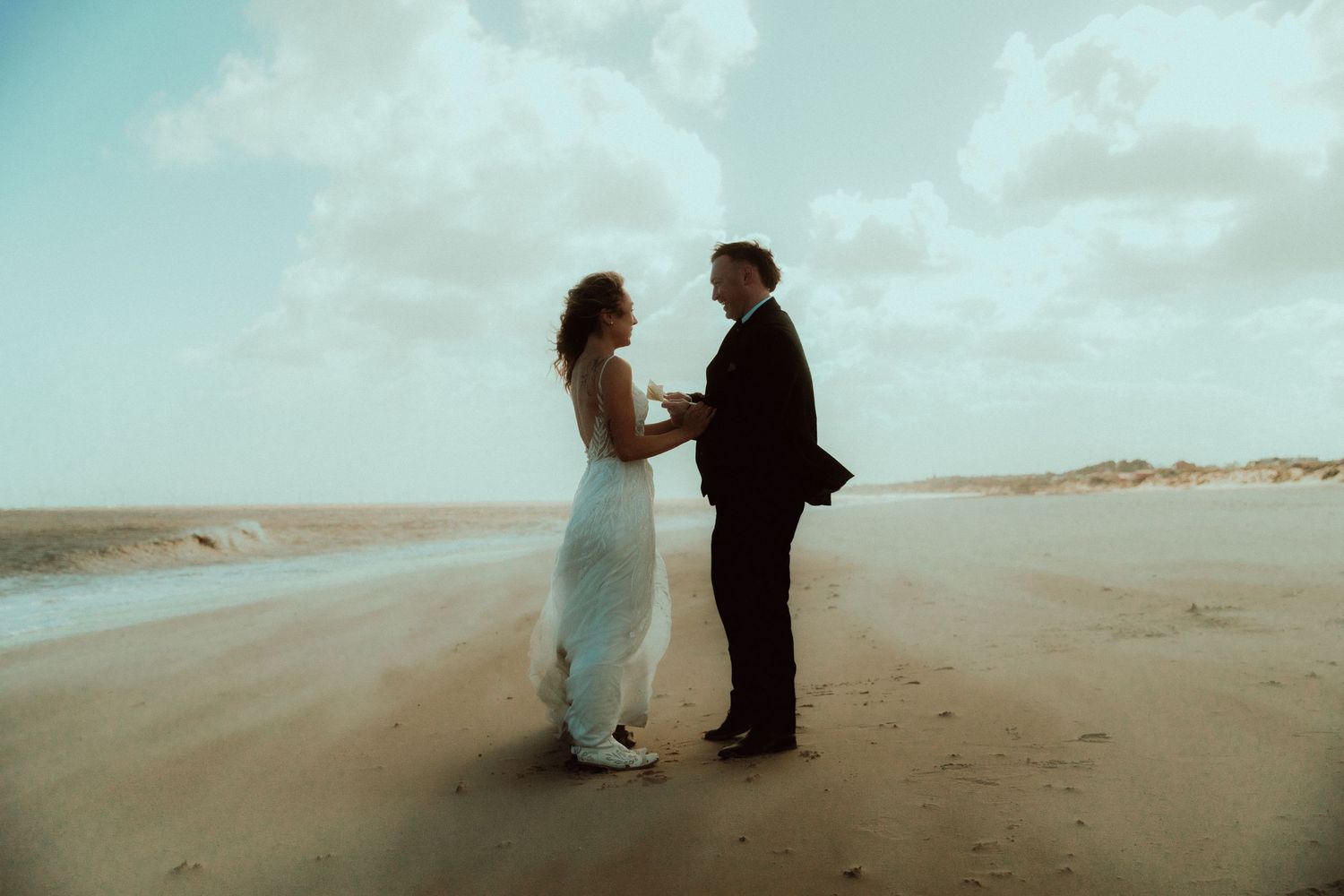
There are broad stretches of sand, shingle, dunes and coastal paths, with views that can feel expansive even on a grey day. The weather is often more exposed here, bringing strong wind, dramatic cloud and changing light across the water.
For an elopement, the coast could form the final part of a day that began in the mountains, or provide a quieter setting after exploring the inland valleys. It offers a natural change of pace without losing the rugged atmosphere of Cumbria.
A Different Kind Of Adventure
The coast can be part of an adventurous wedding without requiring a mountain hike.
You might walk along the beach, explore the dunes, follow a coastal path or simply find a quiet place to watch the tide. The experience can be active, but it can also be slow and uncomplicated.
There is something particularly atmospheric about standing beside the sea after spending time among the fells. The scale changes, the air feels different and the landscape opens out in another direction.
Estuaries & River
The places where rivers meet the sea bring together several of the Lake District’s defining elements, water, open land, shifting weather and working landscapes.
Around the western coast, estuaries and tidal areas create a sense of movement that is different from the stillness of the lakes.
The landscape changes with the tide, while distant fells can remain visible behind the shoreline.
These settings are often less immediately recognisable than the famous mountain views, but they can give a wedding story a strong sense of place and a more unusual visual character.
Coastal Villages & Historic Details
The western coast is not only about beaches. Villages, old buildings, railway history, churches, harbours and traditional stone structures add texture and human detail to the landscape.
Ravenglass, in particular, offers a connection between the coast, the rivers and the wider history of the area. Elsewhere, small roads and coastal settlements provide places to stop, eat, stay or shelter when the weather changes.
For couples who want a setting with more than scenery, these details can bring warmth and depth to the day.
Leave The Place As You Found It
Quieter locations often have less infrastructure and fewer facilities, so they need to be treated with care.
Stay on appropriate paths, avoid disturbing livestock, take everything away with you and be mindful of other people using the landscape. If you are planning a ceremony, a gathering or any activity beyond photographs, check what permissions may be needed beforehand.
The appeal of these places comes from their atmosphere and simplicity. Protecting that character helps ensure they remain special for the people who live in and visit the Lakes.
Combining The Coast With The Fells
One of the advantages of the western Lake District is the contrast between inland and coastal landscapes.
A day could begin among the mountains, move through a valley and finish beside the sea. Alternatively, the coast could be the main setting, with the fells providing a dramatic backdrop during the journey there and back.
This kind of combination works best when the route is planned realistically.
Distances, weather, daylight and road conditions all need to be considered, particularly if the day includes a ceremony or fixed booking.
The coast does not need to be added simply to fit in another location. It should have a purpose within the experience.
Finding Somewhere That Feels Personal
The most meaningful quiet place may not be the one with the fewest people. It may be somewhere connected to your own story.
Perhaps it is a path you walked together before getting engaged, a village where you have spent holidays, a lake you return to regularly or a small corner of the landscape that feels familiar for reasons no one else would immediately understand.
That personal connection matters more than whether the location is considered a hidden gem. A place becomes significant through the memories attached to it.
The Lake District, Seen Differently
The quieter side of the Lake District is not limited to hidden mountain paths or overlooked lakeshores.
It can be found on the western coast, where rivers reach the sea, beaches stretch beneath changing skies and the landscape takes on a wider, more open character.
For a wedding or elopement, the coast offers another way to experience Cumbria. It brings contrast, space and a sense of distance, creating a setting that feels connected to the Lakes while offering something entirely its own.

Can we legally get married outdoors in the Lake District?
A legally recognised wedding ceremony in England must meet specific requirements, and not every outdoor location is licensed for marriage ceremonies.
Some couples complete the legal ceremony at a register office or licensed venue, then exchange personal vows or hold a symbolic ceremony outdoors. Your registrar or celebrant can explain which options are available for your plans.
Can we elope in the Lake District with our family and friends?
Yes. An elopement does not have to mean getting married alone.
You can invite a small group of people to join you for the ceremony, share part of the day with them and keep other moments private. The format is entirely up to you.
Do we need to book a traditional wedding venue?
No. You could choose a licensed venue, a village church, a private property, a register office or a combination of locations.
Some couples use a venue for the legal ceremony and spend the rest of the day exploring the Lakes. Others build the celebration around their accommodation, a private gathering or a personal outdoor ceremony.
Where are the best places to elope in the Lake District?
That depends on the atmosphere you want.
You might be drawn to the lakes and villages around Grasmere, the open landscapes of Ullswater, the quieter surroundings of Buttermere, the mountain scenery of Langdale, the woodland around Grizedale or the open coastline of western Cumbria.
The most suitable location will also depend on access, privacy, weather, travel and who is joining you.
Do we need to hike for our wedding photographs?
Not at all.
The Lake District offers lakeshores, villages, rivers, woodland, historic buildings, country lanes and coastal locations that can be enjoyed without a strenuous hike.
If walking is important to you, it can become a central part of the day. If you prefer something more accessible, there are still plenty of beautiful settings to choose from.
Can we have a mountain, lakeside or coastal ceremony?
You may be able to exchange vows or hold a personal ceremony in a natural setting, but permission and practical suitability will depend on the exact location.
A place that works for photographs may not be suitable for a formal ceremony, a large group or prolonged use. Check access, restrictions and permissions before making arrangements.
What happens if the weather changes?
The weather can affect routes, travel, outdoor ceremonies and how long you want to stay outside.
It helps to have suitable clothing, practical footwear, warm layers and somewhere comfortable to return to. A flexible plan can also allow you to change the route, move a walk to another part of the day or spend more time somewhere sheltered.
What is the best time of year for a Lake District wedding?
Each season offers a different experience.
Spring brings fresh colour and lively rivers. Summer offers longer days for exploring, although popular places can be busy. Autumn brings woodland colour and softer light, while winter can offer quieter roads, stark landscapes and dramatic weather.
The best season depends on the atmosphere, activities and level of flexibility you want from the day.
Can we combine the mountains, lakes and coast?
Yes, but the distances and road conditions need to be considered carefully.
You could begin among the fells and finish beside the Irish Sea, or plan a longer stay around several different landscapes. It is usually better to choose a small number of places that connect naturally than to spend the day travelling between distant stops.
Can we bring our dog?
That will depend on your accommodation, venue and chosen locations.
Check any restrictions in advance, particularly around livestock, wildlife, nature reserves and busy walking routes. It is also worth considering who can look after your dog during the ceremony or photographs if the surroundings become unsuitable.
How far in advance should we plan our Lake District elopement?
The earlier you arrange the key details, the more choice you are likely to have.
Accommodation and popular venues can become busy, particularly during the warmer months. Legal ceremonies may also require notice and availability, so it is sensible to begin with the ceremony arrangements before planning the rest of the day.
Can you help us choose a Lake District location?
Yes. The right location depends on the atmosphere you want, the time of year, the people attending, your walking ability and how far you are comfortable travelling.
We can help you consider the landscape, practical details and photographic possibilities, whether you are drawn to lakes, villages, woodland, mountain valleys or the coast.
Can you photograph and film the whole day?
Yes. Photography and film can follow the experience from the quieter preparations through to the ceremony, walking, travelling, exploring and evening celebrations.
The coverage can include the atmosphere and smaller details that make the day feel complete, from voices and movement to changing weather and the landscape around you.
What if we do not know exactly where we want to get married?
That is completely fine.
You do not need to have every detail decided before making an enquiry. It can be more useful to begin with how you want the day to feel, then explore the locations, routes and practical options that suit you.
The right place often becomes clearer once you know how you want to spend the day.
Can we have a relaxed wedding weekend rather than just one day?
Yes. You could arrive a few days early, settle into your accommodation and make the wedding part of a longer stay.
This might include walks, shared meals, time with guests, exploring nearby villages or simply enjoying the landscape without a schedule. A longer stay can make the experience feel less like a single event and more like a proper escape.
Are there Lake District wedding venues near the water?
Yes. The region has venues and accommodation around several lakes, including Windermere, Ullswater, Derwentwater and Coniston Water.
The setting, access, ceremony arrangements and guest capacity will vary, so it is important to check whether a particular venue suits the kind of celebration you are planning.
Can we have a small, intimate wedding in a village?
Yes. A village setting can offer a useful balance of character, comfort and access to the surrounding landscape.
You might have the ceremony nearby, take photographs through the lanes or countryside, and finish with food and drinks at a local pub, restaurant or accommodation. This can work particularly well for couples who want a relaxed day without organising a large formal reception.
What should we wear for a Lake District wedding or elopement?
Choose clothing that allows you to move comfortably and cope with the likely conditions.
If you are planning to walk, consider practical footwear, warm layers and outerwear that can handle wind or rain. You can still bring a more formal outfit for the ceremony, but it may help to think about how easily it can be carried, changed into or worn outdoors.
More Notes
Planning a wedding or elopement in the Lake District often begins with one place, then opens into a wider search for landscapes, routes and experiences that feel right for you.
You might enjoy exploring:
- Lake District wedding venues with a sense of place
- The best lakes for a Lake District elopement
- Planning an elopement in the Lake District
- Where to elope in the Lake District
- Lake District wedding photography: what to look for
- The best walking routes for a Lake District elopement
- Mountain, lakeside or coastal? Choosing your Lake District setting
- The Cumbrian coast: a different side of the Lake District
- The best time of year for a Lake District wedding
- How to plan a relaxed wedding in the Lake District
- Places to stay for a Lake District elopement
- How to include adventure in your Lake District wedding day
- What to consider when planning an outdoor ceremony in the Lake District
- A guide to intimate weddings in the Lake District
Continue exploring
If The Lake District has given you a taste for wild landscapes, meaningful places and weddings shaped by the journey, there are a few more places worth exploring.
Wales
From the mountains of Eryri to the coastlines of Pembrokeshire, discover a country filled with rugged landscapes, quiet valleys and places made for adventurous weddings and elopements.
Devon & Cornwall
From wild moorland to dramatic coastlines, historic villages and remote beaches, discover landscapes with their own character and plenty of space for meaningful weddings and elopements.
→ Explore Devon & Cornwall
The Peak District
Open moorland to winding country lanes and welcoming villages, explore the Peak District as a place for meaningful weddings and countryside elopements.
Scotland
From the Highlands and rugged west coast to quiet lochs, ancient forests and remote islands, discover a country shaped by wild landscapes, long journeys and adventurous celebrations.