The Peak District has a way of making the countryside feel much bigger than it is.
The Peak District is a place of open moorland, limestone valleys, old stone villages and long walks that seem to lead somewhere. It feels wild in places, but never completely remote. You can spend the morning on a hill, wander through a village for lunch and still be back somewhere warm by evening.
That mix makes it a lovely place for a wedding or elopement. You might want a day in the hills, a quiet ceremony somewhere meaningful, or simply a few days away with the people you love most. There is no single way to experience the Peak District. The landscape changes from one valley to the next, and the best place for you might be somewhere you discover along the way.
This guide explores some of those places, and what makes them worth going to.
The Peak District, in it's own way.
A place that gives you plenty of ways to spend a day
There is something quite appealing about a place that does not ask you to choose between going somewhere wild and being somewhere comfortable. The Peak District manages to do both. You can be out on open moorland in the morning, walking between gritstone edges and wide views, then find yourself in a stone village, beside a river or sitting down for lunch somewhere warm a little later. That variety is one of the things we like most about it.
It doesn't feel like a wilderness theme park
The Peak District is a National Park, but it is also a living landscape. People farm here. People live in the villages. Old roads, walls, buildings and industrial remains are woven through the countryside. The landscape has been shaped by people for thousands of years, and that history is still visible in the places you walk through today.
That gives the Peak District a different feeling from somewhere that is purely remote.
You are not disappearing from the world completely. You are stepping into a different pace of it.
There is room for the day to become something of its own
Perhaps that is what we like about the Peak District most. It gives you enough structure to know where you are, but enough variety that the day can unfold naturally. You can have a plan.
Then take the path that looks interesting.
Stop for a drink. Find a view. Get caught in the rain. Stay out a little longer. Come back when you are hungry. The Peak District does not need you to make the day complicated. It gives you somewhere to go, and then lets you decide what happens when you get there.
The landscape changes without needing a long journey
The Peak District's three main landscape areas, the Dark Peak, White Peak and South West Peak, each have their own character.
The Dark Peak brings open moorland and gritstone edges. The White Peak is more enclosed, with limestone dales, farmland and wooded valleys.
The South West Peak brings rolling hills, farmland and long views towards the surrounding countryside.
For a wedding or elopement, that means there is room to build a day around what you actually enjoy. You might want the big view. Or you might prefer a valley, a village, a woodland path or somewhere beside the water.
There is no need for every Peak District wedding to look like a photograph of a windswept hilltop.
It is wonderfully easy to get to
There is another reason the Peak District works so well for weddings.
It sits right in the middle of England, stretching across parts of Derbyshire, Cheshire, Staffordshire, Yorkshire and Greater Manchester, with Manchester, Sheffield, Nottingham and Derby all close by.
The National Park describes it as Britain's most accessible National Park.
That makes a difference when you are asking people to travel for you.
The countryside can feel like a proper escape without requiring everyone to spend an entire day getting there.
And for a couple who want to turn the wedding into a few days away, that accessibility can be part of the appeal.
It works for couples who do not want a huge wedding
You do not need a guest list of fifty people to make a day here feel worthwhile.
In fact, the Peak District lends itself quite naturally to smaller celebrations.
A handful of people can stay together somewhere in the countryside, spend the day outside, explore a village, walk somewhere beautiful and sit down for a long meal afterwards.
It can still feel like a 'proper' wedding. It just does not have to feel like a production.
You can actually experience the place
This is perhaps where the Peak District makes particular sense for the way we think about weddings.
The landscape is not just something to look at.
It is somewhere to walk through.
There are paths across the moors, trails through the dales, old railway routes, viewpoints, reservoirs, climbing edges and countless smaller routes between villages and valleys. The National Park has a huge range of outdoor activities because so many different landscapes sit close together. That gives you options.
A wedding day can have movement in it. You can leave the ceremony behind for an hour and go for a walk. You can take everyone somewhere for a view. You can disappear together for a little while and come back when you are ready.
The landscape becomes something you take part in, rather than simply something behind you in the photographs.
The best seasons in the Peak District.
The Peak District changes quite noticeably through the year. The moors, dales, woods and villages can feel like completely different places depending on the season, and there is no single month that has a monopoly on good days.
For weddings and elopements, the best time really comes down to what you want the landscape to feel like.
Spring
Spring brings the Peak District back to life.
The first signs are often subtle, with fresh green appearing through the valleys, trees beginning to fill out and wildflowers returning to the meadows.
In the White Peak, spring is particularly lovely in the limestone dales, where flower-rich grassland and woodland start to come alive. Along places such as the Monsal Trail, cowslips, bluebells, wood anemones and wild garlic can appear as the season progresses.
Up on the higher ground, spring can still feel quite exposed. The weather can change quickly and the landscape has not necessarily lost its winter character yet, which can make for a wonderfully varied day.
It is also an important time for wildlife. Ground-nesting birds and farm animals are raising young, so some areas require extra care when walking, particularly on open access land.
For weddings: Spring works particularly well if you want a mixture of fresh woodland, green valleys and open hills, without everything being at its summer peak.
Summer
Summer is when the Peak District feels most alive.
The days are longer, the countryside is greener and there is more opportunity to make the landscape part of the day. The higher moors can still feel wild, while the valleys become full of colour, long grasses and wildflowers.
At Stanage-North Lees, for example, the hay meadows are particularly rich in flowers around June and the first half of July, before they are cut later in the summer.
Summer also brings some of the Peak District's distinctive wildlife. Ring ouzels return to the gritstone edges from late March and remain into late summer, while skylarks, curlews, red grouse and other upland birds can be seen across the landscape.
The obvious advantage for a wedding is daylight. There is much more room in the day to wander, stop somewhere for a view and still make it back for dinner.
The obvious disadvantage is that you are not the only people who have noticed. Popular places can become busy during the warmer months, particularly on weekends. If having a quieter experience matters to you, it is worth thinking beyond the most recognisable viewpoints and considering an early start, a weekday or a less obvious route.
Autumn
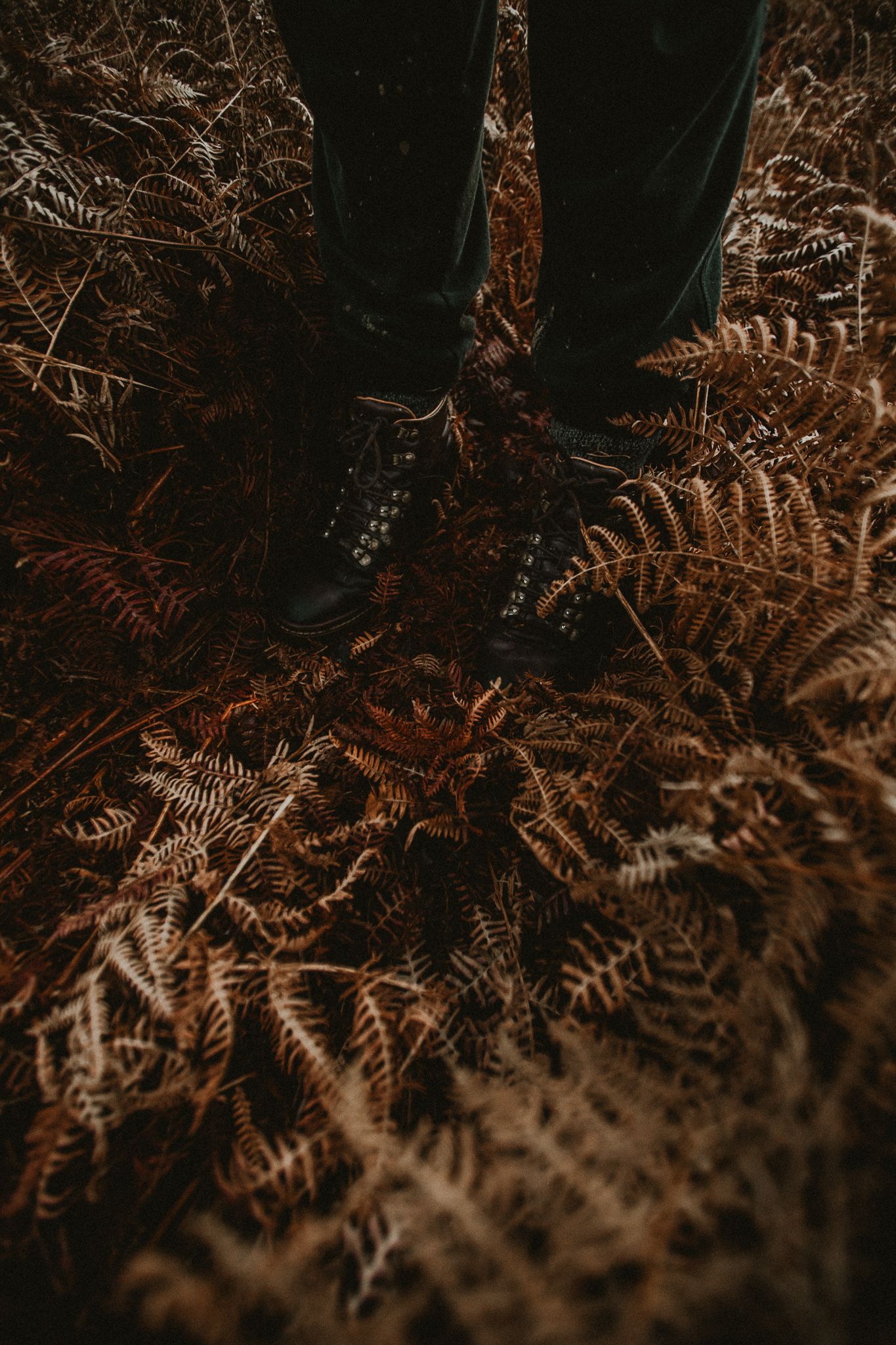
Autumn suits the Peak District beautifully. The landscape starts to lose its summer brightness and becomes more earthy. Bracken changes colour, trees turn gold and copper, berries appear along woodland edges and the evenings begin to draw in.
The National Park's trails and valleys can be particularly atmospheric at this time of year. Along the Monsal Trail, for example, autumn brings changing leaves and red berries, while winter visitors such as redwings and fieldfares begin arriving later in the season.
There is also something about the weather that suits the Peak District. A bright autumn morning can give you huge views across the hills, while mist or low cloud can completely change the feeling of the landscape a few hours later.
For photography, that unpredictability can be part of the appeal.
For weddings: Autumn is a good fit if you like darker greens, changing woodland, moody skies and a landscape that feels a little more weathered and atmospheric.
So, when is the best time?
There isn't really one answer.
Spring brings new growth, wildflowers and changing weather.
Summer gives you the longest days, greener landscapes and the most freedom to spend time outside.
Autumn brings changing colour, softer light and a more atmospheric landscape.
Winter strips everything back and can make the Peak District feel particularly quiet and exposed.
The important thing is not choosing a season because it is supposed to be the best.
Choose the season that feels most like you.
If you want long walks and late sunsets, summer makes sense. If you would happily pull on a coat and head into the hills with rain coming across the moor, winter might suit you perfectly.
And if you are somewhere in between, the Peak District is very good at giving you a bit of everything
Winter
Winter strips things back.
The trees are bare, the grasses and heather become more muted and the structure of the landscape becomes much easier to see. Stone walls, old paths, exposed rock and the shape of the hills become more prominent.
Higher ground can feel properly wild in winter. Conditions on the open moorland can change rapidly, with cold, wind, rain, fog and snow all possible, particularly on higher routes. But that is also what makes winter interesting.
A clear, cold day can give you enormous visibility across the landscape. A misty one can make the hills feel completely different. Snow, when it arrives, changes the Peak District again, although it should never be relied upon when planning a wedding around a particular landscape.
Winter also brings its own wildlife. Woodland birds become easier to notice among bare branches, while redwings and fieldfares can be seen feeding on berries and short-eared owls may hunt over the moors.
For weddings: Winter suits smaller days, shorter walks and couples who are happy to embrace whatever the weather decides to do.
The Peak District landscape.
More than just hills
When people picture the Peak District, they often imagine the same things first: open moorland, gritstone edges, a winding path and a big view. Those places are certainly here. But the landscape is much more varied than that. The National Park contains everything from high open moors and rocky edges to limestone dales, wooded valleys, riverside meadows, farmland and small stone villages.
The differences come largely from the underlying geology and the way generations of people have lived and worked the land. For a wedding or elopement, that variety matters. You can choose a landscape that feels dramatic and exposed, or something much quieter and enclosed.
Dark Peak
The Dark Peak is the landscape most people probably associate with the Peak District.
It is the higher, more open side of the National Park, with broad moorland, peat bogs, heathland, gritstone edges and deep valleys. The landscape can feel enormous, particularly when you are standing above the valleys with nothing immediately around you.
Gritstone outcrops give the hills their distinctive character, with places such as Stanage Edge creating long rocky escarpments above the surrounding moorland.
But the Dark Peak is not simply one enormous stretch of empty hill.
Reservoir valleys, pasture, streams and pockets of woodland break up the open ground, creating a landscape that changes considerably as you move through it.
This is where you go when you want the Peak District to feel properly open.
White Peak
White Peak is built around limestone rather than gritstone, and the result is a softer, more enclosed countryside of steep-sided dales, green farmland, rivers, woodland and stone walls.
Places such as Lathkill Dale, Chee Dale and Dovedale show just how different this part of the Peak District can feel. The valleys draw you in rather than opening everything out at once.
There are streams and rivers running through the dales, flower-rich grasslands, pockets of ash woodland and the remains of old lead-mining activity.
It is a landscape with plenty of texture.
Stone walls. Meadows. Trees. Water. Rock.
Old paths disappearing around the next bend.
For couples who do not necessarily want a huge panoramic view, the White Peak offers another way of experiencing the National Park.
Limestone dales
The dales offer almost the opposite experience. Instead of standing above everything, you are often walking between it.
Steep limestone sides rise around rivers, streams and meadows, with woodland appearing along the edges. Some valleys are wide and open, others feel surprisingly enclosed.
Its river valleys are one of its iconic landscapes, with steep-sided valleys in the uplands opening into wider pastoral landscapes further downstream.
They can be particularly good for a slower kind of day. A few hours without needing to climb to the highest point.
South West Peak
The South West Peak sits somewhere between the two. It has open moorland and gritstone uplands, but also farmland, wooded valleys, streams, hay meadows and small settlements.
The landscape becomes more intimate as the higher ground falls away, with fields and stone walls creating a patchwork across the hillsides.
It is perhaps one of the easiest parts of the Peak District to overlook when thinking about the National Park as a whole.
But that mixture is exactly what makes it interesting. You can have the feeling of being properly out in the hills, while still being surrounded by farms, lanes and small communities.
Gritstone edges
The gritstone edges are some of the Peak District's most recognisable landscapes.
Stanage, Curbar, Froggatt and other edges create long rocky ridges above the surrounding countryside. They are places where the geology becomes impossible to ignore, with exposed stone sitting against open moorland and wide views.
They also give the landscape a sense of scale. Stand on an edge and the view can stretch a long way beyond the National Park itself.
These are the places that suit a day where the landscape is meant to be part of the experience, rather than simply somewhere you happen to pass through.
Woodland, rivers and reservoirs
The Peak District is not all open country. Woodland appears in pockets throughout the National Park, particularly along slopes, valleys and cloughs. In Dark Peak and South West Peak, wooded valleys provide a noticeable contrast to the open moorland above them. There are also reservoir valleys, riverside meadows and streams running through the landscape.
These places can completely change the feeling of a day. The same walk can move from exposed hillside into shelter, from open views into trees, then back towards water and farmland. For photography, that gives you something more interesting than simply finding one good viewpoint. The landscape keeps changing.
A landscape shaped by people
Perhaps the most important thing to understand about the Peak District is that this is not untouched wilderness.
It is a landscape shaped by people.
Farming, mining, quarrying, woodland management, roads, settlements and centuries of movement have all left their mark. The National Park describes the landscape as having been transformed by more than 10,000 years of woodland clearance and agricultural development, with later industries leaving features such as mine shafts, quarry faces, meadows and lead rakes.
That history is still visible. You do not have to go looking for it. It is in the walls beside the path, the old buildings in the villages, the shape of the fields and the remains of industry scattered through the countryside. And that is part of what makes the Peak District feel like the Peak District. It is not just a collection of beautiful views. It is a place with layers.
Villages are part of the landscape too
One of the things that makes the Peak District distinctive is how closely its settlements are tied to the countryside around them.
Stone villages, farms, inns, churches, field barns and dry stone walls are not separate from the landscape. They are part of it.
The National Park's traditional buildings use local gritstone, sandstone and limestone, and the pattern of walls, fields and settlements reflects the geology and history of each area.
That means a Peak District day does not have to be entirely about being on a hill. You might walk through a village, follow a lane between stone walls, cross farmland and eventually find yourself looking out across the moors. The built landscape and the countryside continually overlap.
Planning a Peak District Wedding
A Peak District wedding does not need to be complicated, but it does benefit from a little more thought than simply choosing a beautiful view. The landscape is protected, the weather can change quickly and some of the places that look easy to reach on a photograph can be surprisingly exposed or busy in real life. The best days tend to leave a bit of room for the landscape to do what it does.
Start with the kind of day you actually want
Before choosing a venue, location, viewpoint or walking route, think about how you want to spend the day.
Do you want everyone together most of the time, with a few photographs outside? Would you rather have a small ceremony followed by a walk?
Or are you imagining something where the landscape is a much bigger part of the day?
There is no need to build the wedding around the most famous place in the Peak District.
A village, a valley, a country house or a small ceremony venue can all become the starting point for a day that takes you further into the landscape.
The important thing is that the location works for the way you want to spend your time.
Think about the weather before you think about the photographs
The Peak District weather can change quickly, particularly on the higher open moorland. We recommend being prepared for changes in temperature, wind, rain, fog and, in winter, snow. Even in summer, warm and waterproof layers are sensible.
That does not mean you need to plan around bad weather. Quite the opposite. A wedding in the Peak District can be better for having a bit of weather in it. The trick is making sure your plans still work when the forecast changes.
If your entire day depends on standing on a particular summit at 3pm, you are giving the weather rather a lot of control.
Keep the group size in mind
The Peak District is popular for a reason, and some of its best-known places can become busy.
A large wedding party arriving at a popular viewpoint, particularly at a busy weekend time, is going to feel very different from two people walking there early in the morning.
For smaller weddings and elopements, this is one of the advantages of having flexibility.
You can choose quieter times, less obvious routes and places where you are not competing with dozens of other groups for the same view.
If you are planning something larger, think about the impact on the place as well as the logistics of getting everyone there. The National Park has specific guidance for organised events, particularly larger commercial events, because of the potential impact on landscapes, wildlife, residents and other visitors.
Give yourselves time
This is particularly important if you want to include a walk. Distances on a map do not always tell the whole story. A route can involve uneven ground, gates, climbs, muddy sections or simply take longer because you keep stopping to look at things. And you should pause.
A Peak District wedding should not feel like you are trying to complete a walking route against the clock. Leave enough time to wander, have a drink, take photographs, sit somewhere for a while and change plans if you find somewhere you want to stay.
The National Park has extensive public rights of way and open access land, but access varies between locations.
Check access before choosing somewhere
Open access does not mean you can simply do anything anywhere.
Open access land generally gives people the right to walk and enjoy the countryside on foot, with photography included, but there are restrictions and exceptions. Public rights of way, access land and privately owned land can all have different rules.
This becomes particularly important if you are planning a ceremony, gathering or anything beyond simply walking.
If you have found a particular field, viewpoint or piece of land, check who owns it and what permission is needed before making it part of your plans.
It is much nicer to sort that out beforehand than discover it on the morning of your wedding.
Parking needs planning too
It is easy to underestimate this. Some Peak District car parks are small and can fill early, particularly at popular locations and during busy periods. Have alternative parking options in mind.
If you are planning a walk as part of your wedding, make sure everyone knows where to meet and where the actual starting point is.
And if several cars are involved, consider whether you really need all of them. Sometimes one minibus or a couple of shared cars makes the whole day considerably easier.
Bring the right clothes
You do not have to turn up to your wedding in walking gear.
But if you are heading onto the hills, bring something sensible to put over your wedding clothes. A decent coat. Proper shoes. Something warm. Maybe a change of footwear.
It is surprisingly easy to make a wedding outfit work with the landscape without compromising on how you want to look. You can put the smart shoes back on later. And if the weather turns, you will be much happier having the option.
Leave room for the day to change
Perhaps the most useful piece of advice is also the simplest.
Do not plan every minute.
The Peak District gives you plenty of reasons to stop.
A view might be better than expected. The weather might suddenly clear. You might find a quiet path you want to follow.
You might decide that you would rather sit beside a river for half an hour than rush back for the next thing on the schedule.
Build your day so that those moments are possible. Because the best part of choosing somewhere like the Peak District is not necessarily reaching the famous viewpoint.
It is having enough time to notice everything that happens on the way there.
If your dog is coming, plan for them too
The Peak District is a brilliant place to bring a dog, but livestock and ground-nesting birds mean dogs need to be properly controlled.
On open access land, dogs must be kept on a lead of no more than two metres between 1 March and 31 July, and at all times around livestock. Some areas, particularly grouse moors, can also have additional restrictions.
For a wedding day, this is worth thinking about in advance. Who is looking after the dog during the ceremony? Where can they walk? Will they cope with livestock? Is there somewhere they can settle while everyone is eating?
A dog can absolutely be part of the day. It just helps if someone other than the couple is responsible for them.
Think carefully about drones
The Peak District is exactly the kind of place where you might look at a landscape and think, that would look incredible from above.
Sometimes it will.
But drone use comes with additional considerations here. The National Park advises that pilots need permission from the landowner for take-off and landing, while wildlife, livestock, other visitors and the tranquillity of the area also need to be considered.
Some National Park-owned locations are not suitable for drone take-off and landing, and commercial filming and photography may require permission.
So if aerial photographs or video are important to you, check this before the wedding rather than assuming that a drone can simply be flown on the day.
Walking routes in The Peak District.
Walking is one of the best ways to experience the Peak District.
Not because every wedding needs a huge hike, but because so much of the landscape changes once you are actually moving through it. A view from a car park is one thing. Walking through a valley, climbing onto the moors, passing through a village or following a river gives you a completely different sense of the place.
There are hundreds of miles of paths, tracks and access land across the National Park, ranging from easy, surfaced trails to proper hill walks. For a wedding or elopement, the trick is choosing a route that suits your day, rather than trying to tick off the longest walk.
Mam Tor and the Great Ridge
If you want one of the classic Peak District walks, the route around Mam Tor and the Great Ridge is hard to ignore.
Mam Tor sits above the Hope Valley, with views stretching across the surrounding hills and valleys. The ridge gives you that feeling of being properly up in the landscape without needing to travel deep into the National Park.
It is also one of those places where the weather can completely change the experience. On a clear day, you can see for miles. With clouds and mist, the landscape becomes much more enclosed.
The nearby villages of Edale and Castleton also make this area useful for a longer day, with places to stop before or after a walk. The National Park's bus service between Buxton, Edale, Hope and Castleton also passes Mam Nick, providing access to Mam Tor.
For a wedding, this is better suited to couples who genuinely enjoy being on the hills. It is not a quick wander in wedding shoes.
Edale and the Kinder Plateau
Edale is one of the best starting points for exploring the higher Peak District. The valley itself has a completely different feeling from the exposed ground above it, with farmland, woodland, streams and views towards the Kinder Plateau.
The National Park's walking guides include routes around Edale that combine the village, farmland and woodland with views towards Kinder. You can make the walk as much about the valley as the summit.
That can be a good option if one person in your group loves walking and another would rather not spend the entire day climbing a mountain.
For those who do want the bigger walk, Kinder Scout is the highest point in the Peak District at 636 metres, and the plateau opens out into some of the National Park's most distinctive moorland.
It is a very different experience from the limestone dales further south.
Dovedale
Dovedale is one of the Peak District's best-known landscapes, following the River Dove through its limestone valley towards the famous Stepping Stones beneath Thorpe Cloud.
The short route from the car park to the Stepping Stones is only around 640 metres, making it possible to experience the landscape without committing to a full day's walk. But there are much longer walks in the surrounding countryside if you want them.
Routes around Dovedale can take in nearby villages including Alstonefield and Ilam, with the National Park's own walking guide offering several options ranging from shorter walks to an 8.7-mile route.
This makes the area particularly useful if you want the landscape to be part of the day without making the whole day about walking.
Stanage Edge
Stanage Edge is one of the Peak District's most recognisable landscapes. The gritstone escarpment stretches for around three and a half miles above the moorland near Hathersage, with walking routes running along and around the edge.
There are several ways to approach it, although the final terrain around the rocks is rugged and there are no formal surfaced paths directly along the edge. That matters if you are bringing wedding clothes, older relatives or anyone who is less confident on uneven ground.
For a smaller wedding or elopement, though, it can be a spectacular place to spend part of the day.
And you do not necessarily need to walk the entire edge.
Sometimes the best route is simply the one that gets you somewhere you want to stop.
The Monsal Trail
The Monsal Trail offers a completely different kind of Peak District walk.
Following the former Midland Railway line through the White Peak, it passes through limestone dales, over viaducts and through several tunnels. The full route runs for around 8.5 miles between Bakewell and Blackwell Mill, with several access points along the way.
It is relatively flat and has good access compared with many of the National Park's hill routes, making it useful for couples who want to spend time outdoors without tackling steep climbs.
The Headstone Viaduct is one of its obvious highlights, but the tunnels, former stations, cliffs and changing views are just as much a part of the experience.
It is also a good wet-weather option. Which, in the Peak District, is never a bad thing to have in your back pocket.
The Limestone Dales
If you want something quieter and more enclosed, the limestone dales of the White Peak are worth exploring.
Routes through places such as Lathkill Dale, Monsal Dale and Chee Dale take you through a completely different landscape from the exposed moors. Rivers run through the valleys, limestone cliffs rise above the paths and woodland and meadows soften the edges.
These walks can be particularly good for couples who want their Peak District elopement to feel slower and more intimate. You can spend an afternoon following a river, stopping for photographs along the way, rather than setting out with a particular summit as the destination.
There is something lovely about that kind of walk. You are not chasing the biggest view. You are simply moving through the landscape together, seeing what is around the next corner.
The High Peak and Tissington Trails
The Peak District also has several former railway lines that have become recreational trails.
The High Peak Trail runs through the White Peak, while the Tissington Trail follows another former railway route between Ashbourne and Parsley Hay. Together with the Monsal and Thornhill Trails, they form a network of routes that are generally easier going than many of the National Park's upland paths.
These can work particularly well when a group has mixed abilities.
You can walk together, stop whenever you want and enjoy the countryside without everyone needing to be comfortable scrambling over rocks or climbing steep hills.
The Derwent Valley and Ladybower
The paths around Ladybower Reservoir offer a different side of the Peak District, with water, woodland, open hills and long views all coming together.
You can follow sections of the reservoir, head towards the surrounding valleys or take longer routes into the hills above. The landscape feels more enclosed than the high moors, with the water giving you a natural focal point as you move through it.
For a wedding or elopement, this can work particularly well if you want to spend time outside without committing to a demanding hill walk.
There are plenty of opportunities to stop, take in the view and let the landscape become part of the day.
It is also a good reminder that a Peak District walk does not have to mean heading straight for the highest ground.
You do not need to walk the whole route
This is probably the most important thing to remember. A wedding walk does not need to be a walk in the traditional sense. You might only go for twenty minutes. You might walk until you find a view you love and then sit there. You might take a longer route between the ceremony and dinner. Or you might leave everyone else behind for half an hour and disappear together. The Peak District has plenty of famous routes, but your wedding does not need to become another item on a hiking checklist. The best route is the one that gives you somewhere to go, enough time to enjoy it, and a reason to stop.
Planning an Adventure Wedding in the Peak District
For couples who want the landscape to play a bigger role, the Peak District also lends itself well to adventure weddings and elopements.
That does not necessarily mean climbing Kinder Scout in your wedding clothes.
It might simply mean choosing somewhere beautiful, walking a little further to reach it and allowing the day to happen outdoors rather than spending every minute inside a venue.
The key is to plan around the experience rather than the photograph. Choose a route you will actually enjoy, leave enough time to stop along the way and have a backup plan if the weather changes.
The Peak District gives you plenty of options, from open moorland and gritstone edges to limestone dales, woodland and quiet countryside. The right place is ultimately the one that feels like somewhere you would actually want to spend your wedding day.
Planning a Peak District Elopement
If you are planning a Peak District elopement, you have a little more freedom to let the landscape shape the day.
With just the two of you, or a handful of your favourite people, you can choose a location that would be impractical for a larger wedding and spend more of the day outside. A ceremony in a small venue, a walk across the hills, a picnic somewhere overlooking the valley and dinner in a nearby village can all become part of the same day.
You do not need to find one perfect location and stay there. One of the great things about a Peak District elopement is being able to move through the landscape. Start in the valley, climb towards the moors, stop somewhere quiet for photographs and finish the day somewhere warm with good food.
It can be simple without feeling like you have missed out on having a wedding.
Quieter places in The Peak District.
The Peak District has its famous places.
Mam Tor. Stanage Edge. Dovedale. Kinder Scout.
They are famous for good reason, but they are not the only places worth going.
If you are planning a wedding or elopement, there can be something quite special about finding somewhere that feels a little less obvious. A quieter valley, a small village, an old track or a viewpoint where you are not surrounded by a queue of people taking the same photograph. The National Park itself recognises tranquillity as one of the qualities that makes the Peak District special, particularly away from roads, settlements and the busiest visitor spots.
Look beyond the famous viewpoints
You do not necessarily need to find a completely secret location. Sometimes it is enough to move a little further away from the obvious one.
A popular viewpoint might have a quieter path leading away from it. A busy valley might become surprisingly peaceful once you have walked for half an hour.
A village a few miles from a major attraction can give you the same sense of being in the Peak District without quite so many people around.
This is particularly useful for couples who want photographs that feel connected to the place rather than recognisably taken at one of its most photographed landmarks.
Monyash & The Limestone Country
Monyash is a good example of the quieter side of the White Peak. The village sits at the head of Lathkill Dale, surrounded by limestone countryside, with walking routes heading out across the plateau in several directions.
It has a village green, old stone buildings, a pub and a small community, but it feels very different from arriving at one of the Peak District's major honeypots.
From here, the landscape opens into a network of smaller valleys, fields and tracks. It is the sort of place where you can build an afternoon around walking rather than having one particular viewpoint as the destination. For an elopement, that can be exactly what you want.
Ilam & The Manifold
Ilam feels almost tucked away.
The village sits beside the River Manifold among limestone hills, close to Dovedale but with a very different atmosphere. There are cottages, a church, the river and the surrounding parkland, with Bunster Hill and Thorpe Cloud rising behind it.
It can be a lovely alternative if you like the landscape around Dovedale but do not necessarily want your whole day centred around the Stepping Stones.
The wider area gives you plenty of opportunities to wander, stop and explore without having to follow the obvious route.
Longnor & The Dove Valley
Longnor sits on a ridge between the Dove and Manifold valleys, with stone houses gathered around its historic marketplace.
It is also a starting point for walks ranging from shorter riverside routes to longer upland walks.
There is something appealing about using a village like this as your base. You can have breakfast, head out into the countryside, follow a path down into the valley and spend the afternoon exploring without ever needing to make the day revolve around a famous Peak District landmark.
It feels more like discovering somewhere than visiting somewhere.
Alstonefield & The Manifold Valley
Alstonefield sits between the Dove and Manifold valleys, on a ridge crossed by old packhorse routes.
The village itself is small, with a green, old buildings and a network of paths leading into the surrounding countryside.
Nearby, the Manifold Way provides another way into the landscape, running through the valley around Wetton, Ilam and Dovedale.
This part of the Peak District is particularly good if you want the landscape to feel varied.
You can move from open farmland into the valley, follow the river and eventually find yourself surrounded by limestone hills.
And sometimes, quiet is the whole point
If you are planning a Peak District elopement, you do not need to find the most spectacular place you can.
You might remember the little valley where you stopped for ten minutes.
The field gate you leaned against while it rained. The view you found by taking the wrong path. The village pub where you warmed up afterwards.
Those places might never appear on a list of the Peak District's greatest viewpoints.
That does not make them any less important to your day. In fact, finding somewhere that feels like yours, rather than somewhere you feel you ought to visit, can be one of the best reasons to look beyond the obvious.
Look for the smaller paths
One of the best ways to find quieter places is not to search for a list of hidden gems at all.
Look at the map.
The Peak District has an extensive network of public rights of way, village trails and permissive paths. Some of these lead through farmland and valleys that most visitors simply drive past.
There are even permissive routes around places such as Monyash, Sheldon, Wardlow and Taddington, created with landowner permission to provide additional ways into the countryside.
These are the kinds of routes worth exploring before deciding where your wedding day will take you. Not because they are secret.
Because they give you somewhere quiet to go.
A quieter place does not have to be remote
This is worth remembering.
You do not need to disappear completely into the hills to find somewhere peaceful.
The Peak District's villages can offer their own kind of quiet. Narrow streets, old stone buildings, village greens and small local businesses can feel a world away from the cities surrounding the National Park. The Park itself describes this as part of its sense of tranquillity and rural character.
For some couples, that might actually be more appealing than standing alone on a summit.
A quiet village breakfast.
A walk along an old lane.
A few photographs around the village.
Then out into the countryside.
It gives the day a sense of movement without needing to make everything about reaching the top of a hill.
Can you get married in the Peak District?
Yes, there are plenty of wedding venues and places to stay throughout the Peak District, from country houses and barns to smaller venues in villages and countryside settings.
If you are planning an elopement or outdoor ceremony, the rules are different from simply choosing somewhere beautiful to have photographs. You will need to check whether the location is licensed for ceremonies and whether permission is required from the landowner.
Where are the best places for a Peak District elopement?
That depends on what you want from the landscape.
For open hills and big views, areas around Mam Tor, Edale and Stanage Edge are popular choices. For limestone valleys, rivers and more enclosed scenery, look towards Dovedale, the Manifold Valley and the White Peak.
There are also plenty of quieter villages, valleys and walking routes away from the most recognisable viewpoints.
The best Peak District elopement location is not necessarily the most famous one. It is the place that suits how you actually want to spend the day.
Can you have an outdoor wedding ceremony in the Peak District?
You cannot simply set up a wedding ceremony anywhere in the National Park because you like the view.
Legal marriage ceremonies in England and Wales have specific requirements, and outdoor ceremonies need to take place within an approved structure or licensed setting. If you are considering a particular venue or outdoor location, check the legal requirements and permissions before making plans.
You can, however, have plenty of the day outdoors around a legal ceremony, including walks, photographs and time exploring the landscape.
What is the best time of year for a Peak District wedding?
There is no single best season.
Spring brings fresh greenery and wildflowers. Summer gives you longer days and more time outside. Autumn brings changing woodland, softer light and darker colours. Winter strips the landscape back and can feel particularly quiet and atmospheric.
The Peak District weather can change quickly at any time of year, particularly on higher ground, so flexibility is useful whichever season you choose.
Can we have a small wedding or elopement in the Peak District?
Absolutely.
The Peak District works particularly well for smaller weddings because you can make the landscape part of the day without needing to move a large number of guests around.
A small ceremony, a walk through the countryside, some time together outdoors and dinner somewhere nearby can be enough to make a whole wedding day.
Where should we stay for a Peak District elopement?
There are lots of options across the National Park, depending on which landscape you want to explore.
Edale, Castleton and Hathersage are useful bases for the Dark Peak and Hope Valley. Bakewell, Tideswell, Monyash and the surrounding White Peak villages put you closer to limestone dales and southern Peak District landscapes.
Staying close to where you want to spend your time can make a big difference, particularly if you are planning walks or an early morning or evening shoot.
Can we bring our dog to a Peak District wedding?
Yes, but you need to plan around livestock and wildlife.
Dogs must be kept under control, and on open access land there are seasonal restrictions, including requirements to keep dogs on leads of no more than two metres between 1 March and 31 July, as well as around livestock. Some areas have additional restrictions. (peakdistrict.gov.uk)
If your dog is part of the wedding, it is worth deciding in advance who will look after them during the ceremony, meals and any sections of the walk where they cannot come with you.
Are there quiet places for a Peak District elopement?
Yes.
The Peak District has plenty of quieter valleys, villages, farmland and walking routes away from its best-known viewpoints. Places around Monyash, Longnor, Alstonefield and the Manifold Valley can offer a different experience from the busiest visitor locations.
You do not necessarily need to find a completely secret location. Often, simply choosing a quieter route or visiting a popular area at a less busy time can make the experience feel very different.
Do we need to be experienced hikers?
No.
There are plenty of accessible trails and shorter walks, as well as more demanding routes for couples who genuinely enjoy hiking.
The Monsal Trail, for example, follows a former railway route through the White Peak and is considerably easier going than climbing onto the higher moors.
Your wedding day does not need to involve climbing Kinder Scout or walking for several hours. A twenty-minute walk to somewhere beautiful can be enough.
Can our wedding photographer fly a drone in the Peak District?
Potentially, but it needs to be planned properly.
Drone operators need to follow current aviation rules, and permission may also be needed from the relevant landowner for take-off and landing. The Peak District National Park also highlights considerations around wildlife, livestock, other visitors and tranquillity. (peakdistrict.gov.uk)
If aerial photography or video is important to you, check the specific location and permissions before the wedding rather than assuming a drone can be flown there.
Is the Peak District good for wedding photography?
Yes, particularly if you want the landscape to be part of the photographs.
The variety is what makes it interesting. You have open moorland, gritstone edges, limestone dales, rivers, woodland, farmland, villages and historic landscapes within a relatively compact area.
That means your photographs do not have to be built around one viewpoint.
A wedding can move through several different landscapes during the same day, with the photographs reflecting what the two of you actually experienced rather than simply documenting where you stood.
How far in advance should we plan a Peak District elopement?
It depends on how simple you want the day to be.
If you are booking a licensed wedding venue, accommodation and suppliers, it is sensible to start planning well in advance, particularly for popular dates.
A very small elopement with a photographer and accommodation can be much more flexible. The main thing is to check permissions, ceremony requirements, access and accommodation before committing to a particular location.
What are the most popular Peak District wedding photography locations?
Some of the most recognisable locations include Mam Tor, Stanage Edge, Dovedale, Kinder Scout and Winnats Pass.
They each offer something quite different, from high moorland and gritstone edges to limestone valleys and dramatic rocky landscapes.
Popular does not necessarily mean better for your particular day, though. The right location depends on how far you want to walk, how busy you are comfortable with it being and what sort of landscape you actually like.
What if we do not know exactly where we want to get married?
That is completely fine.
You do not need to have every detail decided before making an enquiry. It can be more useful to begin with how you want the day to feel, then explore the locations, routes and practical options that suit you.
The right place often becomes clearer once you know how you want to spend the day.
Can we have a relaxed wedding weekend rather than just one day?
Yes. You could arrive a few days early, settle into your accommodation and make the wedding part of a longer stay.
This might include walks, shared meals, time with guests, exploring nearby villages or simply enjoying the landscape without a schedule. A longer stay can make the experience feel less like a single event and more like a proper escape.
What should we wear for a Peak District elopement?
Wear something you feel good in, but think about the landscape too.
If you are planning to walk across open moorland, sensible footwear and an extra layer are worth having, even if you change into something smarter for the ceremony.
A good approach is to make the outfit work with the day rather than choosing clothes that mean you cannot comfortably leave the venue.
Is the Peak District suitable for a winter elopement?
Yes. Winter can be a particularly atmospheric time to visit, with bare trees, darker colours, mist and the possibility of frost or snow.
You do need to take the conditions seriously, especially on higher ground. Daylight is shorter and exposed areas can become cold, wet and windy very quickly.
For a smaller wedding or elopement with a flexible itinerary, however, winter can give the Peak District a completely different character.
Can you photograph our Peak District wedding and elopement?
Yes. At Wildkin Weddings, we photograph weddings and elopements with the landscape treated as part of the day rather than simply a backdrop.
That might mean documenting the ceremony and celebrations at your venue, heading into the hills for a walk, or simply stepping outside for a little while together.
If you are planning a Peak District wedding or elopement, we can help you think through how the photography could fit naturally into the day, without turning it into a photoshoot.
More Notes
Planning a wedding or elopement in the Peak District often begins with one place, then opens into a wider search for landscapes, routes and experiences that feel right for you.
You might enjoy exploring:
- Peak District wedding venues with a strong sense of place
- The best Peak District elopement locations
- Where to elope in the Peak District
- Peak District wedding photography locations
- The best walks for a Peak District elopement
- Mam Tor, Edale and the Great Ridge for a mountain elopement
- Stanage Edge and the Dark Peak for open moorland views
- The White Peak, limestone dales and riverside walks
- Quieter Peak District villages for an intimate wedding
- Peak District wedding locations away from the busiest viewpoints
- Planning an outdoor wedding ceremony in the Peak District
- What to know before planning an adventure wedding in the Peak District
- The best time of year for a Peak District wedding
- Where to stay for a Peak District elopement
- How to include a walk in your Peak District wedding day
- Peak District wedding photography, what to look for
- A guide to intimate weddings and elopements in the Peak District
- Hidden places to explore around the Peak District
- Sunrise and sunset locations for Peak District wedding photography
- Real Peak District wedding stories from Wildkin Weddings
Continue exploring
If the Peak District has given you a taste for open landscapes, quiet valleys and weddings shaped by the places you choose to explore, there are a few more places worth discovering.
Wales
From the mountains of Eryri to the coastlines of Pembrokeshire, discover Wales through rugged mountains, quiet valleys, forests and wild coastlines, with plenty of space for meaningful weddings and elopements.
Devon & Cornwall
From Dartmoor and Exmoor to dramatic cliffs, hidden coves and old coastal villages, discover Devon & Cornwall as places where weddings and elopements can become part of the landscape.
→ Explore Devon & Cornwall
The Lake District
From high fells and quiet lakes to stone villages, woodland and winding country roads, discover the Lake District as a place for intimate weddings and elopements shaped by the landscape.
Scotland
From the Highlands and rugged west coast to quiet lochs, ancient forests and remote islands, discover Scotland as a place for wild landscapes, long journeys and weddings that become part of the experience.