The Field Guide
Every Field Guide exists for one reason. Not to convince you. Not to sell you something.
But to explore an idea before you make a decision. This one begins with space.
There are plenty of guides that will tell you how long your wedding day should be, when to take your photographs, how to build a timeline, or how to fit everything into the hours you've booked. This isn't one of them. Because a wedding day isn't a schedule to complete. It's a day to experience. Before we talk about timelines, timings or what happens when things inevitably run late, it helps to understand why leaving space can change the way a wedding actually feels.
Not a schedule. But space to be present.
A guide to slower, more intentional wedding days
A wedding day can be beautifully planned and still feel like it is moving too quickly. There can be a ceremony time, a drinks reception, photographs, canapés, speeches, dinner, dancing, sunset portraits and a hundred little things happening around them. Everything can be organised. Everyone can know where they need to be. And yet, somehow, you can reach the end of the day and wonder where it all went.
Making Space is about a different way of thinking about the wedding timeline. Not about removing the things you have planned. Not about abandoning structure. And certainly not about pretending that time does not matter.It is about creating enough room within the structure for the day to actually happen.
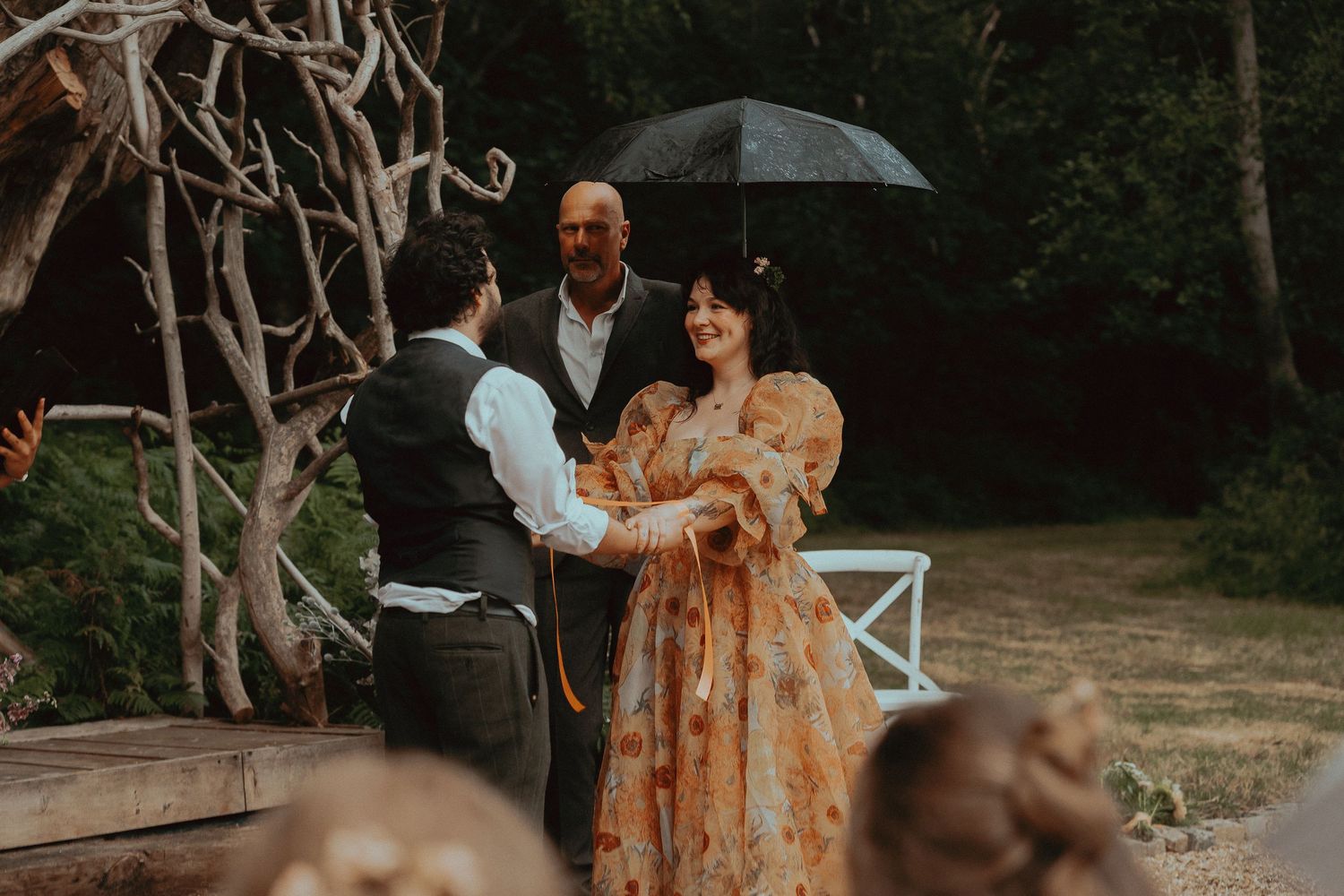
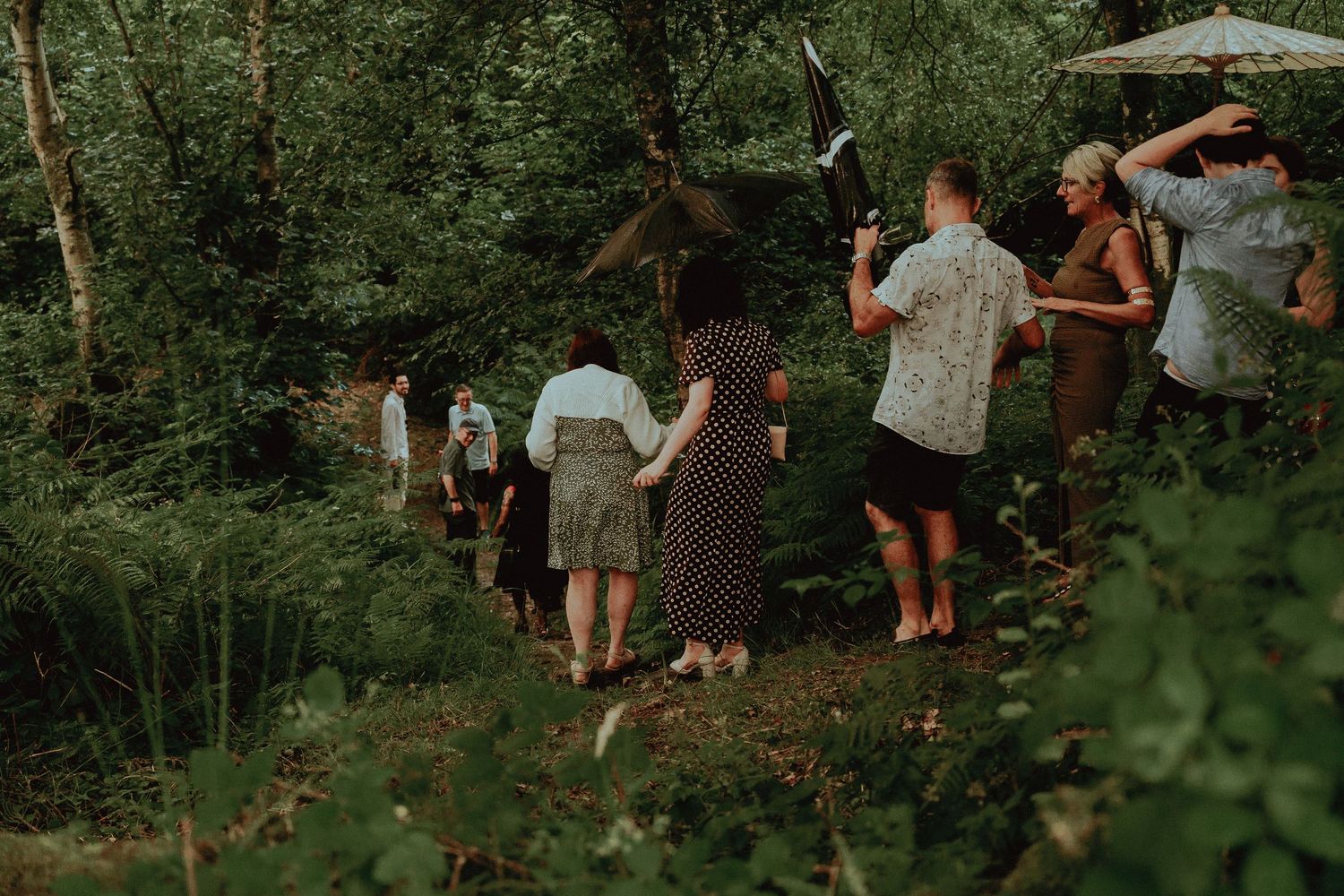
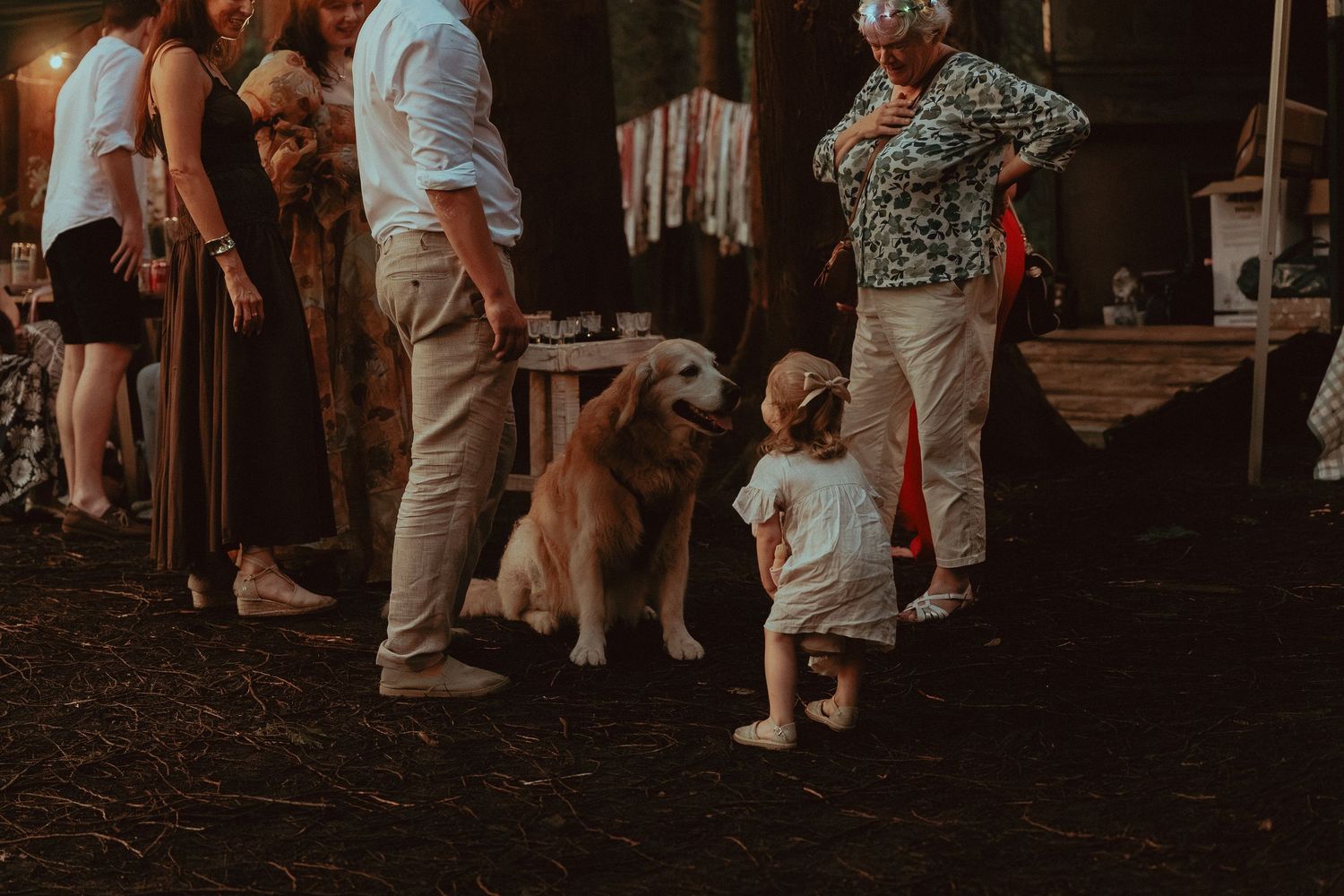
For conversations to run long. For your friends to pull you onto the dance floor. For your dog to wander into the ceremony. For the rain to arrive and change the plan. For photographs to happen because something beautiful is happening, rather than because the clock says it is time for photographs.
For you to stop for a moment and realise; We're actually here.
Why this guide exists:
There is a strange pressure around weddings to make every minute count.
Timelines are built backwards from ceremony times. Suppliers are given fifteen-minute windows. Couples are told how long photographs should take, how long speeches should last and exactly when they should disappear for sunset portraits.
Some of that planning is useful. But a wedding day is not a production schedule. It is a day lived by people.
People who get emotional. People who run late. People who laugh halfway through a sentence. People who need another drink. People who haven't seen each other for years. People who suddenly decide they want to stay outside for another twenty minutes because the evening feels too good to leave.
Those things cannot always be planned. And they shouldn't always have to be.
This guide exists because we believe good wedding planning isn't about controlling everything that happens. It is about creating enough space for the important things to happen naturally.
This guide explores:
- What an intentional wedding actually means.
- Why a wedding timeline should have room to breathe.
- How to build a day around people rather than a checklist.
- How much time you really need for photographs.
- How to make space for conversations, family and friends.
- How documentary photography works within a relaxed timeline.
- How to include children and dogs without over-planning them.
- What happens when the weather changes your plans.
- Why leaving gaps can sometimes create the best photographs.
- How to enjoy your wedding instead of constantly managing it.
Because sometimes the most important part of the day is the part you didn't schedule.
The difference between a timeline and a checklist
A wedding timeline is useful. A checklist isn't always. A timeline should help everyone understand the shape of the day.
A checklist can make the day feel like a series of things that need to be completed.
There is a difference between:
2:00pm, ceremony
and:
2:30pm, photographs
2:45pm, family photographs
3:00pm, couple portraits
3:20pm, drinks reception
3:45pm, guests seated
4:00pm, dinner
The second version might look wonderfully organised. But what happens when the ceremony runs ten minutes over?
What happens when your grandparents need more time to get outside?
What happens when everyone starts talking? What happens when you don't want to leave your friends?
Suddenly the entire afternoon is behind schedule.
Instead, think about the shape of the day. Ceremony. Time with your people. Photographs naturally woven through that time. Food. Speeches. More time together. Dancing.
There can still be a plan. It just doesn't have to dictate every minute.
A wedding doesn't need to be full to be meaningful
There is a temptation to fill a wedding day. If there is an empty hour in the timeline, it can feel like something must be added.
More photographs. Another activity. A champagne tower. A first look. A cocktail hour. A sunset portrait session. Another group photograph. Another planned moment.
But space isn't necessarily a problem. Sometimes it is exactly what you need. Imagine finishing your ceremony and having nowhere you urgently need to be. You walk outside. Your friends are waiting.
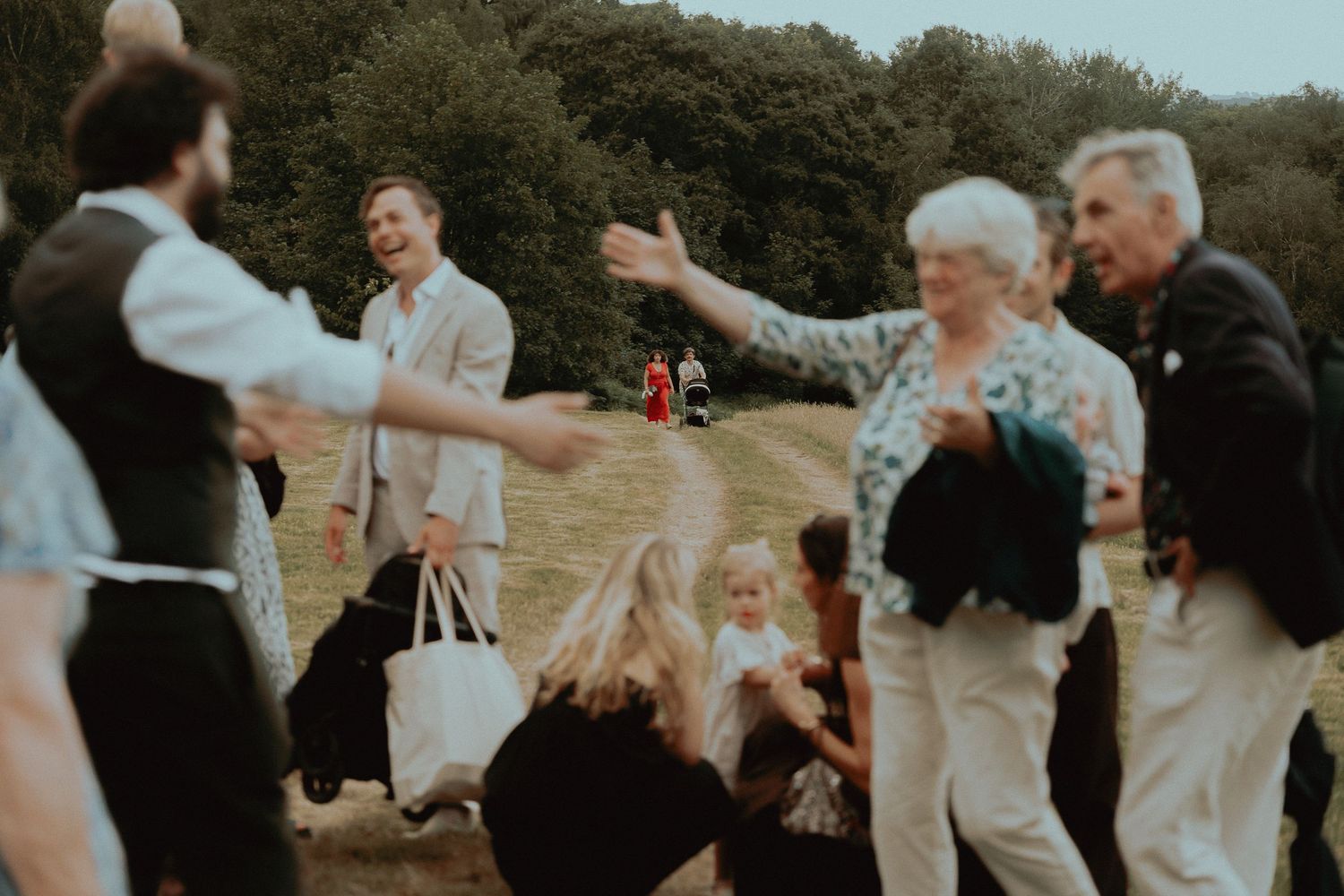
Someone gives you a drink. Your aunt wants to hug you. Your best friend starts telling you something ridiculous that happened during the ceremony. You laugh. Twenty minutes disappear.
Nothing was scheduled. And yet, when you look back at the photographs, that might be the part you remember most clearly.
That is what making space is about.
What is an intentional wedding?
An intentional wedding isn't necessarily a small wedding. It isn't necessarily an elopement.
It doesn't have to be minimalist, alternative, outdoors or completely free from tradition.
An intentional wedding simply means you have thought about why you are doing something, rather than doing it because you feel you are supposed to.
That might mean choosing a huge party because having everyone you love in one room matters enormously to you. It might mean getting married in a tiny ceremony with ten people. It might mean having a traditional church ceremony followed by a chaotic party in a field.
It might mean photographs with your grandparents are incredibly important, while spending an hour posing for portraits isn't. There is no single version.
The question is simply:
Does this part of the day feel like you?
And if it does, keep it.
If it doesn't, ask why it is there.
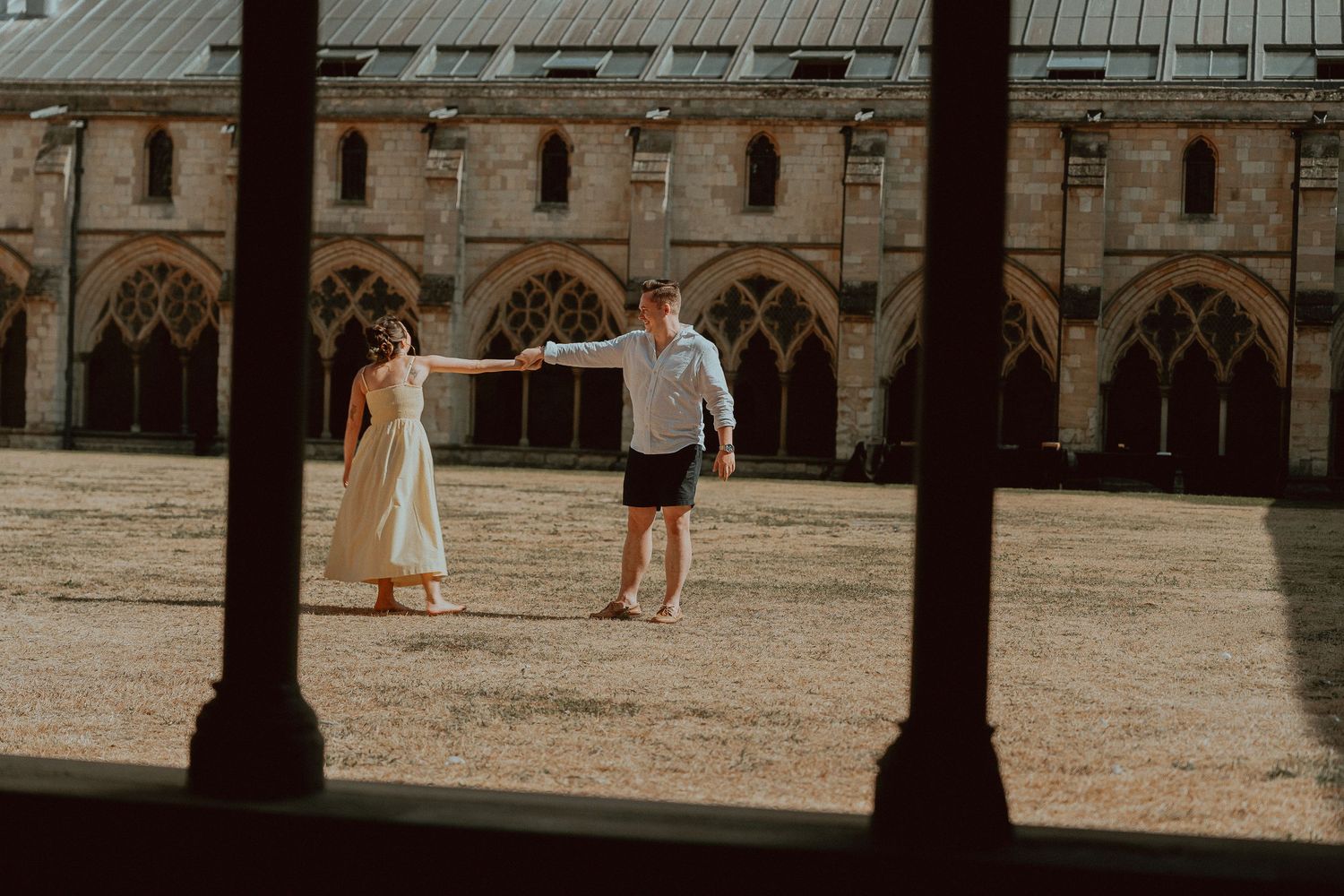
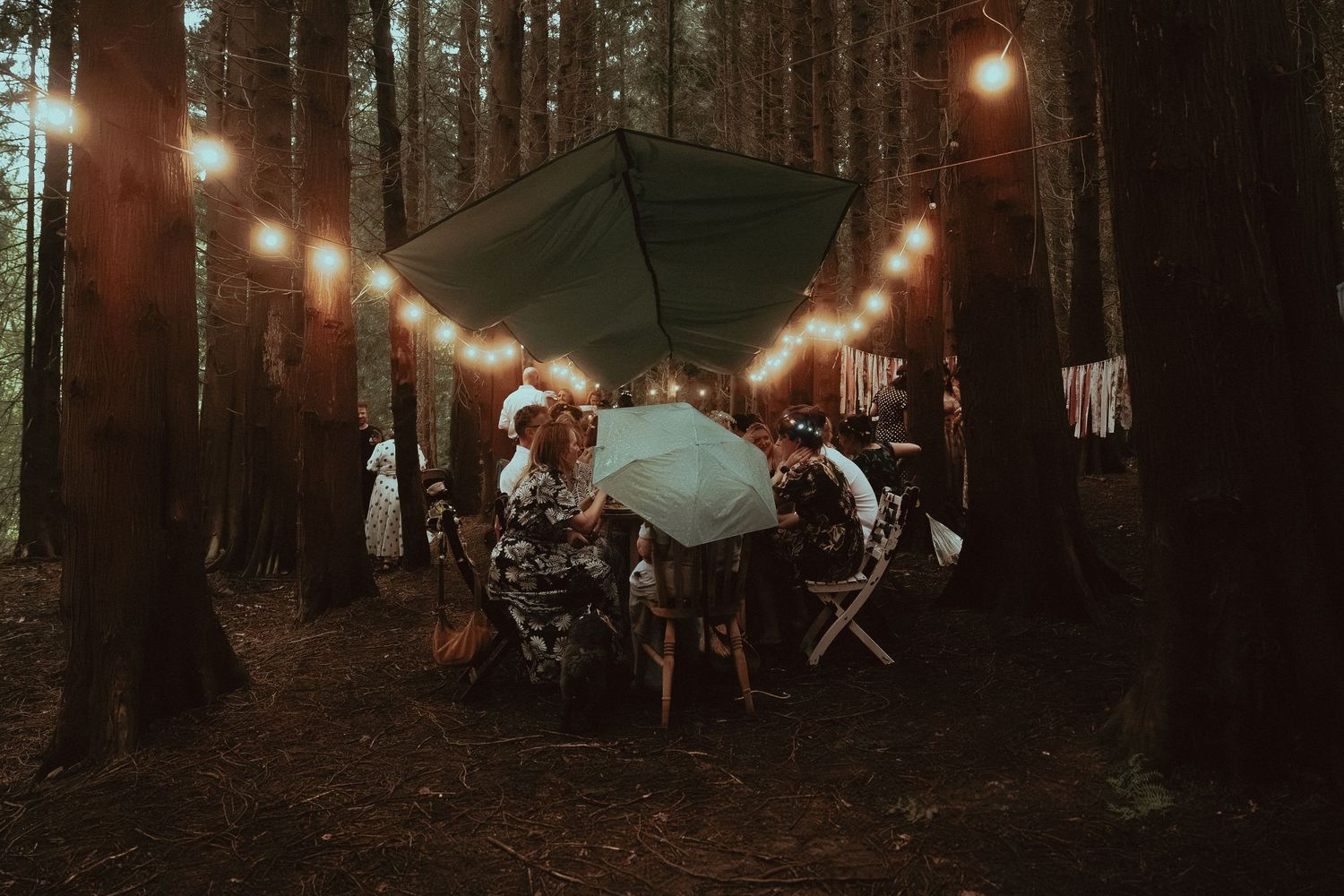
The Wildkin approach
At Wildkin, we don't believe our job is to manufacture moments for you. We'd rather give you the space to experience them.
That means we can photograph the organised parts of a wedding.
The ceremony. The family photographs. The portraits. The speeches. The dancing.
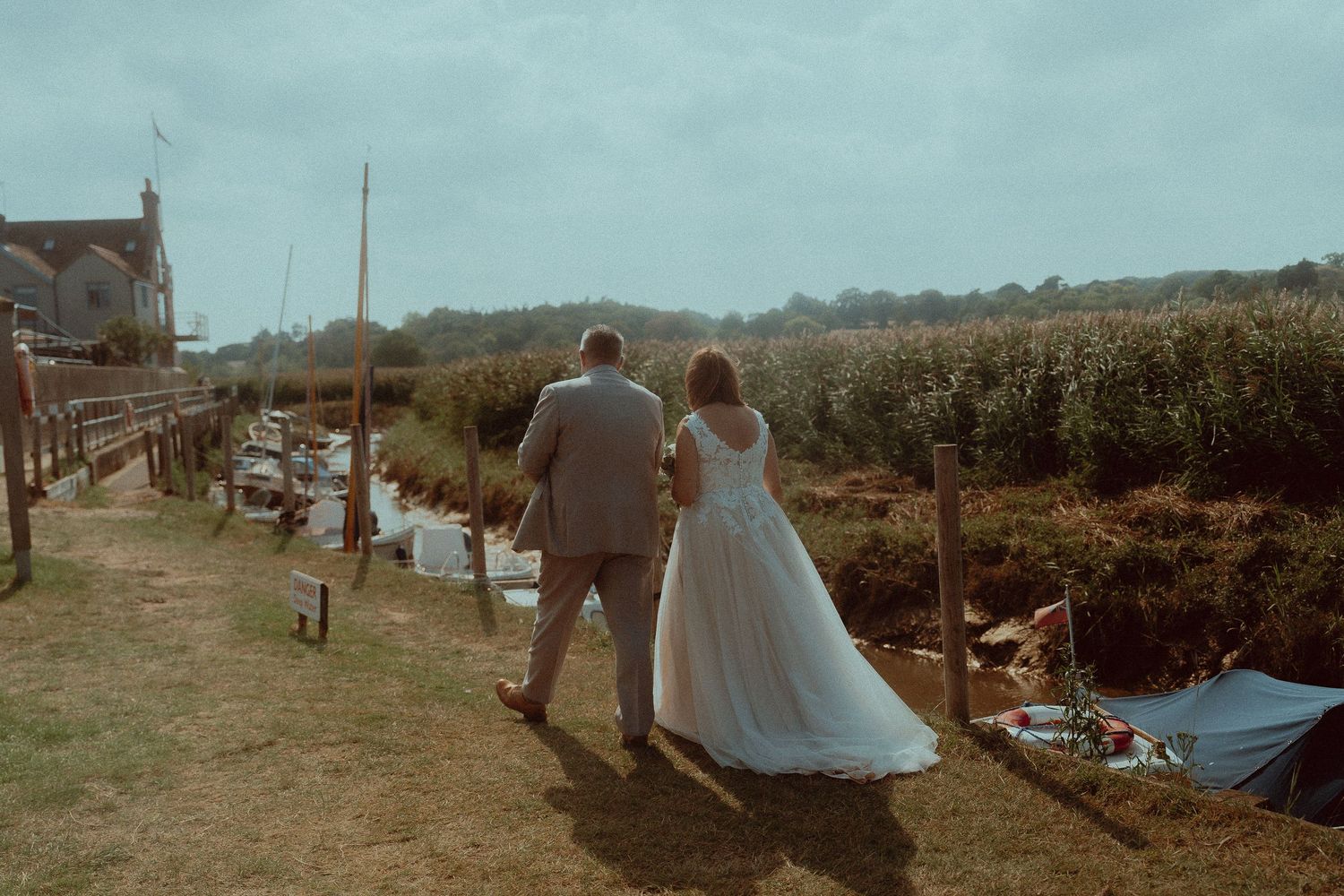
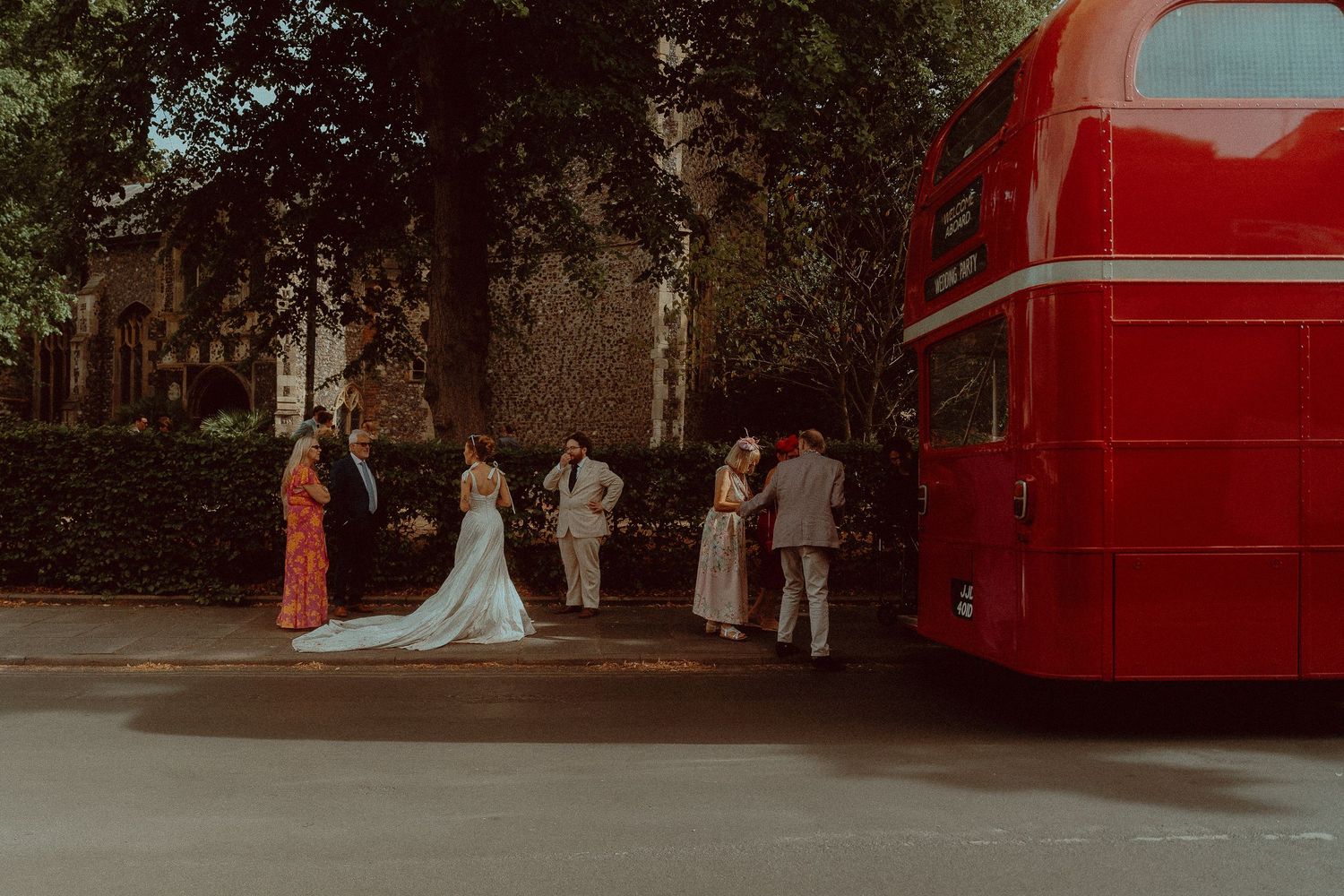
But we're equally interested in what happens around them. The pause before the ceremony. The conversation nobody planned. The walk between two places. The five minutes everyone spends outside after dinner. The quiet moment before the party properly begins.
Those spaces are not interruptions to the wedding. They are the wedding.
Our documentary approach works best when you don't have to constantly stop being yourselves to be photographed.
We want you to be with your people.
Why presence matters more than productivity
You aren't trying to complete a wedding. You're trying to experience one.
That sounds obvious, but it is surprisingly easy to forget. A couple can spend months planning a day that lasts twelve hours, then spend those twelve hours being moved from one thing to another.
Now photographs. Now speeches. Now dinner. Now cake. Now sunset. Now dancing. And suddenly the day belongs to the schedule.
Making space asks a slightly different question:
"What do we want this day to feel like?"
Maybe the answer is:
Relaxed. Chaotic. Warm. Unhurried. Full of people. Outside. A little bit wild. Then the timeline should support that feeling.
If you want your wedding to feel relaxed, you cannot build a timeline that leaves everyone running five minutes late all day.
If you want to spend time with your guests, you cannot spend half the reception away from them. If you want photographs that feel natural, you need to give natural moments enough time to happen. The plan serves the experience.
Make room for the things you can't plan
The best wedding photographs rarely announce themselves. They don't usually begin with: "This would make a lovely photograph."
They begin with something happening. A grandmother laughing.
A child falling asleep on someone's shoulder. A friend crying during a speech. Someone sneaking another piece of cake.
Your partner squeezing your hand underneath the table. Your friends dancing before the music has properly started. Rain arriving at exactly the wrong moment. Or exactly the right one.
These moments need something that a perfectly packed timeline doesn't always provide: time.
Not necessarily hours. Sometimes just ten extra minutes. Sometimes an afternoon without somewhere else you need to be. Sometimes simply knowing that you don't have to rush away.
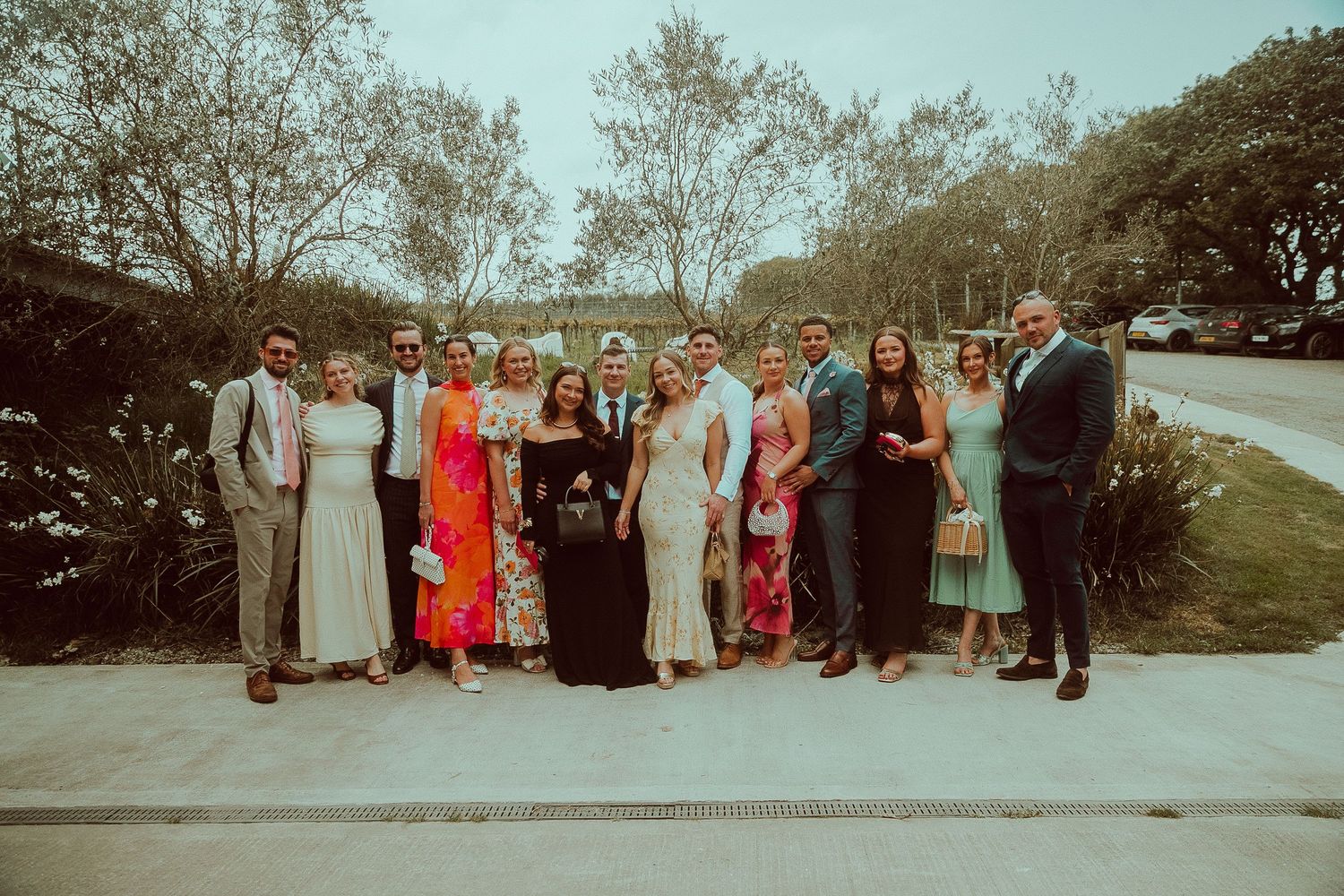
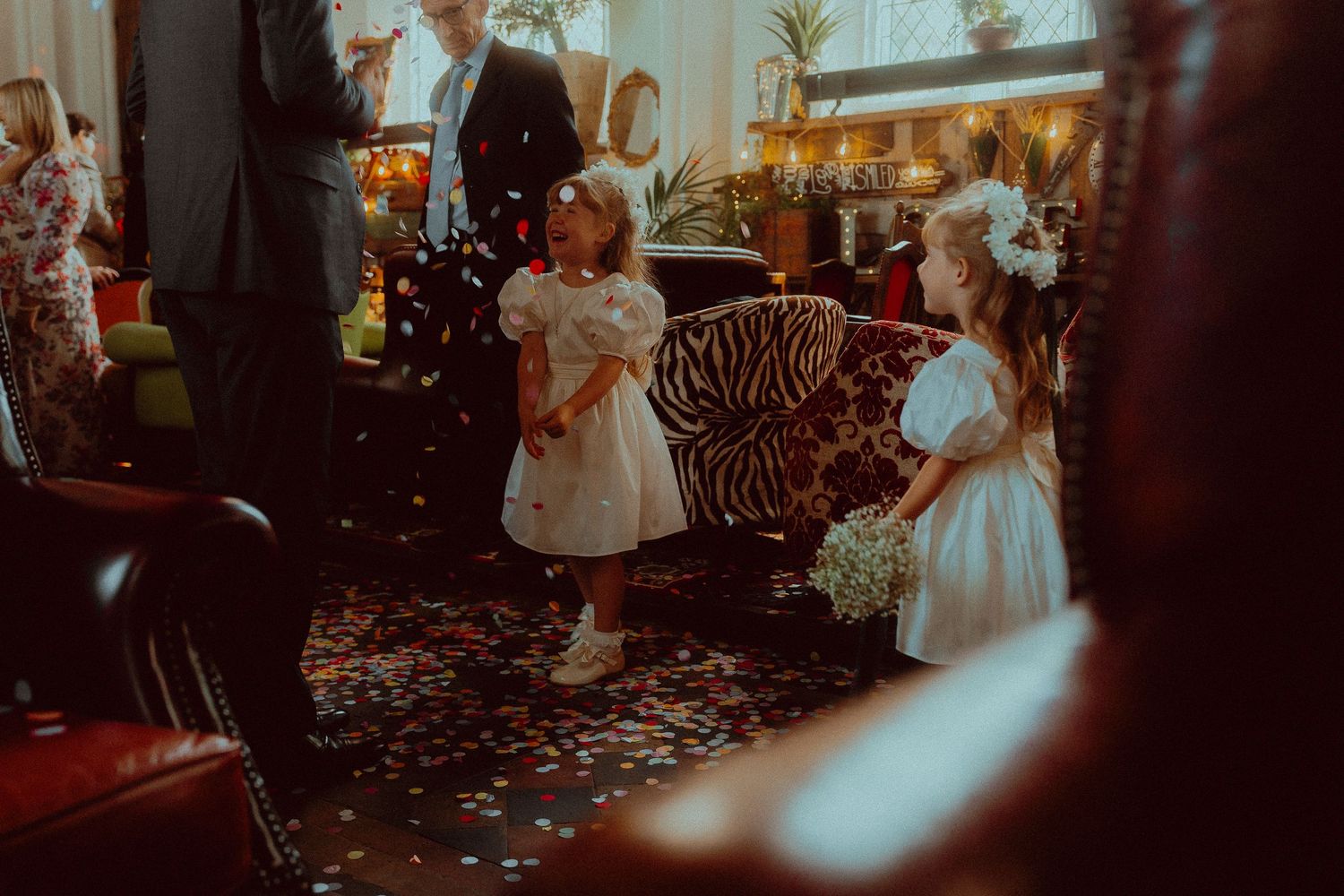
The best timeline is the one you forget
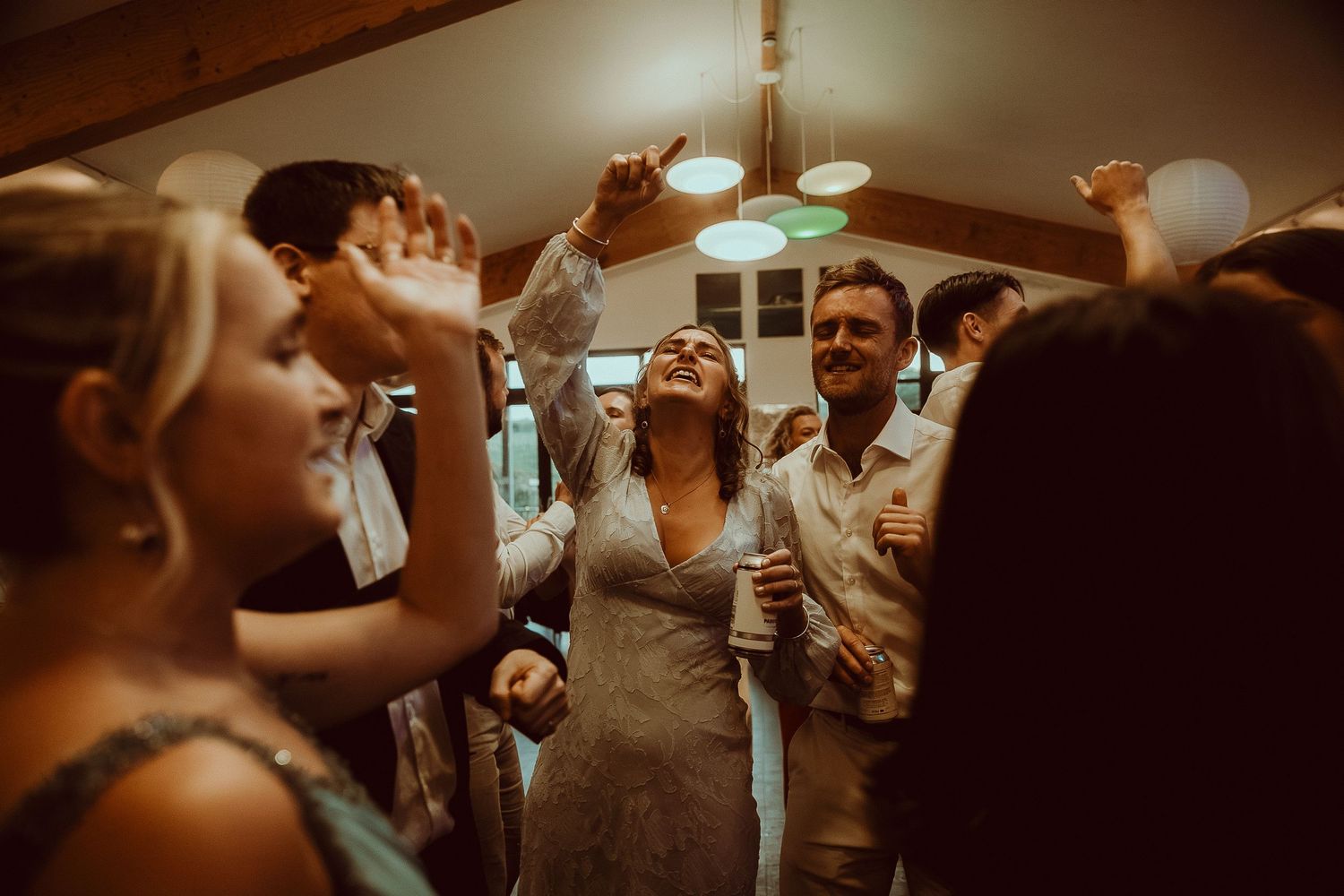
A good wedding timeline doesn't mean you spend the day checking the time; quite the opposite. It should quietly hold everything together in the background while you focus on being present.
Your suppliers know where they need to be. Your photographer knows when important things are happening. Your caterer knows when dinner needs to be served. Your venue knows what is happening next.
And you?
You get to stop looking at the clock. That is what we mean by making space. Not removing the structure. Making the structure invisible enough that you can actually live inside it.
How much space do you actually need?
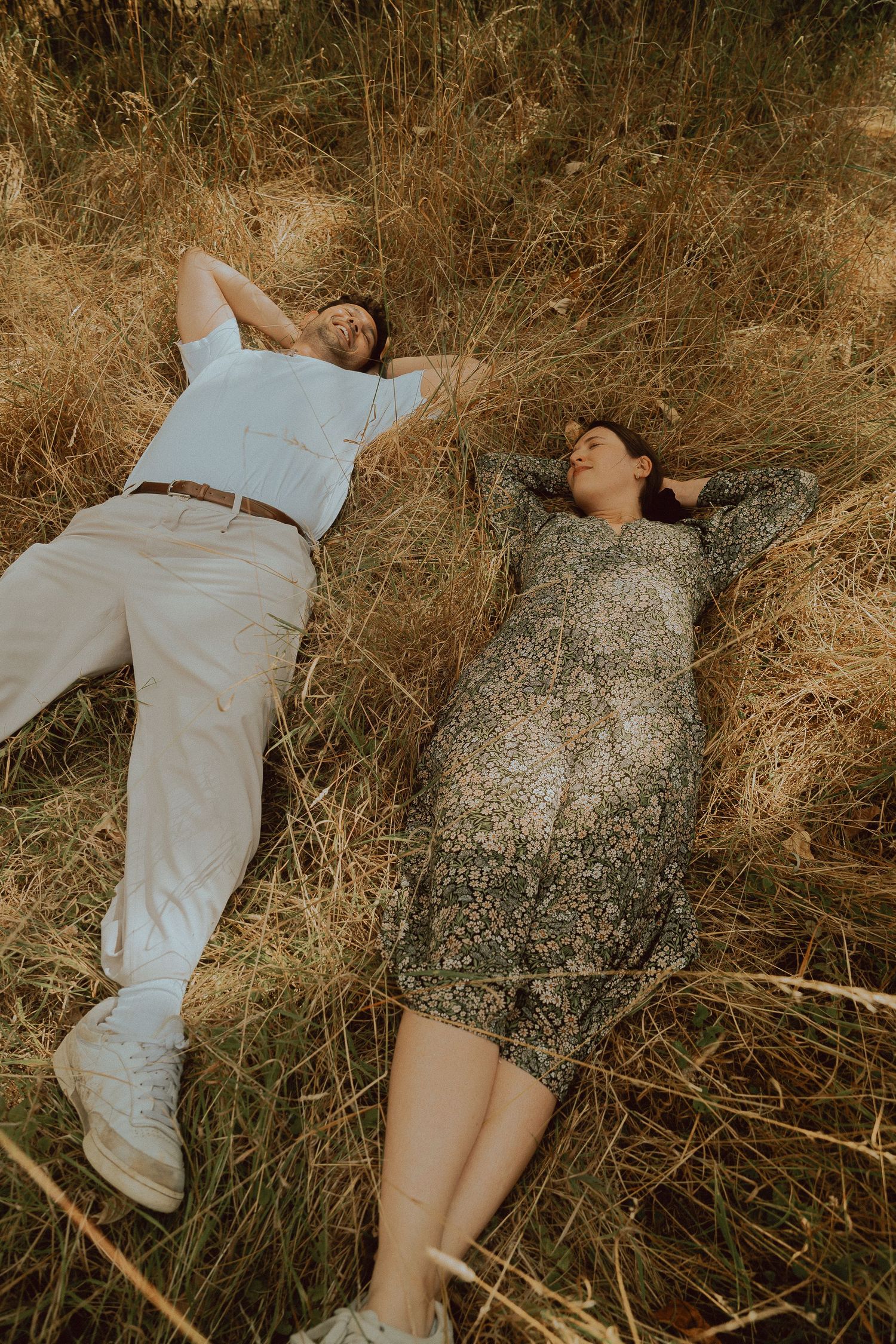
There isn't one perfect wedding timeline. A relaxed wedding can still have a tight schedule. A twelve-hour wedding can feel rushed. A six-hour wedding can feel incredibly spacious.
It depends on what you want to include and, more importantly, how much time you want to spend actually experiencing each part of it. As a starting point, think in terms of breathing room rather than empty time.
Instead of asking:
"What can we fit into this hour?"
ask:
"What do we want this hour to feel like?"
That small change can completely alter the way you build your day. If you want a quiet morning, don't fill the morning. If you want to spend time with your guests after the ceremony, protect that time.
If photographs matter to you, don't squeeze them into the smallest possible window. If you want sunset photographs, don't schedule them so tightly that you have to abandon dinner to make them happen.
And if something unexpected happens? Leave enough room for it to become part of the story.
A little more room changes everything
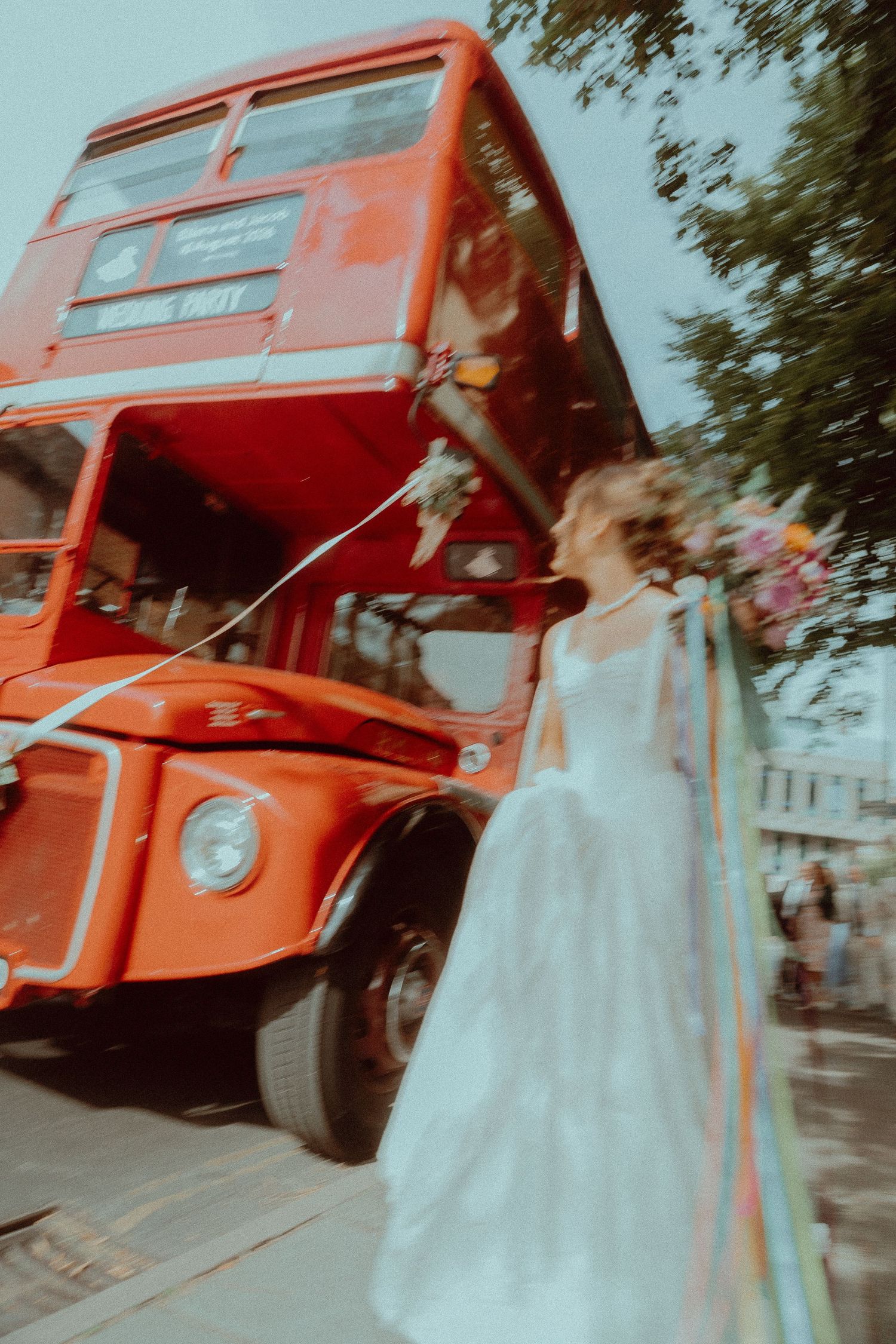
You don't need to redesign your entire wedding to make it feel more intentional. Sometimes it starts with something very small.
Leave twenty minutes between getting ready and leaving. Don't schedule photographs immediately after the ceremony. Give your drinks reception enough time for people to actually talk.
Don't assume every moment needs an activity.
Leave room for dinner to become a conversation rather than a production. Let the speeches run a little long if they need to. If everyone is outside enjoying themselves, don't rush them back in simply because the timeline says so.
And if the rain comes?
Pause.
Look around.
Work out what actually matters.
Then keep going.
Because the aim isn't to create a perfectly controlled wedding day. It is to create a day you actually remember living.
Not a schedule. But space to be present.
That is the heart of Making Space.
The photographs, the film, the analogue frames, the speeches, the dancing and everything else are all part of the story.
But none of them matter quite as much as the people experiencing them.
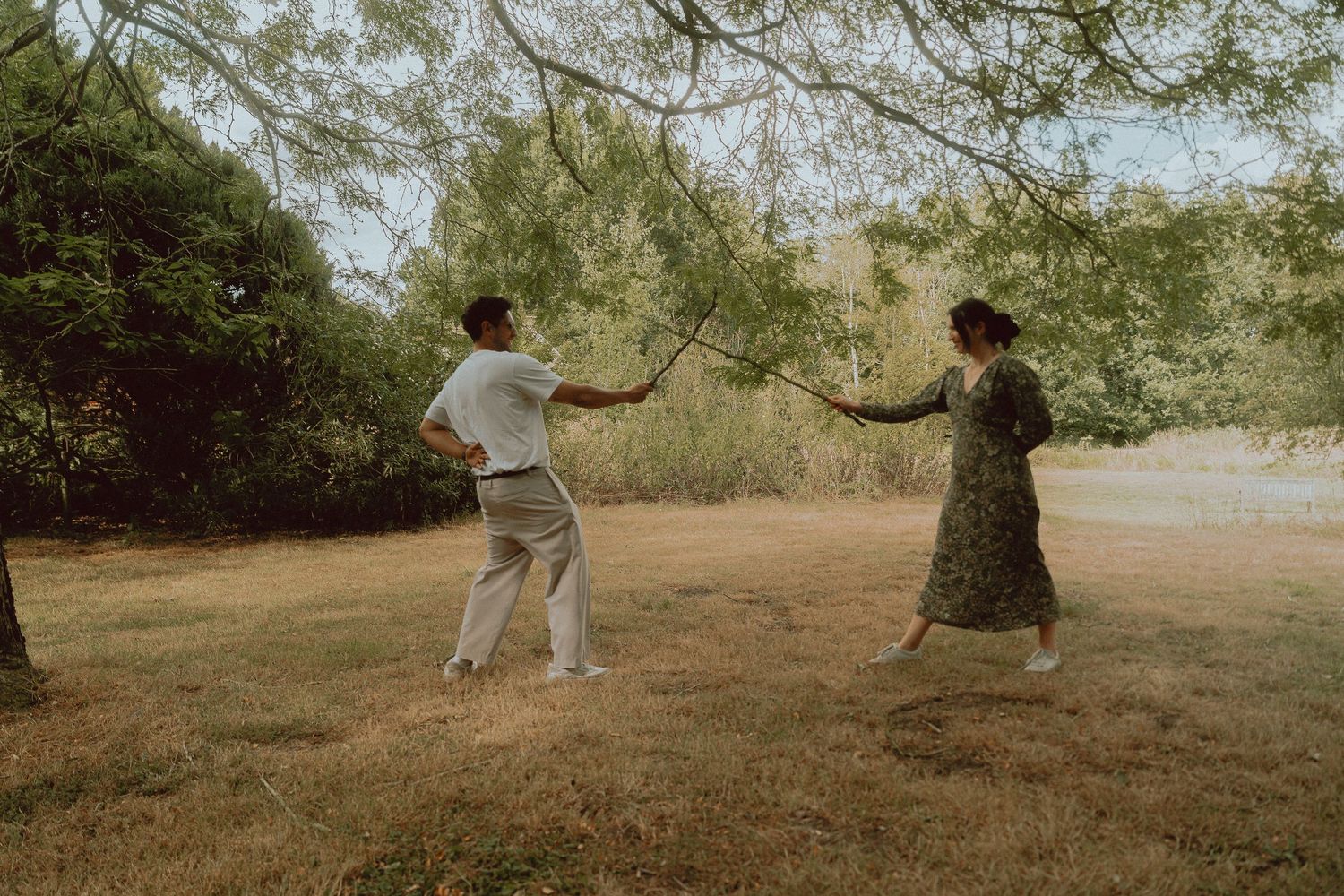
Making space in the day.
A relaxed wedding doesn't happen by accident. It usually comes from a series of small decisions made before the wedding day ever arrives.
How much time you give yourselves in the morning. How far you're travelling between places. Whether you really need every group photograph. How long you want to spend with your guests. Whether you leave room between the ceremony and dinner. Whether sunset photographs are something you want to build around, or simply something you'd love to happen if the evening allows.
None of these decisions needs to be complicated. The trick is not to fill every available minute.
It's to decide what deserves the time.
Build the shape before the schedule
Instead of starting with individual timings, start with the big pieces.Getting ready.
Ceremony. Time with your people. Food. Speeches. Dancing. Everything else can fit around those things.
For example:
Morning
Getting ready without rushing.
Early afternoon
Ceremony and the first moments afterwards.
Afternoon
Drinks, conversations, photographs and time with your guests.
Evening
Food, speeches and the beginning of the party.
Night
Dancing, drinks and whatever happens when nobody is watching the clock anymore. That is already a timeline. It just isn't trying to predict every five minutes.
Start with how you want the day to feel
Before opening a spreadsheet or building a timeline, think about the feeling you want to have when you reach the end of the day. Do you want it to feel:
Relaxed?
Social?
Chaotic in a good way?
Quiet and intimate?
Like a big party?
Like an adventure?
Slow enough to actually notice things?
There isn't a right answer.
But once you know what you want the day to feel like, your timeline becomes much easier to build.
If you want to spend most of the afternoon with your friends, don't build a timeline that removes you from them for two hours. If photographs are really important to you, give them enough room to happen properly.
If you don't care about formal portraits, don't feel obliged to build half an afternoon around them. Plan around what matters to you, rather than what a wedding is supposed to contain.
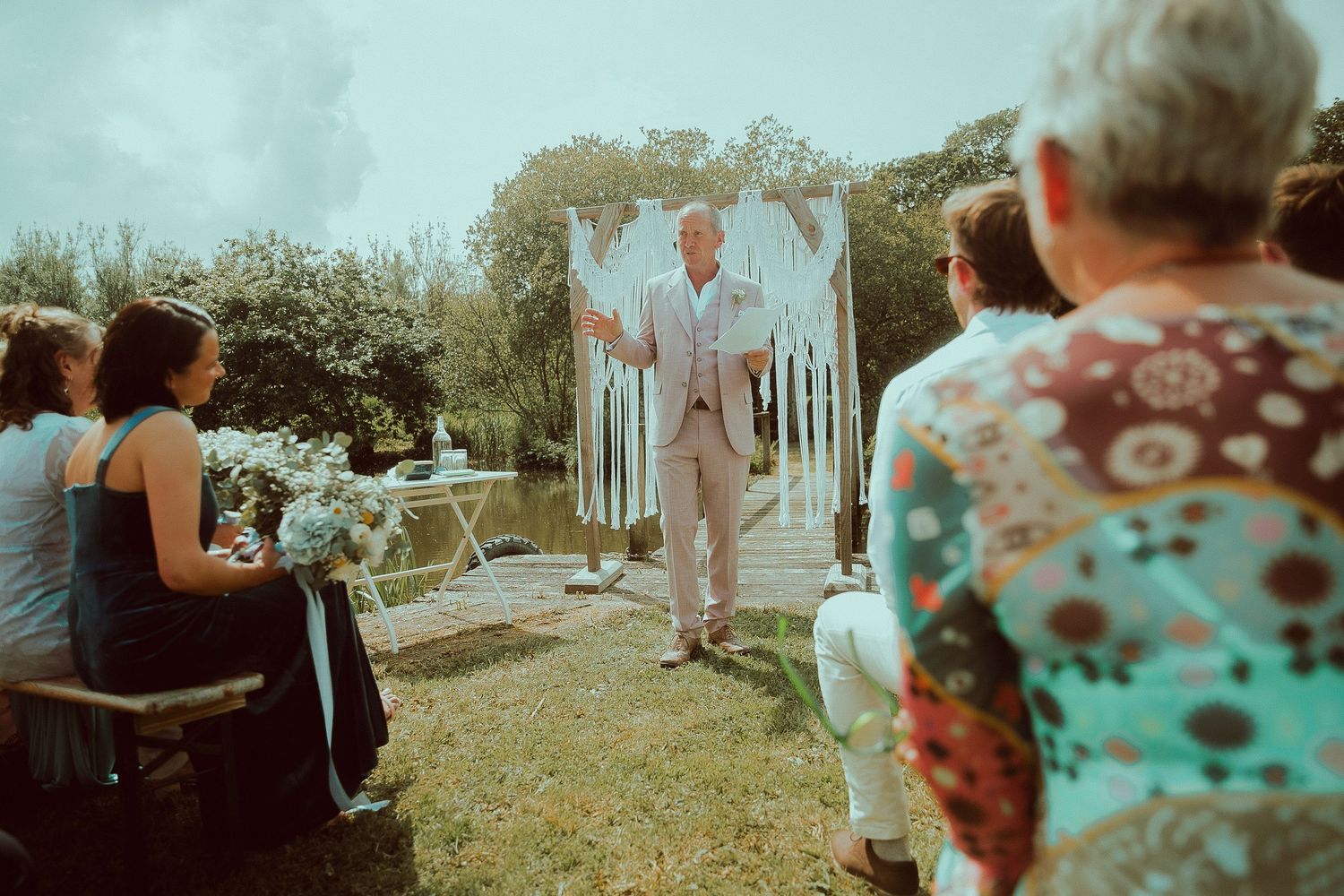
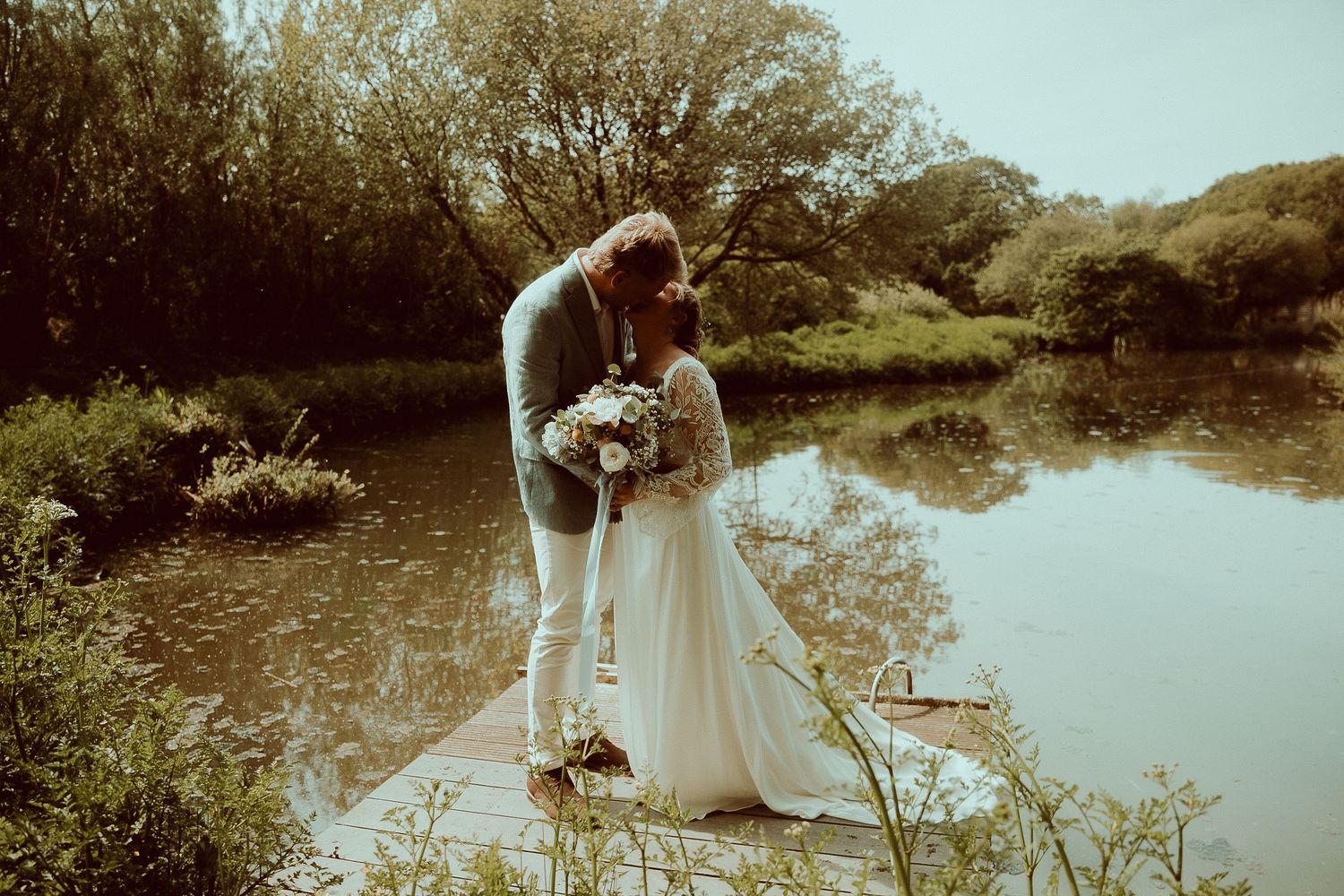
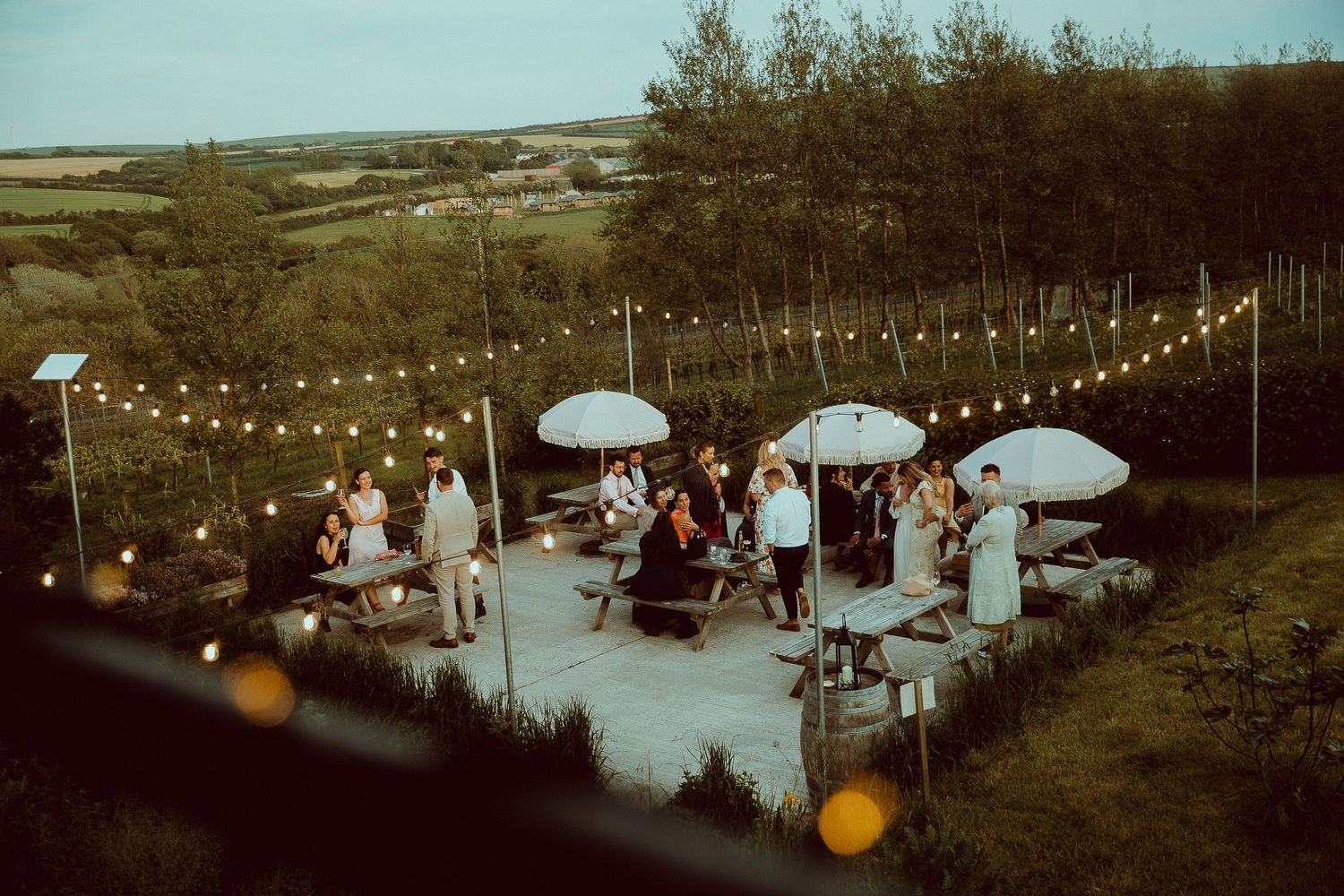
Don't schedule every photograph
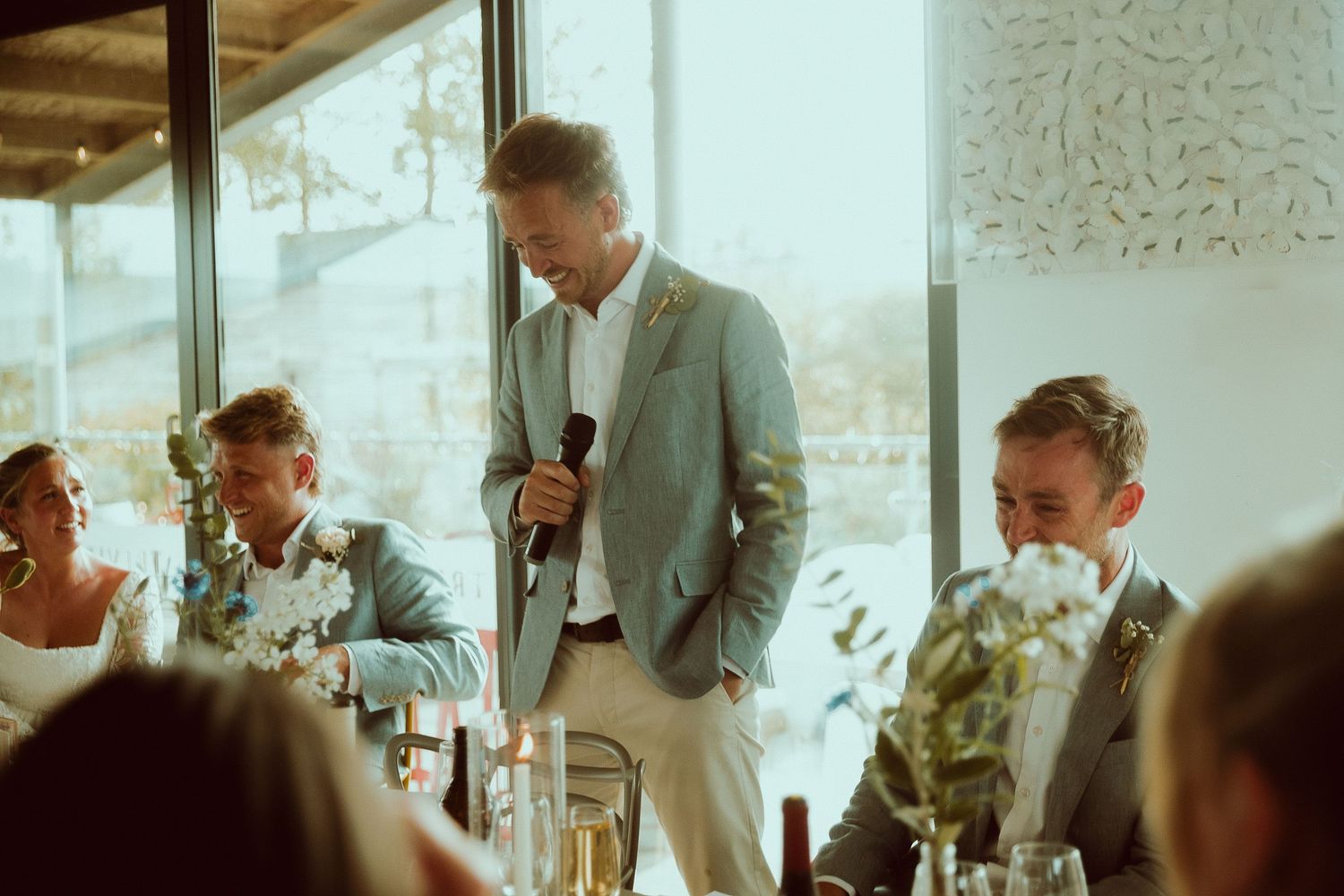
This is particularly important if you want documentary photography. You don't need to know exactly when every photograph will happen.
We need to know the important parts of the day.
You don't necessarily need to stop the day every time we want to make a photograph. A lot of the photographs happen naturally as things unfold.
If your friends are talking, we'll photograph them talking. If your family are laughing, we'll photograph that. If you walk outside together, we'll come with you.
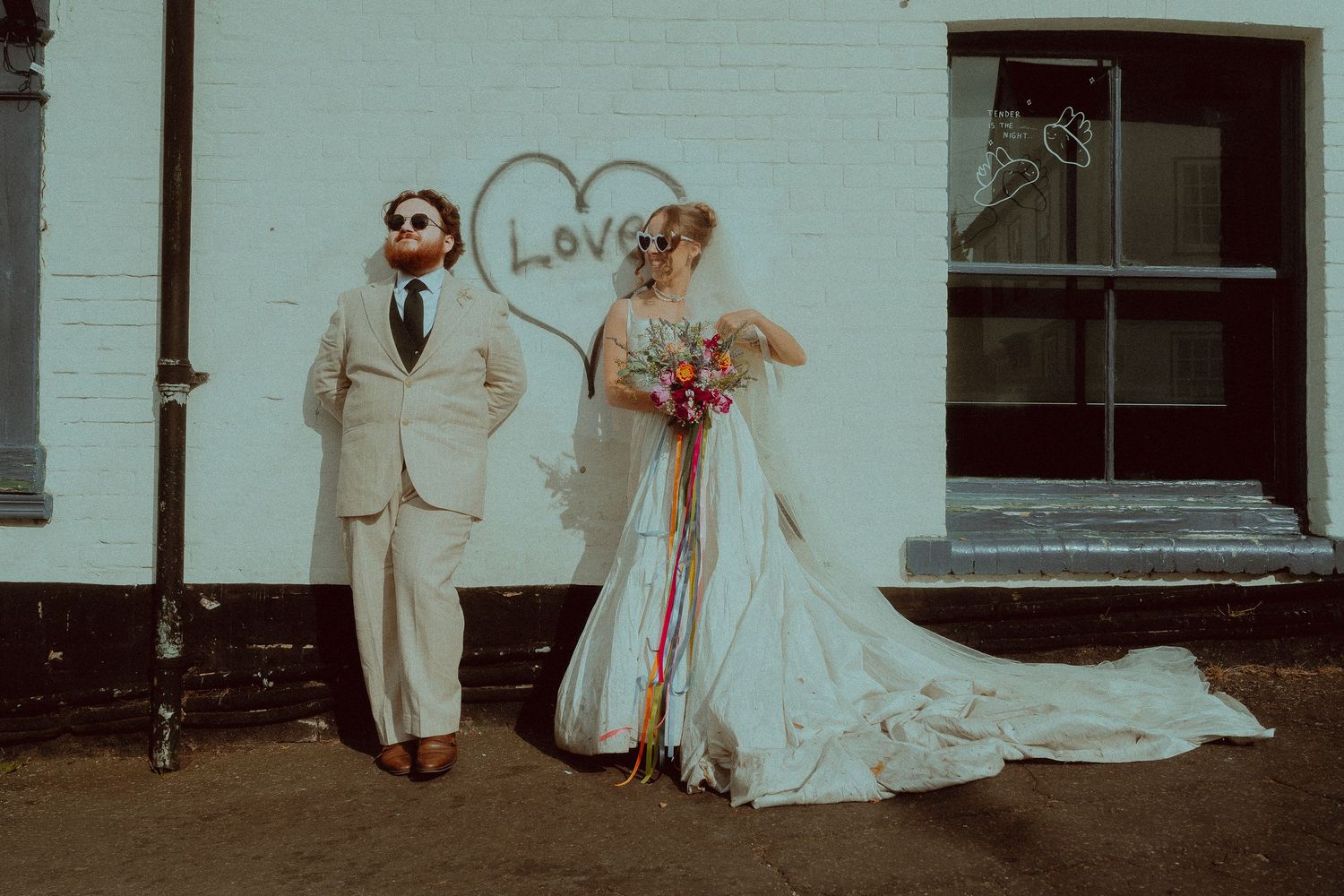
If the light becomes beautiful, we might suggest stepping outside for a few minutes.
The aim isn't to create a two-hour photography window.
It's to let photography exist throughout the day.
Give the morning room to breathe
The wedding day can begin long before the ceremony.
Hair and makeup. Breakfast. Music. A glass of something. People arriving. Parents popping in. Friends helping with buttons, jewellery, flowers or shoes.
There can be a lot happening.
And the temptation is to work backwards from the ceremony and give yourself exactly enough time to get ready. That's where mornings can become stressful.
Instead, give yourselves more time than you think you need.
Not because you need hours of preparation photographs.
Because something will take longer. Someone will forget something. Someone will start crying. Someone will want a cup of tea.
And sometimes, the getting-ready photographs you end up loving have nothing to do with getting ready at all.
They're the people.
How much time should you leave for couple photographs?
This is one of the questions we get asked most.
The answer depends on what you want.
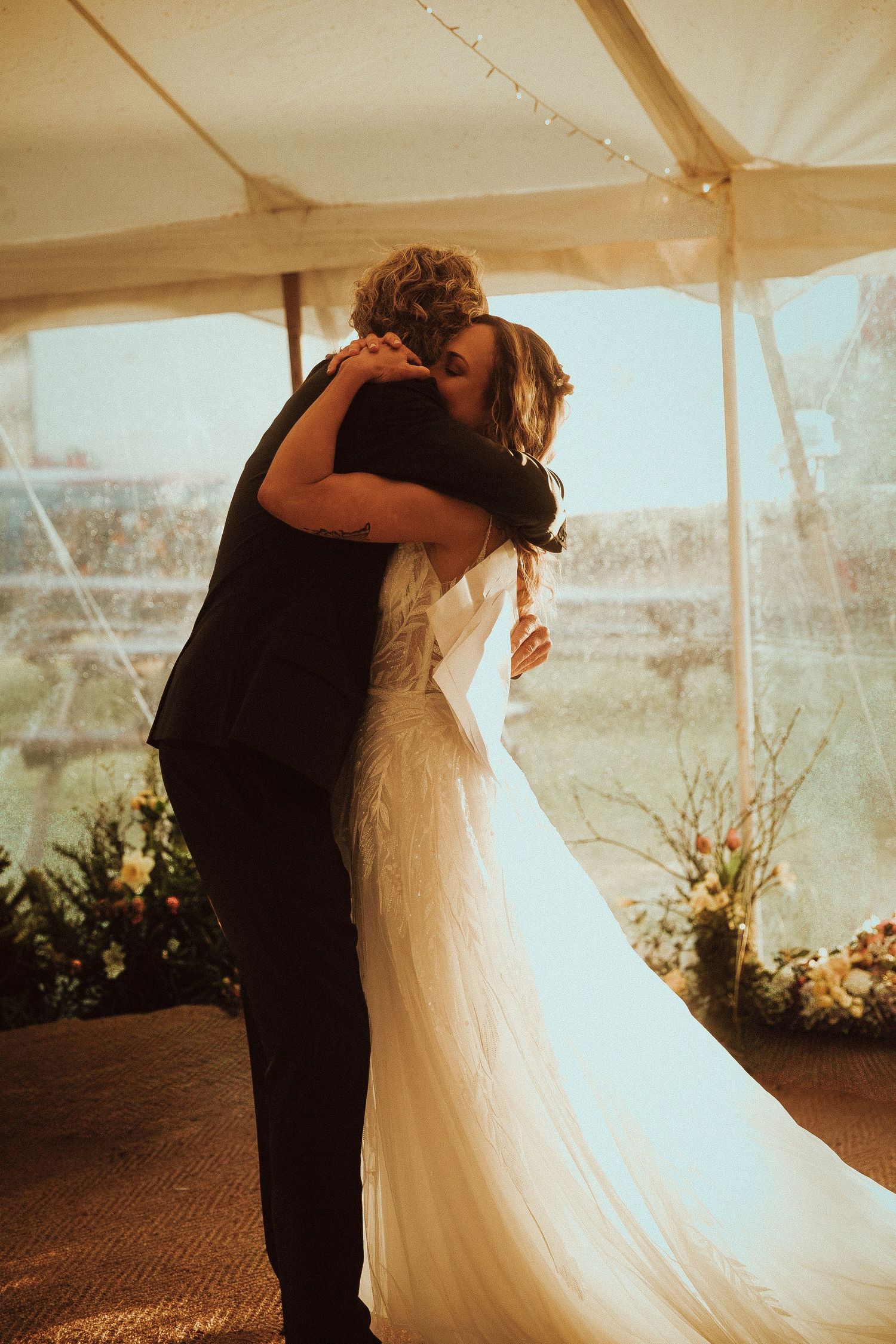
If you want a handful of relaxed portraits, you don't need to disappear for an hour. Ten or fifteen minutes can be enough to step away, breathe, look at each other and make a few photographs.
If portraits are important to you and you want more time, give them more time. There is nothing wrong with that either. The important thing is that the time feels like yours.
You shouldn't feel like you've been removed from your wedding because you've been told photographs require an hour.
And you shouldn't feel rushed through photographs because somebody decided they should only take ten minutes.
Leave space after the ceremony
The moment immediately after a ceremony is often one of the most socially important parts of the day.
You've just got married. Everyone knows. Everyone wants to hug you. People want to congratulate you. Your friends want to talk. Your family want photographs.
And you probably want a drink.
So don't make the next appointment on the timeline happen immediately.
Give yourselves time.
Let people come to you. Let the congratulations happen. Let the adrenaline settle.
Let the photographer work around it.
You don't need to turn the first ten minutes of married life into a production line.
Sunset doesn't have to become another appointment
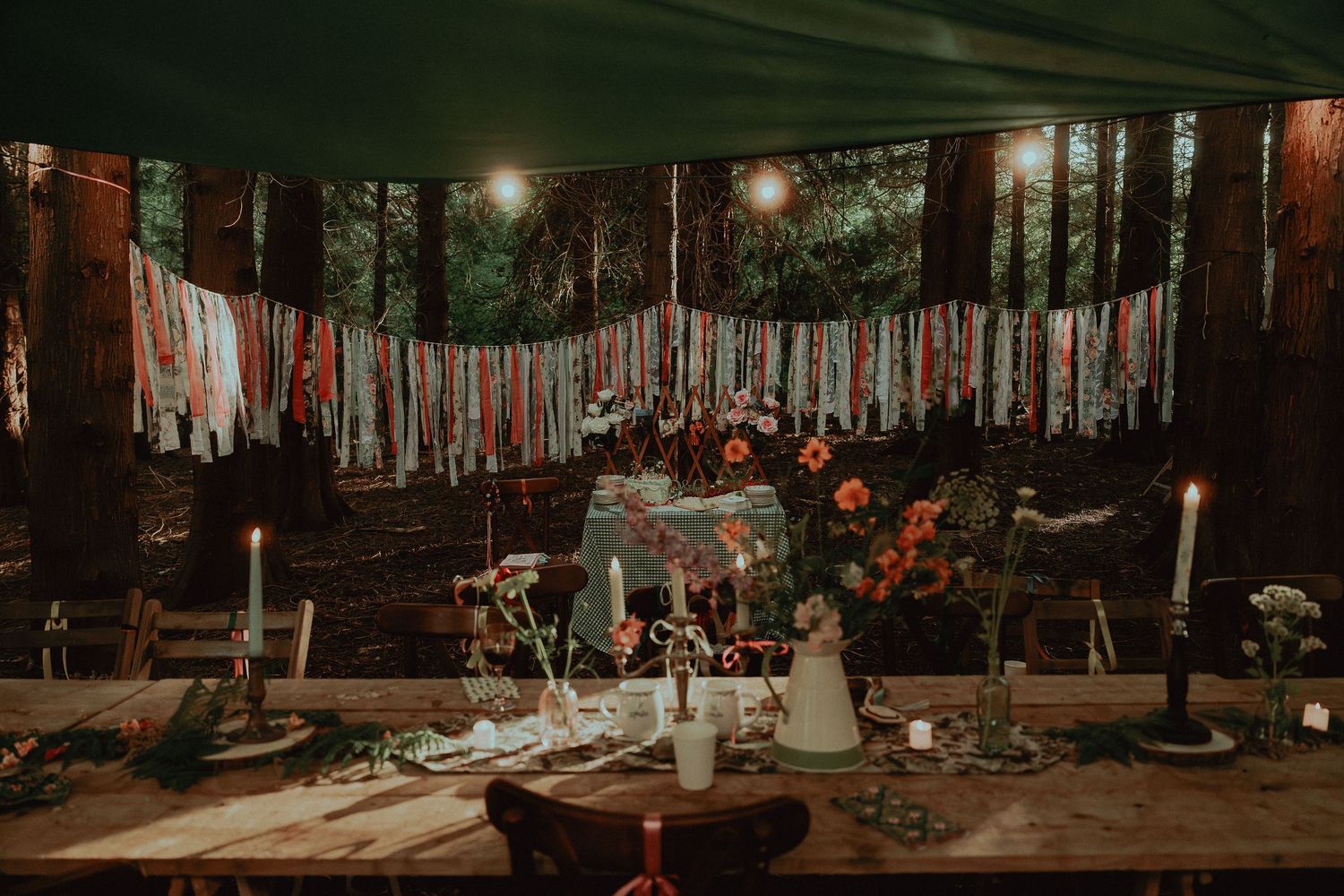
Golden hour photographs can be beautiful. But you don't have to build your entire evening around them.
If the light is incredible, we'll notice.
If you're outside and the evening is unfolding naturally, we'll photograph it.
If the sun disappears behind clouds, that's okay.
If you're halfway through dinner when the sky suddenly turns pink, we'll work out whether it is worth stepping outside.
The photograph doesn't have to be perfect. The evening doesn't have to stop.
Sometimes the best approach is simply:
"Let's see what happens."
Group photographs without losing your afternoon
Family photographs are important.
For some couples, they're one of the most important parts of the wedding.
For others, they're something they'd rather keep short. Neither is wrong.
The key is to be intentional.
Make a list of the photographs you genuinely want. Keep the combinations clear. Have someone who knows your family help gather people.
And don't create twenty different variations simply because you've got a camera in front of you.
If there are photographs you know you'll treasure, make time for them.
Then get back to your people. The point of the group photographs is to remember the people who were there, not to spend the entire afternoon arranging them.
Let the drinks reception be a drinks reception
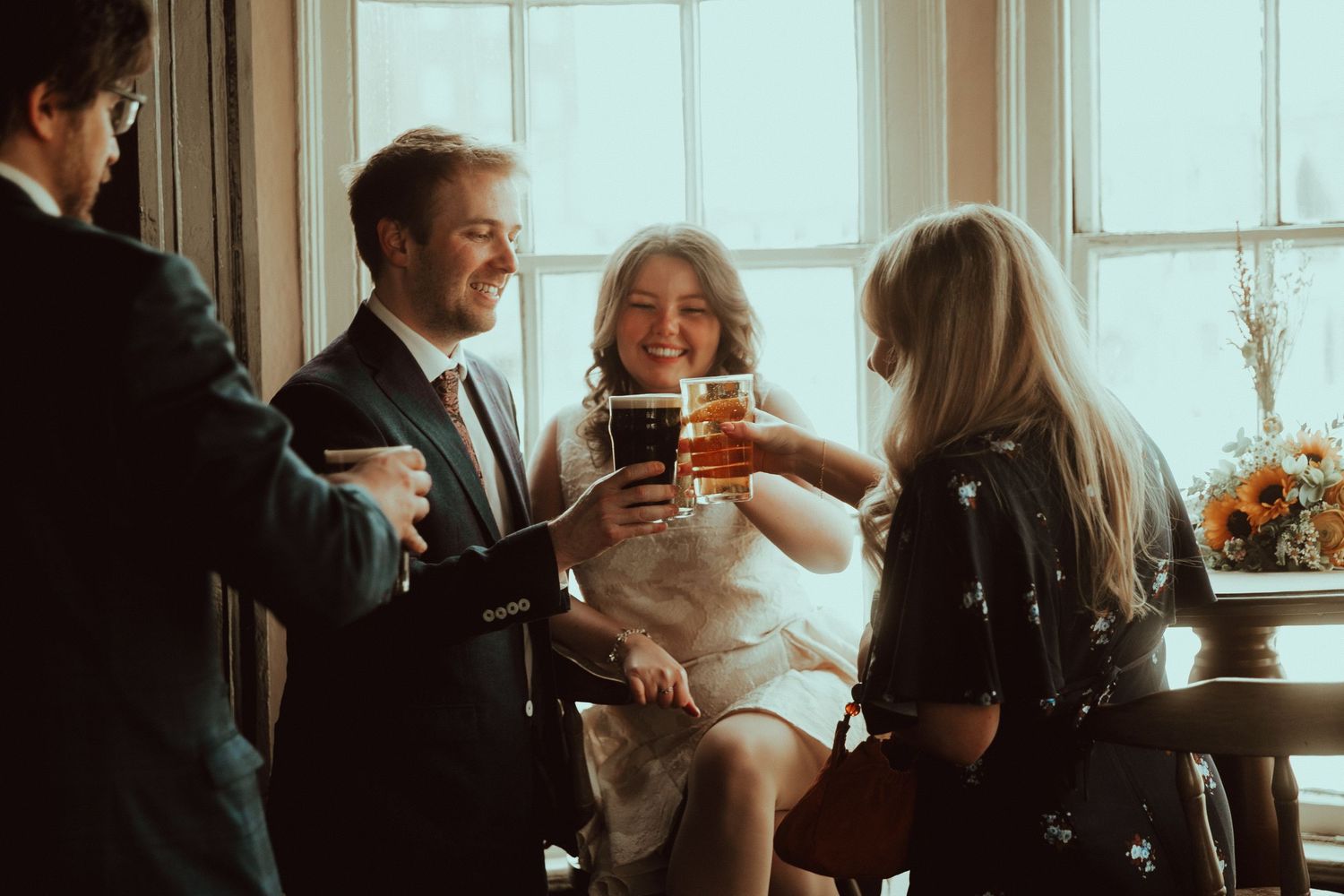
You don't need to fill it. People can talk. They can drink. They can eat. They can wander. They can find someone they haven't seen in years.
They can stand in the sunshine. They can complain about the rain. They can meet the dog. They can do absolutely nothing.
And while that is happening, there are photographs everywhere. This is one of the reasons documentary coverage works so naturally during this part of the day.
We don't need to manufacture things for people to do.
People are already doing things.
What happens when you're running late?
You probably will. Almost every wedding does at some point.
Someone takes longer getting ready. The ceremony starts late. The confetti takes longer than expected. The speeches run over. Dinner arrives later. Someone can't find their shoes. It happens.
The mistake is thinking that being ten minutes late means the entire day has failed. A good timeline has enough flexibility to absorb small changes.
And when it doesn't? Something gets moved. Something gets shortened. Something gets removed.
The important thing is that you don't spend the rest of the day worrying about being behind schedule.
The wedding isn't a train timetable.
Build in gaps
This is perhaps the simplest thing you can do.
If one part of the day finishes at 2:30, don't automatically make the next thing begin at 2:30.
Give yourself ten minutes. Or twenty. Or thirty.
A gap gives the day somewhere to go. It gives people time to move. It gives suppliers time to reset.
It gives you time to breathe.
And if nothing happens?
That's okay.
You haven't wasted the time. You've simply had a moment where nobody needed anything from you.
What about rain?
Rain is one of the easiest things to panic about when planning an outdoor wedding.
But a rain plan doesn't have to mean having a completely different wedding waiting in the wings.
It can simply mean knowing what matters most.
Where can the ceremony move?
Where can people shelter?
Can photographs happen indoors?
Can you wait twenty minutes and see what happens?
Can we photograph in the rain?
Absolutely.
Sometimes the weather becomes part of the story rather than something that needs to be defeated.
The important thing is having enough flexibility to make a decision without feeling like the entire day is collapsing around you.
You don't have to do everything
This might be the most useful planning advice in the entire guide. You don't have to have:
- A first look
- An elaborate confetti moment
- A champagne tower
- A cake cutting
- An hour of portraits
- Twenty group photographs
- A sunset session
- A choreographed first dance
- A sparkler exit
- Every wedding tradition you've ever seen online
You can have them if you want them.
But ask yourselves:
"Do we actually want this?"
Not:
"Are we supposed to do this?"
There is a difference.
Every decision you remove from the timeline creates a little more room for something else.
Sometimes that something is another photograph.
Sometimes it's another conversation.
Sometimes it's nothing at all.
Before we continue...
Planning gives a wedding its shape.
But the really interesting question is what happens inside that shape.
What does a wedding actually look like when you aren't constantly moving from one scheduled thing to the next? What happens when the photographs aren't an interruption?
What happens when the weather changes? What happens when the timeline slips?
And what does it feel like to have a photographer who is working around your day rather than directing it?
That's what we'll explore next.
Because making space isn't just something you put on a timeline.
It's something you feel.
The timeline should support the photographs, not control them
This is where planning and documentary photography meet.
We need to know what matters. We need to know where you need to be. We need to know when important moments are happening.
But we don't need to know exactly what is going to happen between them. That's where the documentary part begins.
A timeline gives us the framework.
The people fill it.
If you have built enough space into the day, there is room for us to notice what happens naturally.
And if something unexpected happens? We don't need to stop the story to photograph it.
We simply photograph the story as it happens.
A wedding day with room to breathe
There is no magic number of minutes that creates a relaxed wedding. It isn't about adding hours for the sake of adding hours.
It's about making conscious choices. Give the important things enough time. Remove the things you don't care about. Leave gaps where you can.
Don't build the entire day around photographs. Don't build the entire day around the clock.
And accept that something will probably change.
Because the goal isn't to create a timeline that survives the day perfectly.
It's to create a timeline flexible enough to let the day become itself.
A wedding that isn't waiting for the camera
The easiest way to understand our approach is to imagine the camera isn't there.
You're getting ready. Your friends are in the room. Someone is making coffee. Someone is looking for a missing shoe. Your mum is trying not to cry. People are talking over each other.
The photographer isn't asking everyone to stop. They're watching.
They might photograph the hands. The expressions.
The chaos. The quiet moments between it all.
Then the day moves on.
That's the relationship we're trying to create with photography.
The camera follows the wedding. The wedding doesn't follow the camera.
What does it actually look like?
It is one thing to talk about making space.
It is another to experience it.
Because a relaxed wedding isn't simply a wedding with fewer things in the timeline. It's a wedding where the people, places and moments have enough room to happen without everything being immediately moved on from.
This is where the philosophy becomes practical.
What does the photographer actually do? What happens when you're running late? How do photographs happen without constantly stopping the day? And what happens when the plan changes?
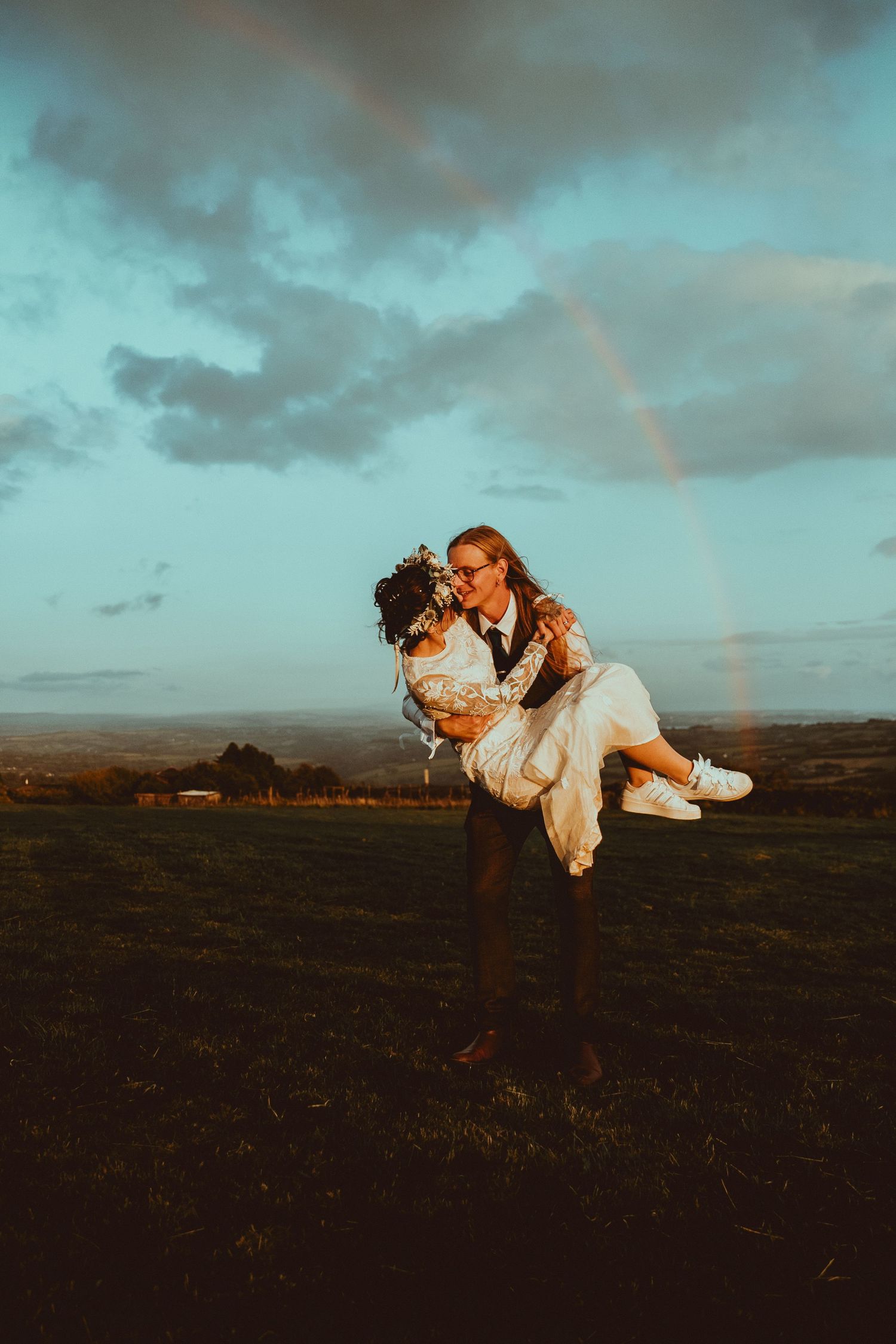
What documentary photography looks like when there is space
Documentary photography works best when people have permission to simply be people.
You don't need to perform. You don't need to know where to put your hands. You don't need to recreate a moment because the photographer missed it. You don't need to spend the day wondering whether you're standing in good light.
We'll give direction when it genuinely helps. We'll organise the photographs that need organising. We'll make sure the important people are photographed.
But most of the time, we're looking for what is already happening.
A glance.
A laugh.
A hand on a shoulder.
Someone disappearing into the kitchen. The way your friends react to your speech. The moment everyone relaxes after the ceremony. Those things don't need directing.
They need space.
You don't have to be good at having your photograph taken
This is particularly important for couples who tell us:
"We're really awkward in photographs."
You don't need to become models for the day.
We aren't looking for perfect poses. And we don't want to turn your wedding into a photoshoot.
When there is space, you can simply interact with each other.
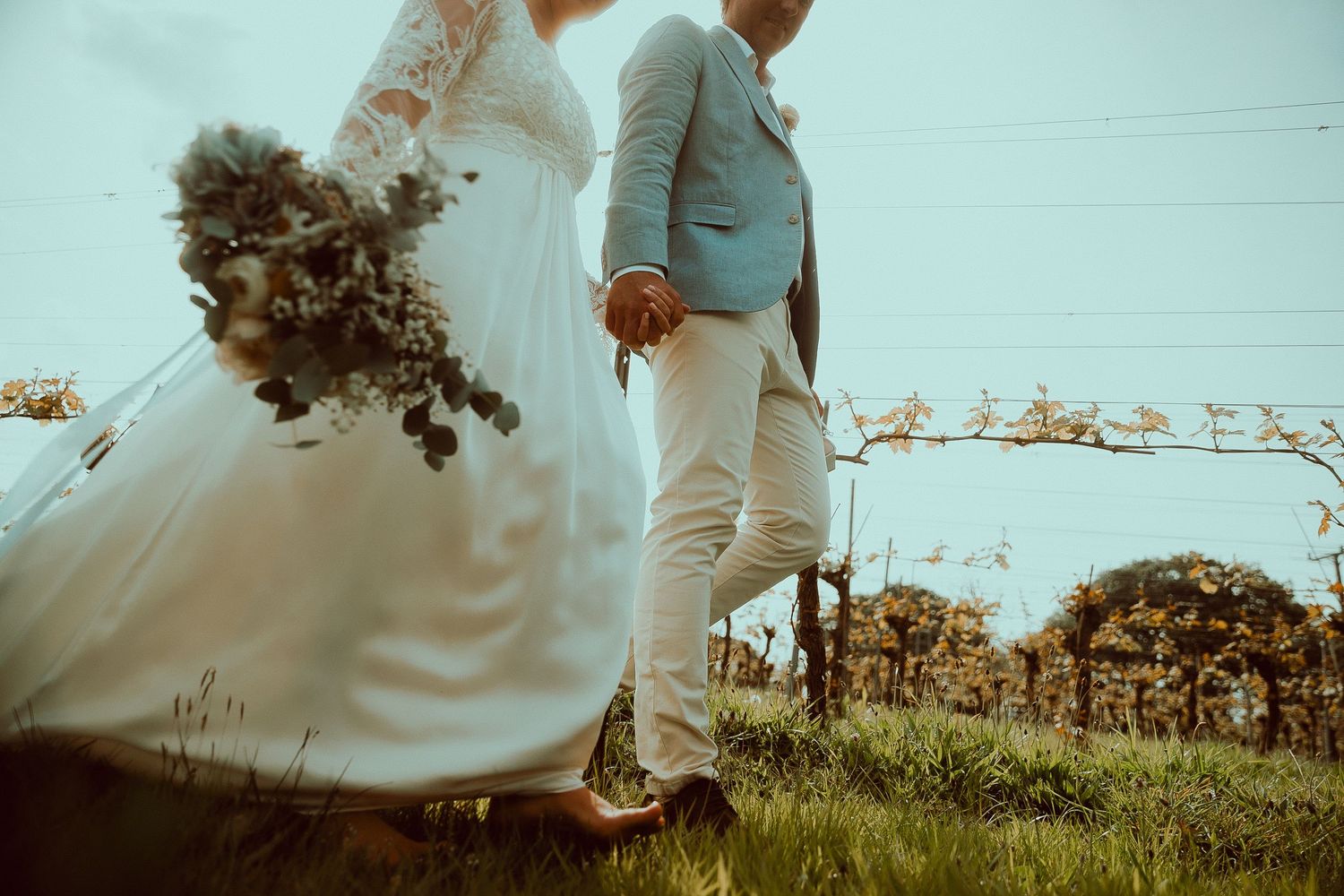
Walk. Talk. Stand together. Look around. Hold hands.
Do whatever you would normally do. We'll work with that.
And if you want a little more direction, we'll give it.
The aim isn't to leave you wondering what to do.
It's to give you enough guidance to feel comfortable without making you feel like you're performing.
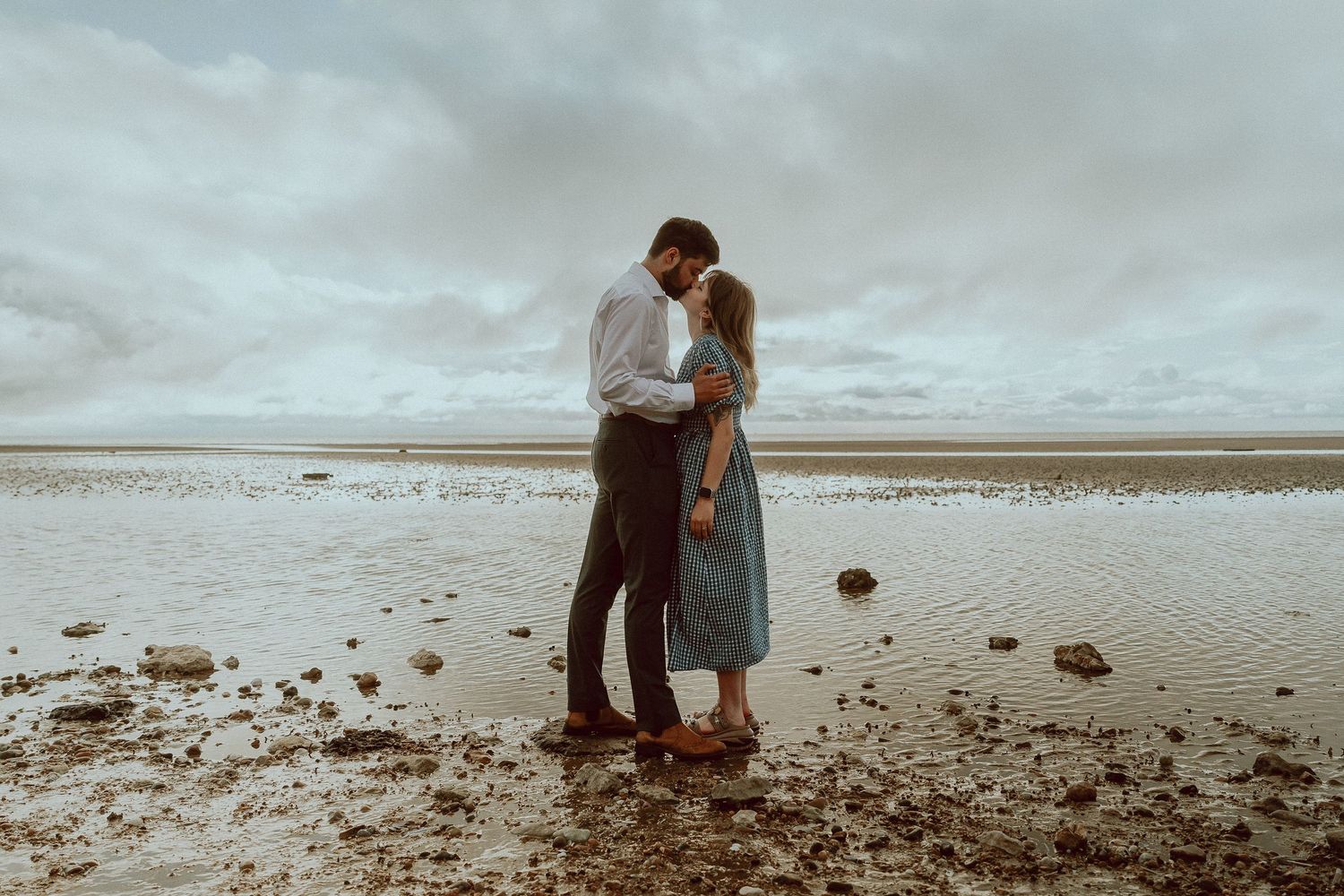
The space between the planned moments
This is where some of our favourite photographs happen.
Not during the ceremony.
Not during the first dance.
Not during the speeches.
But immediately before and after them.
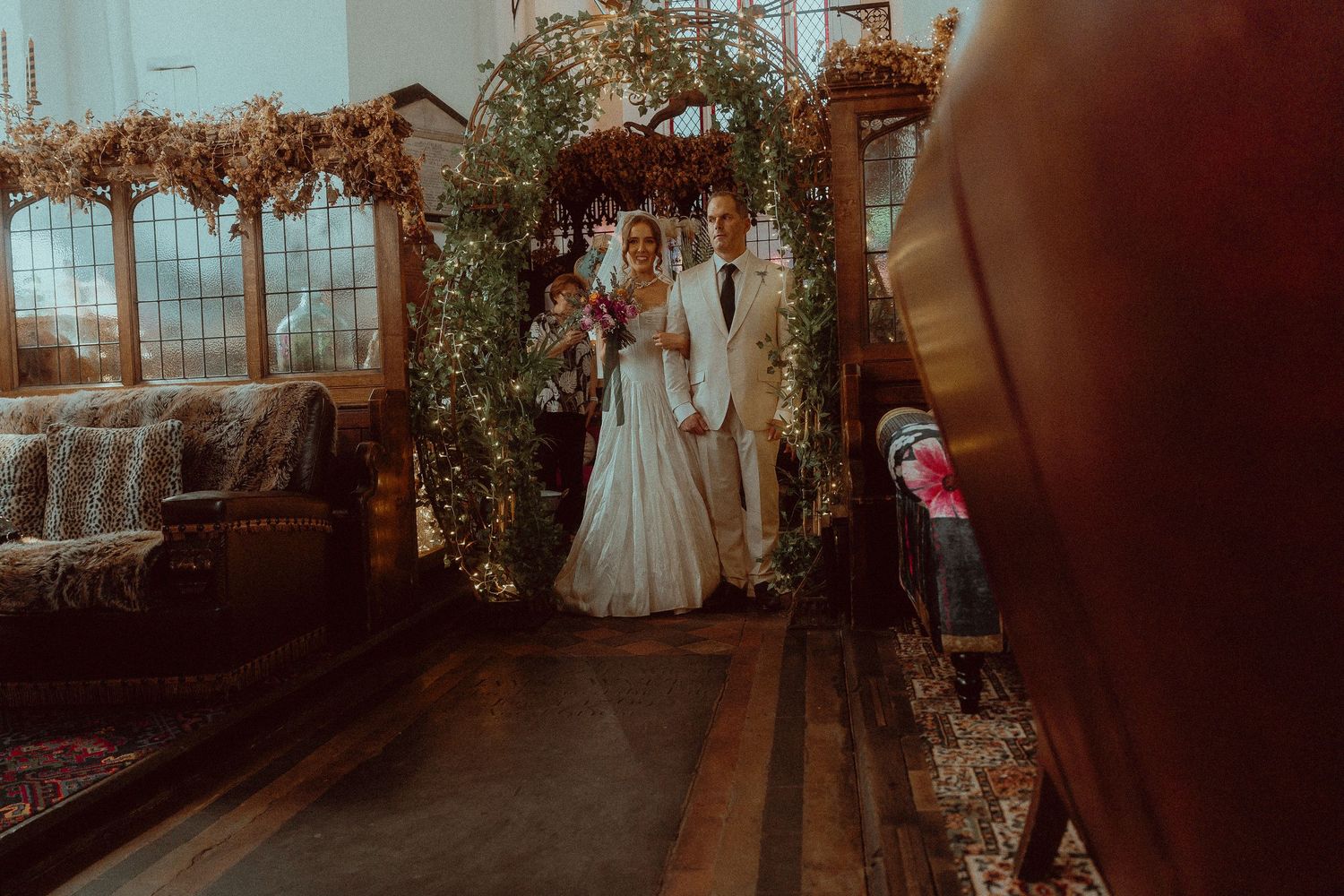
The moment your dad straightens his jacket before walking in.
Your friends waiting outside the ceremony.
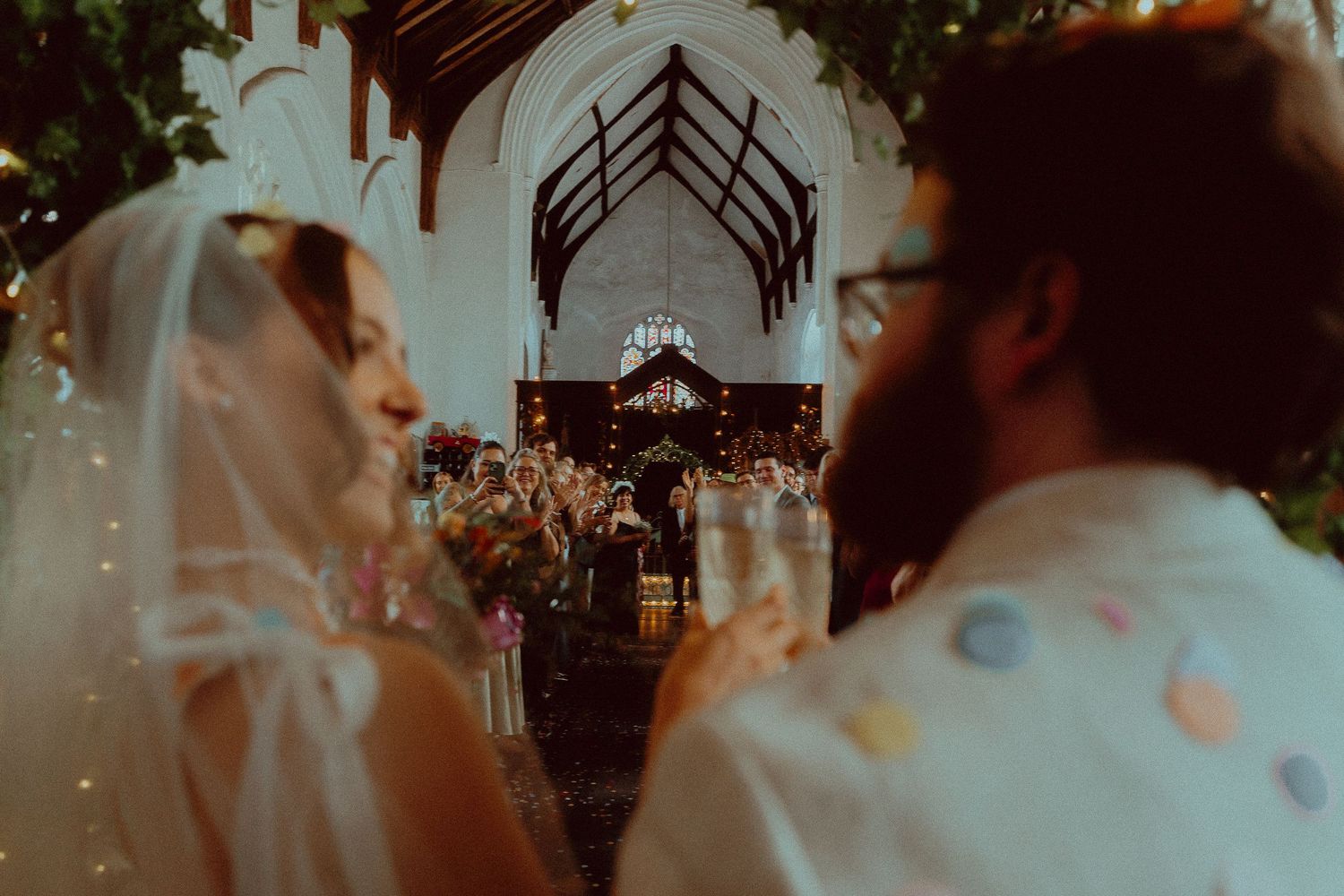
The first hug after you walk back down the aisle.
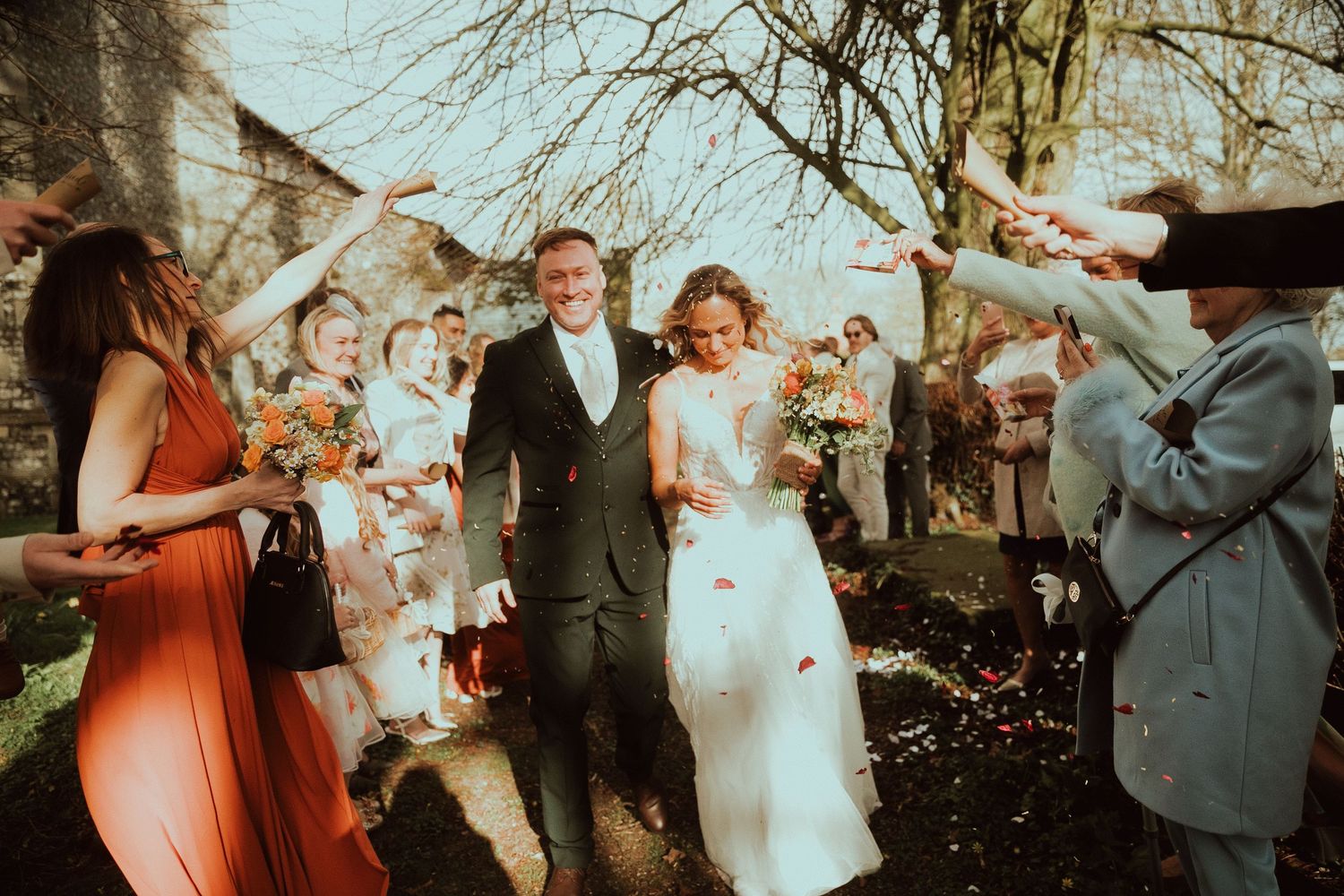
Everyone spilling outside afterwards.
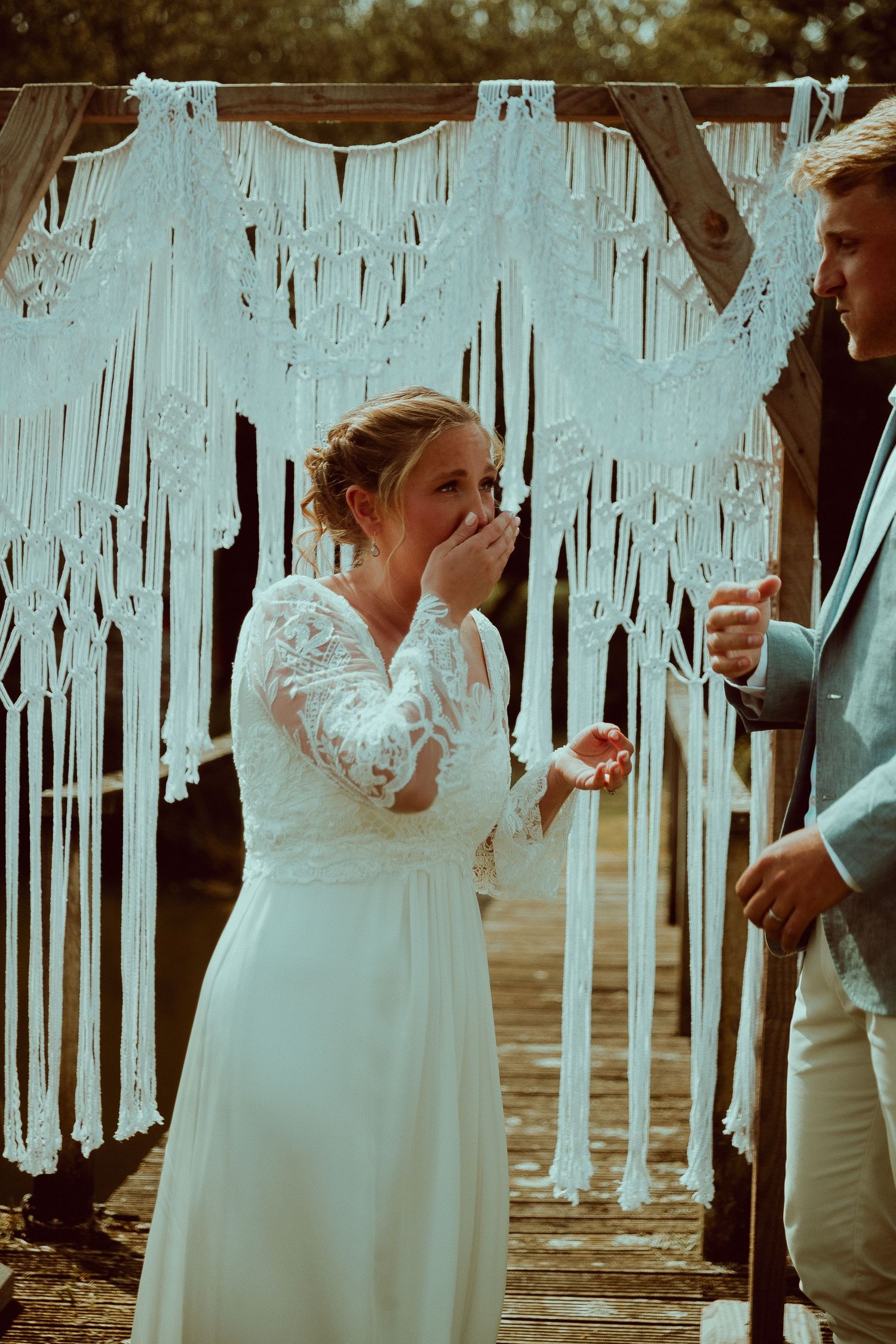
Someone crying and then laughing because they're embarrassed about crying.
Your guests meeting each other. The quiet few minutes before dinner.
The room changing as the evening gets darker.
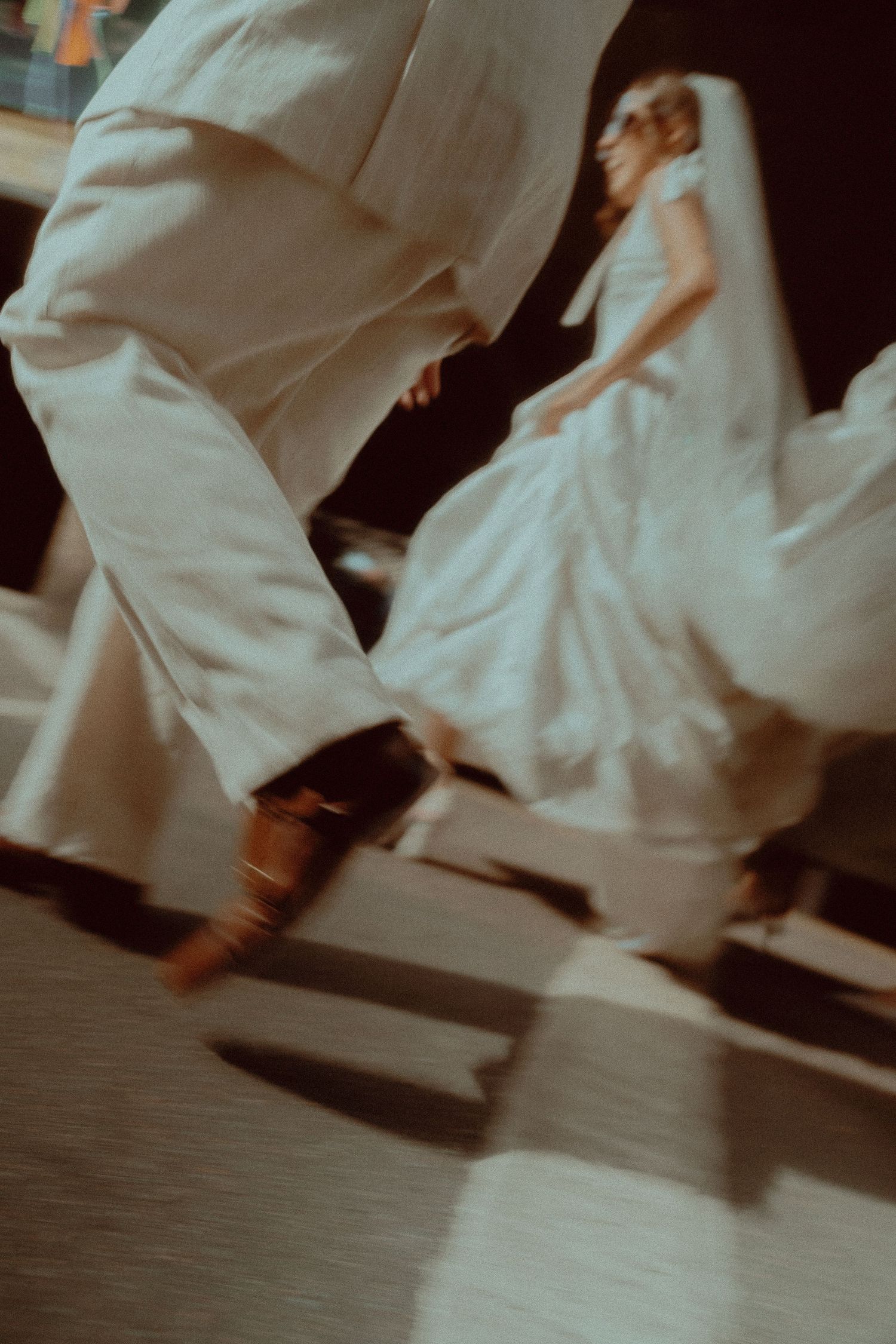
The dance floor slowly filling.
These aren't secondary moments.
They're the connective tissue of the day.
They're what makes the story feel like a story.
What happens when the timeline slips?
It probably will.
The ceremony might start ten minutes late.
The speeches might run over.
Someone might get stuck in traffic.
Dinner might take longer than expected.
And sometimes the weather has its own ideas.
The important thing is not whether something changes.
It's whether there is enough flexibility for the change to happen.
If you're running late, we don't need to panic. We look at what's coming next. What actually matters?
What can move? What can be shortened? What doesn't need to happen at all?
A good wedding team should be able to adapt. You shouldn't have to spend your wedding trying to get back on schedule.
What if we want photographs but don't want a photoshoot?
You can have both.
This is one of the reasons we encourage couples to think about photographs as something that happens throughout the day, rather than one large block of time.
There will be moments when we step in. Family photographs need some organisation. A portrait of the two of you might benefit from ten quiet minutes together.
But much of the coverage can simply happen around you.
You don't need to stop talking to your friends. You don't need to pose every time we raise a camera.
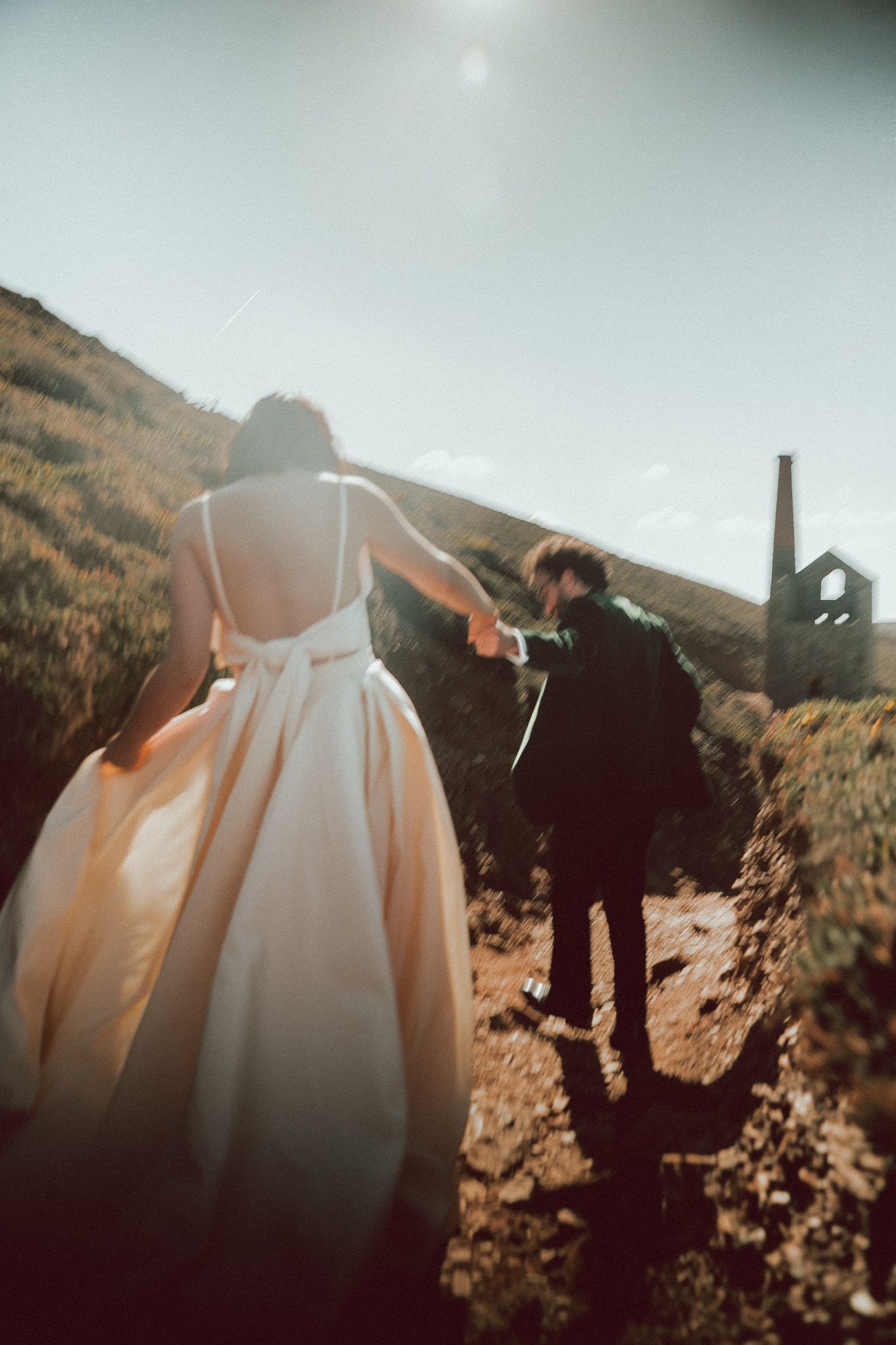
You don't need to recreate the way you met. You don't need to spend an hour walking through a field while we photograph you from seventeen different angles.
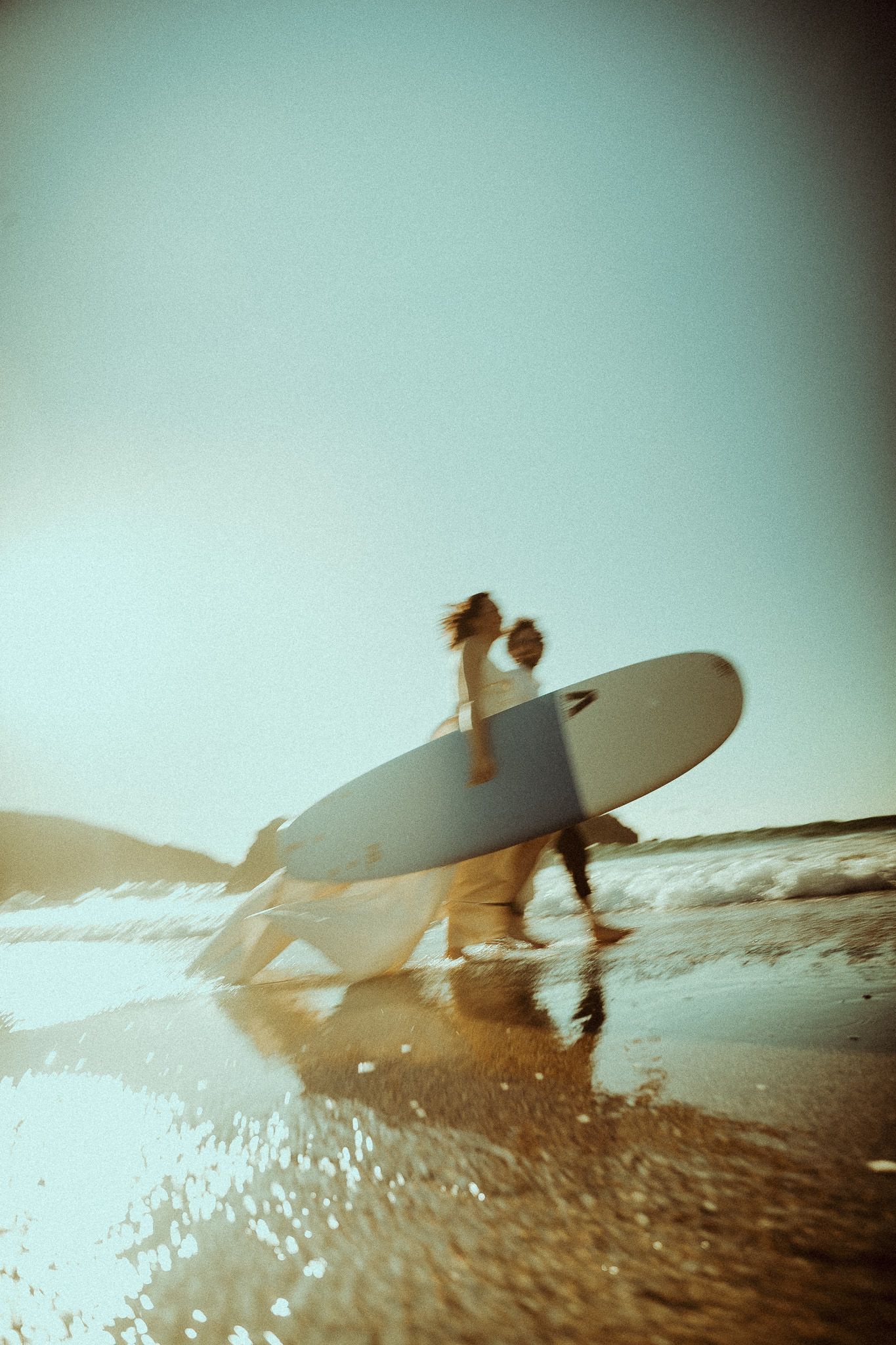
You can just be together.
We'll photograph that.
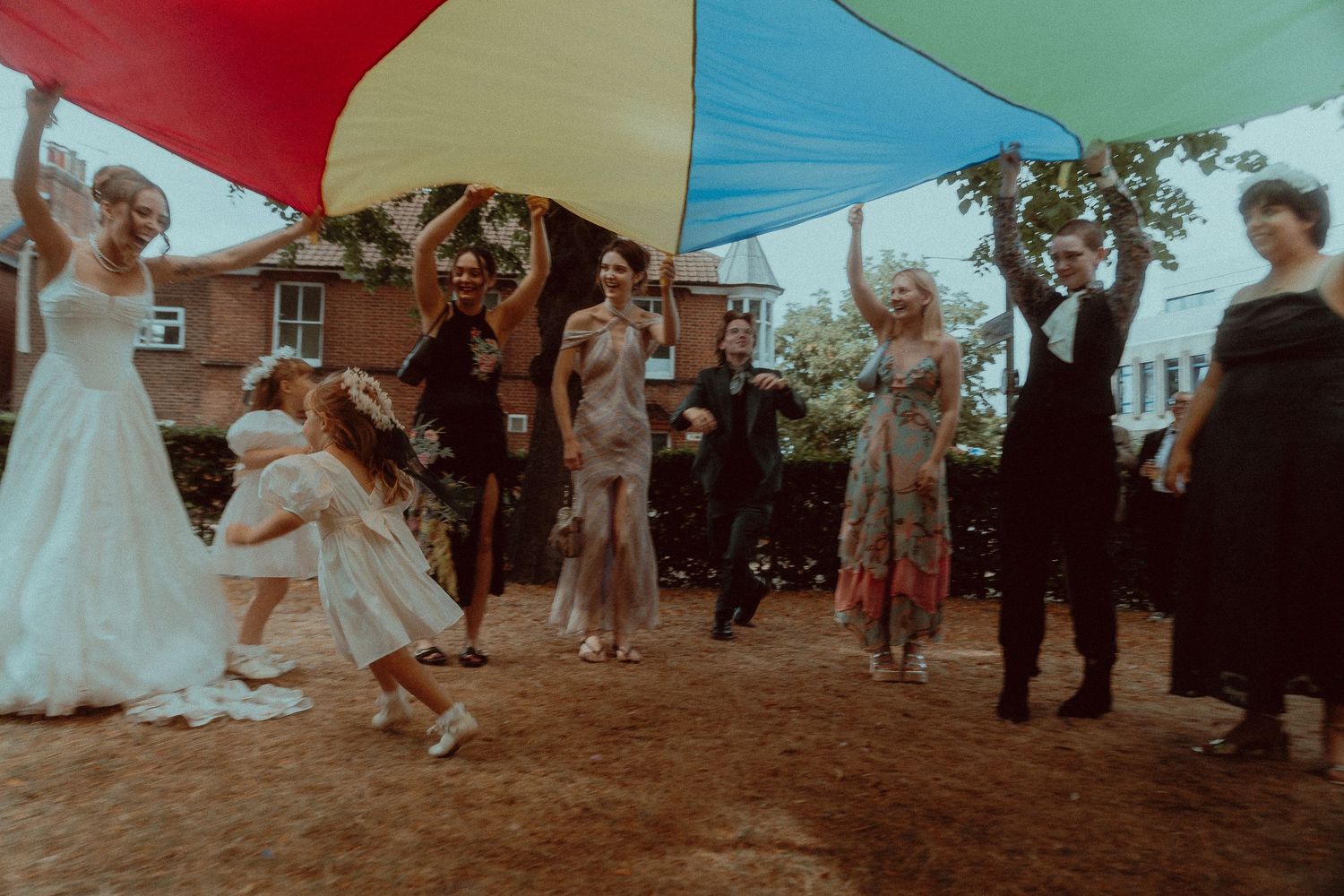
What if we have children?
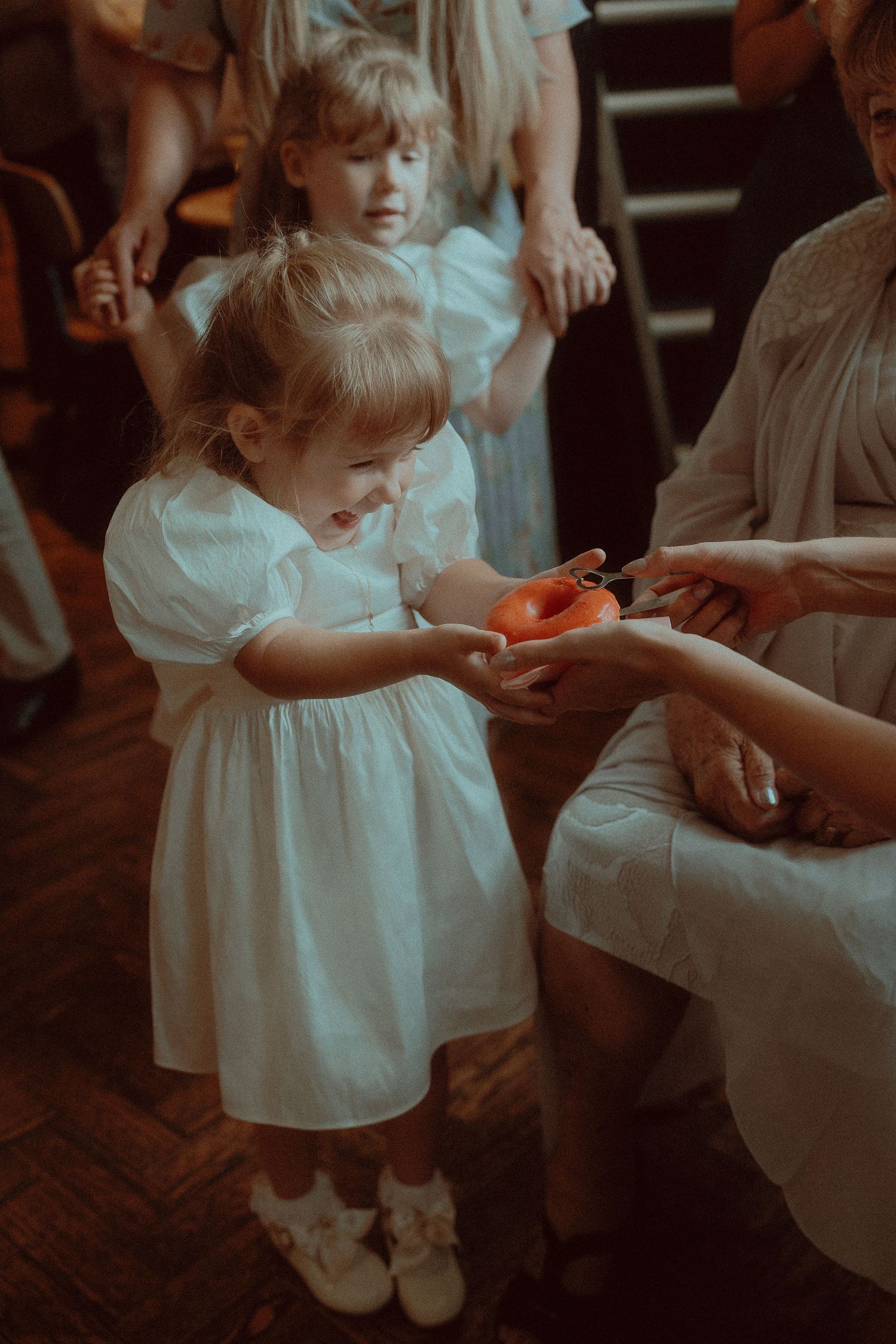
Children don't follow timelines particularly well.
That's one of their better qualities. They get bored. They run off.
They ask questions at exactly the wrong moment. They fall asleep. They dance when everyone else is standing still.
And they can produce some of the most honest photographs of the day. We don't need to make them 'behave perfectly' for photographs.
If they are part of your day, they are part of the story.
Give them room to be themselves. We'll work around them.
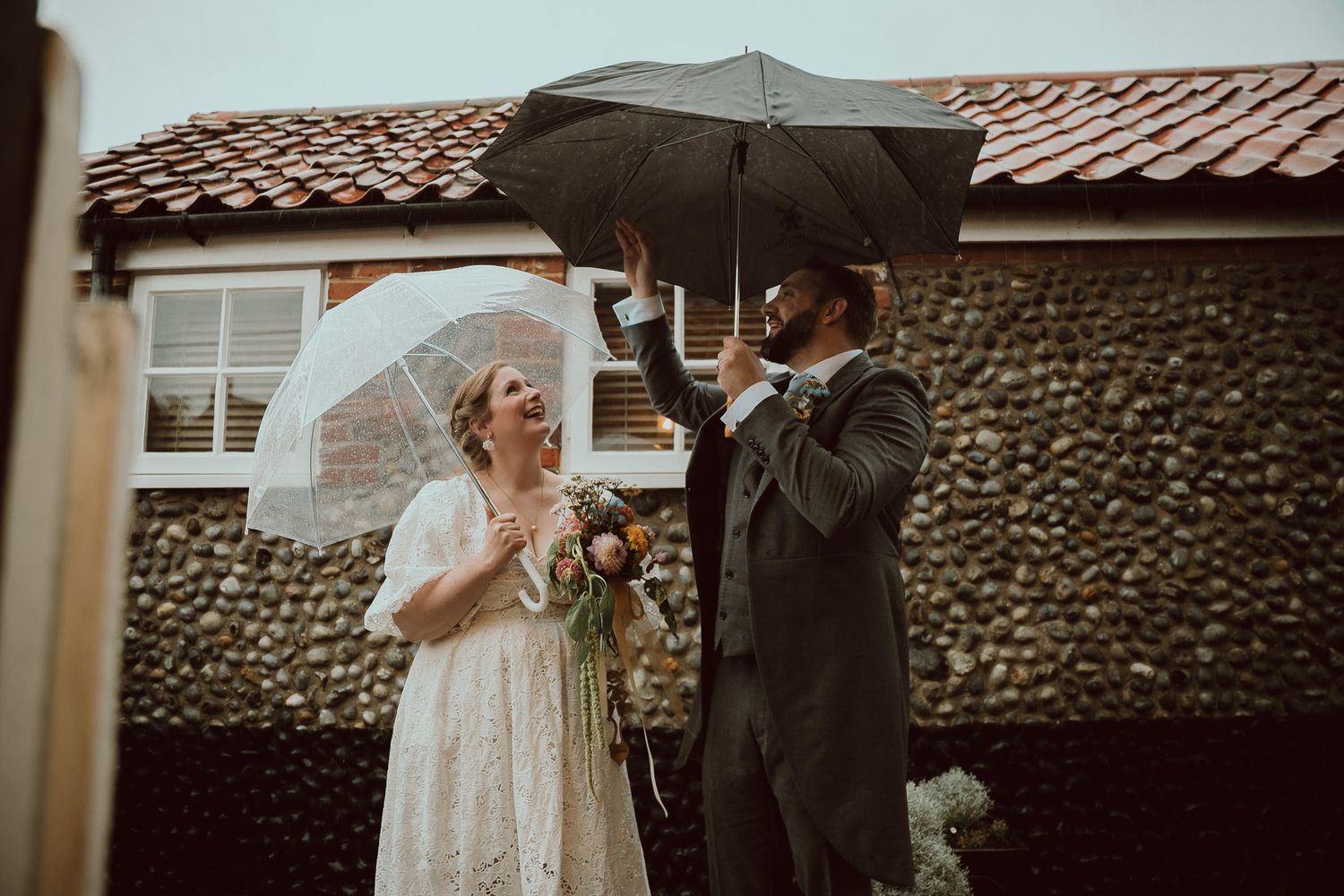
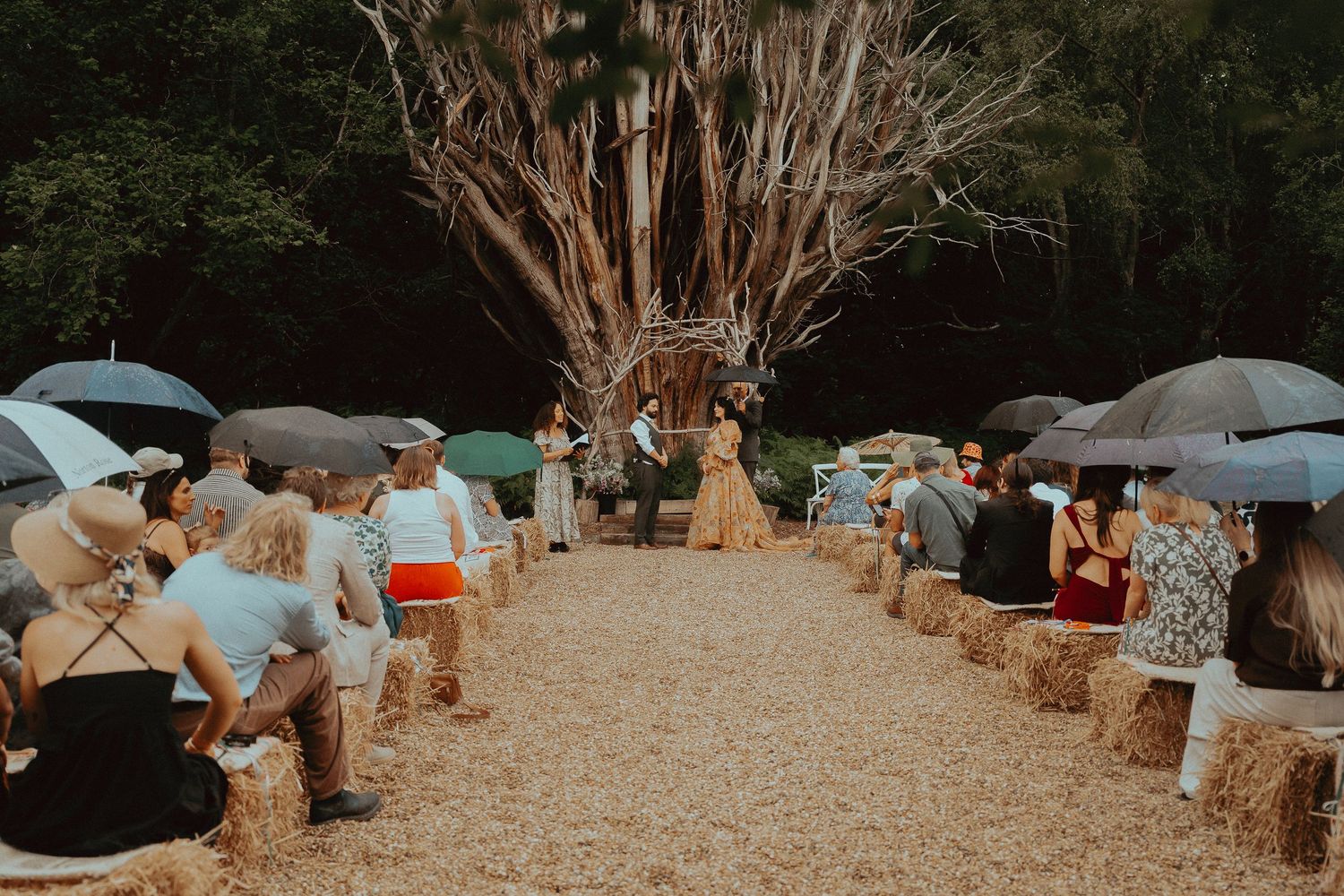
What if it rains?
We don't immediately stop photographing.
Rain can change the way a place looks. It can change the light. It can bring people together. It can create reflections, movement and completely unexpected moments.
Sometimes we'll photograph it.
Sometimes we'll find somewhere covered.
Sometimes we'll wait.
Sometimes the best decision is to simply get wet.
The important thing is that rain doesn't automatically become an emergency.
If the timeline has enough space, you have options.
You can wait for the shower to pass.
You can move something.
You can change the order.
You can embrace it.
A flexible plan gives you choices.
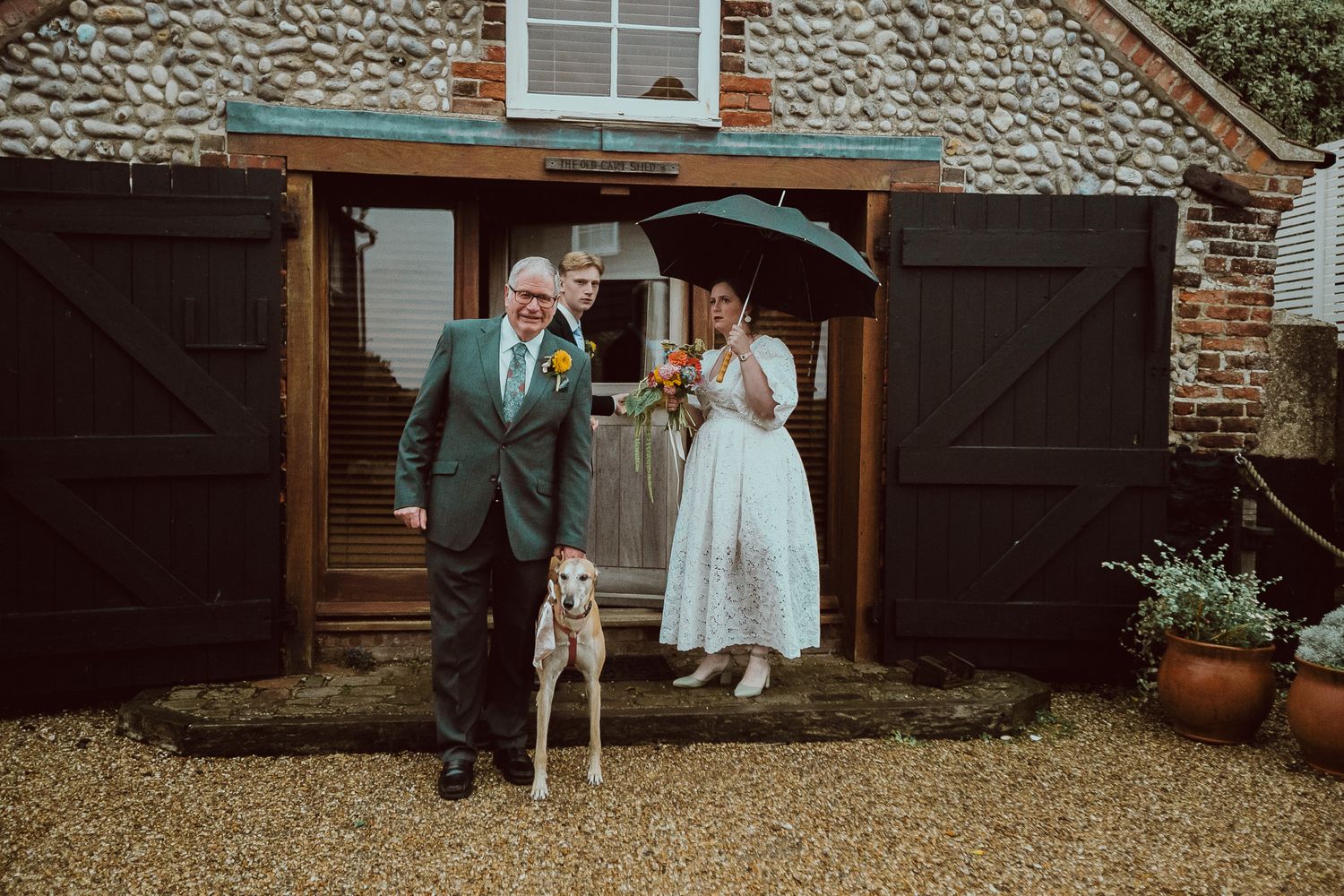
What about dogs?
Same principle.
If your dog is part of the wedding, we're not expecting them to suddenly become a 'perfectly behaved' wedding guest.
They might sit beautifully for five seconds.
They might run off.
They might decide the confetti is edible.
They might spend the ceremony investigating something much more interesting.
That's okay.
We'll photograph the reality.
If there are particular photographs you want with them, we'll make time for those. But we don't need to turn the dog into a prop.
They're part of your people.
The photographs you didn't plan
Imagine you've planned a beautiful outdoor ceremony.
Then it starts raining.
Everyone moves inside.
The ceremony happens in a smaller room.
Your friends are squeezed together.
Someone laughs halfway through the vows.
The windows steam up.
Afterwards, the rain stops.
Everyone goes back outside.
You stand under a tree with your partner.
Nobody has planned a portrait.
But the light is beautiful.
You look at each other.
We make a photograph.
That photograph wasn't in the timeline.
It didn't need to be.
The space allowed it to happen.
We don't need to fill every silence
There can be a strange expectation that something should always be happening at a wedding.
Music.
Conversation.
Photographs.
Activities.
Drinks.
Speeches.
Dancing.
But quiet moments matter too.
The few minutes when you sit down.
The walk between two places.
The pause before dinner.
The moment after everyone has left the ceremony room.
The morning when it is just you and the people closest to you.
Nothing needs to happen.
And that's precisely why it can be worth photographing.
What about golden hour?
Golden hour is lovely.
But the wedding doesn't need to revolve around it.
If the light is beautiful, we'll notice.
If you're eating dinner, we'll decide whether it's worth stepping outside.
If you're dancing, we're not going to drag you away because an app says the sun is setting.
And if you really want photographs in that light, we'll make space for them.
The point is to use the conditions rather than become controlled by them.
The same applies to weather, locations and everything else.
We work with what the day gives us.
When the unexpected becomes the photograph
One of the biggest advantages of leaving room in a wedding day is that unexpected things don't automatically become problems.
They can become part of the story.
A delayed ceremony.
A sudden downpour.
A guest who gives an unexpectedly brilliant speech.
A child stealing food from the table.
Your friends deciding to start dancing before the DJ has properly begun.
A sunset that arrives earlier than expected.
A walk that takes longer because you stop to talk.
The photograph doesn't need to explain why the timeline changed.
It simply preserves what actually happened.
And years later, that's often what makes it valuable.
The role of your photographer
A photographer can become another person you have to manage.
Or they can quietly become part of the background.
We want to be the latter.
We need to know your plans.
We need to understand what matters to you.
We need to know which people and moments are important.
But once the day begins, our job is to observe.
To anticipate.
To move when you move.
To notice when something is happening.
To know when to step closer.
And, just as importantly,
when not to.
A little direction is still okay
Documentary doesn't mean completely hands-off.
There are moments where direction helps.
If you want a photograph with your grandparents, we'll organise it.
If the light is beautiful and we think you might love a few portraits, we'll tell you.
If everyone needs to move somewhere, we'll help make that happen.
If the timeline needs adjusting, we'll communicate with the relevant people.
The difference is why we're directing.
We're not trying to manufacture a performance.
We're creating enough structure for the real moment to happen comfortably.
A real wedding isn't perfectly smooth
There will probably be a moment when something goes wrong. That's normal.
The cake might be late.
The weather might change.
The button might break.
Someone might forget the rings.
The bus might be stuck.
The speech might go on for twenty minutes longer than planned.
And then something else will happen that you didn't plan at all.
That's the wedding.
You don't need to protect yourself from every possibility.
You need a team and a timeline flexible enough to respond when things happen.
Because the goal isn't a perfectly executed day.
It's a day that still feels like yours when things don't go perfectly.
What making space looks like in photographs
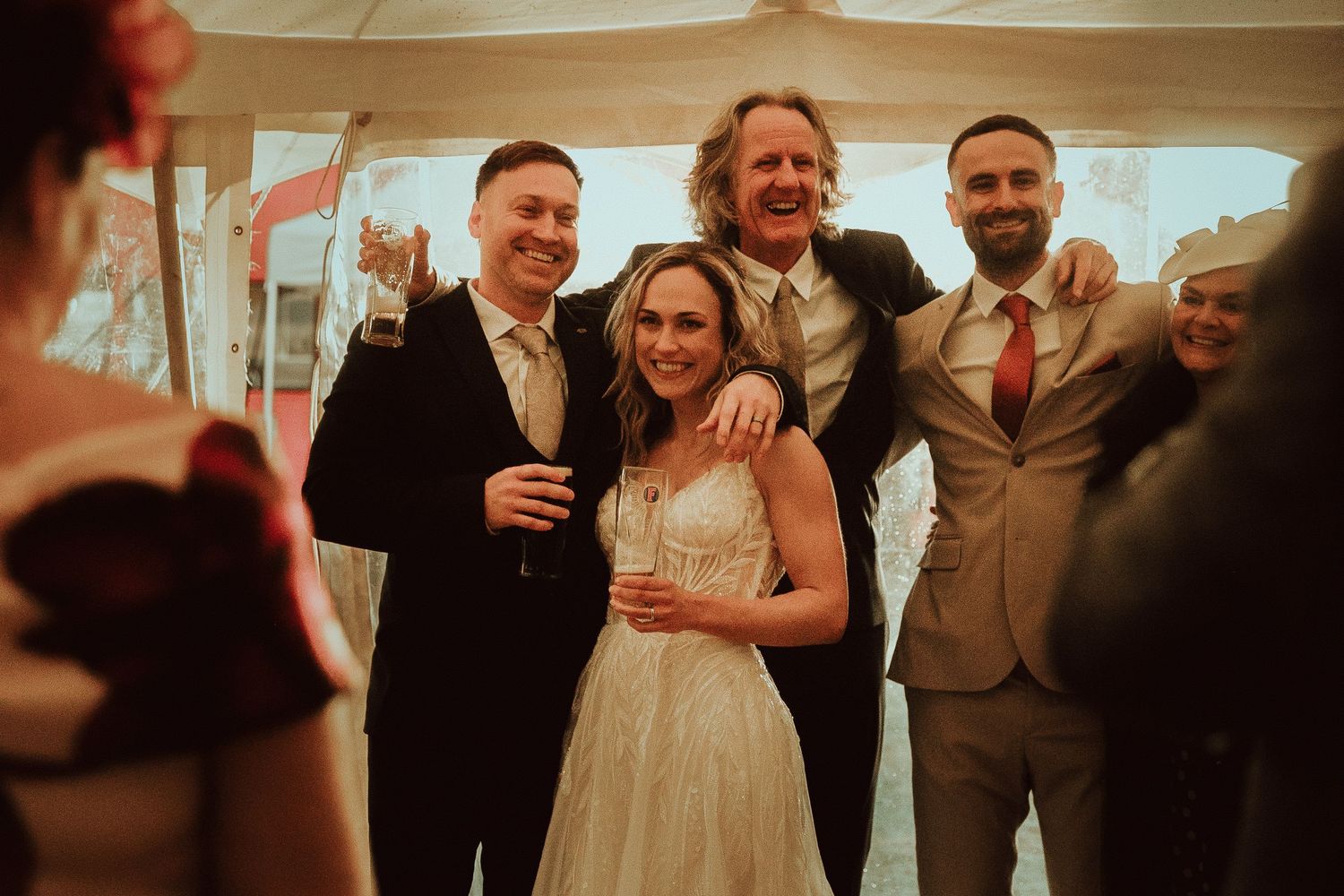
When you look through a gallery from a day with room to breathe, you shouldn't just see the major events. You should see the connections between them.
The people arriving.
The waiting.
The laughter.
The anticipation.
The quiet.
The chaos.
The food.
The conversations.
The weather.
The landscape.
The tiny gestures.
The moments that happened because nobody was rushing to the next thing.
That is what gives a wedding gallery its rhythm.
Not just what happened, but how it felt to move through it.
Before we continue...
Making space doesn't mean having a completely empty wedding day.
It doesn't mean throwing away your timeline.
It doesn't mean refusing to plan.
It means knowing what deserves your time. Because once you've created that space, the next question becomes much more practical:
How much coverage do you actually need to tell the story?
How many hours?
When should your photographer arrive?
Do you need morning preparations?
How much of the evening matters?
What happens if you want photographs and film?
And how do you make sure you're not paying for hours you don't actually need?
That's where we'll go next.
Because the best coverage isn't necessarily the most coverage. It's the coverage that leaves enough room for your story to unfold.
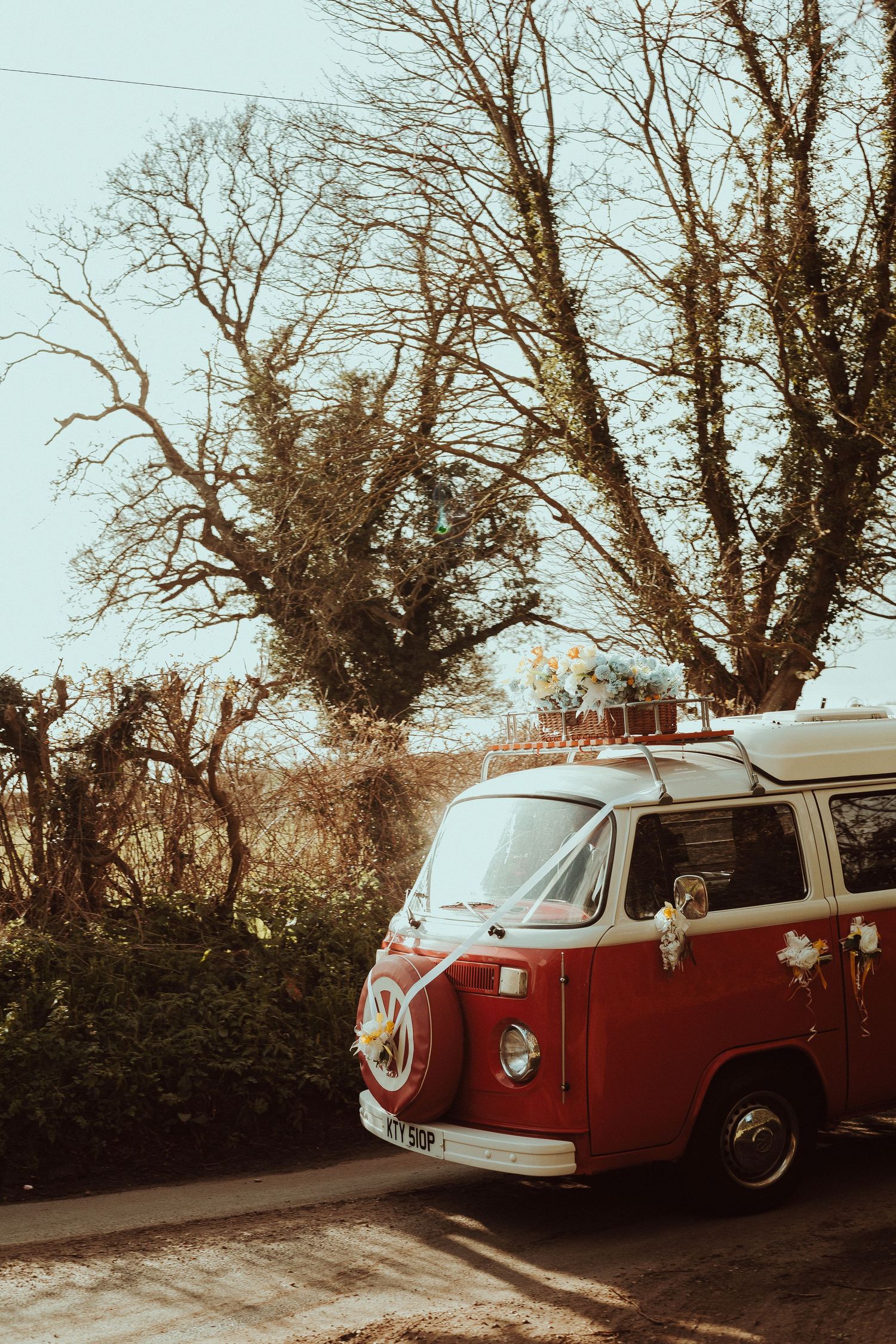
You don't need to plan the photographs
You just need to plan enough space for them.
That's the distinction.
You don't need to predict every photograph we're going to make.
You don't need a shot list of every moment.
You don't need to create perfect conditions.
Give yourselves enough time.
Give your people enough room.
Let the day move.
We'll pay attention.
And when something happens?
We'll be there.
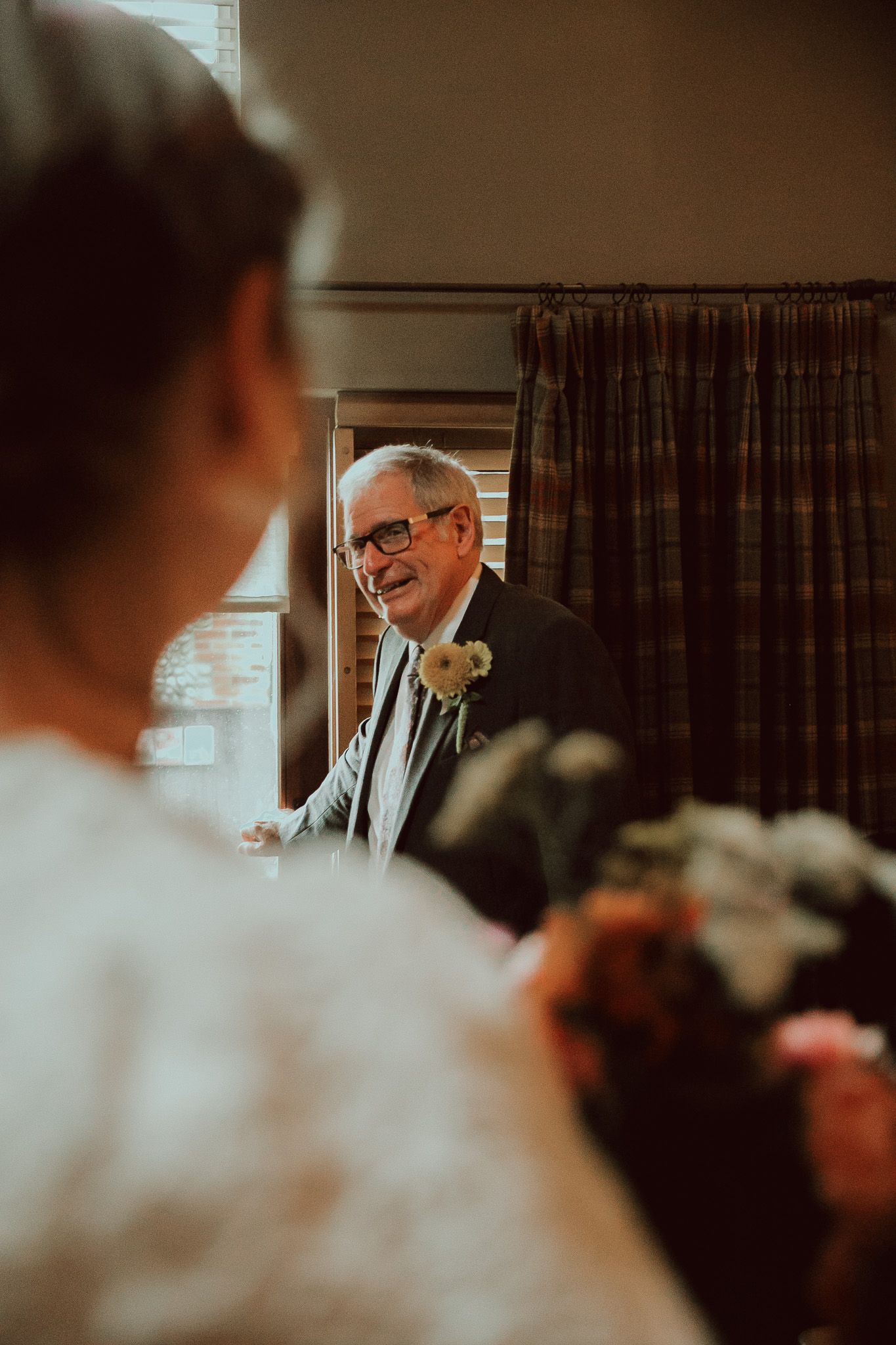
Making space work for you
There is no perfect wedding timeline.
There is no magic number of hours that guarantees a relaxed day, and there isn't a checklist that can tell you exactly how much time you should spend on photographs, food, family, friends or dancing.
The best timeline is the one that reflects your priorities.
So rather than giving you another rigid schedule to copy, this final part brings everything together.
How much coverage do you actually need?
What should you prioritise?
What happens when things don't go to plan?
And how do you create a wedding day that feels spacious without losing the things you care about?
How much wedding photography coverage do you actually need?
More isn't automatically better.
If you want your entire story documented, full-day coverage can make sense.
You might want the quiet morning preparations, the anticipation, the ceremony, your guests arriving, the drinks reception, dinner, speeches and the beginning of the party. But if those parts aren't important to you, you don't necessarily need someone there for twelve hours.
A shorter wedding doesn't need to feel like an incomplete wedding. What matters is which parts of the story you want remembered.
Think about the moments you'd be genuinely sad not to have photographs of.
Then work backwards.
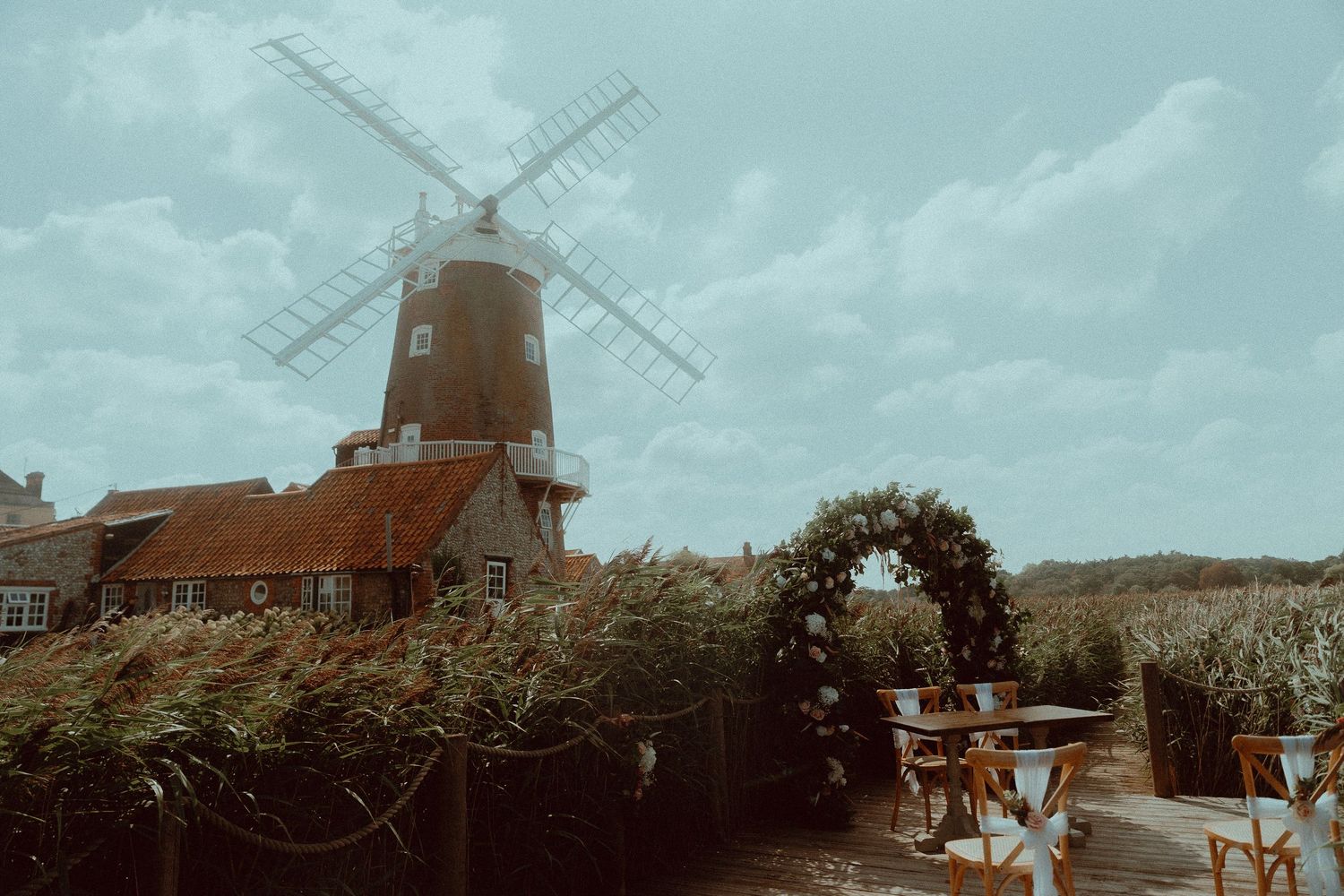
Do we need an hour for couple portraits?
You might want an hour.
You might want fifteen minutes.
You might not want a formal portrait session at all.
There is no rule.
If you're uncomfortable with being photographed, a short walk together can be enough to create some beautiful photographs without turning the experience into a photoshoot.
If you love photographs and want more, we can make more space.
And sometimes we'll make photographs without you even realising we're doing it.
The day doesn't need to stop for every photograph.
Do we need getting-ready photographs?
Not necessarily.
Some couples love them.
Others would rather have a quiet morning without a camera in the room.
Both are completely valid.
Getting-ready coverage can tell you a lot about the atmosphere of the day.
The people who were there.
The anticipation.
The little details.
The nervousness.
The laughter.
But if you'd rather have your morning to yourselves, that's okay too.
You can begin coverage later and concentrate the photography around the ceremony, people and celebrations.
Coverage should fit your day, not the other way around.
How long should we allow for photographs?
There isn't one answer.
Family photographs need enough time to gather everyone.
Couple photographs need enough time to feel relaxed.
Everything else can happen naturally throughout the day.
For many couples, a small amount of intentional portrait time is enough. For others, photography is a major part of the experience and deserves more space.
The important thing is not to ask:
"What's the standard amount of time?"
Ask: "How important are these photographs to us?"
That answer is far more useful.
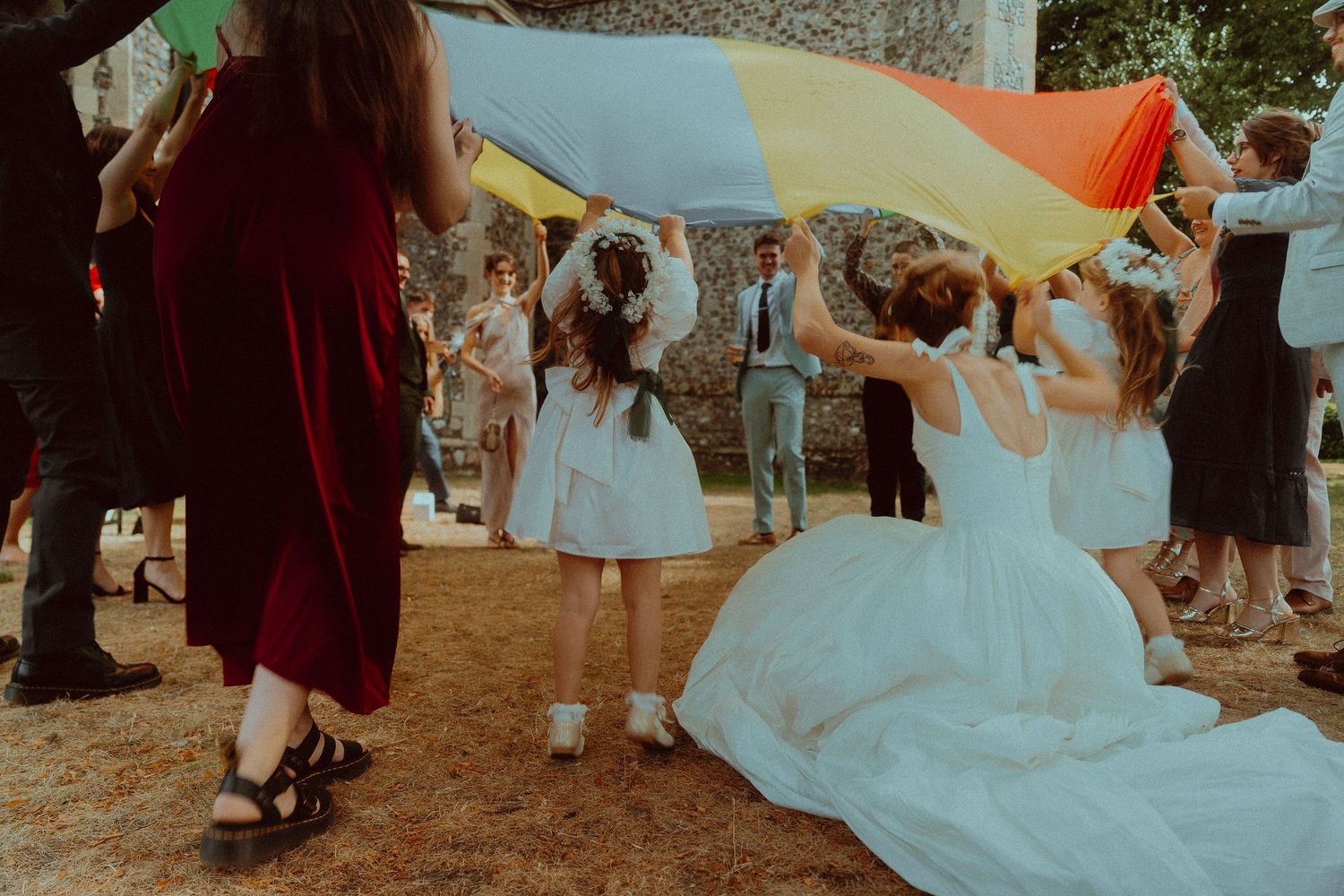
What if we have a really tight timeline?
Then we work with it.
Not every wedding has the luxury of a completely open schedule.
Some venues have strict ceremony times.
Some ceremonies are followed immediately by dinner.
Some weddings involve multiple locations.
Some couples simply prefer a more structured day.
That's fine.
The aim isn't to force every wedding into the same relaxed template. Instead, we'll look at where the pressure points are.
Where can we create ten minutes?
Where can photographs happen naturally?
What absolutely needs to happen?
What could be shortened?
What could be removed?
Sometimes a little space is all you need.
What if we want to spend most of the day with our guests?
Then make that a priority.
It's surprisingly easy for couples to spend their wedding day being pulled away from the people they've invited.
Photographs.
Venue photographs.
Private moments.
Formalities.
More photographs.
Before you know it, you've barely seen anyone.
A documentary approach can work beautifully here because we're photographing much of the time you're already spending with your guests.
You don't need to disappear for hours.
Being with your people is part of the story.
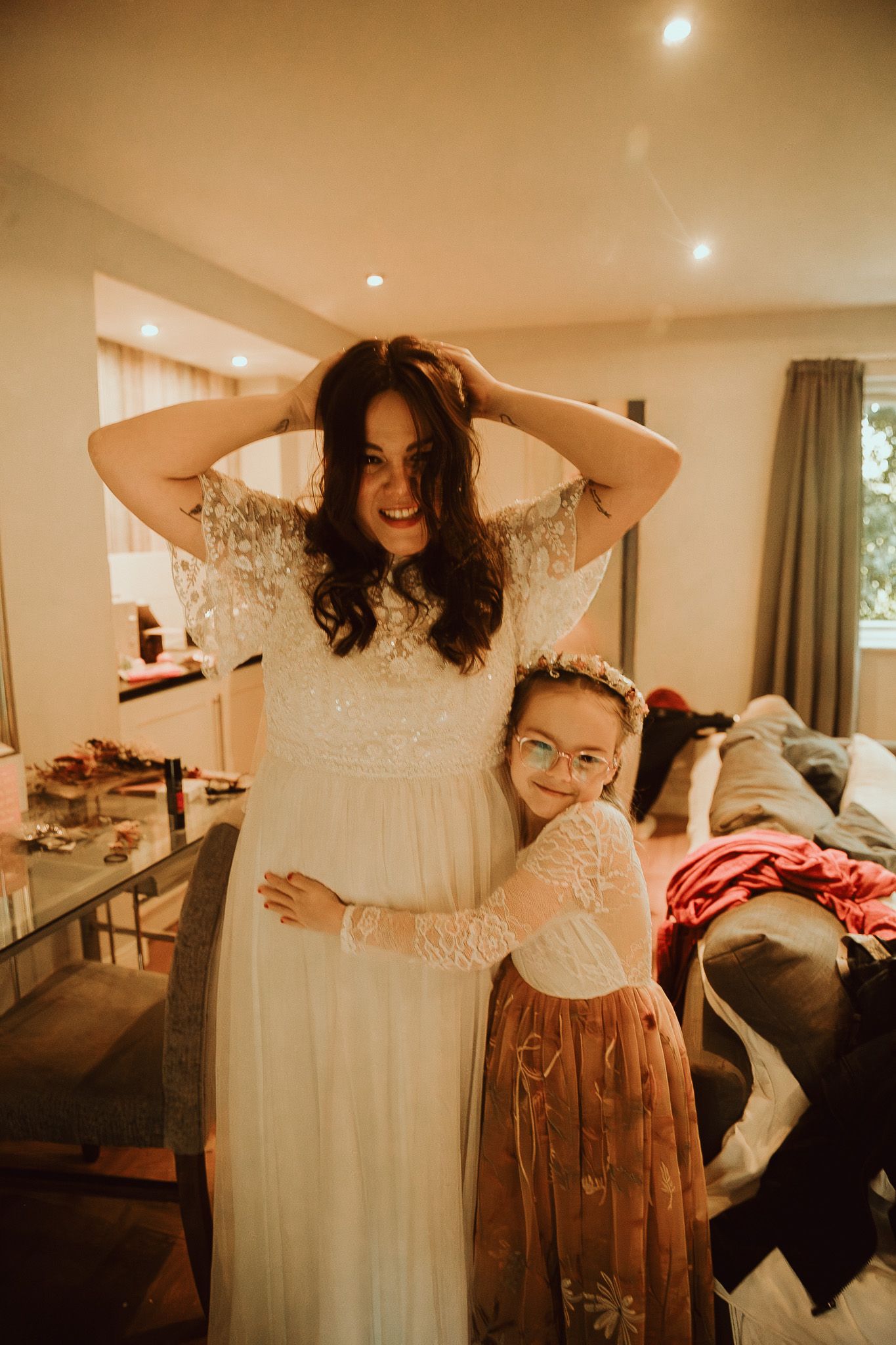
What if we're running late?
Don't panic.
Your wedding isn't ruined because you're twenty minutes behind schedule.
We can adapt.
Your photographer should know how to prioritise.
Your suppliers should communicate.
Your timeline should have some flexibility. And if something has to change, we'll work out what matters most.
The last thing you should be doing is spending your wedding reception worrying about whether you're still on schedule. Let the professionals worry about the schedule.
You have a wedding to enjoy.
What if it rains?
Have a plan.
Then be prepared to ignore it. That might sound contradictory, but it's actually the best approach.
Know where you can go if the weather turns; know what parts of the day can move indoors. Then allow yourselves to make a decision based on what is actually happening.
Maybe the rain lasts five minutes. Maybe it lasts all afternoon. Maybe you end up outside anyway. Maybe your wedding photographs become full of umbrellas, wet grass, reflections and everyone huddling together.
Rain doesn't have to be something you endure until the real wedding starts again. It's allowed to be part of the wedding.
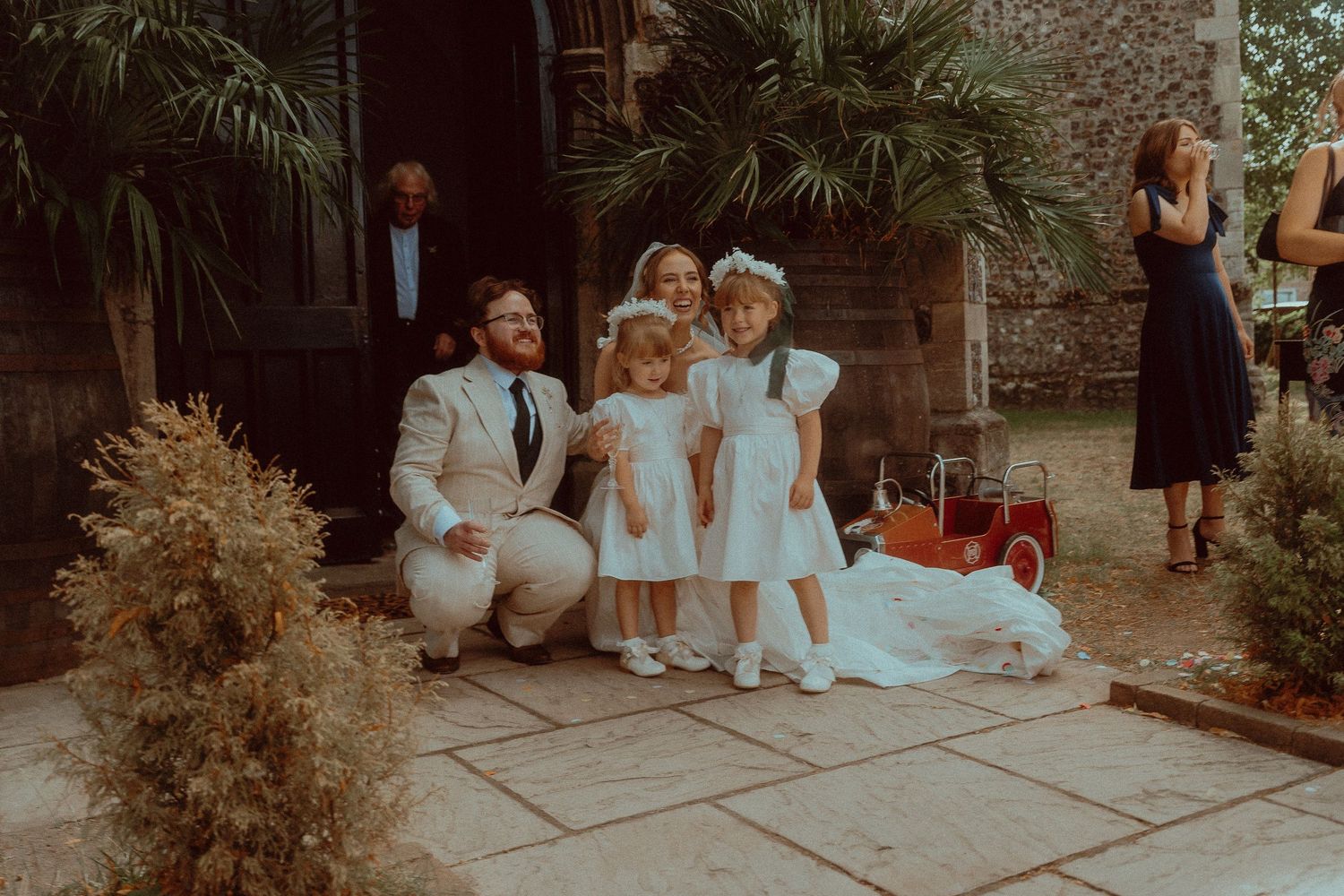
Do we need formal family photographs?
If they matter to you.
These photographs can become some of the most valuable images you own.
Grandparents.
Parents.
Siblings.
People who won't always be there.
We just don't need to turn every possible combination into a military operation.
Choose the photographs that genuinely matter.
We'll organise them efficiently, photograph them properly, and then get everyone back to enjoying the day.
Should we plan golden hour photographs?
If you love the idea, yes.
But don't build your entire evening around a photograph.
Golden hour is beautiful, but so is sitting at dinner with your friends.
So is the first dance.
So is being on the dance floor when everyone has had a few drinks.
If the light becomes incredible, we'll tell you.
If you want to step outside for ten minutes, we'll make it happen.
If you're having the best time inside, you don't have to leave because the sun is setting.
The photograph should serve the experience.
Not the other way around.
Do we need a first look?
A first look can be wonderful if you genuinely want one.
It can give you a private moment together before the ceremony and can sometimes make the timeline easier.
But you don't need one because you've seen it on Instagram.
If seeing each other for the first time as you walk into the ceremony matters to you, keep that.
If you want a private moment beforehand, have one.
There is no universally correct version.
Choose the experience you actually want.
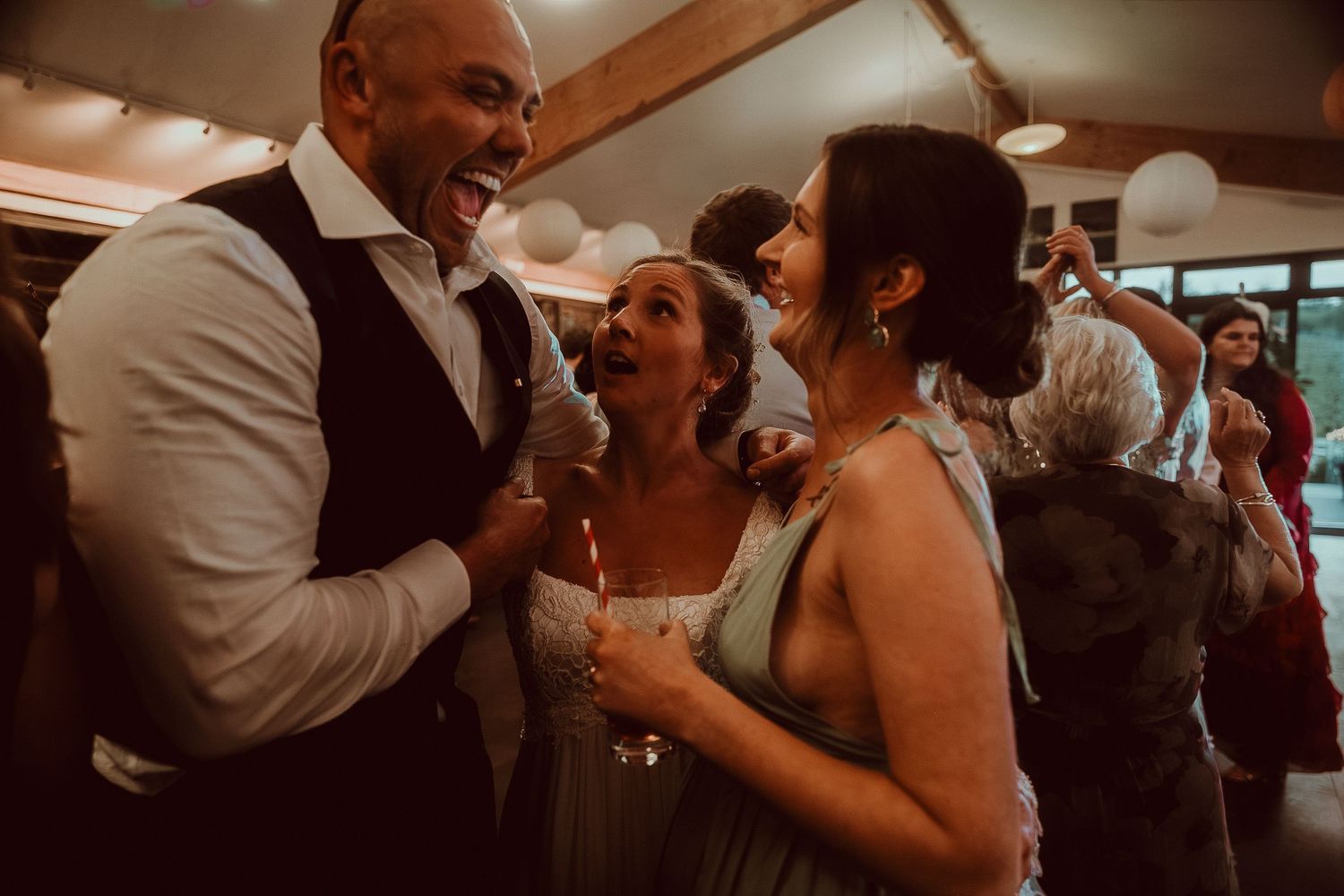
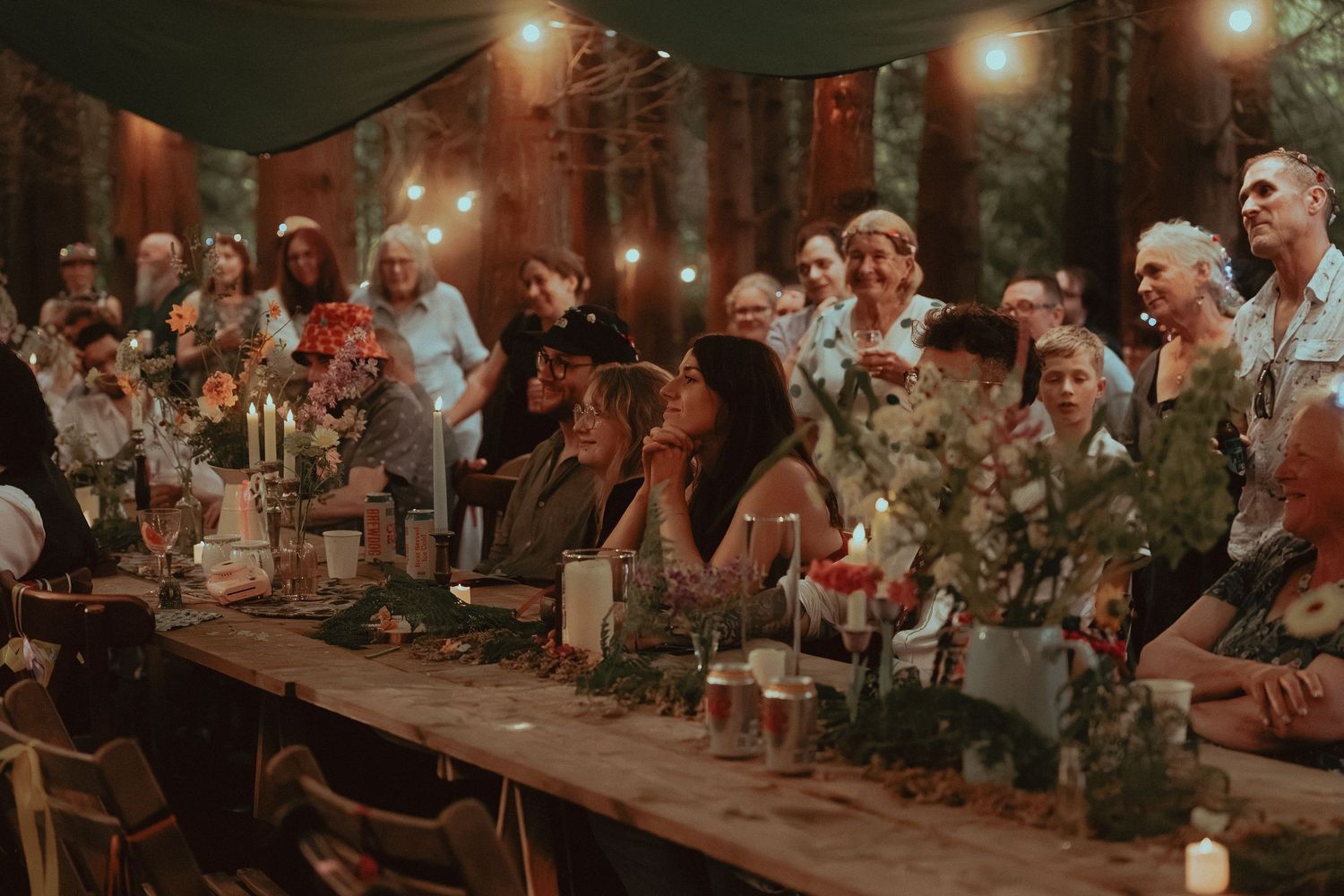
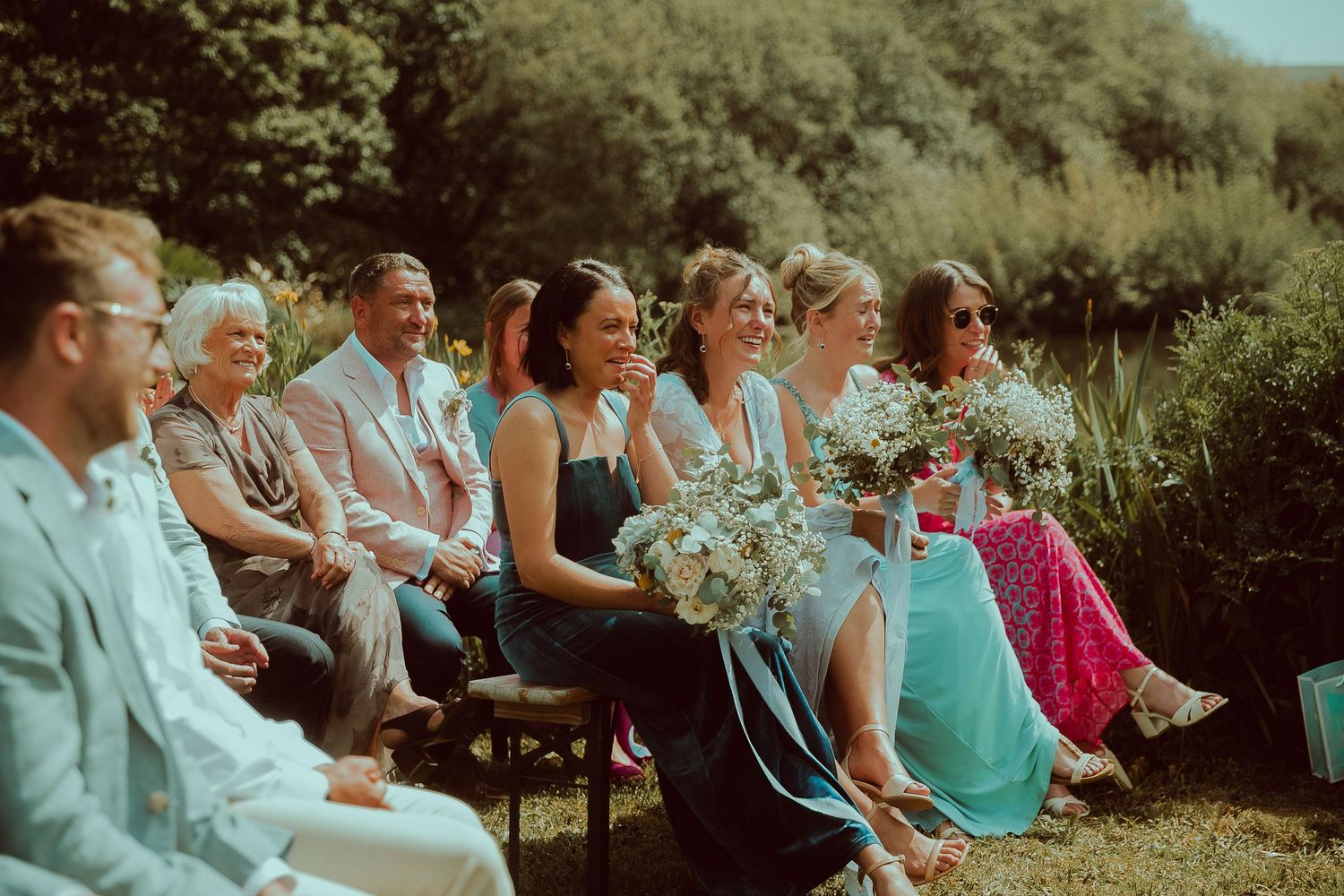
What if we don't like having our photograph taken?
You're not alone. A lot of couples tell us this.
And it's one of the reasons we don't want your wedding to feel like a photoshoot.
You don't need to know how to pose.
You don't need to practise beforehand.
You don't need to become comfortable in front of a camera overnight.
We'll give you enough direction when it's useful and leave you alone when it isn't.
Most importantly, you don't have to perform your relationship for the camera.
Just be together.
We'll take it from there.
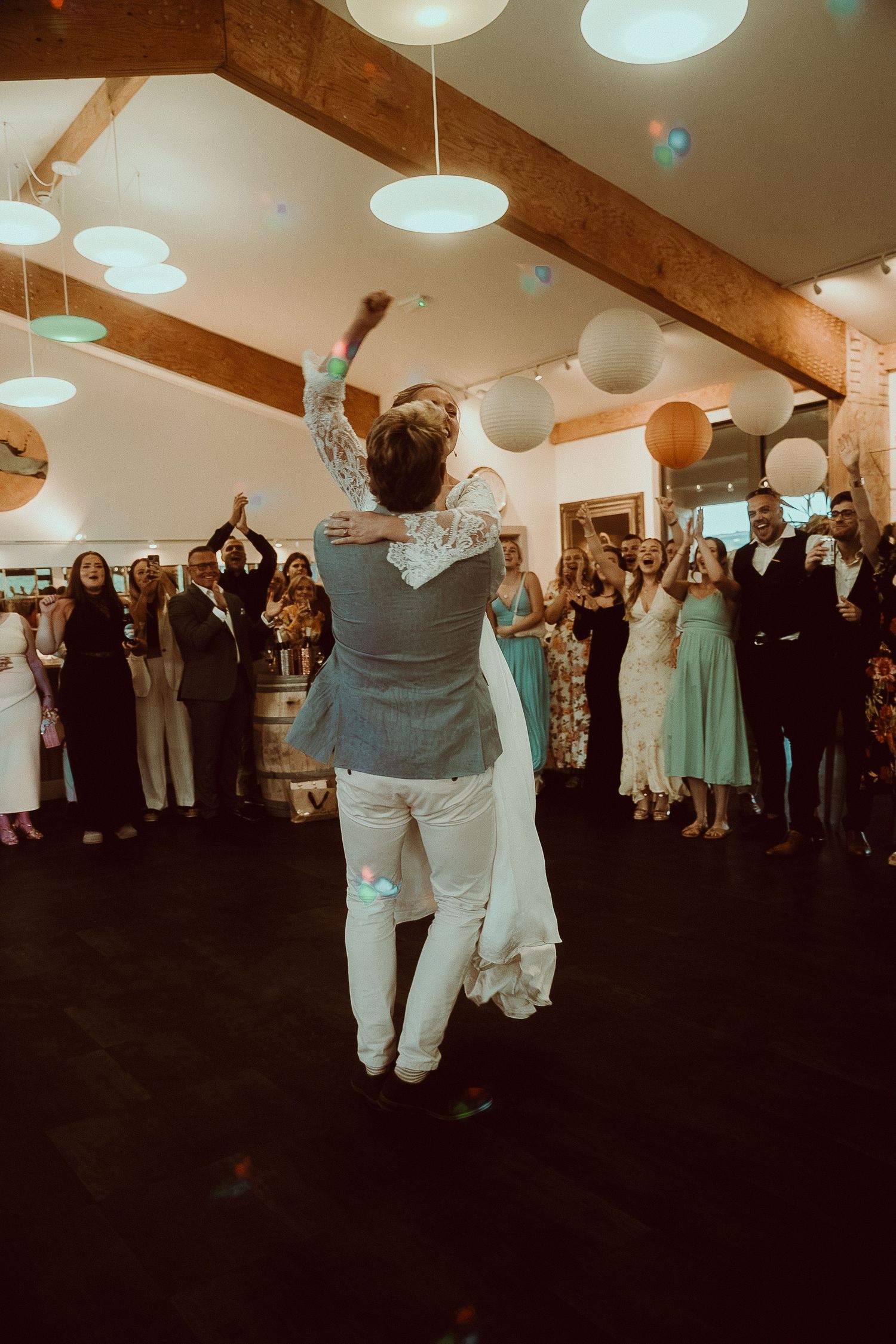
Can children and dogs be included naturally?
Yes. And we think they should be.
If they're part of your life, they're part of your wedding story.
Children don't need to sit perfectly still.
Dogs don't need to pose.
They can run around.
They can get bored.
They can interrupt.
They can make everyone laugh.
Those things are often exactly what you'll want to remember.
If there are specific photographs you want with them, we'll make time.
Otherwise, we'll let them be themselves.
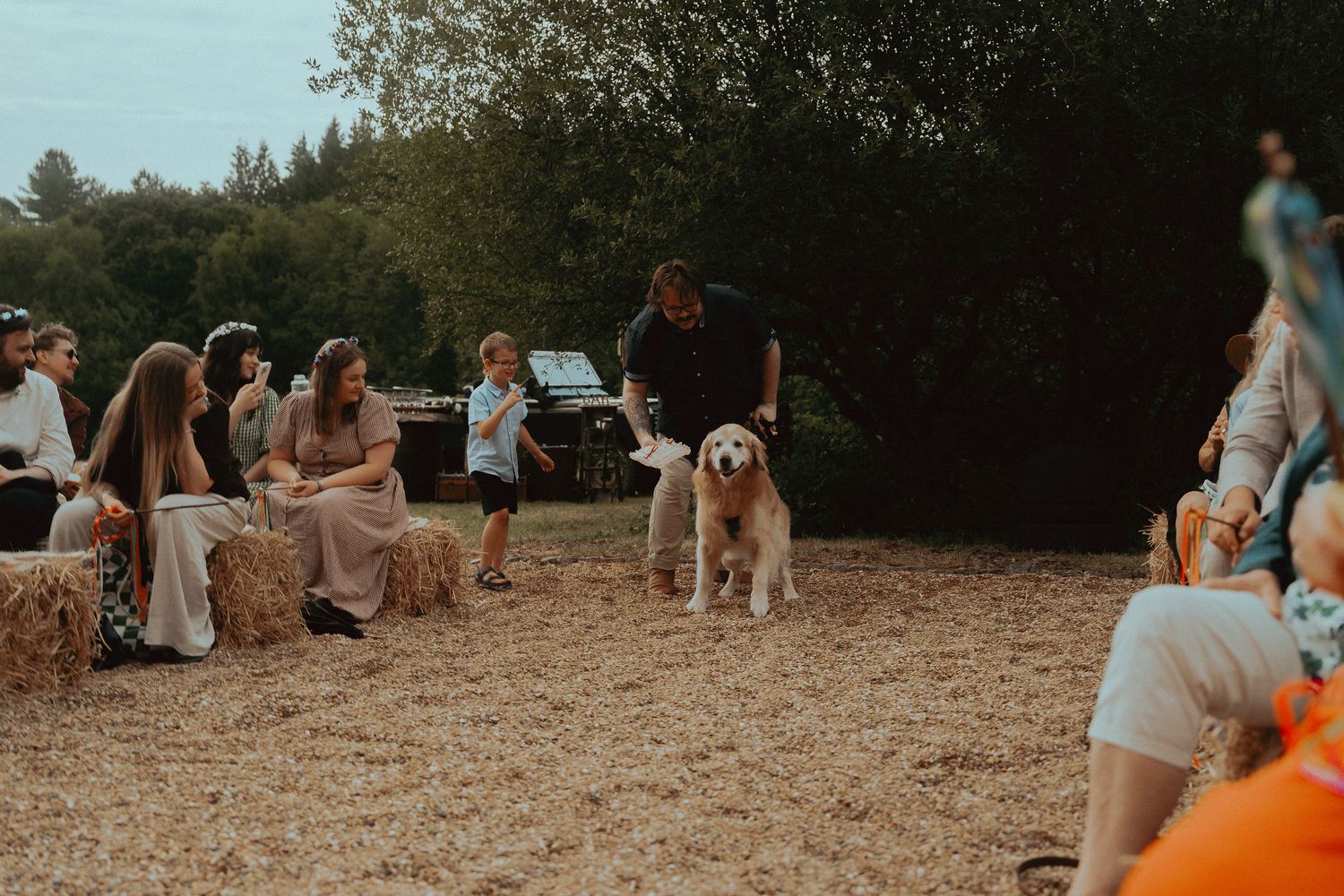
How do we make our wedding feel less rushed?
Start by identifying where the pressure is coming from.
Is it too many locations?
Too many formal photographs?
Too little time between ceremony and dinner?
A ceremony too late in the day?
Too many things you don't actually care about?
Then remove or soften the pressure points. Give yourself more time than you think you need for the things that matter.
Leave gaps.
Keep travel realistic.
Don't schedule every minute.
And accept that the day will change.
A relaxed wedding isn't a wedding where nothing goes wrong. It's a wedding where something going wrong doesn't ruin the experience.
How do we know if this approach is right for us?
Would you rather spend an hour taking photographs or an hour talking to your friends?
Do you want your wedding documented as it actually happened?
Do you like photographs that feel lived-in rather than perfectly posed?
Would you rather have a flexible day or a tightly controlled one?
Do you want your photographer to notice moments rather than constantly create them?
If most of those answers are yes, you might find that this approach feels very natural. And if you want something more structured? That's okay too.
There is no single right way to get married.
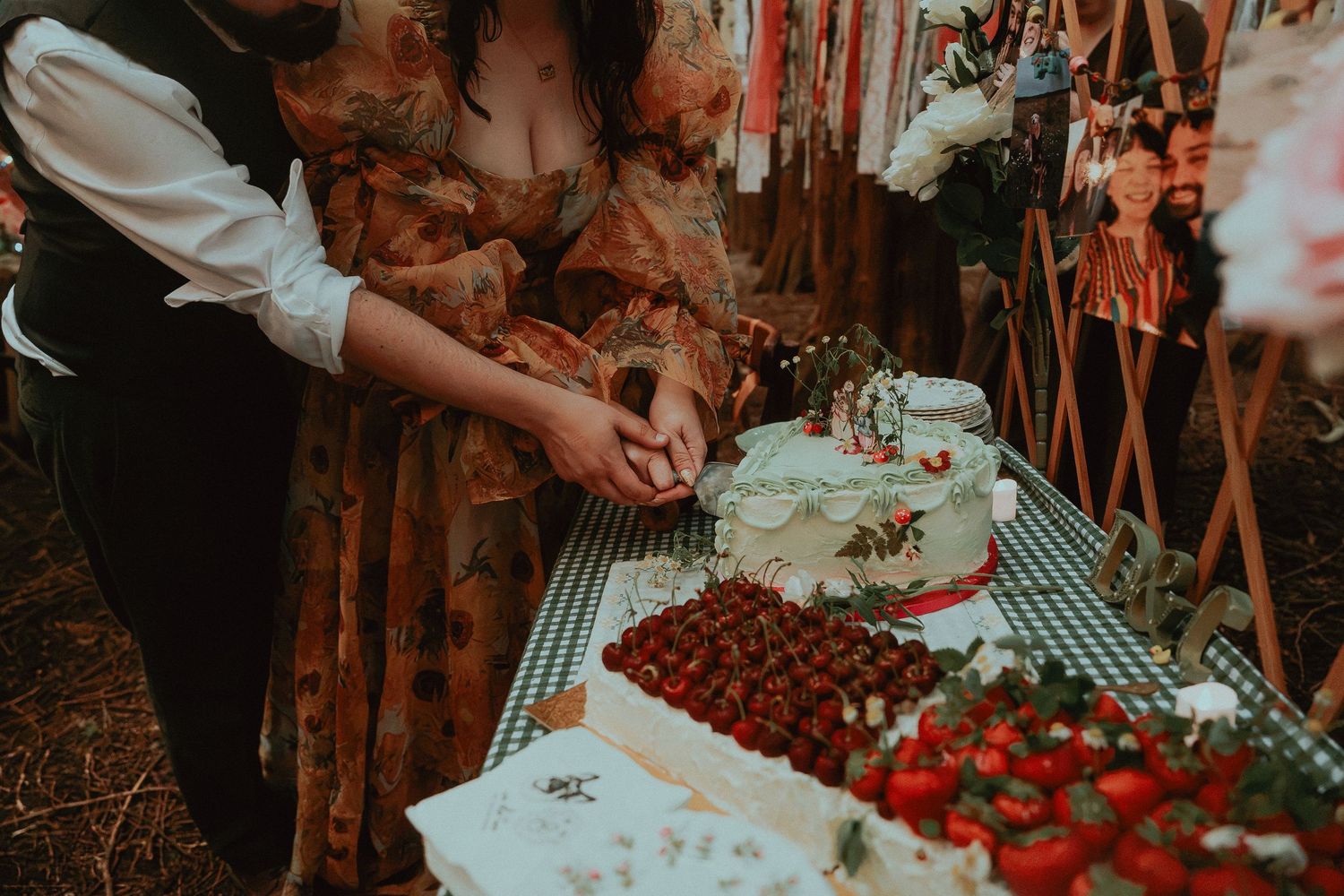
Your wedding doesn't have to look like anyone else's
There is no perfect wedding.
There is no perfect timeline.
There is no correct amount of photography.
There is no required number of traditions.
There is no rule saying you have to fill every gap.
You can have the big wedding.
You can have the tiny wedding.
You can get married in a church.
You can get married outside.
You can have a huge party.
You can disappear into the countryside with your favourite people.
You can follow traditions.
You can ignore them.
Or you can take the bits you love and leave everything else behind.
Make space for the wedding that actually belongs to you.
You don't have to choose between photographs and enjoying your wedding
This is perhaps the biggest misconception we want to challenge.
Good documentary photography shouldn't require you to sacrifice your wedding day.
You shouldn't have to choose between:
being present
and
having beautiful photographs.
The two can exist together.
In fact, when there is enough space, they often make each other better. You're more relaxed. Your guests are more relaxed. The moments become more natural. And there is more room for us to notice what is actually happening.
Making Space, in practice
If you take nothing else from this guide, take these with you:
Plan what matters.
Don't automatically include something because it's traditional or expected.
Leave room between things.
A little breathing space can prevent the whole day becoming a race.
Give important moments enough time.
Don't squeeze the things you'll care about most.
Don't over-plan the photographs.
Tell us what matters. Let us document the rest.
Expect the unexpected.
Something will change. That's okay.
Protect time with your people.
You invited them because you want them there.
Let the weather happen.
Have a plan, then be flexible.
Don't spend your wedding watching the clock.
The timeline is there to support you.
You aren't there to serve the timeline.
Make Space for the Story
Your wedding doesn't need to be perfectly planned. It needs to feel like yours.
The best photographs aren't always created when everything goes according to plan. Sometimes they're created because you had another ten minutes. Because the rain changed your plans. Because your friends stayed outside a little longer. Because you didn't rush away from your grandparents. Because you stopped checking the time. Because, for once, there was nowhere else you needed to be.
Make space for those moments.
We'll be there to photograph them.
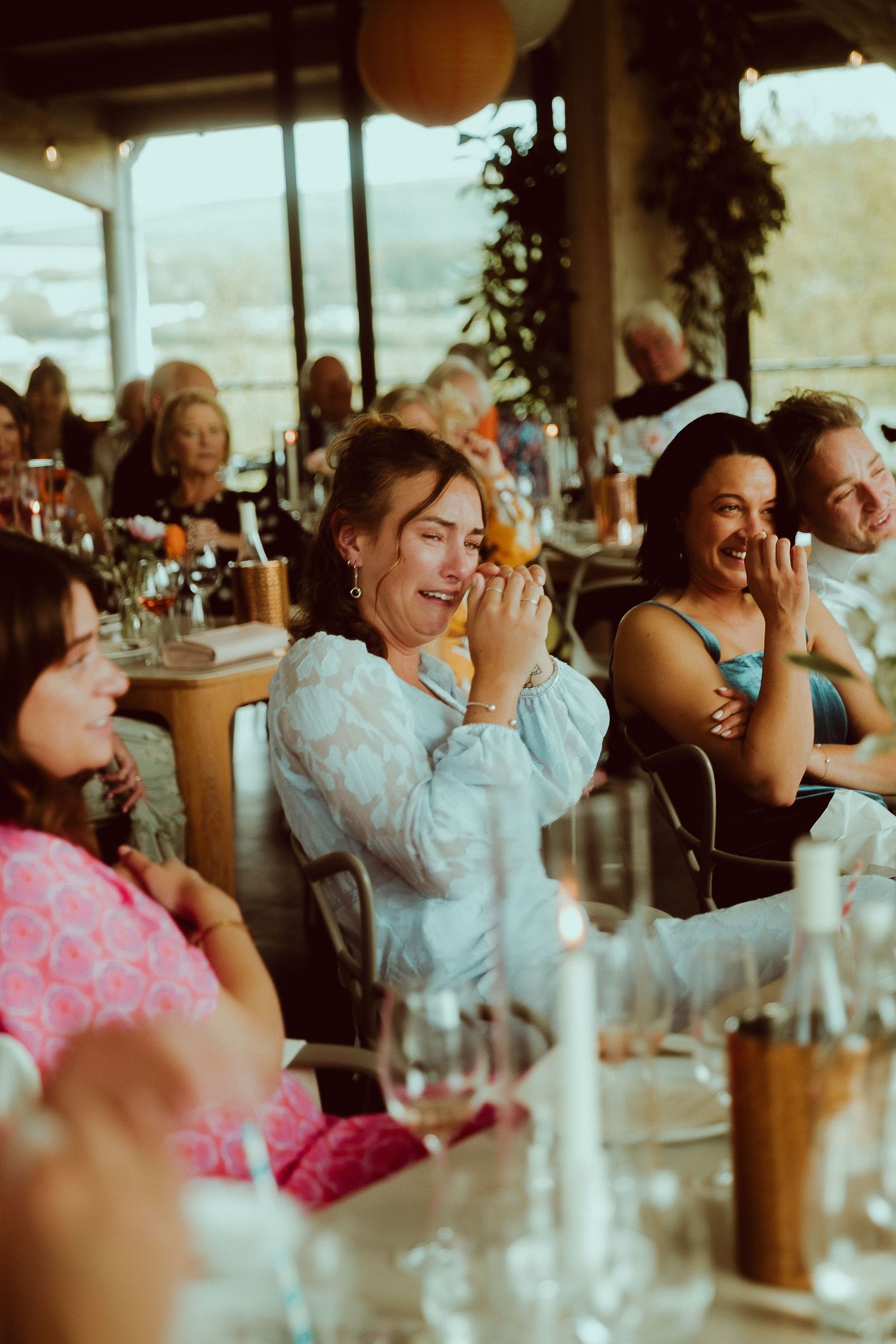
And then, let it happen
Once you've made the important decisions, there comes a point where you have to stop planning.
The flowers will arrive.
The guests will turn up.
The ceremony will begin.
Someone will probably be late.
Someone will probably cry.
Someone will definitely laugh at the wrong moment.
The weather will do whatever it wants.
And eventually, you'll look around and realise that the day you've spent so long planning is actually happening.
That's the moment the planning has done its job.
You don't need to manage it anymore.
You just need to be there.
How long should a wedding timeline be?
There isn't a standard length. A timeline should reflect the number of locations, people, traditions and events you've chosen, while leaving enough breathing room that small delays don't immediately create stress.
How much time should we leave between the ceremony and reception?
Enough for your guests to move, congratulate you, have a drink and settle in without feeling rushed. If you also want family photographs or couple portraits during this time, build that into the window rather than trying to squeeze it around everything else.
How long should couple portraits take?
As long as you want them to. For a relaxed set of portraits, fifteen or twenty minutes can be plenty. If portraits are important to you, you can give them more time. There isn't a correct amount.
Do we need a first look?
No. A first look can be lovely, but it's completely optional. Choose it because you want the experience, not because you think you should.
Do we need to plan sunset photographs?
Not necessarily. If golden-hour photographs matter to you, we'll make space for them. If you're having a brilliant time with your guests, you don't need to leave the party simply because the sun is setting.
What happens if we're running late?
We'll adapt. Small delays are normal at weddings. The important thing is prioritising what matters and avoiding the temptation to panic or rush through the rest of the day.
What happens if it rains?
We make a plan and then respond to the weather as it happens. Sometimes we'll move indoors, sometimes we'll wait, and sometimes we'll photograph the rain. It doesn't have to become a disaster.
Can we have documentary photography if our wedding has a strict schedule?
Absolutely. Documentary photography doesn't require a completely open timeline. We work within your plans and look for opportunities to photograph naturally around them.
Can we have family photographs without spending ages on them?
Yes. A clear list of the combinations you genuinely want, plus someone who can help gather people, makes formal family photographs much quicker and easier.
Can we have photographs without spending hours away from our guests?
Yes. A lot of documentary coverage happens while you're already with your guests. We can also keep any intentional portrait time short and purposeful.
What if we're awkward in front of the camera?
That's completely fine. You don't need to know how to pose. We'll give you direction when it helps and otherwise let you interact naturally.
Can our children and dogs be included?
Absolutely. If they're part of your life, they're part of the story. We can make specific photographs with them while also documenting the unpredictable moments that happen naturally.
How much photography coverage do we actually need?
It depends on what you want remembered. Think about whether the morning, ceremony, reception, evening and party are all important to you, then choose coverage that gives those parts enough room rather than simply choosing the longest package.
Do we need a detailed shot list?
Usually, no. We do need to know about the important people, relationships and specific photographs you don't want to miss. Beyond that, we prefer to document the day as it unfolds.
Our aim is to deliver something that still feels just as meaningful years from now as it does the day you first watch it.
Delivery times vary depending on the time of year and the type of film you've chosen, but we'll always give you a clear expectation before your wedding and keep you updated throughout the editing process.
We'd rather take the time to tell your story well than deliver something simply because a deadline arrived.
What if we want both natural photographs and some posed portraits?
You can absolutely have both. Documentary coverage and a little direction aren't opposites. We can create a small amount of intentional portrait time while keeping the rest of the day natural.
How do we make sure our wedding doesn't feel rushed?
Build the day around what matters, leave gaps between major events, keep travel realistic, avoid overloading the timeline and accept that things will change. The aim isn't to prevent every delay. It's to make sure a delay doesn't derail the whole experience.
How much time should we actually leave between parts of the day?
There isn't one perfect amount of time. It depends on what you want that space to give you.
A few minutes might be enough to let people move between places or catch their breath. A longer gap might give you time to have a drink with your friends, talk to your grandparents, take the dog for a walk or simply be together without immediately needing to be somewhere else.
Your timeline doesn't need to account for every minute. Sometimes the most valuable part of the day is the bit you didn't plan.
Can we have a relaxed wedding without having a completely unstructured day?
Absolutely. Making space isn't about throwing the timeline away.
A good timeline can actually give you more freedom. When the important things have enough time around them, you don't have to spend the day watching the clock or worrying about what's happening next.
The aim isn't to remove structure. It's to give the structure enough breathing room that you can forget about it.
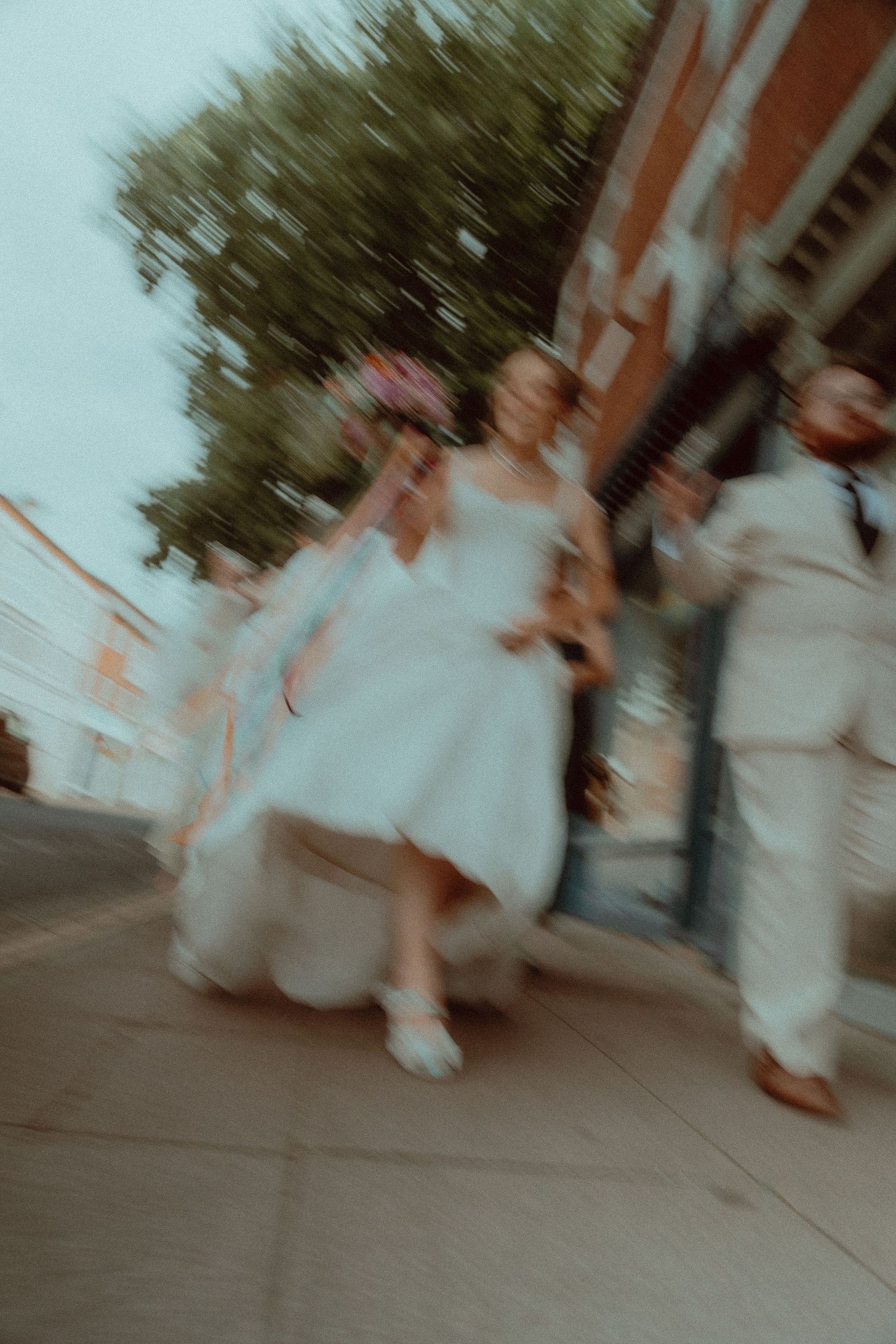
One final thought
There is no perfect way to get married.
There is only the way that feels right for you.
And if that means leaving a little more room for the unexpected, for the people you love, for the weather, for the quiet moments and for simply being there...
That's a pretty good place to start.
More Notes
Every Field Guide is only the beginning.
The ideas explored here continue through Field Notes, shorter articles inspired by real weddings, real conversations and the questions couples ask most often.
You might enjoy exploring:
- How to build a wedding timeline that leaves room to breathe
- Why the best wedding timelines aren't packed from morning to night
- How much time should you leave between parts of your wedding day?
- Planning an outdoor wedding without planning every moment
- What happens when it rains on your wedding day?
- How to plan a wedding around the people you actually want to spend time with
- Why family photographs don't have to take over your wedding day
- How to include children without making the day revolve around them
- Getting married with your dog: making space for them too
- How ceremony timing changes the feeling of a wedding
- Why sunset doesn't always need to be on the timeline
- Planning a wedding that doesn't feel like a production
- How to make space for the unexpected
- Destination wedding planning without losing the feeling of home
Continue exploring
If this guide has made you think differently about the shape of your wedding day,
there are a few natural places to explore next.
Documentary Weddings
Explore what happens when your wedding is photographed as it unfolds
→ Explore Documentary Weddings
STORIES IN MOTION
Explore how movement, voices and atmosphere can carry a memory beyond a single photograph
Slower Stories
Explore what changes when we slow down, discovering more deliberate ways of remembering a wedding.
Real Stories
See these ideas in practice through real weddings, real people and days that unfolded in their own way.
→ Explore Real Stories