The Field Guide
Every Field Guide exists for one reason. Not to convince you. Not to sell you something. But to explore an idea before a decision. This one begins with documentary wedding photography.
It's a phrase you'll probably come across countless times while planning your wedding. Some describe it as candid. Others call it natural. Relaxed. Reportage. Unposed. While each of those words tells part of the story, none of them quite explain what documentary really means because documentary isn't simply a style of photography. It's a way of seeing. Before we talk about cameras, photographs or wedding days, it helps to understand what documentary is really trying to protect.
Not a style. But a way of remembering.
Documentary isn't about avoiding posed photographs.
One of the biggest misconceptions about documentary wedding photography is that it means never giving direction. Never taking family photographs. Never creating portraits. That's not what documentary means.
The purpose of documentary photography isn't to remove every moment of guidance; it's to remove unnecessary interruption. Sometimes people need a little reassurance. Sometimes grandparents appreciate a few moments together for a family photograph. Sometimes it's worth stepping away for ten quiet minutes together while the rest of the day continues around you. Those moments have their place.
What matters is that they never become the entire experience. Your wedding shouldn't feel like a photoshoot with a celebration squeezed in between.
It should feel like a celebration that happens to be beautifully documented.
Some weddings are remembered differently.
Every wedding begins with a plan: the ceremony, the speeches, the first dance, the photographs.
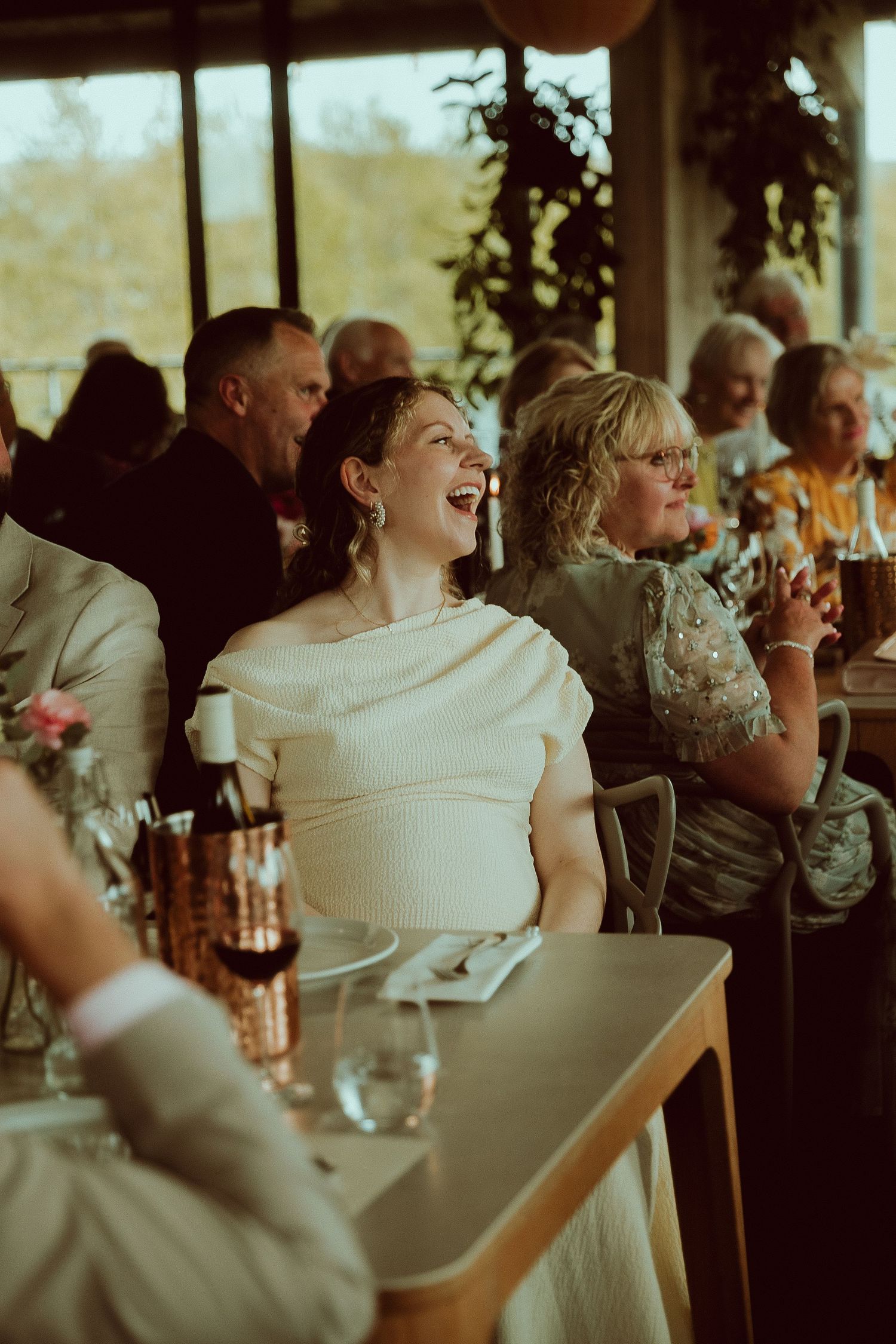
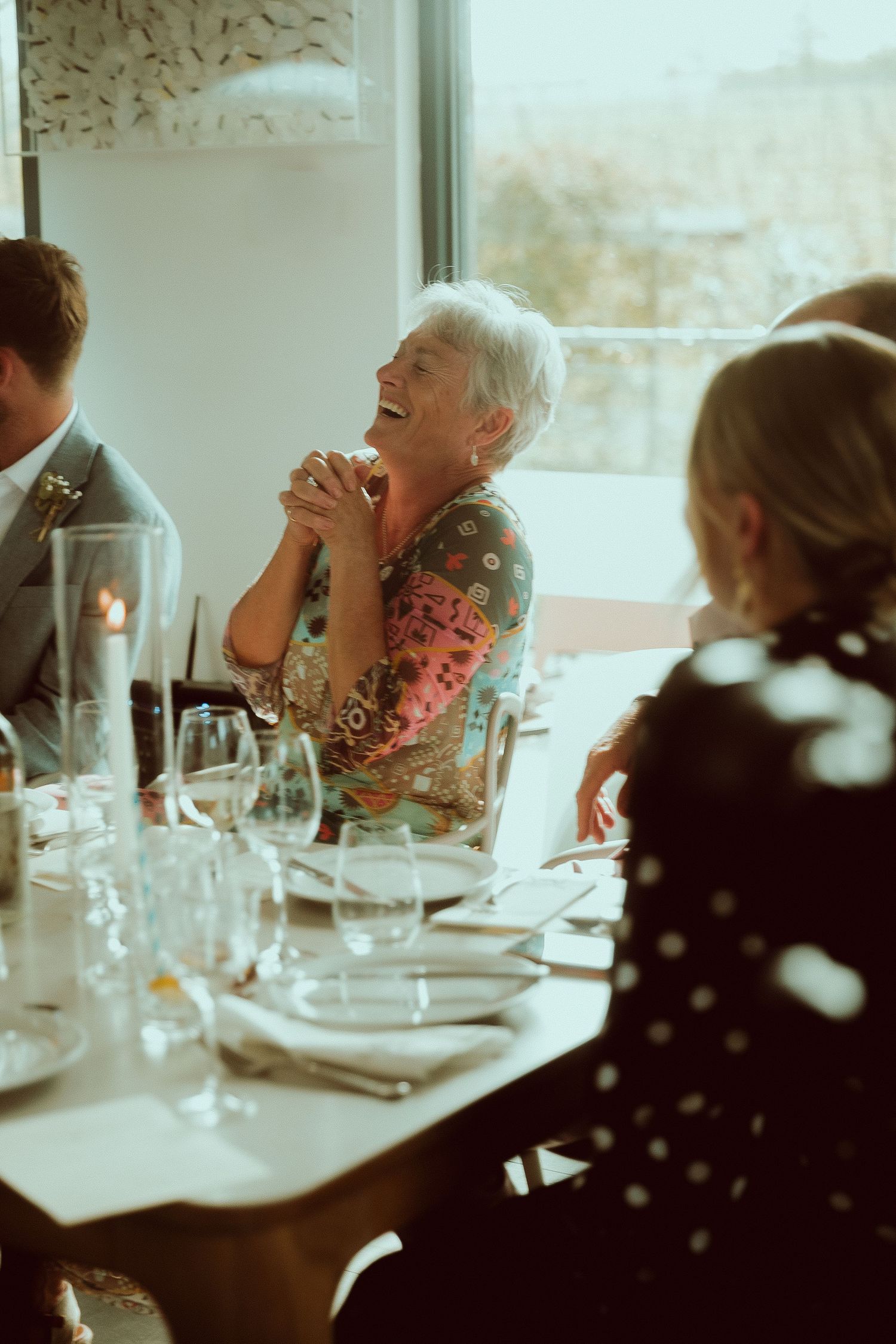
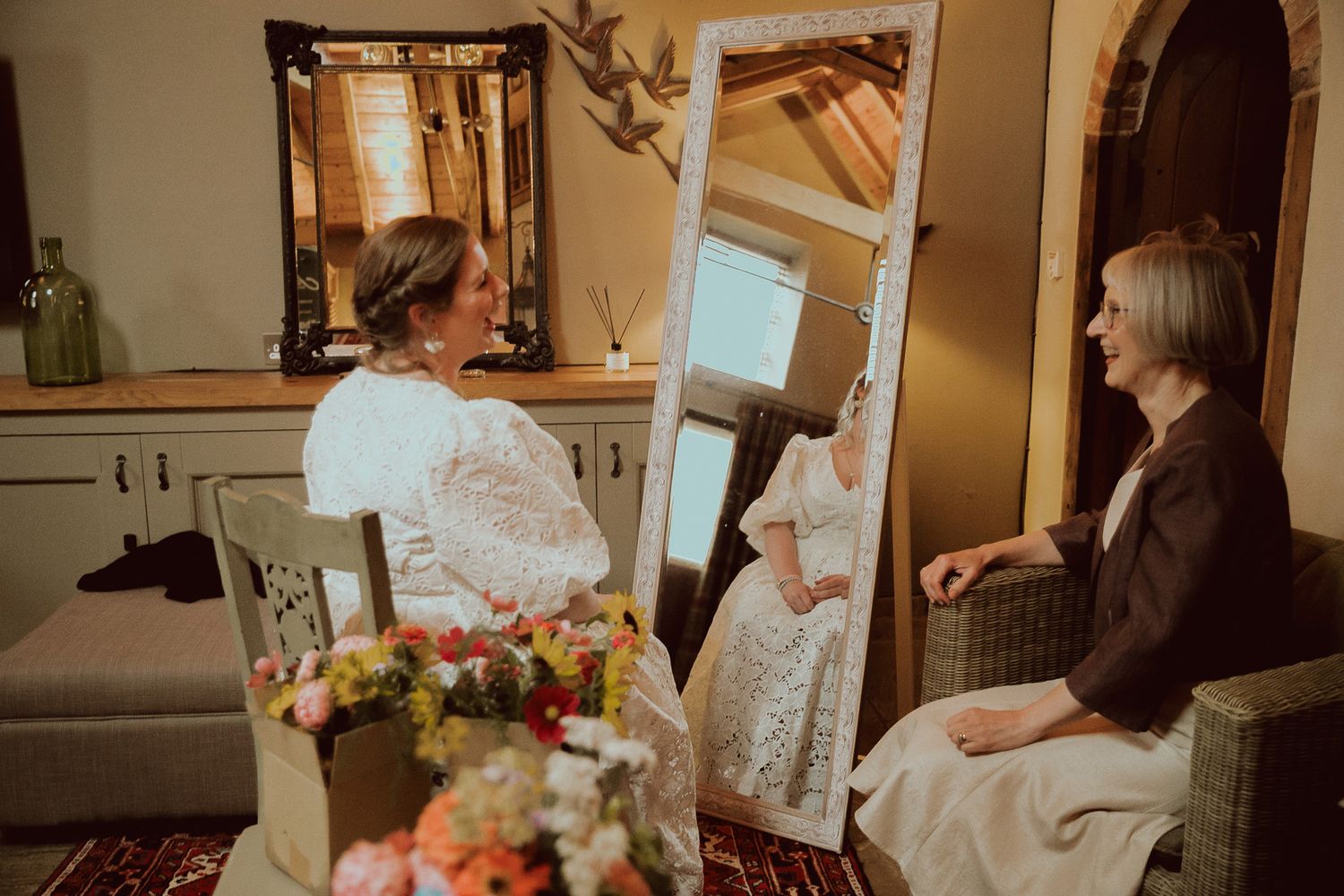
But the moments people remember years later are rarely the ones written into a timeline. They're the unexpected ones. The deep breath before the ceremony begins. Your mum fastening the last button on your dress without saying a word. Your best friend laughing so hard they forget where they were standing.
Your grandparents sitting together while everyone else rushes past. The look you shared across the room when nobody else noticed. These aren't moments anyone can schedule.
They simply happen. And once they're gone, they're gone.
Documentary wedding photography exists because the most meaningful parts of a wedding are often the ones nobody planned. It isn't about creating a perfect version of the day. It's about quietly protecting the one that actually happened.
Documentary begins with trust.
Trust that your wedding doesn't need performing. Trust that your favourite people already know how to laugh together. Trust that emotion doesn't need directing. Trust that your story is interesting enough without asking you to recreate it.
That trust changes everything.
Instead of searching for photographs to create... We begin looking for moments already unfolding. A conversation between siblings. The quiet before the ceremony. Parents taking everything in before the day moves on again.
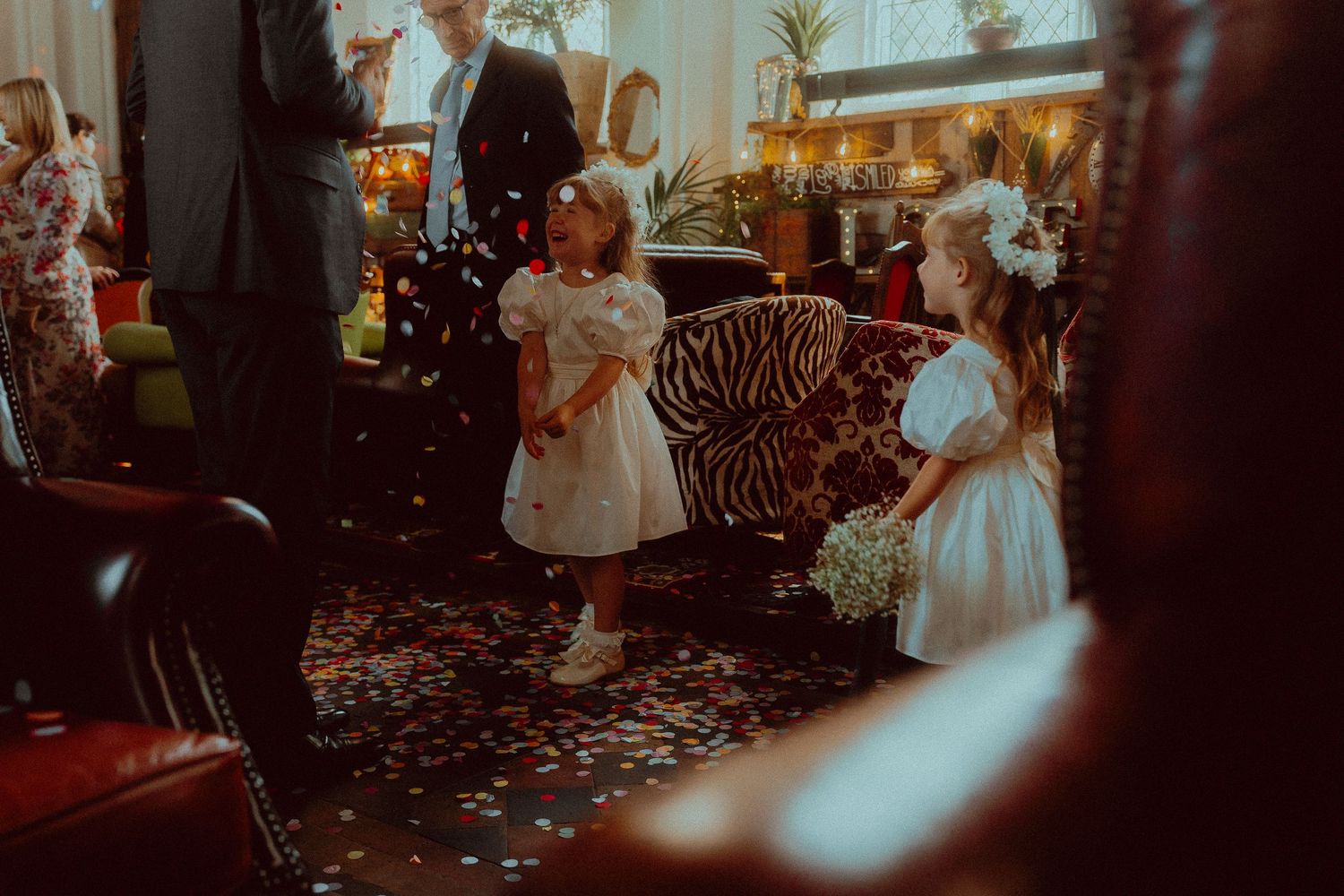
These are the moments that slowly become priceless. Not because they were spectacular. But because they were yours.
Why this guide exists:
Choosing a wedding photographer isn't simply choosing somebody to take beautiful photographs. It's choosing how one of the most meaningful days of your life will be remembered.
For some couples, documentary photography feels immediately familiar. For others, it's a phrase they've heard but never fully understood.
This guide exists to change that. Inside you'll discover what documentary wedding photography really means, how it differs from more traditional approaches, what it actually feels like on the day, and why so many couples choose to experience their wedding rather than perform it.
Whether documentary photography is right for you or not, our hope is that you'll leave seeing weddings a little differently. Because in the end, documentary photography has never been about taking photographs. It's always been about protecting memories.
This guide explores:
- What documentary wedding photography really is.
- The difference between documentary and traditional wedding photography.
- Common misconceptions about documentary photography.
- How we quietly work throughout a wedding day.
- Why presence matters more than perfection.
- Whether documentary photography is the right fit for your wedding.
- Questions couples often ask before booking.
- Field Notes that explore each topic in greater depth.
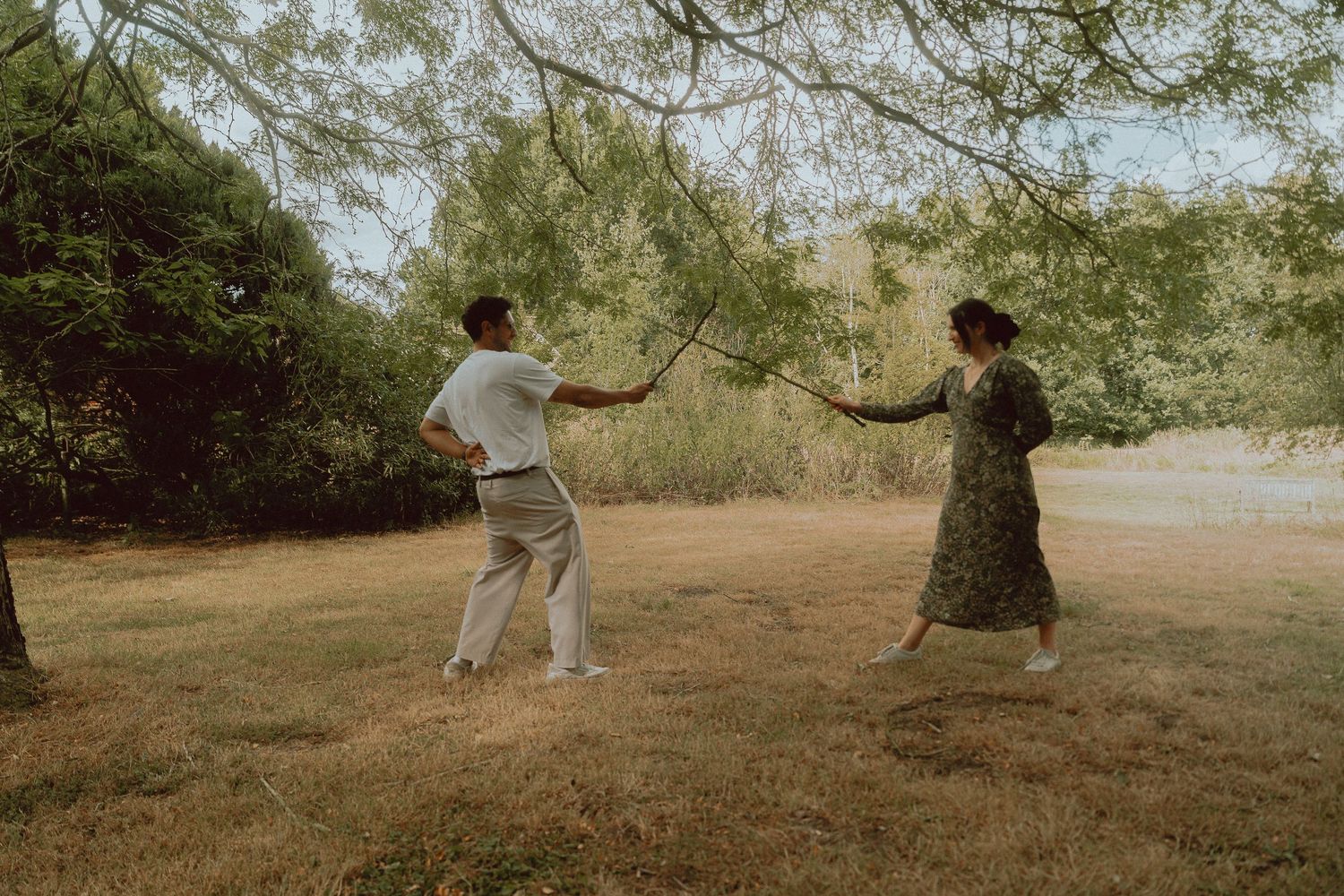
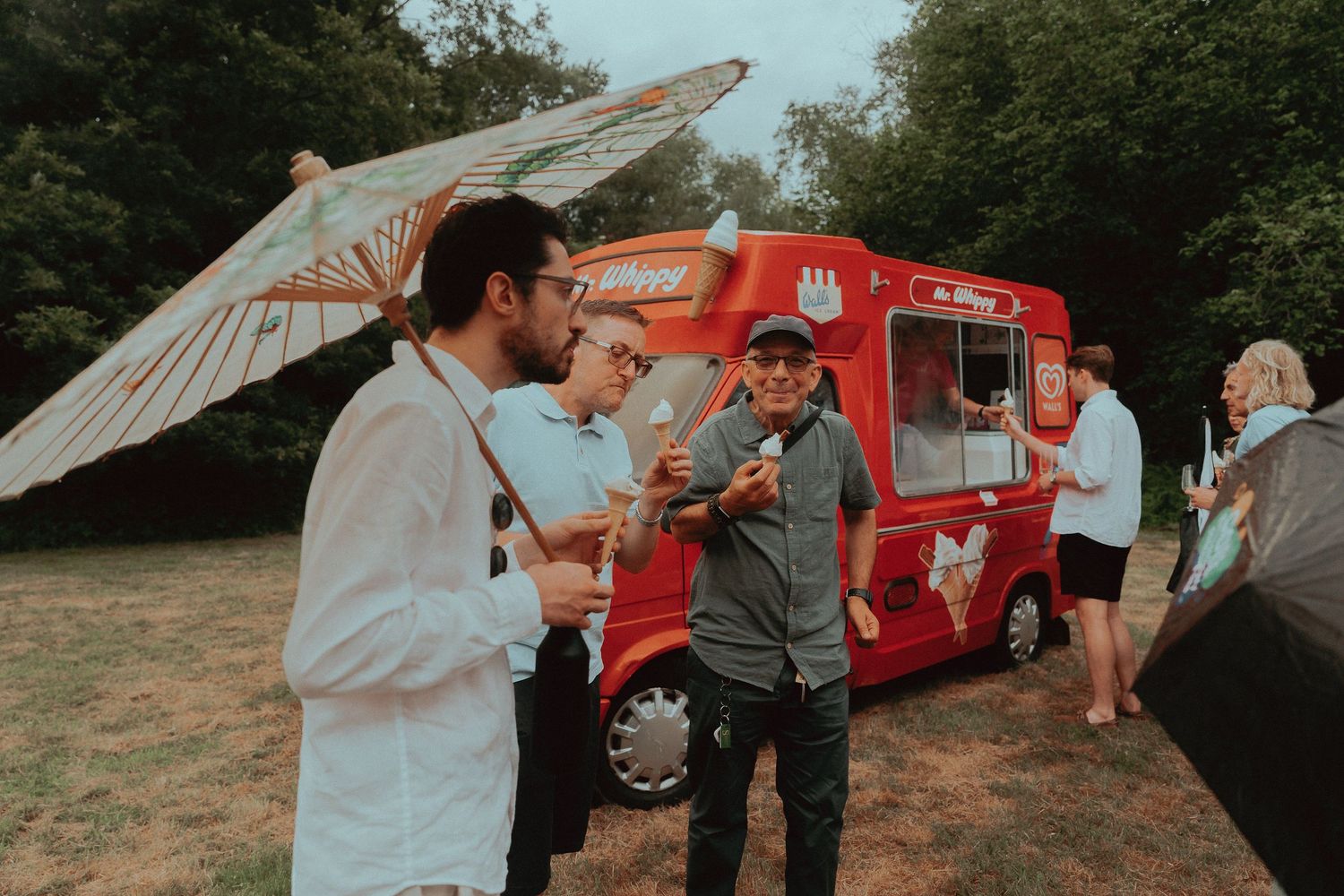
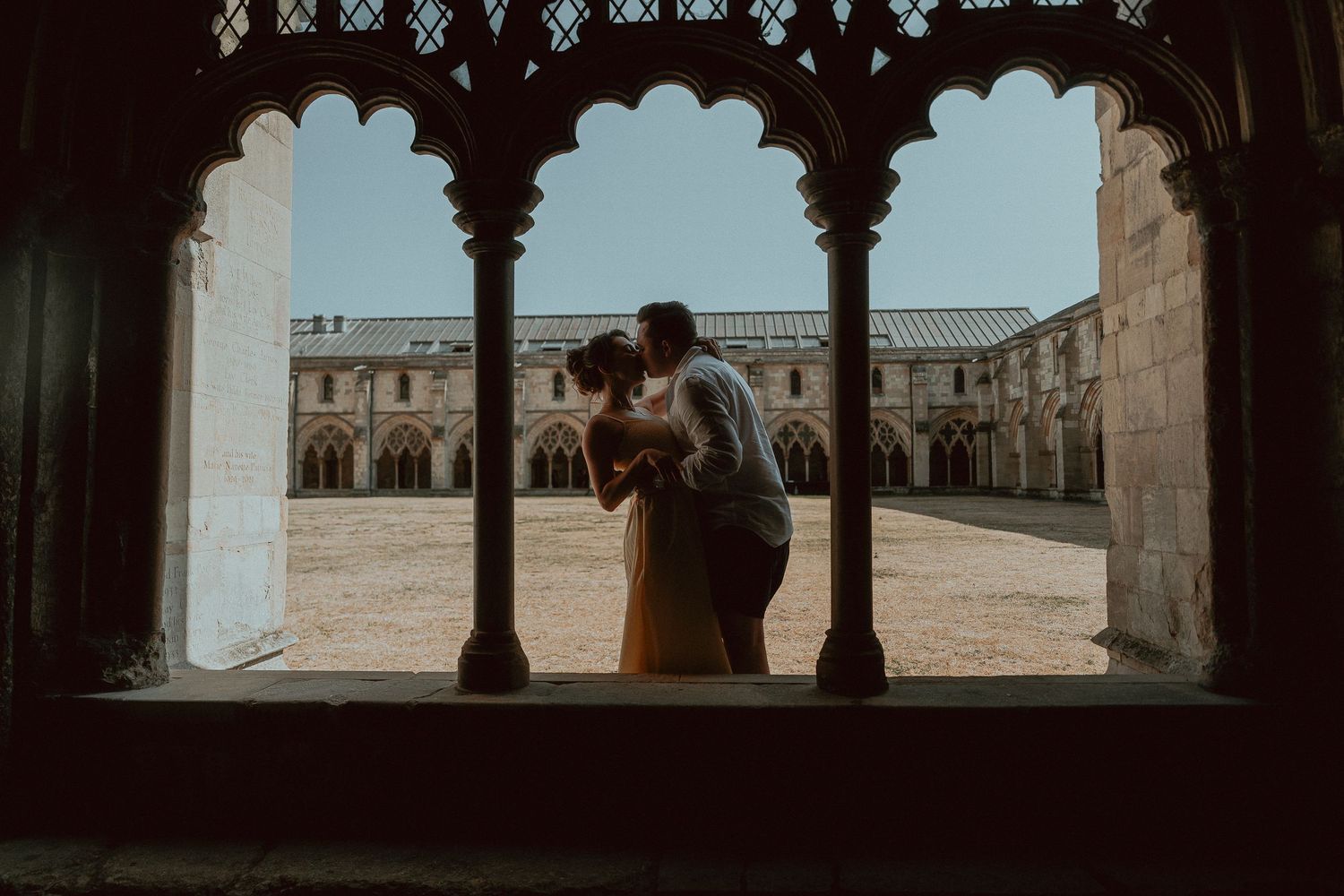
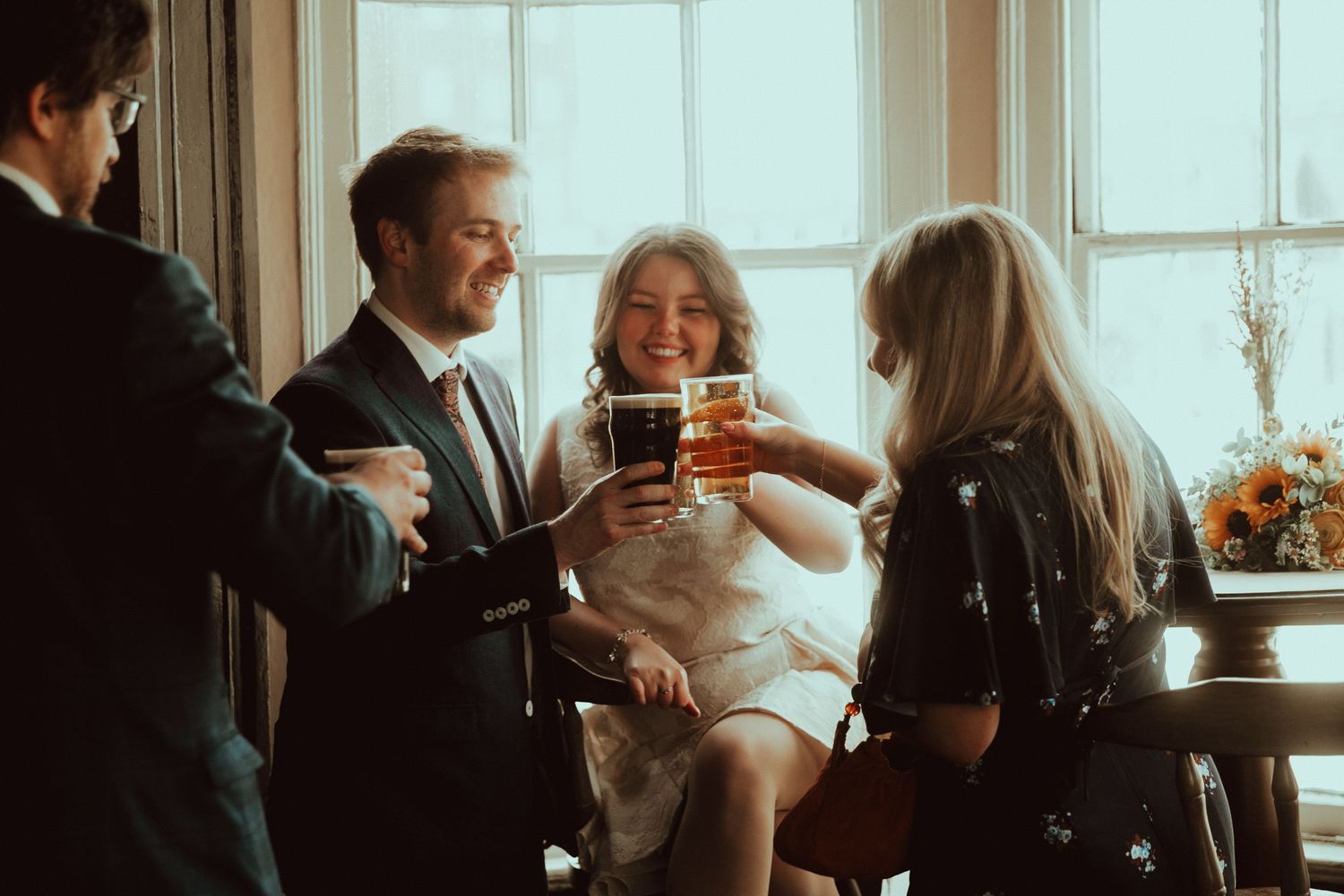
Documentary isn't about perfection.
It's about honesty. Wedding days are beautifully unpredictable.
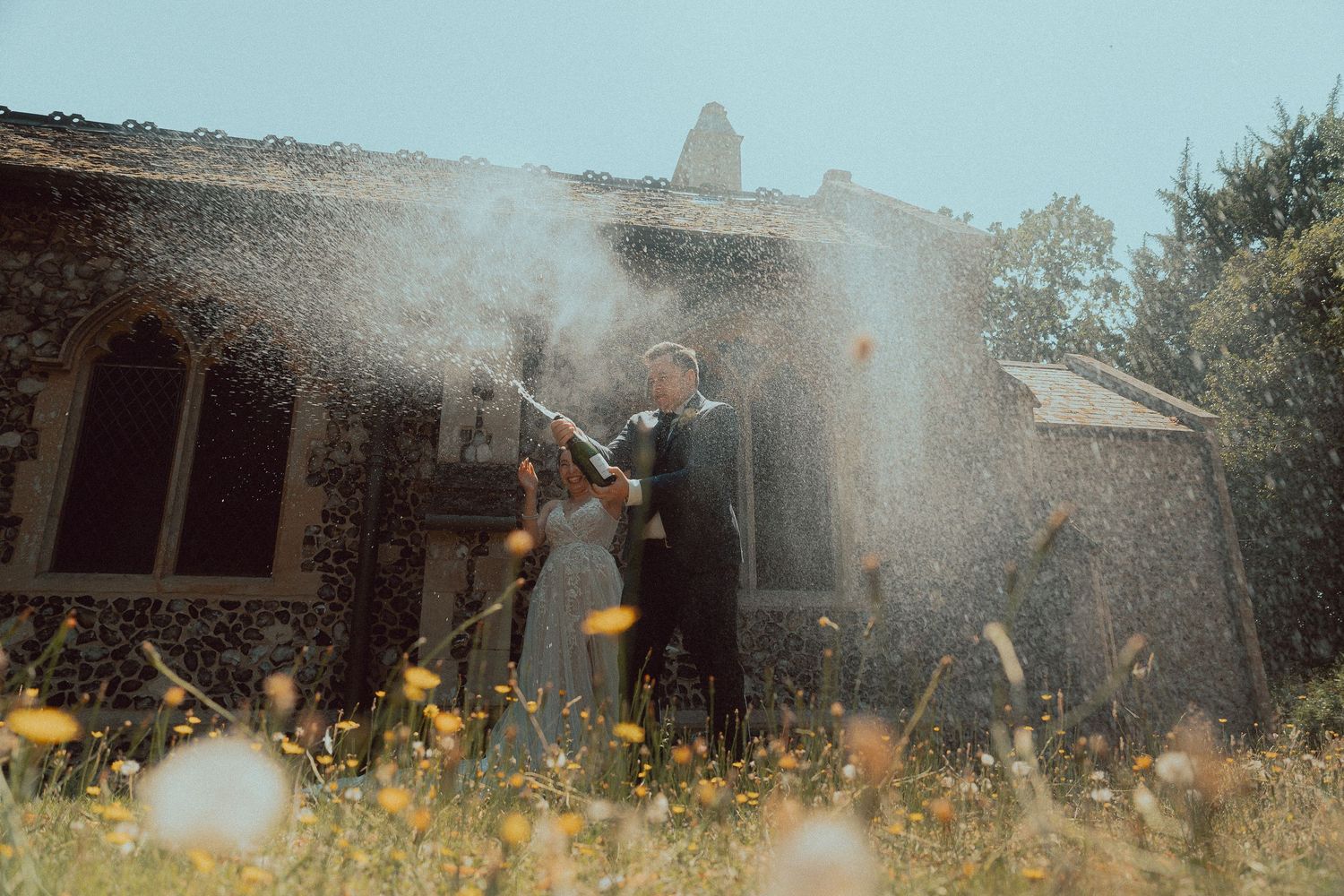
It rains when sunshine was forecast.
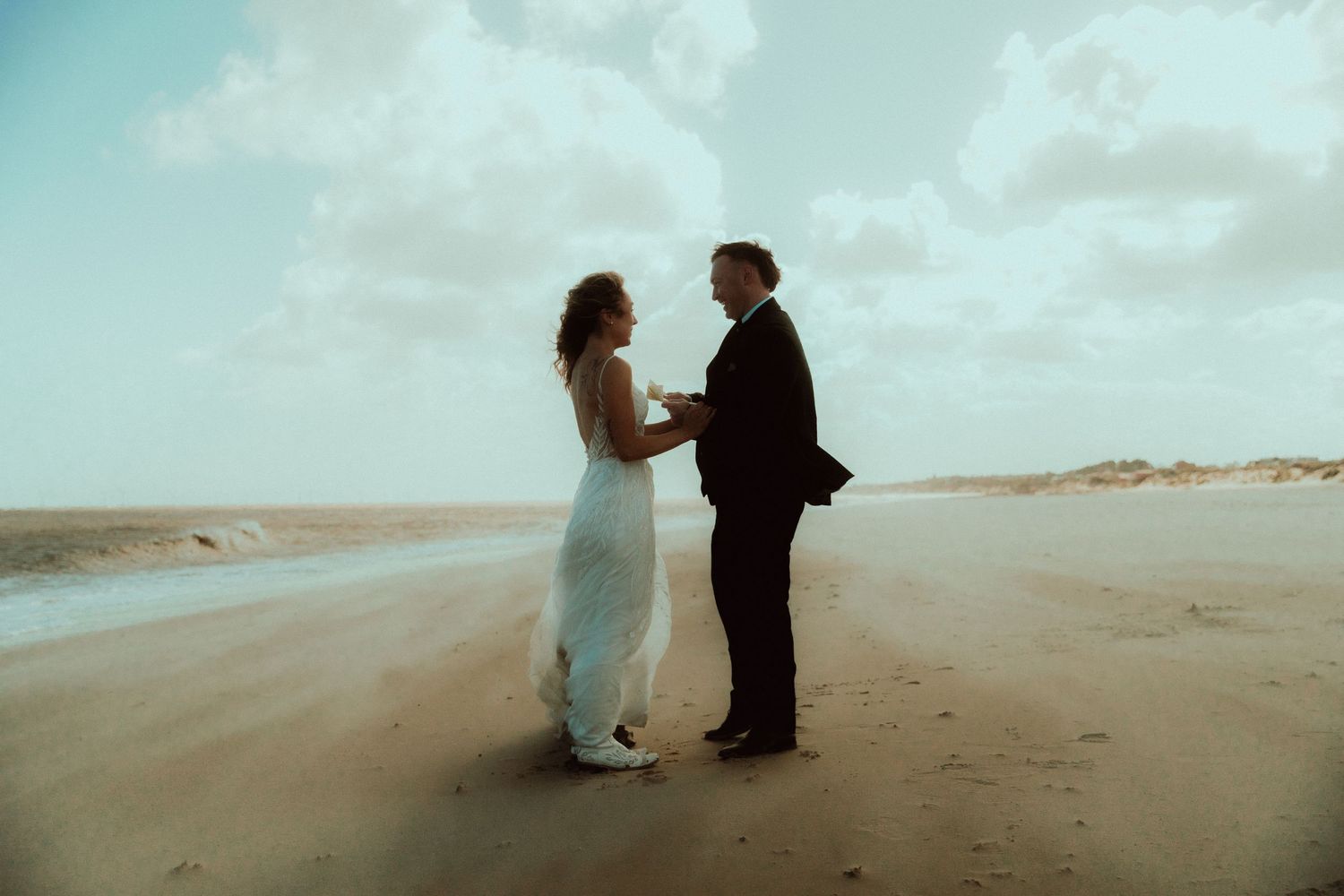
A veil catches in the wind.
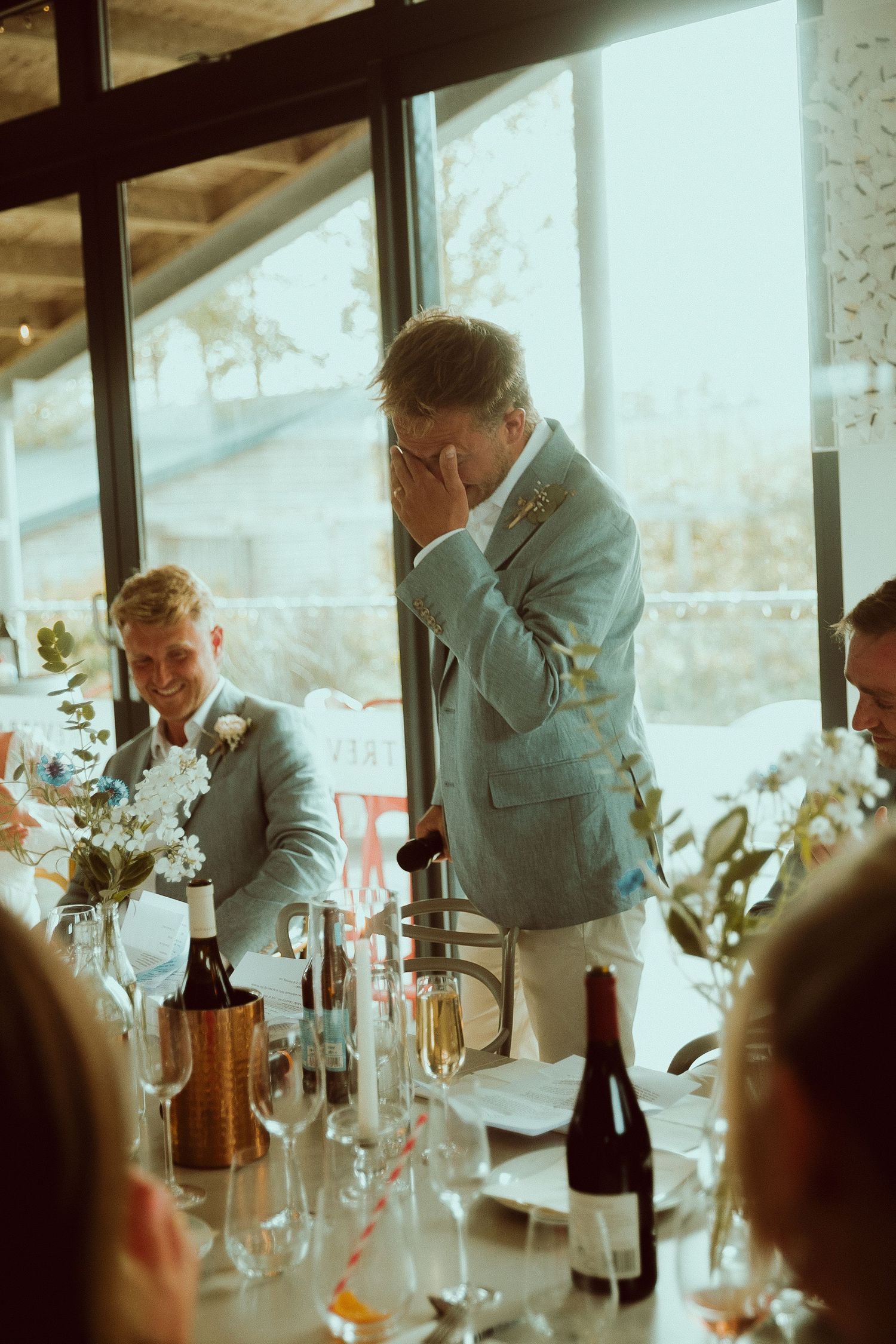
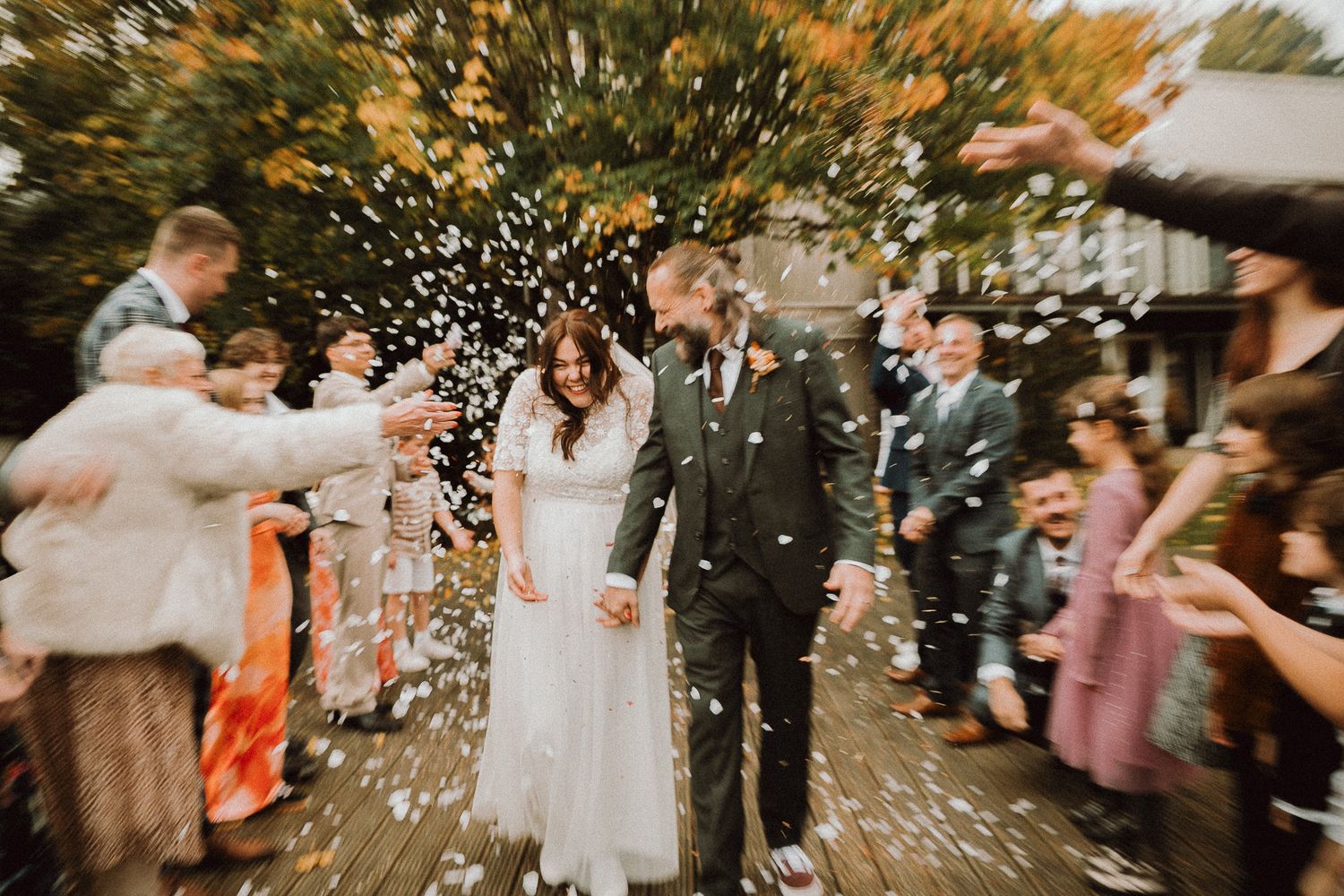
Someone laughs during the vows. A parent cries unexpectedly during the speeches.
None of these moments ruin the story. They are the story.
Perfection has a strange way of feeling distant over time. Honesty doesn't.
Years from now, you probably won't remember whether every chair was perfectly aligned or every flower remained exactly where it was placed.
You'll remember how people looked at one another. You'll remember how the day felt. That's what documentary photography quietly protects.
What is documentary wedding photography?
Documentary wedding photography is often described using words like candid, natural, relaxed or unposed.
While each of those words tells part of the story, none of them really explain what documentary means.
Documentary wedding photography isn't simply a style of taking photographs. It's a way of seeing.
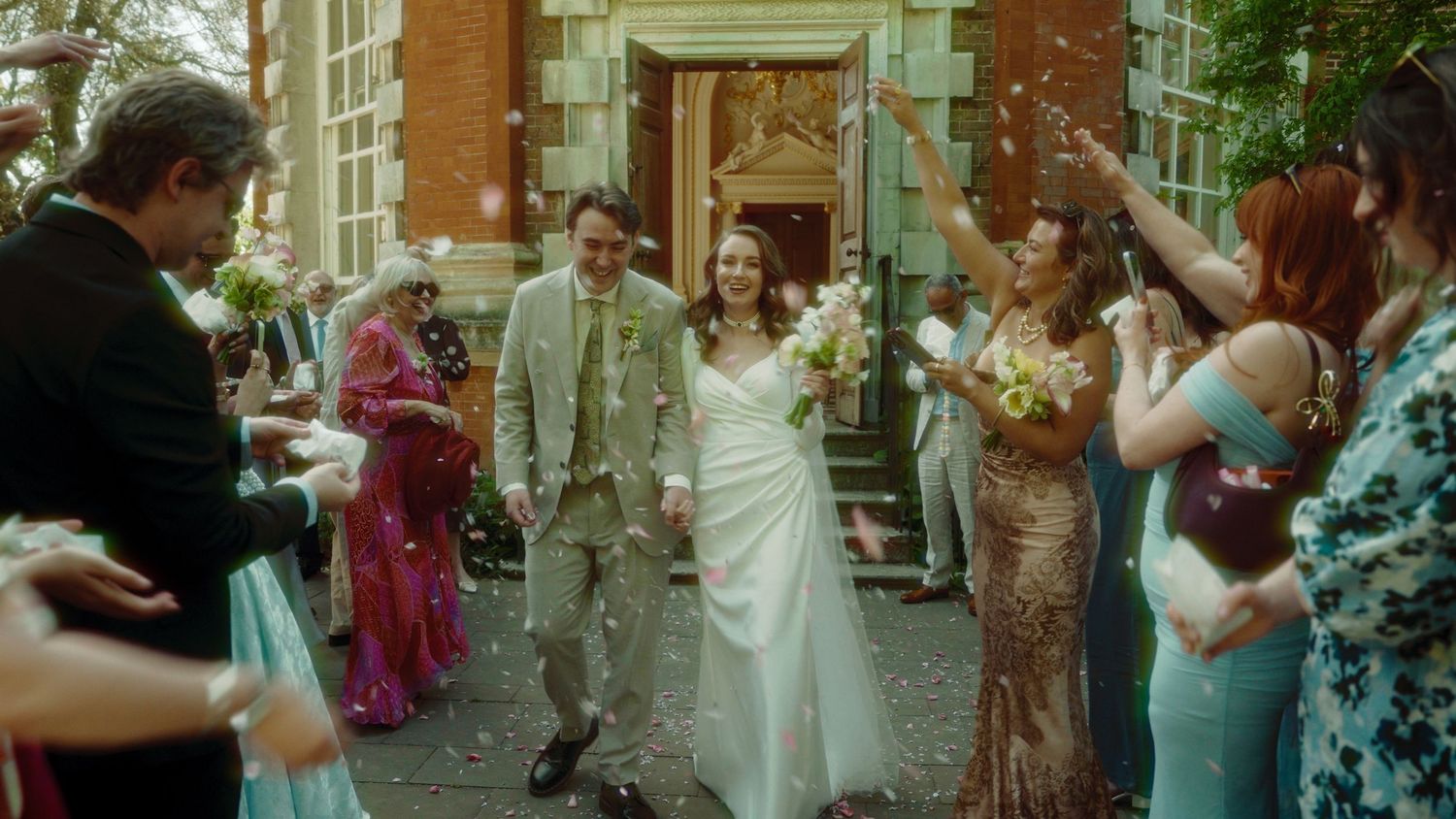
Rather than directing a wedding from the outside, documentary photographers quietly become part of it. They observe, anticipate and respond to what is already happening, allowing real moments to unfold naturally instead of creating new ones for the camera.
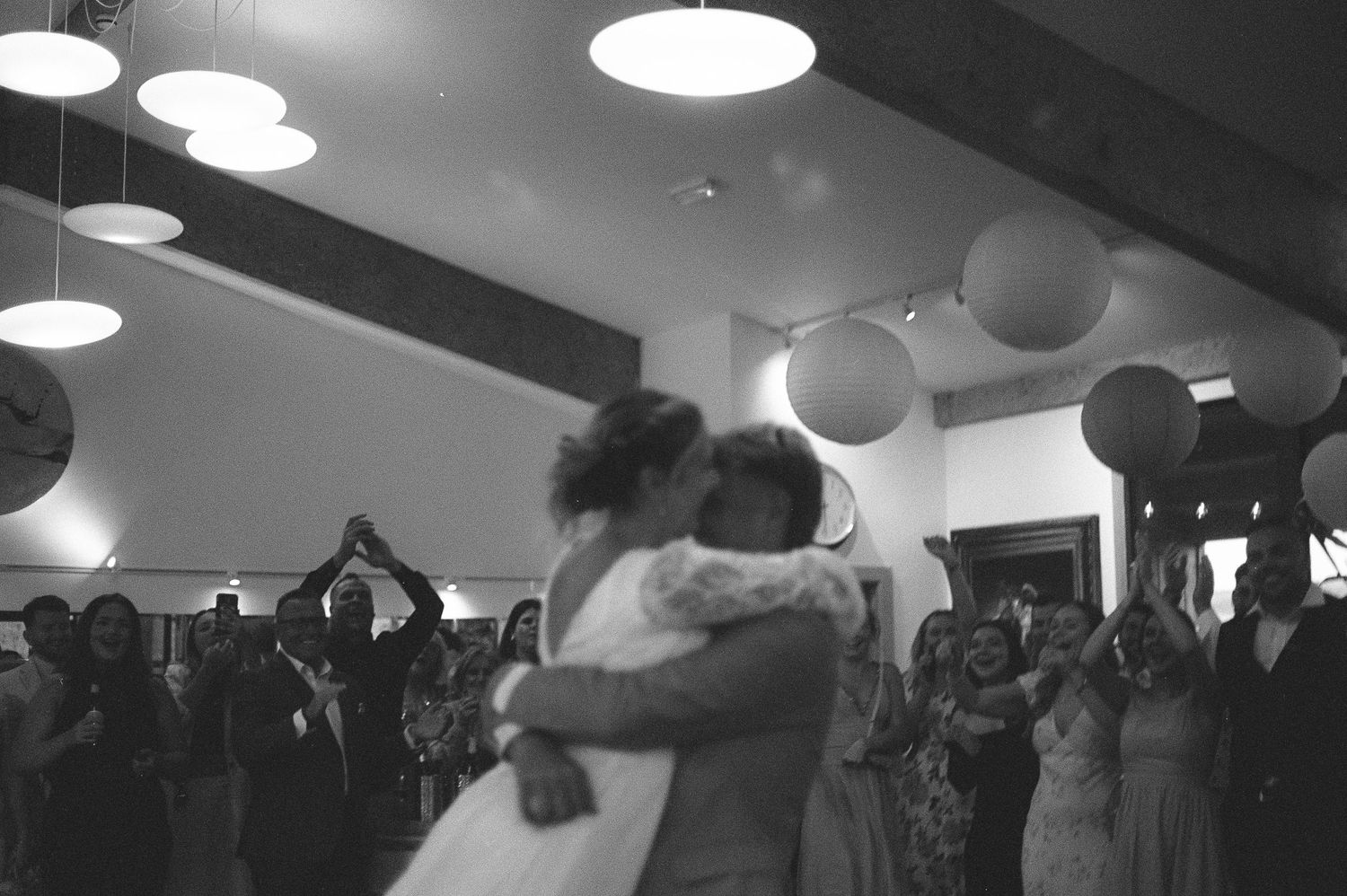
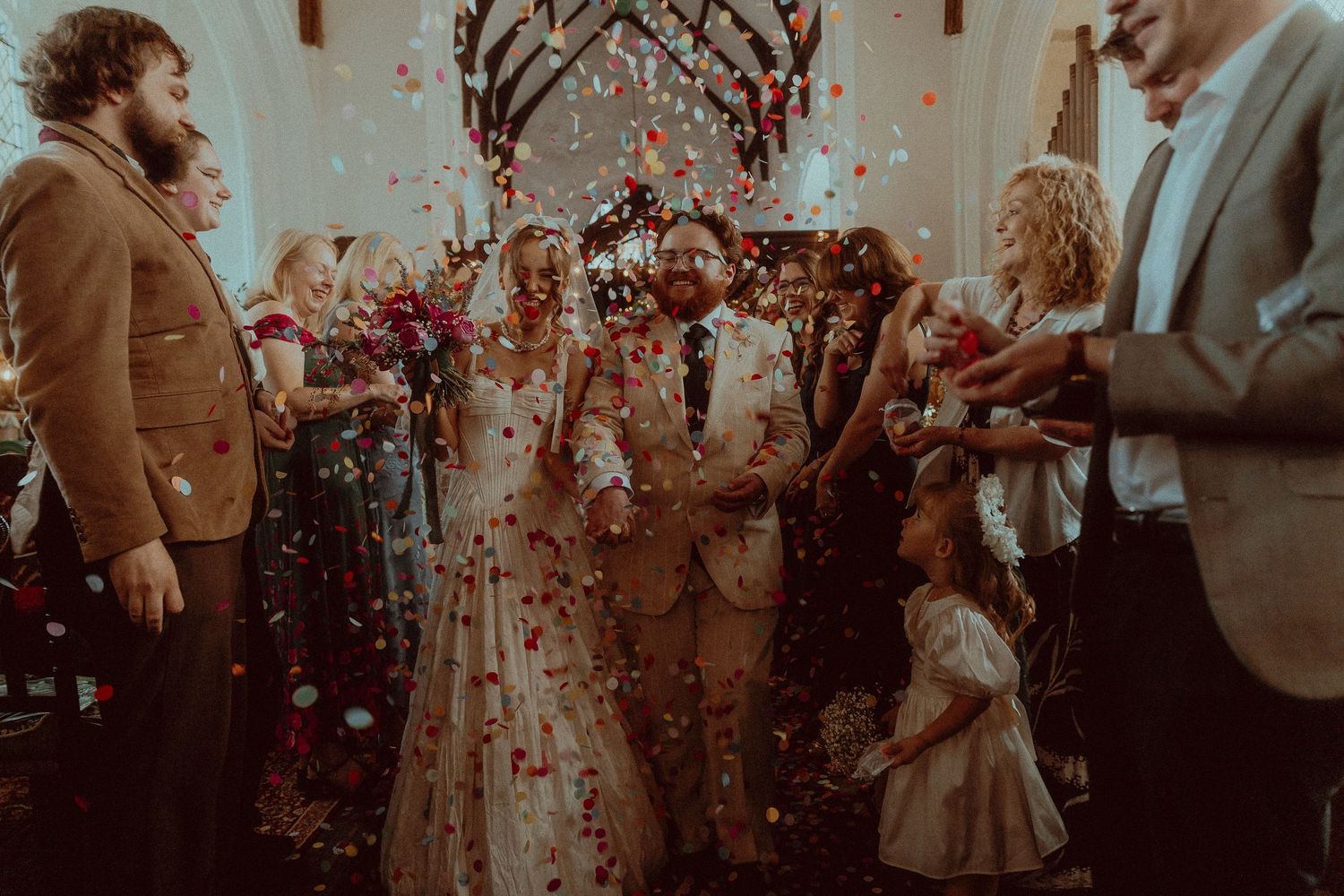
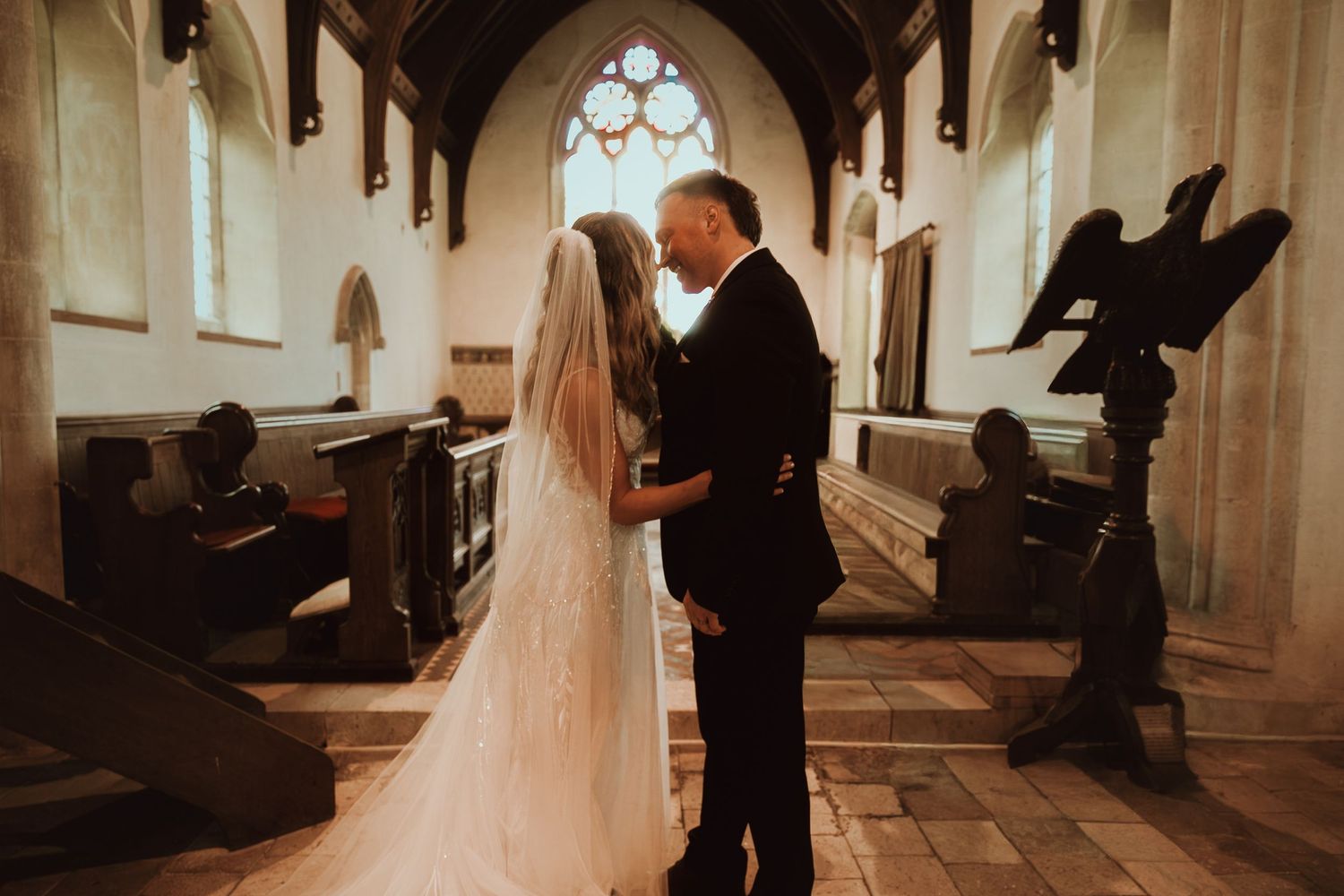
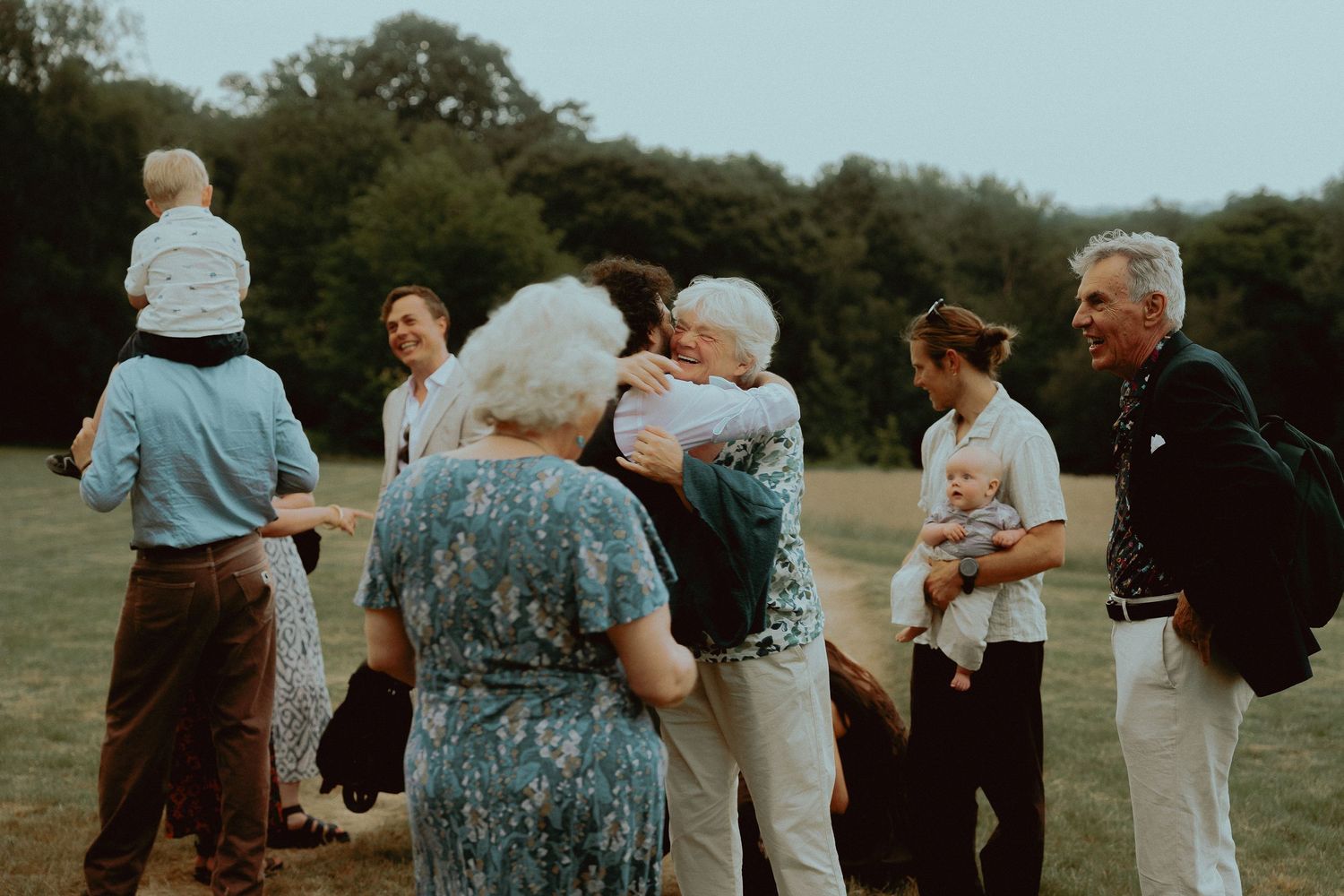
The photographs that follow aren't built around a shot list. They're built around people. The conversations that happen when nobody thinks they're being photographed. The embrace that lasts a little longer than expected. The nervous smile before the ceremony begins. The laughter that nobody could have planned.
These aren't moments created for a portfolio.
They're moments that already belonged to your wedding.
Documentary photography simply gives them somewhere to live.
Documentary doesn't mean no guidance.
One of the biggest misconceptions about documentary wedding photography is that you'll never be given any direction. That's not true.
Every wedding has moments where gentle guidance is helpful.
Family photographs are important because they're often the only time everyone is together.
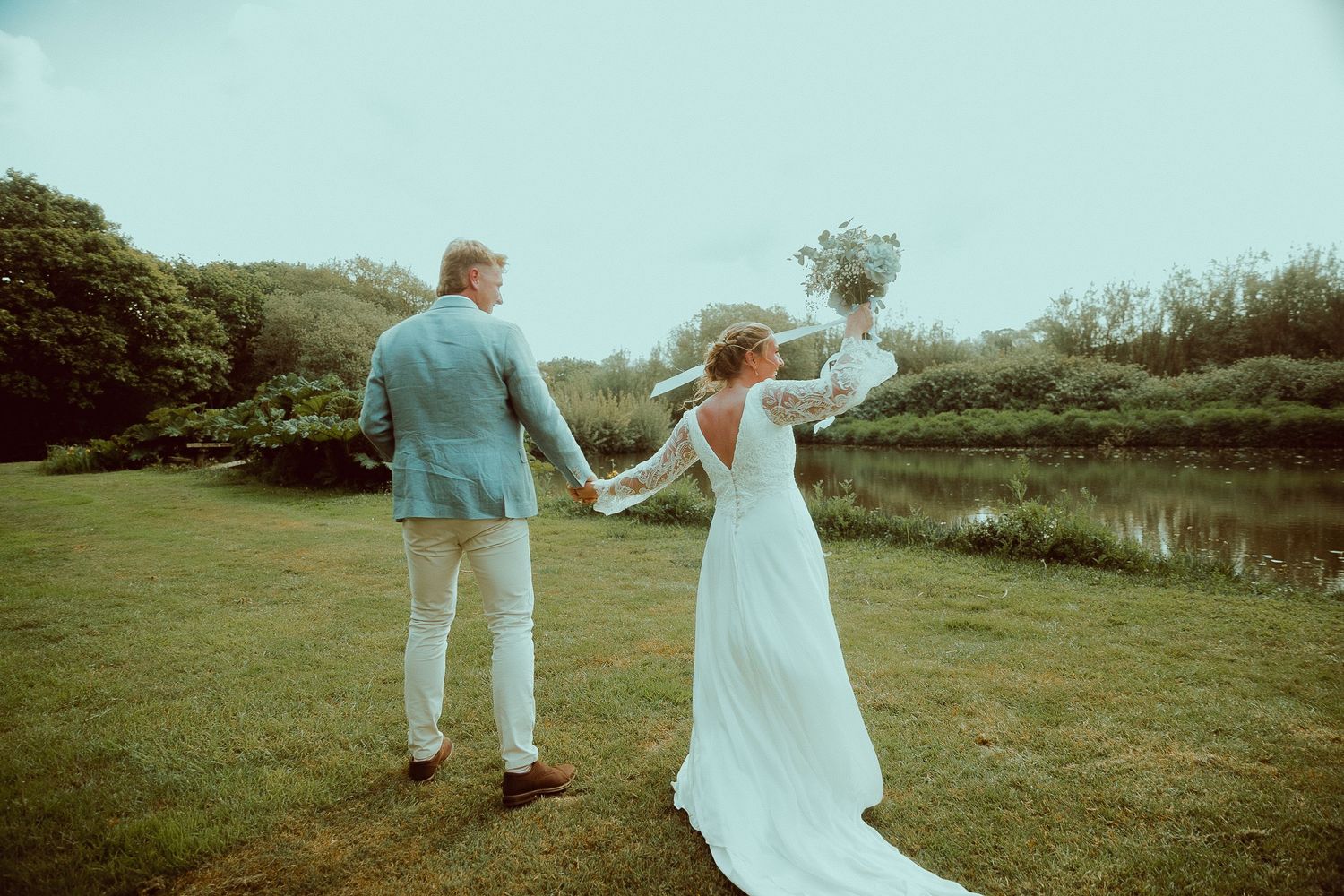
A short walk together after the ceremony can offer a chance to pause, breathe and spend a few quiet moments away from the excitement of the day.
Sometimes all that's needed is a little reassurance. The difference is intention. The guidance is there to support your experience, never replace it.
Your wedding shouldn't feel like a sequence of photographs. The photographs should feel like a natural part of your wedding.
Documentary or traditional wedding photography?
If you've started researching photographers, you've probably noticed a few different styles being described: traditional, editorial, fine art, documentary. Each one approaches a wedding differently. None of them are right or wrong. They're simply built around different priorities.
Presence over performance.
There's a quiet pressure surrounding weddings.
To make every moment look perfect. To follow every trend. To recreate photographs you've saved for years. To make sure nothing goes wrong. It's understandable. But it can also become exhausting.
Somewhere along the way, it's easy to forget why everyone gathered in the first place. Not to create photographs. To celebrate. To promise. To laugh. To cry. To spend a day with the people who matter most. That's why one of the ideas at the heart of documentary photography is beautifully simple.
Your experience matters more than the photographs.
Ironically, that's often what leads to the strongest photographs.
Because when you're completely present, you're no longer performing for the camera. You're simply living the day. The smiles become easier. The hugs last longer. The conversations become deeper.
And the photographs begin to feel less like something that was created and more like something that was discovered.
Traditional Photography
Directs many moments
Photography first
Structured posing
Carefully arranged moments
Active direction
Shot list-led
Documentary Photography
Observes real moments
Experience first
Natural interactions
Genuine emotion
Quiet observation
Story-led
Some couples love spending lots of time creating beautifully posed portraits. Others would rather spend that time talking with family, watching the sunset or simply soaking in the day. Neither choice is better.
It's simply about deciding how you want to experience your wedding.
Our approach naturally leans towards observation. Because we believe the best photographs usually happen when people stop thinking about being photographed altogether.
Before we move on...
By now, you've probably realised that documentary wedding photography isn't really about photography at all.
It's about people.
Photography is simply the language we use to remember them.
The next part of this guide explores what that looks like in practice. How we quietly move through a wedding day. How family photographs fit naturally into the story. How we create space for genuine moments instead of interrupting them. Because understanding the philosophy is only the beginning. Experiencing it is something else entirely.
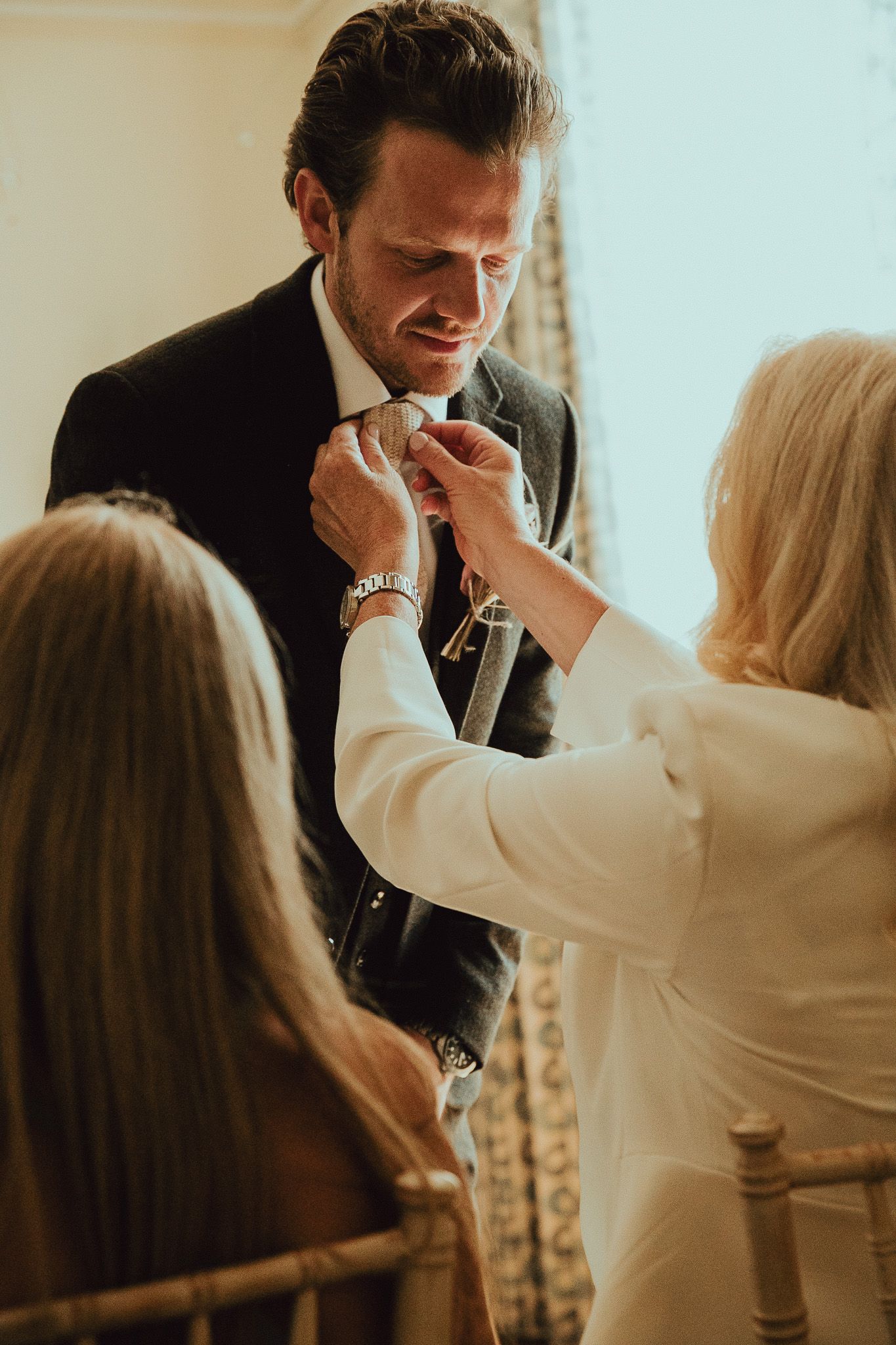
Documentary isn't invisible.
It's attentive.
People sometimes imagine documentary photographers standing quietly in a corner all day, hoping something interesting happens. The reality is very different.
Observation takes intention. It means learning the rhythm of a wedding.
Anticipating where moments might unfold, recognising relationships, understanding when to step closer and when to step back. Knowing when silence says more than words.
Documentary photography isn't passive. It's deeply attentive. The photographs may feel effortless. The attention behind them never is.
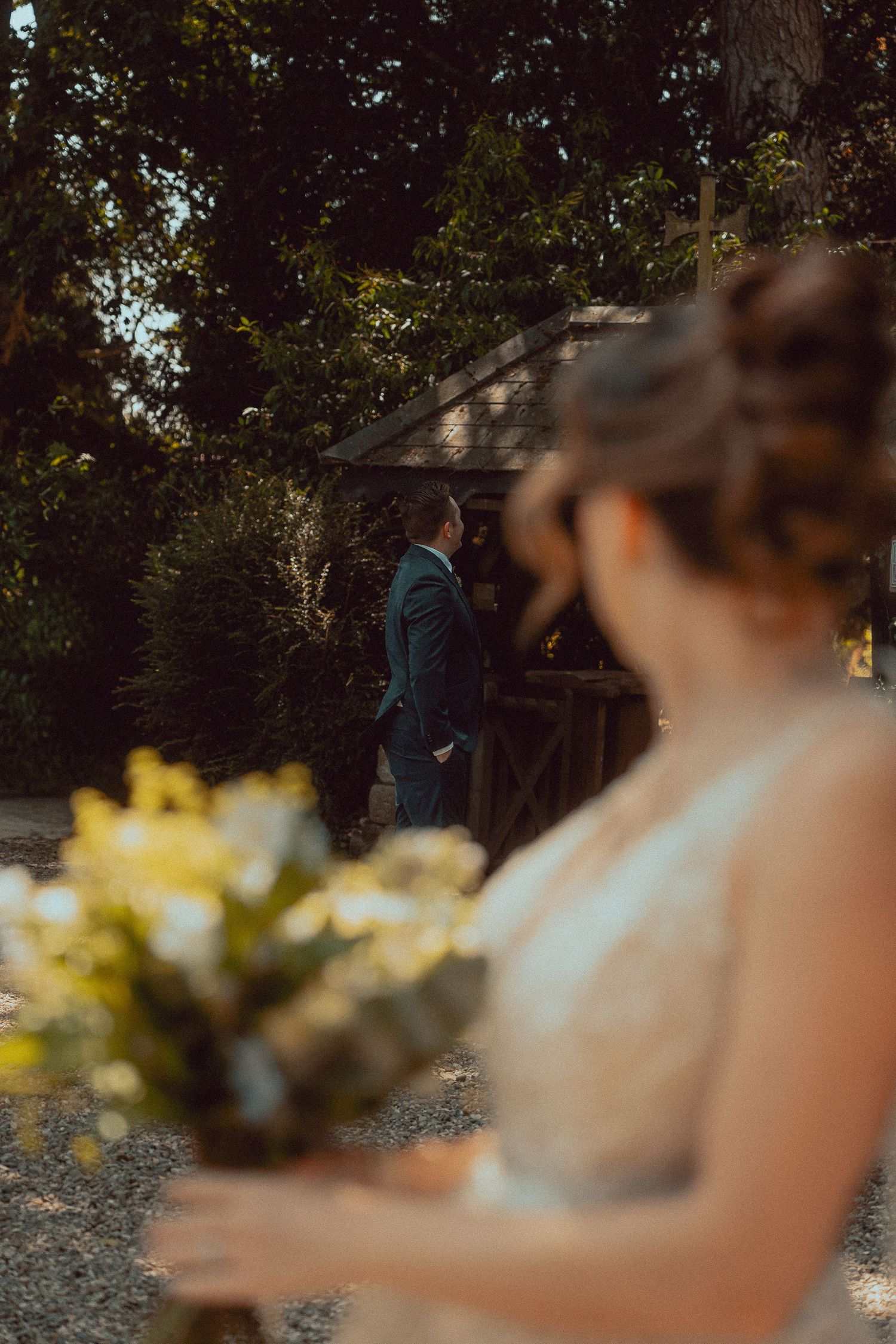
How we quietly photograph weddings
Understanding documentary photography is one thing. Knowing what it actually feels like to have a documentary photographer beside you is another.
Because the photographs are only part of the experience. The way we work matters just as much.
One of the questions couples ask us most often is:
"Will we know you're there?"
It's a fair question. Having someone photograph you for an entire wedding day can sound like a lot, particularly if you're not comfortable in front of a camera.
Our aim is for the camera to become one of the least important things happening around you. We don't want you thinking about where to stand, what your hands are doing or whether you're looking at the camera. We want you thinking about your wedding. The people you've brought together. The conversations you've been waiting to have. The person you're about to marry.
So we move quietly.
We watch.
We listen.
We anticipate.
And when something happens, we're ready.
We don't arrive with a list of moments to create.
We arrive ready to notice yours. Every wedding has its own rhythm. Some begin slowly. Others seem to gather speed from the moment the first guest arrives. Some are full of noise, movement and people. Others have long stretches of quiet.
We don't try to make them all look the same.
Instead, we spend time understanding what's already there. Who makes everyone laugh? Who is quietly emotional? Which friendships have existed for decades? Who hasn't seen each other for years? Where do people naturally gather? Where does the energy change?
Those things tell us far more about your wedding than a predetermined list of photographs ever could.
The camera follows the story. The story doesn't follow the camera.
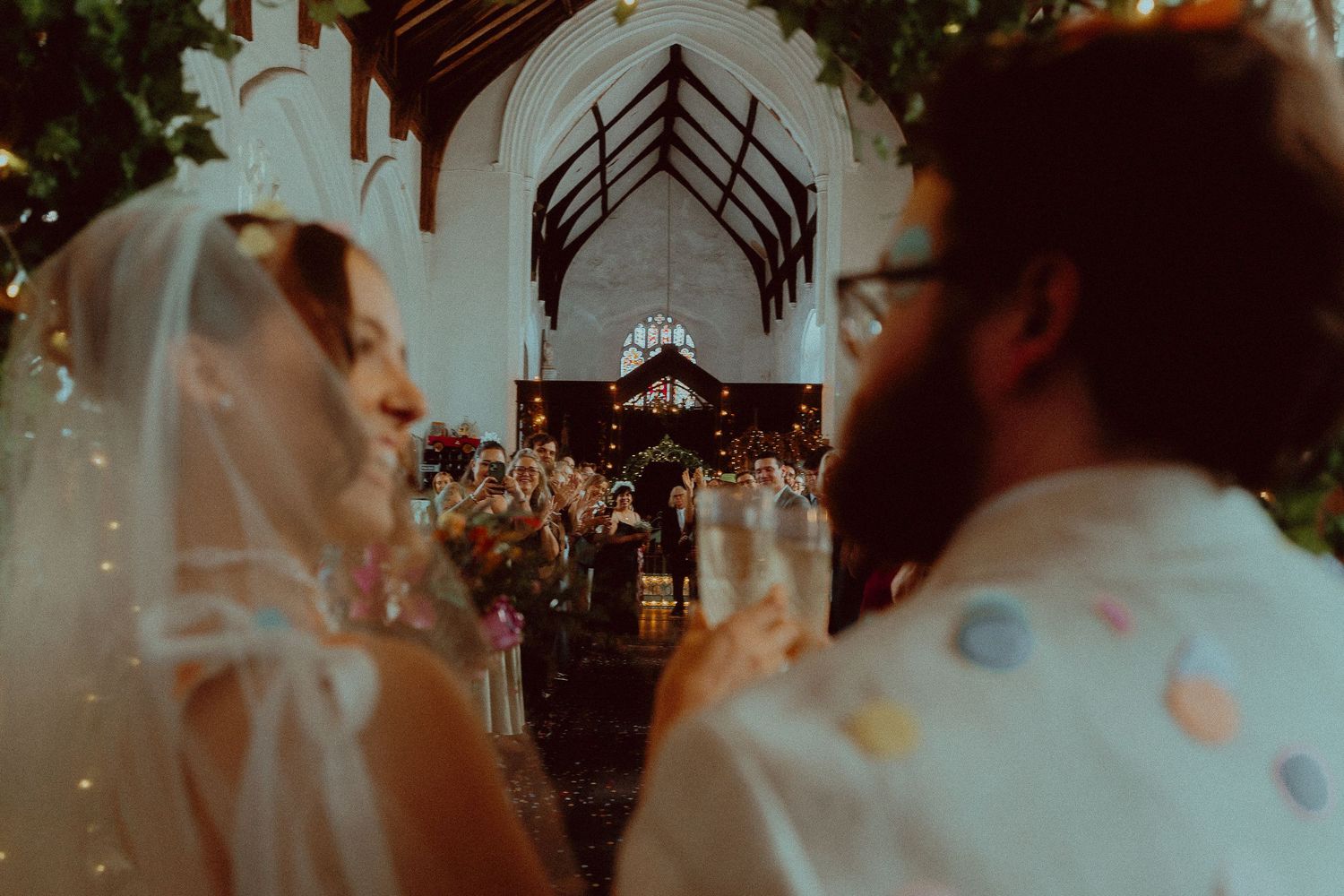
The moments between the moments.
A wedding day is made up of obvious chapters. Getting ready, the ceremony, drinks, dinner, speeches, dancing.
But some of our favourite photographs happen between them.
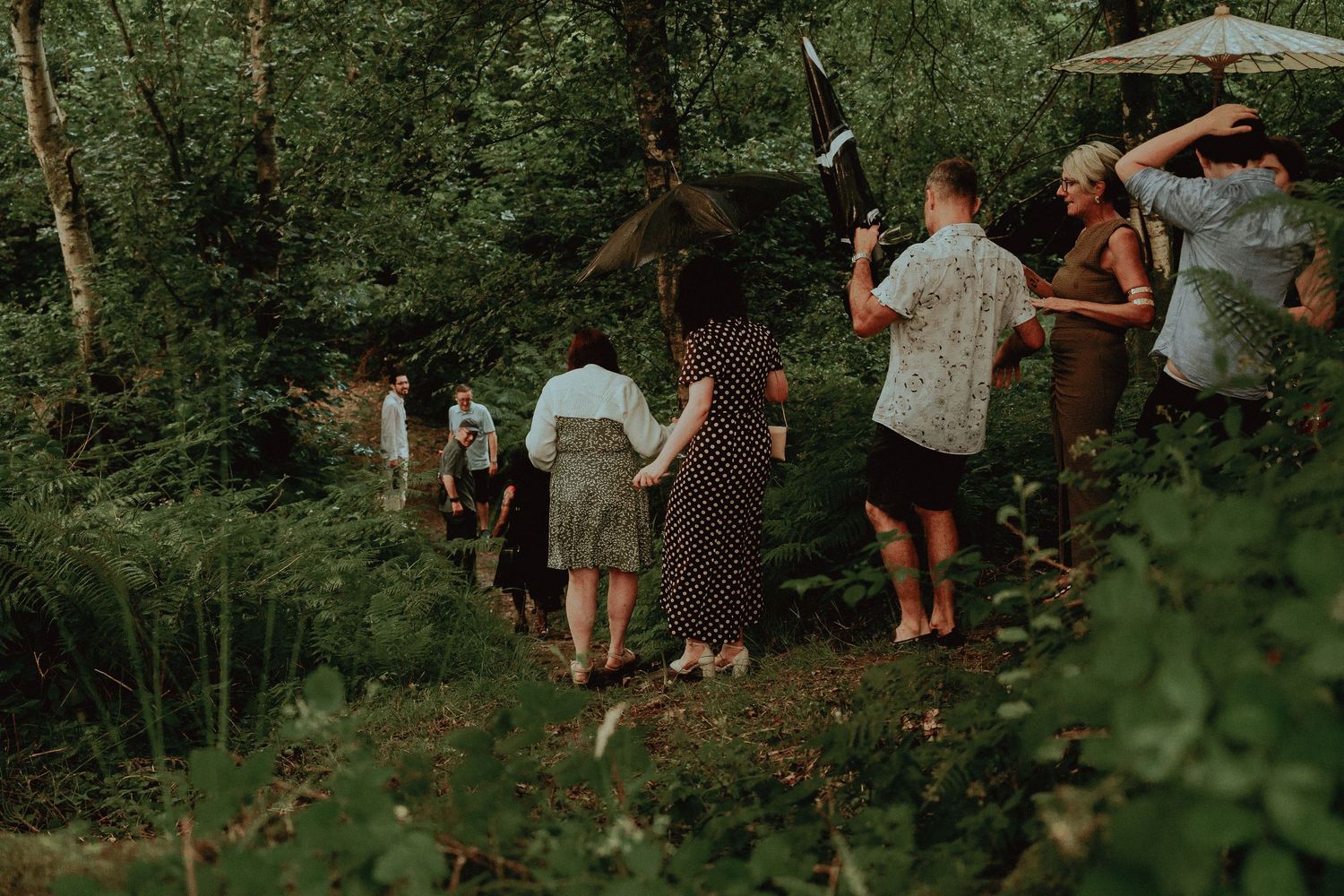
The walk from one place to another.
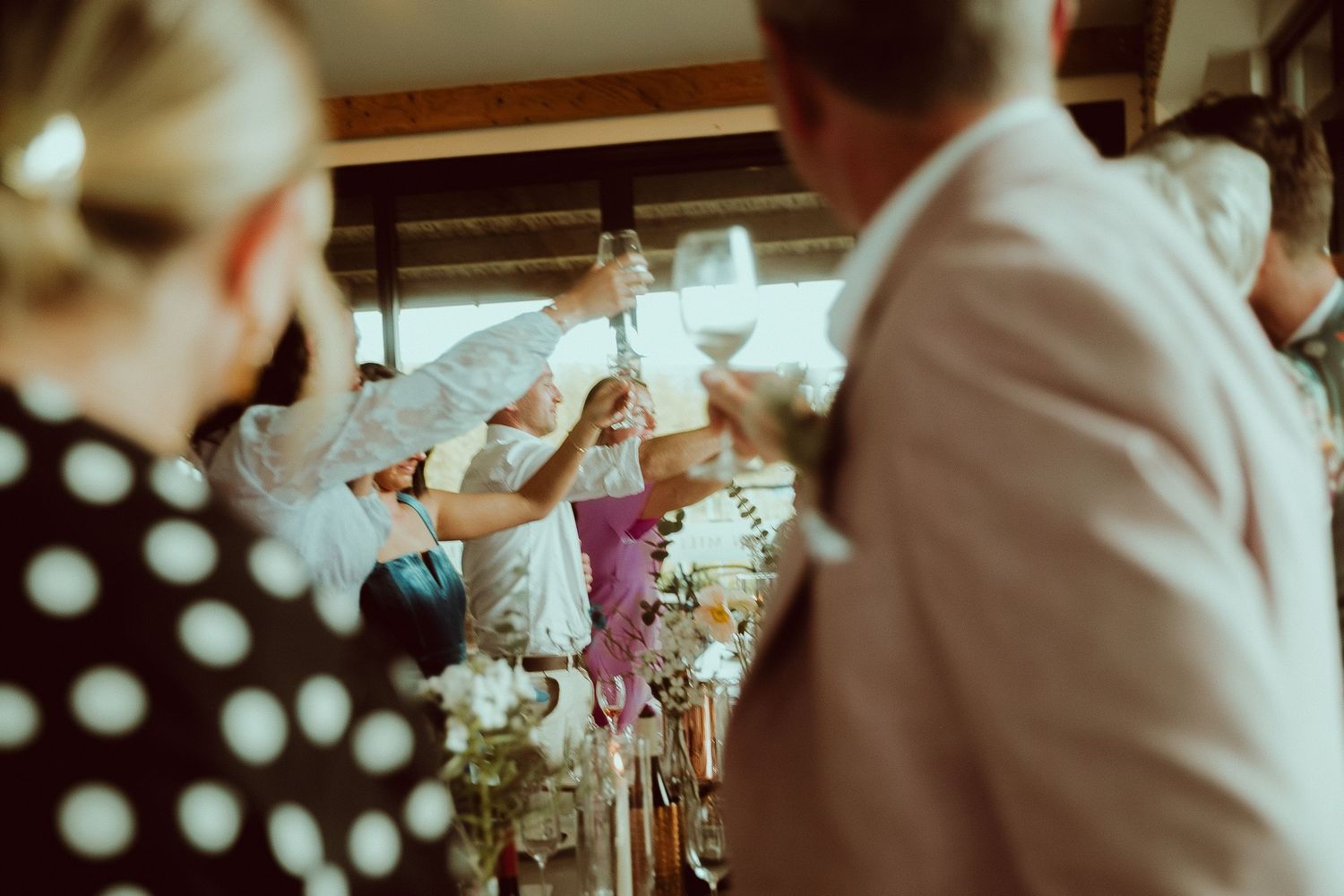
Someone fixing a friend's buttonhole. A parent watching from the edge of the room. Friends talking while everyone else is outside. The quiet after the ceremony. The few seconds before the music begins. These moments don't usually appear on a wedding timeline.
They don't need to.
They're already happening.
Our job is to notice them.
How much direction will we get?
Enough to make you feel comfortable. Not enough to make the day feel like a photoshoot.
There are moments when a little direction is useful. We might gather your family together for photographs. We might suggest stepping away together for a few minutes. We might help you find somewhere quieter if you want a moment to yourselves. But we're never interested in turning your wedding into a sequence of instructions.
You don't need to know what to do with your hands. You don't need to know how to stand. You don't need to perform being in love.
You already know how to be yourselves.
That's more than enough.
Family photographs still matter.
Documentary doesn't mean ignoring the photographs your family will treasure.
Some of the most important photographs from a wedding are beautifully simple. You with your parents. Grandparents together.
Siblings. The people who have travelled across the country to be there.
The group photograph that might feel ordinary today, but becomes extraordinary with time.
We make space for those photographs without allowing them to take over the day. The aim isn't to eliminate structure. It's to make sure structure serves the experience rather than the other way around.
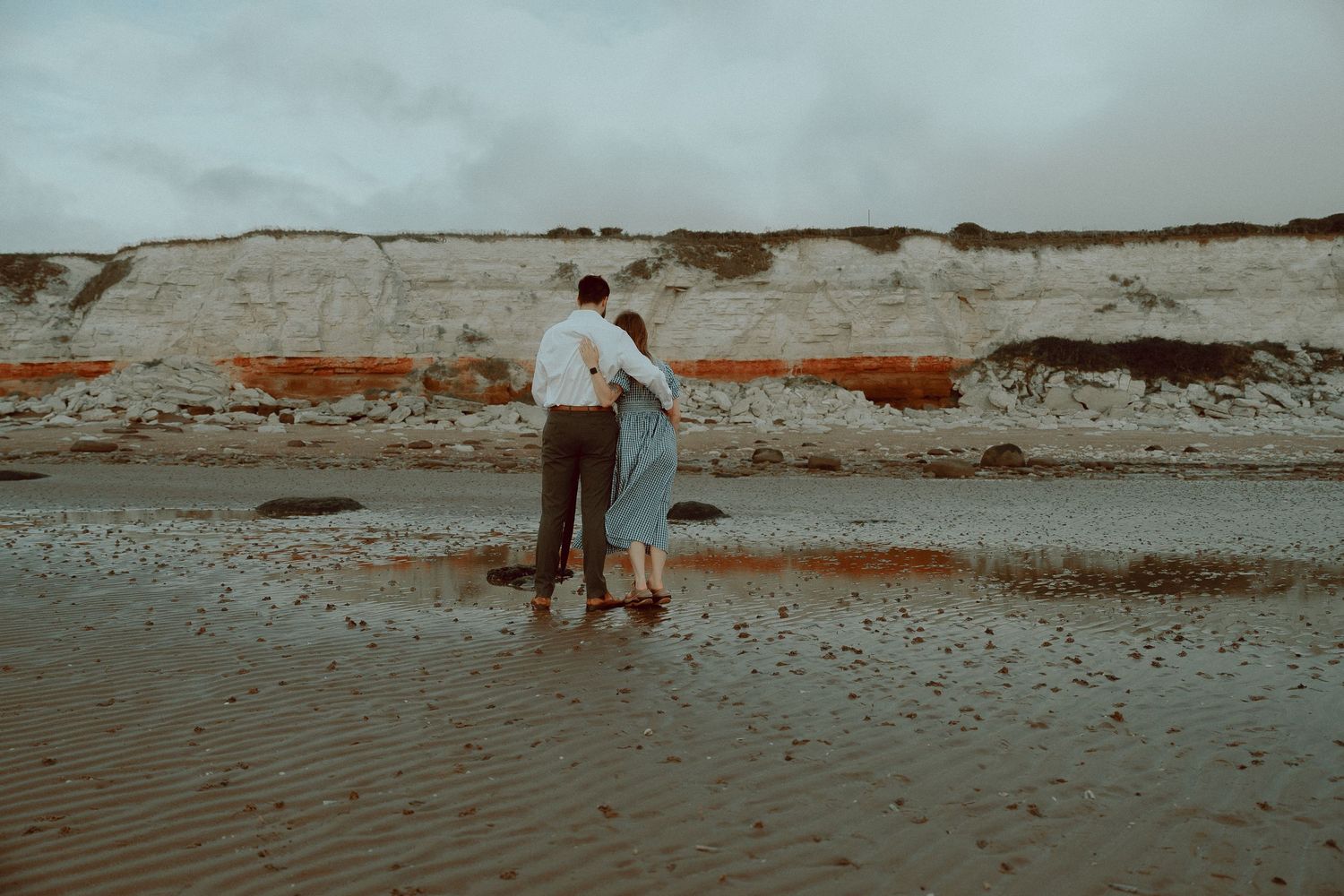
Is documentary wedding photography right for us?
There's no universal answer. Documentary photography tends to suit couples who want their wedding photographs to feel connected to the experience itself.
People who would rather spend time with their guests than spend hours being photographed. People who value the unexpected. People who don't mind a little imperfection. People who want to remember not just what happened, but who was there, how everyone felt and what the day actually looked like.
It may be less suited to couples who want a highly directed photography experience, extensive posing or a large proportion of the day dedicated to creating carefully constructed photographs.
Neither approach is wrong.
They're simply different experiences.
The important thing is choosing a photographer whose way of working matches the way you want to spend your wedding day. For us, the photographs are never more important than the day they're made from.
What if we're awkward in front of the camera?
You don't need to be good at having your photograph taken. Most people aren't.
You don't need to know how to pose, and you don't need to suddenly become a more photogenic version of yourself.
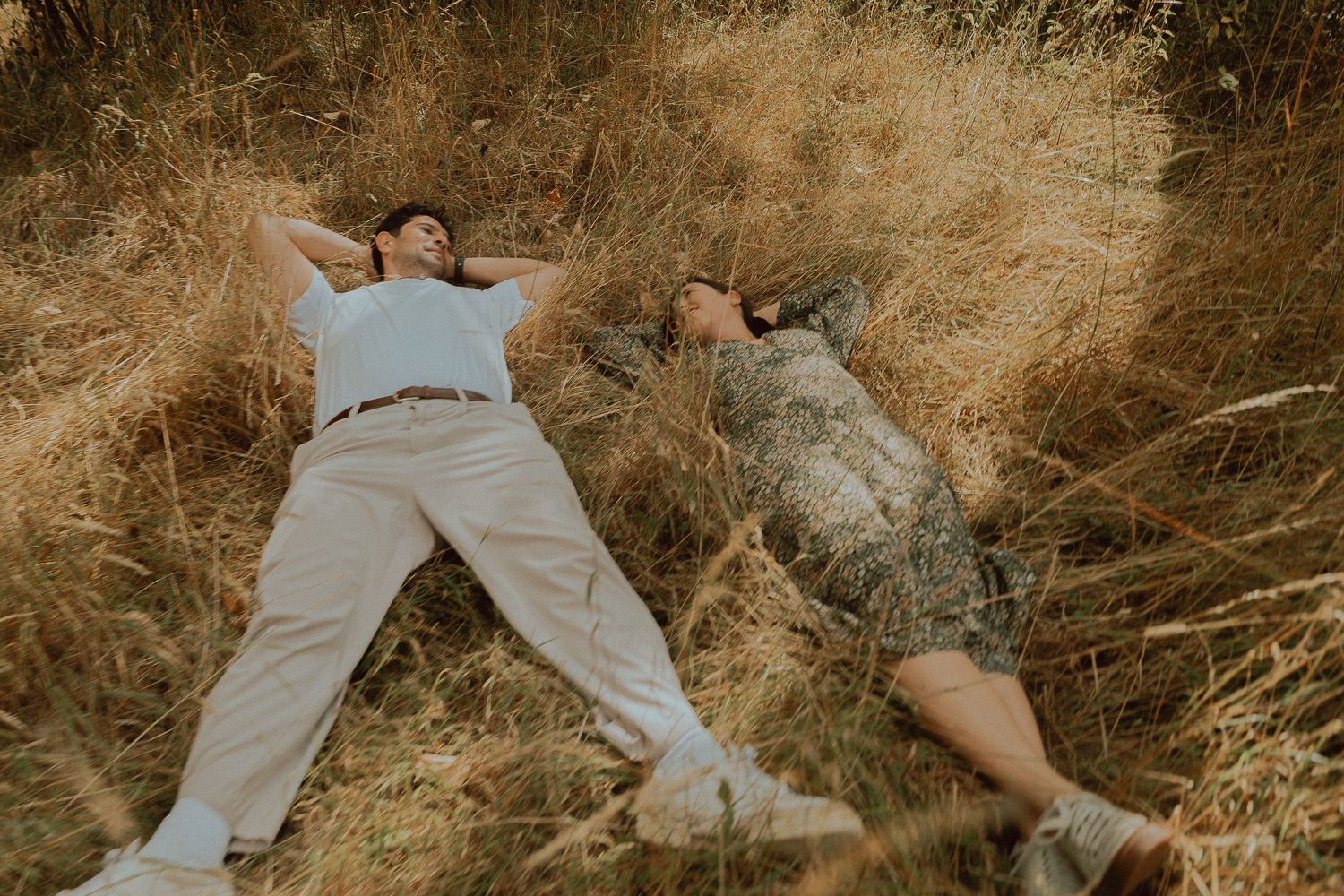
The easiest way to feel comfortable in photographs is usually to stop trying to look comfortable. Talk to each other. Walk. Laugh. Take a breath. Forget we're there.
We'll take care of the rest.
And if you really don't want photographs of the two of you standing and looking at a camera, that's completely fine too.
There are countless ways to photograph a relationship without asking you to perform it.
Your wedding doesn't need to look like anyone else's.
There's a strange pressure to make a wedding look a certain way. Certain photographs. Certain poses. Certain moments.
Certain ideas of what a wedding is supposed to look like. But your wedding isn't a template. It's a collection of people, places, relationships and experiences that couldn't belong to anyone else.
That's what we're interested in.
Before we continue...
Documentary photography is ultimately a collaboration built on trust.
You give us the freedom to observe. We give you the freedom to forget about the camera.
And somewhere between those two things, the photographs begin to happen.
Not perfectly. Not predictably. But honestly.
And that's where we think the best stories live.
A different way of remembering
Your wedding will happen once. The photographs will remain long after it has finished.
That's why we think the two should never be in conflict.
You shouldn't have to choose between having beautiful photographs and actually enjoying your wedding. You shouldn't have to spend the day thinking about the camera.
And you shouldn't have to turn genuine moments into performances simply because they're worth photographing.
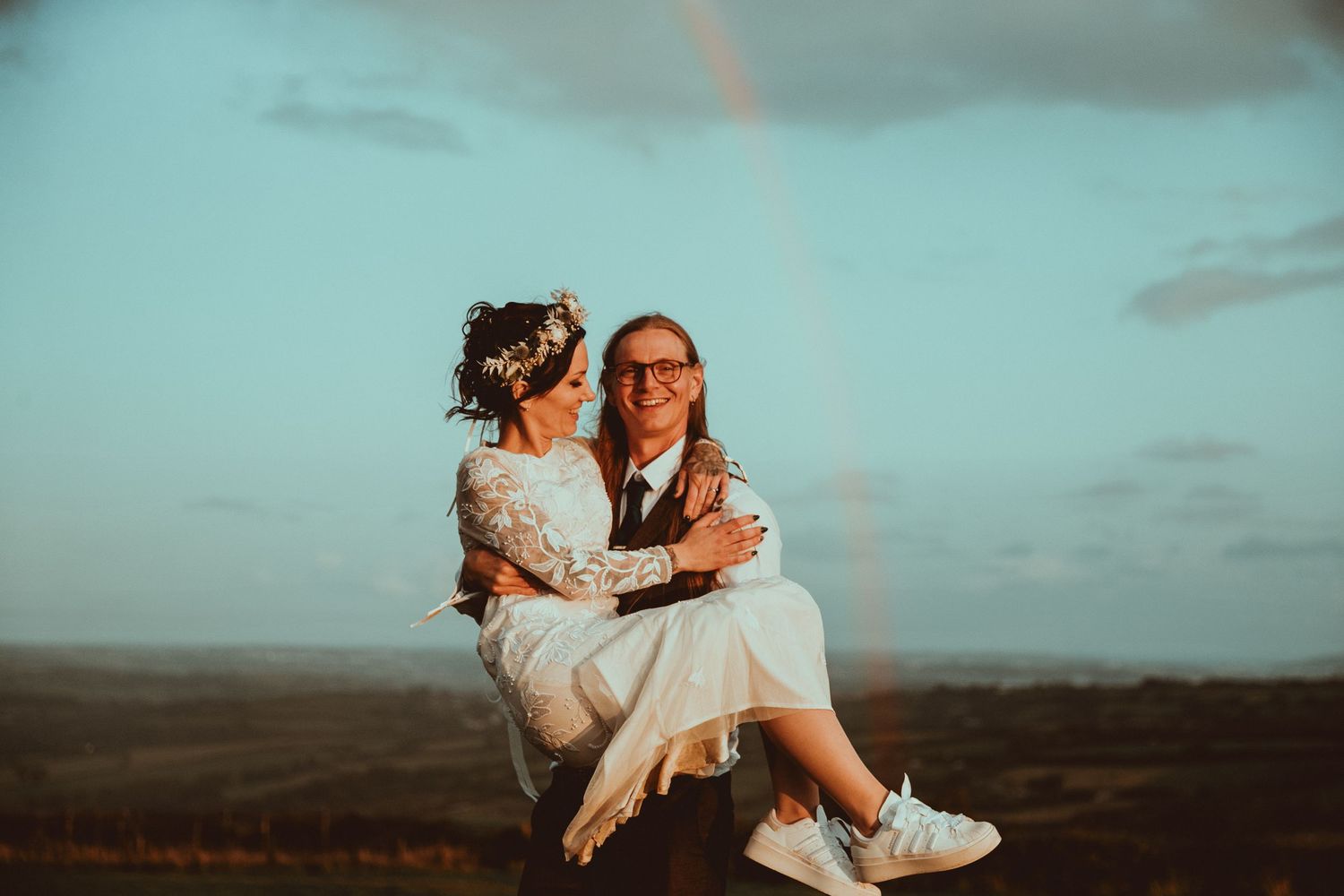
The best photographs often happen when nobody is trying to make a photograph happen. A hand reaching for yours.
A laugh between friends.
The last few minutes before everyone leaves. Nothing extraordinary had to be created. It was already there. We just noticed.
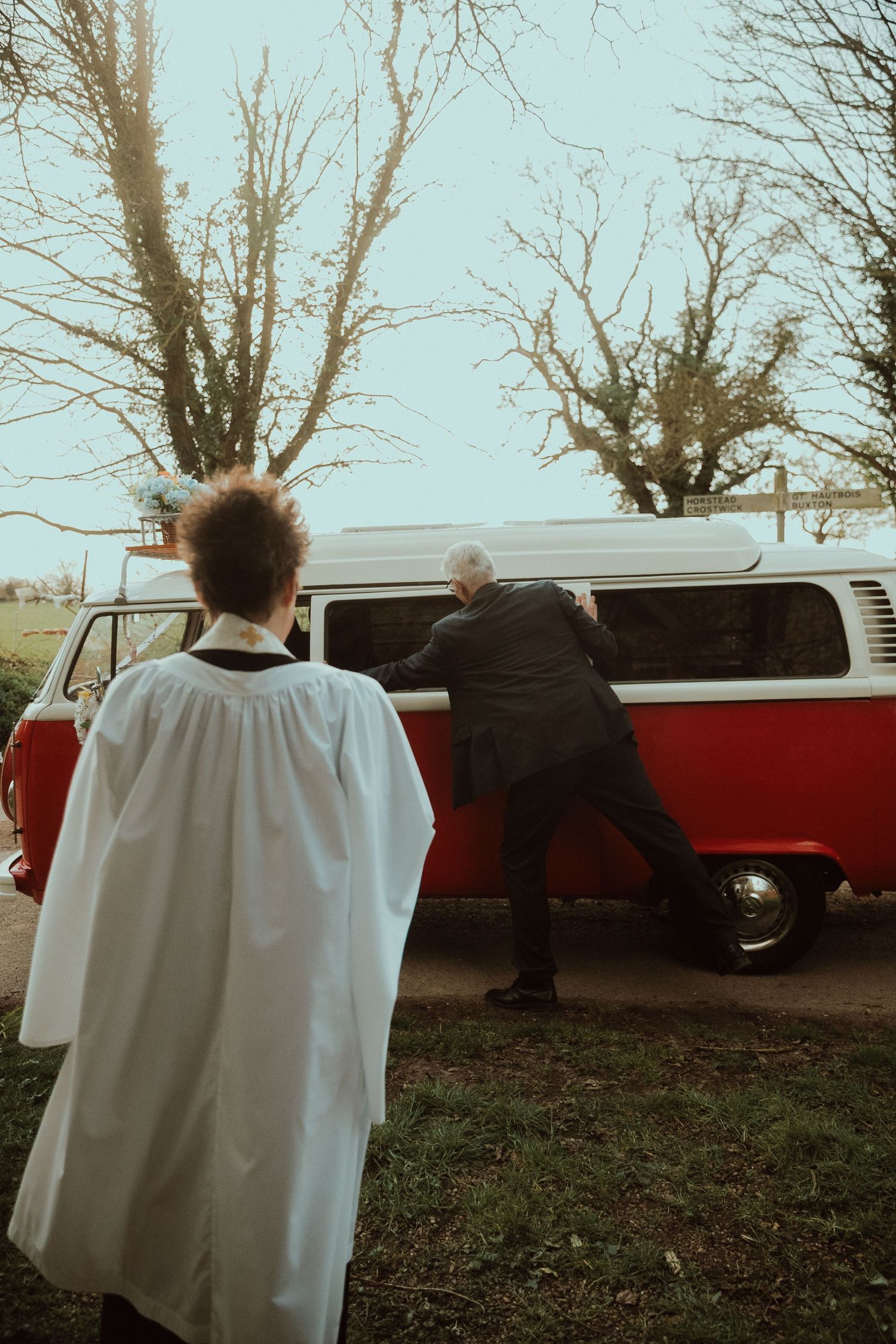
What is documentary wedding photography?
Documentary wedding photography is an approach built around observing your wedding as it naturally happens, rather than directing it into a series of photographs.
It focuses on real interactions, genuine emotion, atmosphere and the relationships between people.
There can still be some gentle direction when it's useful, but the photographs aren't built around creating moments for the camera.
The aim is to preserve what actually happened.
Will you pose us?
Not in the way you might be imagining.
We won't spend your wedding arranging you into a long list of poses or asking you to recreate moments.
There may be a little direction when it helps, particularly for family photographs or a few quiet portraits together.
But most of the time, we'll simply let you be yourselves.
You don't need to know how to pose.
You don't need to perform.
You just need to get on with your wedding.
We're awkward in front of cameras. Is that a problem?
Not at all.
In fact, that's one of the reasons documentary photography can work so well.
You don't have to become comfortable performing for a camera.
The more you forget we're there, the more natural the photographs become.
Talk to each other.
Talk to your friends.
Laugh when something is funny.
Cry if you need to.
We'll take care of the photographs.
Do you still take family photographs?
Absolutely.
Documentary doesn't mean ignoring the photographs your family will treasure.
We'll make time for the people who matter most, while keeping the process as simple and relaxed as possible.
The aim is to get the photographs without turning your wedding day into a long photography session.
Do we have to spend lots of time taking portraits?
No.
If you love portraits and want to spend time creating them, we can.
If you'd rather spend most of your day with your guests, that's completely fine too.
A short walk together, a few minutes in good light or simply stepping away from the noise can be enough.
There doesn't need to be a dedicated photoshoot taking over your afternoon.
Do you photograph the details?
Yes, but they're part of the story rather than the story itself.
The dress, flowers, rings, invitations and little details you've spent months choosing all deserve to be remembered.
But we don't want to spend so long photographing objects that we miss the people who made the day meaningful.
Details matter because they belong to your story.
What happens if it rains?
We get wet.
Rain doesn't automatically mean we need to hide indoors or wait for the weather to improve.
It changes the light, the atmosphere and the way people move through the day.
Sometimes it creates moments that wouldn't have existed otherwise.
Documentary photography isn't about waiting for perfect conditions.
It's about making photographs from whatever the day gives us.
Will our guests notice you?
Hopefully, less and less as the day goes on.
We'll obviously be present, but we don't want to dominate the room or become another thing for your guests to think about.
We move around quietly, pay attention to what's happening and try not to interrupt conversations or moments unnecessarily.
If, by the end of the day, you've occasionally forgotten we're there, we'll consider that a success.
Do you work with wedding videographers?
Yes.
Photography and video can work beautifully together when both teams understand that the experience comes first.
We don't want photographers and filmmakers competing for the same moment.
Communication and awareness make a huge difference, particularly during important parts of the day.
The aim is simple: everyone gets what they need without turning the moment into a production.
Can documentary photography work with a traditional wedding?
Absolutely.
Documentary photography isn't dependent on having a certain type of wedding.
You can have a formal ceremony, a large venue, a traditional reception or a very structured day and still have photographs that feel natural and honest.
The documentary approach is about how we photograph your wedding, not whether your wedding fits a particular aesthetic.
Do you photograph everything that happens?
No.
And we don't think you need us to.
A wedding contains hundreds of small moments.
Some are meaningful.
Some are ordinary.
Some are private.
Some are better experienced than photographed.
Our job isn't to create a photographic record of every second.
It's to recognise the moments that tell the story of the day and preserve them thoughtfully.
How many photographs will we receive?
The number of photographs depends on the length and shape of your wedding.
We don't work towards an arbitrary number just to make a gallery look impressive.
A meaningful photograph is worth more than five photographs that say the same thing.
You'll receive a considered collection that tells the story of your day, from the obvious moments through to the quieter ones you may not have noticed at the time.
How long does it take to receive our photographs?
We take the time needed to carefully edit your gallery rather than rushing it out simply to meet a number.
Your photographs are individually considered so that the finished collection feels coherent and tells the story of the day properly.
We'll always give you a clear expectation around delivery when you book, and we'll keep you informed if anything changes.
Do you travel?
Yes.
Wildkin is based in Norfolk, UK, but we're not limited to one county or country.
We photograph weddings and elopements across the UK and further afield.
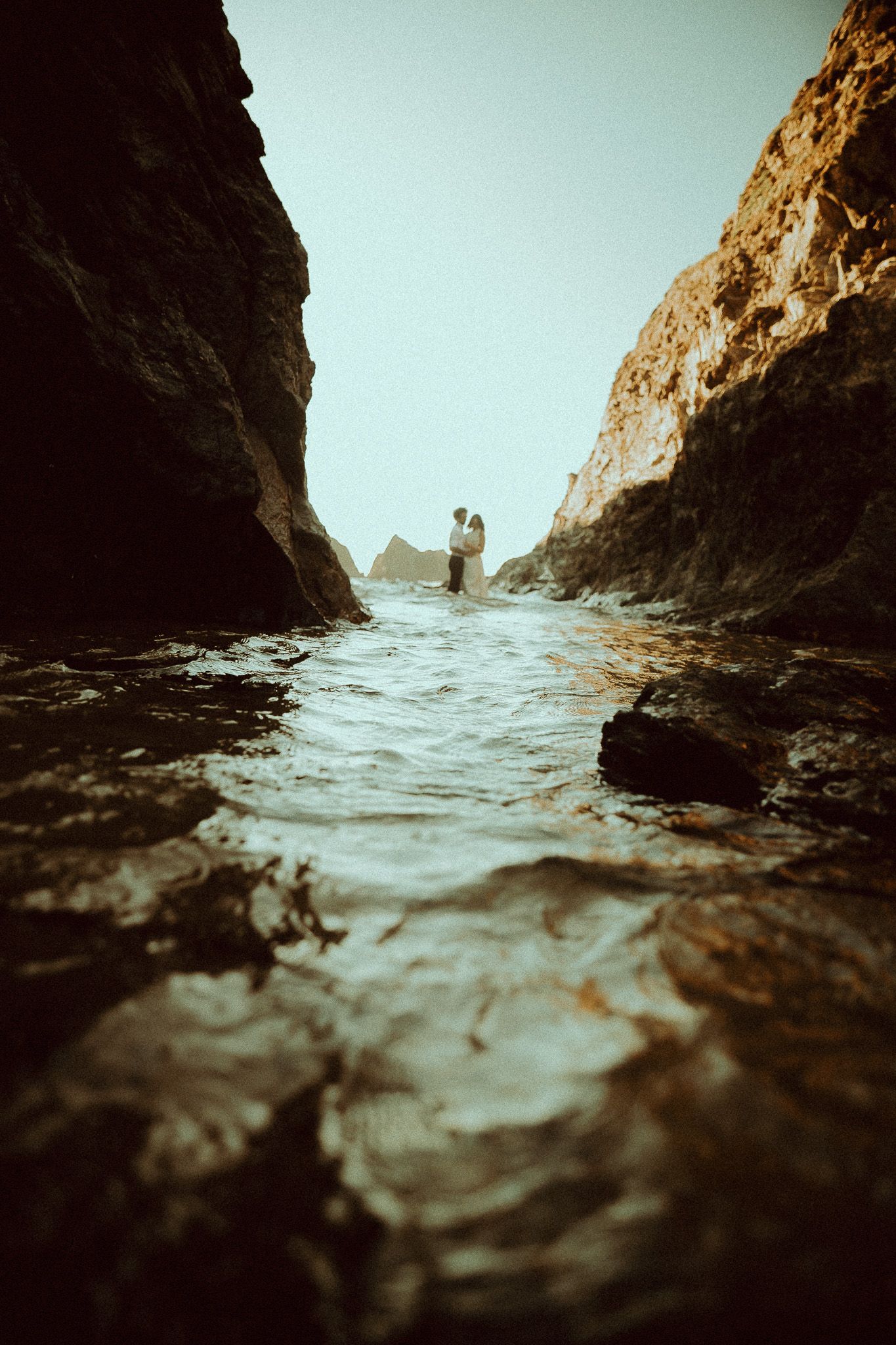
The landscape might change from Norfolk coastline to Scottish mountains, but the approach remains the same.
Observe.
Listen.
Be present.
Tell the story honestly.
Is documentary wedding photography right for us?
It depends on what you want your wedding photography to feel like.
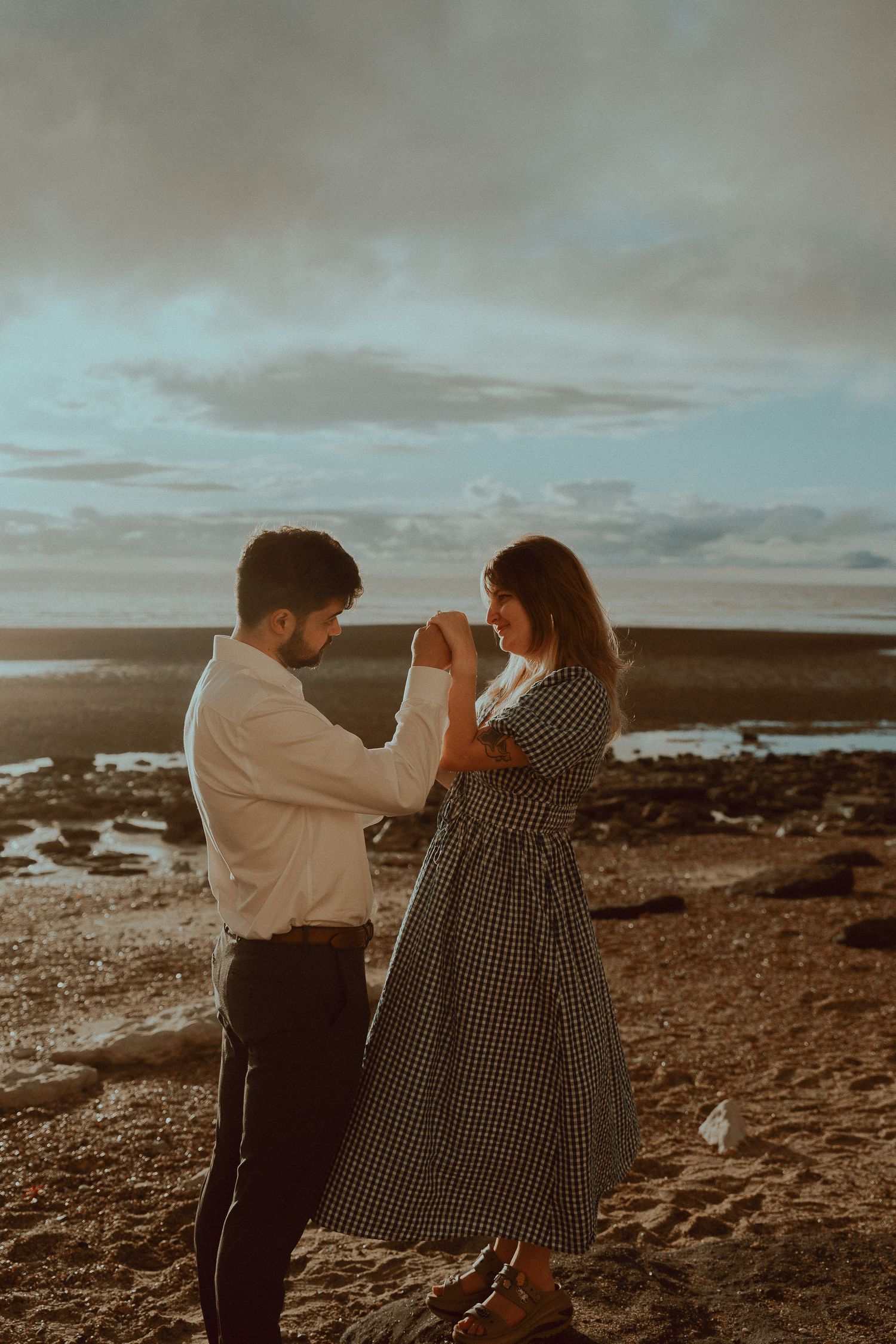
Documentary photography tends to suit couples who would rather experience their wedding than spend the day performing for photographs.
People who value genuine moments, real relationships and photographs that feel connected to the day itself.
It may be less suited to couples who want a highly directed experience with lots of posing and carefully constructed images.
Neither is better.
They're simply different ways of remembering.
The important thing is finding the approach that feels like you.
One final thought
You don't get to experience your wedding twice.
There is the day itself.
And then there is everything that comes afterwards.
The photographs become a way back into it.
Back to the people who were there.
Back to the places you stood.
Back to the expressions you didn't see.
Back to moments that passed so quickly you didn't realise they were happening.
That's why we don't think documentary photography is about taking photographs of a wedding at all.
It's about paying enough attention to remember it properly.
Your wedding doesn't need to be performed for the camera.
It doesn't need to be perfect.
It just needs to be yours.
More Notes
A Field Guide can answer the big questions.
The Field Notes go further.
They're where we explore individual ideas in more detail, drawing on real weddings, real experiences and the questions couples continue to ask.
You might want to explore:
- What actually makes a photograph documentary?
- Documentary vs candid wedding photography
- How family photographs can fit naturally into your wedding day
- Building a wedding timeline that leaves room to breathe
- Why we don't chase perfection
- What if we're awkward in front of the camera?
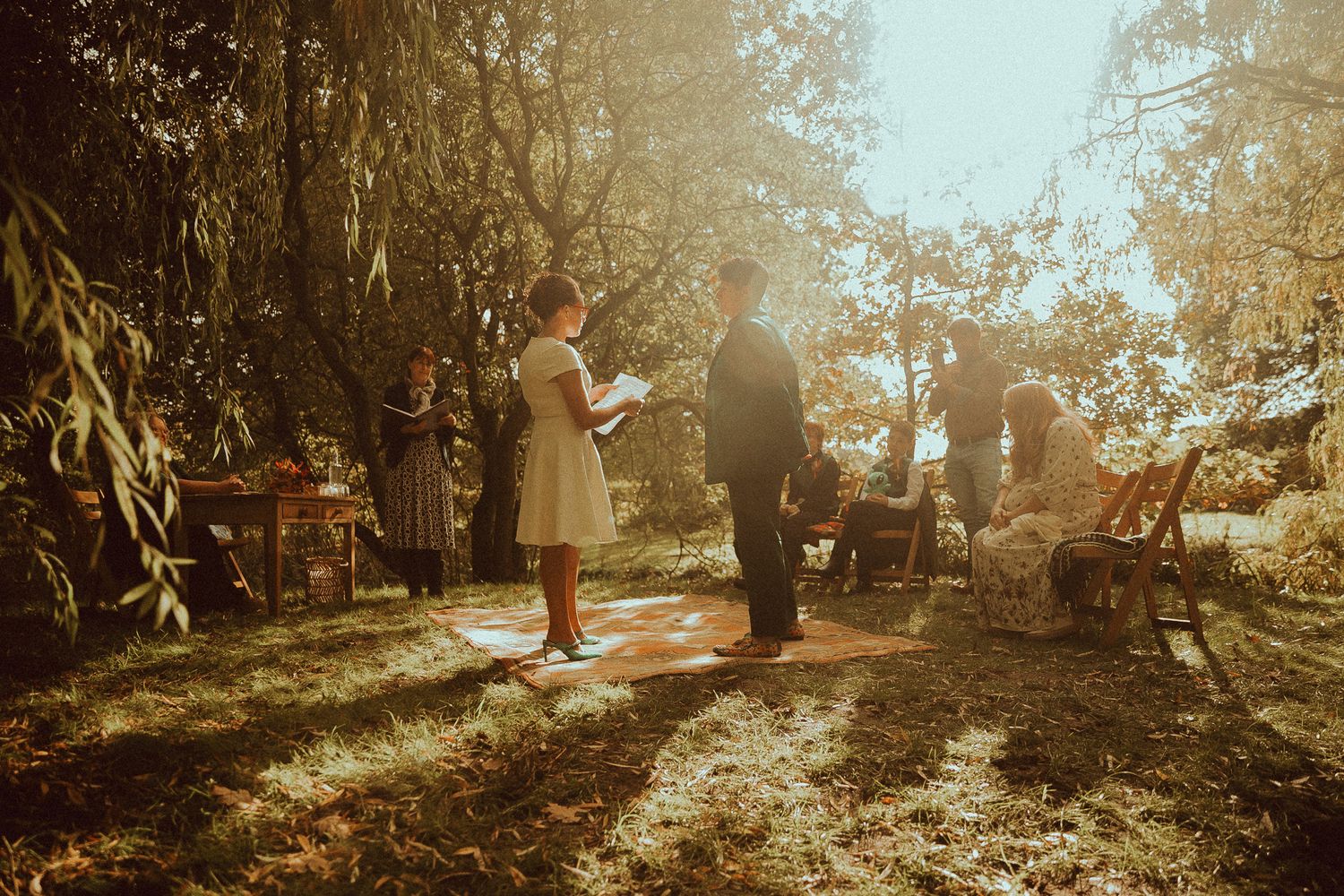
- How we photograph outdoor ceremonies
- Rain on your wedding day
- The moments you don't think will matter
- Why presence always beats perfection
- How documentary photography changes throughout a wedding day
- Quiet photography, and why we work this way
Continue exploring
Understanding documentary weddings is only the beginning.
If this way of seeing the world feels familiar, these guides continue the conversation.
Stories in Motion
Explore documentary wedding films, movement, sound and the moments that become more powerful
Making Space
Explore planning, timelines, & creating space for the moments you can't plan for.
Slower Stories
Explore analogue photography, 35mm, Polaroid and Super 8, and why slowing down can change the way we remember.
Real Stories
Ideas are one thing; real weddings are another.
Explore the people, places and moments we've had the privilege of documenting.
→ Explore Real Stories