The Places
Every place has its own character. Some places feel wild and exposed. Others are softer, slower or more familiar. Some are shaped by mountains, some by the sea, and some by the people who have lived there for generations. For us, a place is never just a backdrop for a wedding. It affects how the day feels, what you do with your time, where you go, and what you remember before and after.
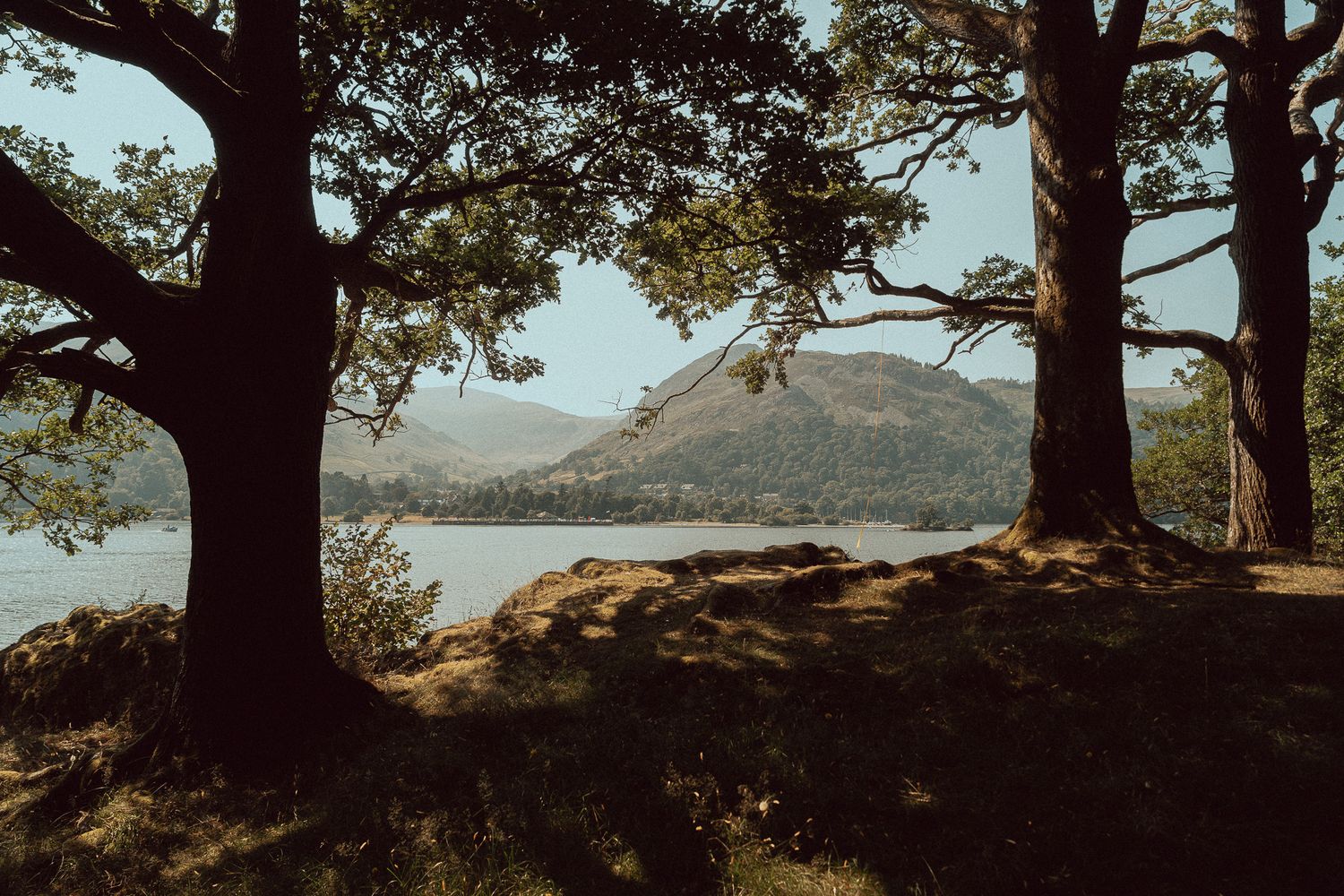
These guides explore the landscapes we love, from the coast and countryside of Norfolk to the mountains and fells of the Lake District, the Welsh valleys of Eryri, the Highlands and islands of Scotland, and the wider landscapes of Europe.
From beaches, saltmarshes and pinewoods to forests, lochs, fjords and mountain passes, from olive groves, vineyards and winding village roads to old towns, islands and quiet coastal paths, these are places where couples travel to get married, to elope, but also places where you might want to stay for a few days with the people you love.
An elopement does not have to be a single ceremony in a beautiful location.
It can be an adventure.
Norfolk is bigger than you think.
A county of different kinds of wild
There is no single Norfolk landscape. The coast feels different from the Broads. The Broads feel different from the Brecks. A woodland near Thetford Forest feels different again from the open fields around Reepham or Aylsham.
That variety is part of what makes Norfolk such an interesting place for a wedding.
The question is not simply:
“Where can we get married in Norfolk?”
It is:
“What do we want our Norfolk wedding to feel like?”
Do you want the sea, the marshes and the wind?
Do you want rivers, reedbeds and quiet mornings beside the water? Do you want woodland, heathland and long walks?
Or do you want a village, a country house or a small gathering somewhere with space to breathe?
There are different answers across the county.

Norfolk has a particular kind of space.
It begins along the North Sea, where wide beaches, saltmarshes, dunes, shingle and cliffs shape the coastline. Inland, the landscape moves through farmland, woodland, heathland and quiet country lanes before opening out again around the rivers and waterways of the Broads.
There are coastal towns such as Cromer, Sheringham and Wells-next-the-Sea. Villages such as Blakeney, Cley-next-the-Sea, Thornham and Burnham Overy Staithe. The medieval streets of Norwich, the forests of the Brecks, and the waterways of The Broads National Park. And then there is the sky.
Norfolk is a county of long views and changing weather. In some places, the horizon feels so open that a cloud moving across the landscape can become part of the day. For a wedding or elopement, that matters.
Norfolk does not ask you to choose between the coast, countryside, woodland or water. You can get married near the sea, spend the afternoon walking through pinewoods, take a boat along the River Bure, or stay in a quiet village and let the day unfold around you.
Norfolk gives you room.
And that is one of the reasons we love photographing weddings here.


The countryside & the Brecks
Away from the coast and waterways, Norfolk becomes quieter again. Fields stretch towards distant tree lines. Country lanes connect villages. Country houses and estates sit behind trees, while woodland and heathland appear across the county.
Around Blickling, Reepham and Aylsham, the countryside has a settled, rural character. Near Thetford, Brandon and Swaffham, the landscape begins to change into the Brecks, with forest, heathland, sandy soils and wide open spaces. The Brecks is one of Norfolk’s distinctive landscape areas, with Thetford Forest offering a very different setting from the coast or Broads.
This is the Norfolk that can be easy to overlook if you are only searching for famous locations.
And for weddings, it can be some of the most beautiful. A ceremony surrounded by fields. A country house tucked behind trees. A woodland walk before dinner. A small gathering somewhere with nothing much beyond grass, sky and countryside.
You do not always need a landmark.
Sometimes you just need somewhere that feels like you.
The Broads National Park
The Broads National Park is another side of Norfolk entirely. Here, water replaces much of the horizon. Rivers wind through reedbeds and low-lying countryside. Windpumps, church towers and small villages appear between stretches of open water.
The network includes places such as Wroxham, Horning, Coltishall, Ranworth, Salhouse, Ludham and Potter Heigham, each offering a different way into the landscape. The Broads are known for their navigable waterways, gentle walking and cycling routes, wildlife and slower pace of exploration.
It is a good place for couples who want the wedding to feel less like an event and more like part of a few days away.
A boat trip.
A walk beside the River Bure.
Breakfast in a riverside village.
An afternoon around Hickling Broad, Ranworth Broad or How Hill.
A quiet evening near the water while everyone stays outside a little longer than planned.
You do not necessarily need to do anything adventurous.
Sometimes the landscape changes the pace of the day for you.
The Norfolk Coast
The Norfolk Coast National Landscape stretches through a varied coastline of beaches, dunes, saltmarshes, shingle and cliffs. It is not one continuous kind of seaside, and that is what makes it so useful for exploring.
Around Holkham and Wells-next-the-Sea, the landscape opens out into wide beaches, pinewoods, dunes and saltmarsh. Further west, places such as Brancaster, Thornham and Burnham Overy Staithe bring together creeks, harbours, marshes and long stretches of sand.
Around Blakeney, Cley-next-the-Sea and Salthouse, the coast feels more shaped by tidal water and saltmarsh. The landscape is quieter, more textured, and constantly changing with the tide.
Further east, Cromer, Sheringham, Overstrand and Mundesley offer a different character, with beaches, cliffs and traditional coastal towns.
For some couples, the coast might be the centre of the wedding.
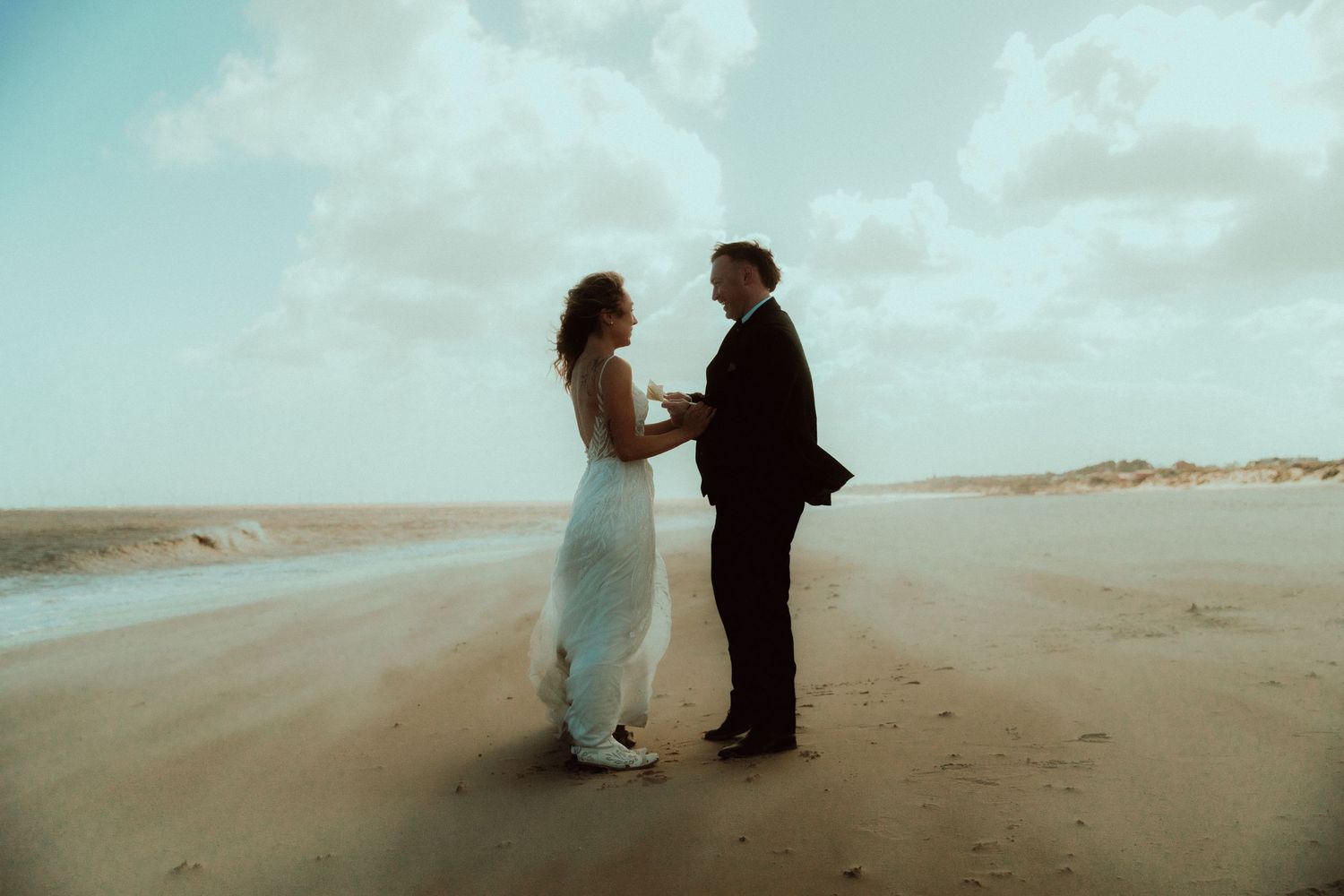
For others, it may simply become part of the day. A walk before dinner. A few minutes by the water after the ceremony. Bare feet on the sand. The two of you disappearing for a little while before returning to everyone else.
It does not have to be a dramatic coastal elopement to matter.
Sometimes it is enough to have the sea nearby.

If you are getting married in Norfolk, start with the feeling
Before you choose a venue, a timeline or even a specific location, think about what you want the day to feel like.
Do you want the coast around Wells-next-the-Sea, Holkham or Blakeney?
Do you want the waterways and villages of the Broads National Park?
Do you want woodland around Thetford Forest?
Do you want open countryside near Blickling, Reepham or Aylsham?
Do you want somewhere remote, or somewhere your guests can reach easily?
Do you want a large celebration, a small wedding or something closer to an elopement?
There is no right answer. That is the beauty of Norfolk.
There are enough different landscapes here that the place can adapt to the kind of wedding you actually want, rather than the other way around.
You do not have to make your wedding fit Norfolk.
You can find the part of Norfolk that fits you.

Norfolk is not just somewhere to get married
We are not interested in Norfolk simply as a backdrop.
A wedding here can be about the place itself.
It can be about arriving a few days early, finding a quiet beach near Holkham, walking the dog around the countryside, taking a boat from Wroxham, exploring a village, or staying out late because nobody particularly wants to go inside yet.
The wedding becomes part of a longer experience.
That is one of the things that makes Norfolk particularly well suited to the way we photograph weddings and elopements.
We do not want you to spend your wedding day trying to create photographs. We would rather photograph the day you actually came to Norfolk to have.
The people.
The weather.
The landscape.
The bits that were not planned.
The walk you did not expect to take.
The conversation that went on longer than it was supposed to.
The sea air.
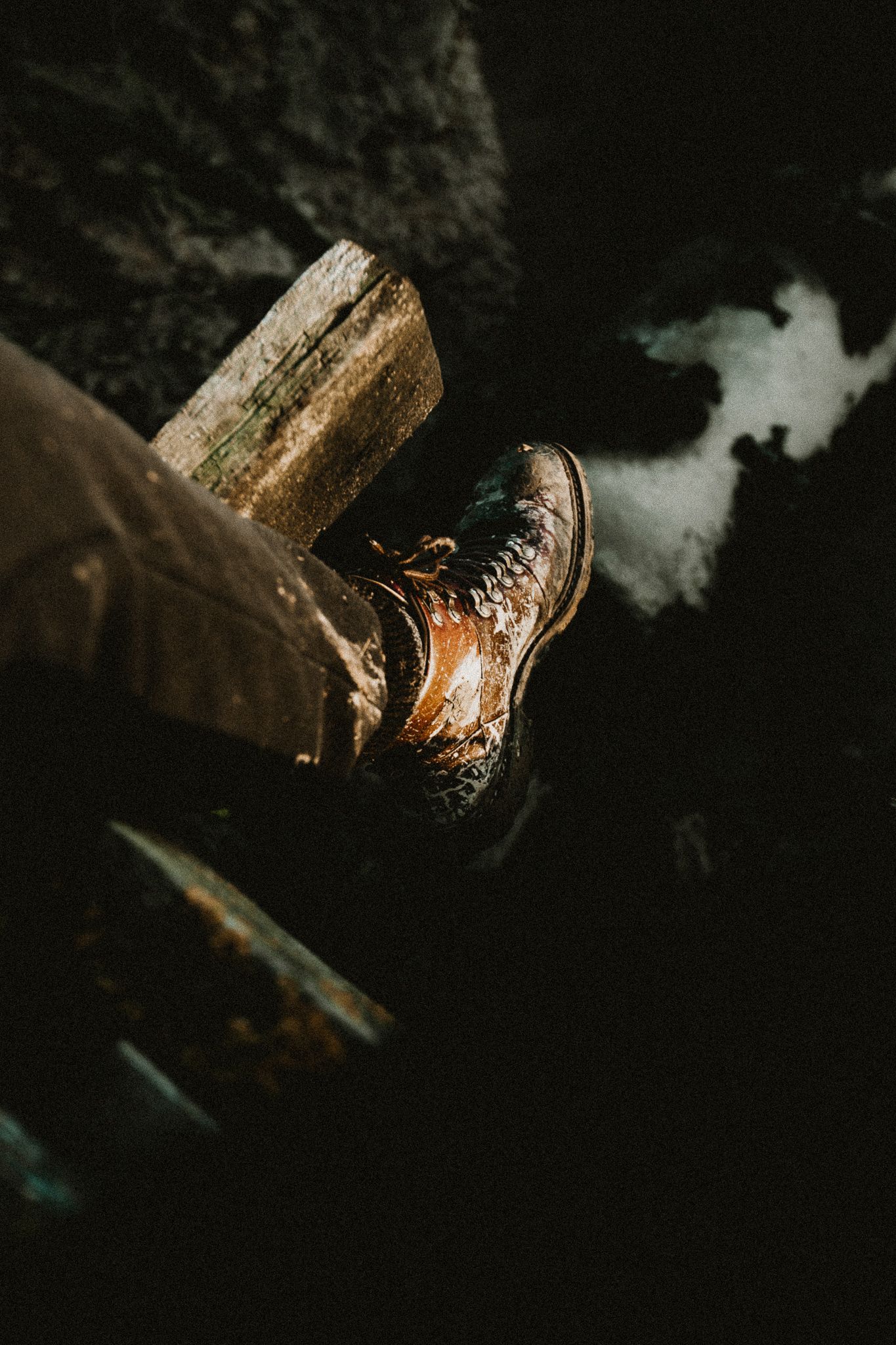
The muddy shoes.
The dog running off.
The evening light.
All of it.

Why we love this place.
It gives you different kinds of freedom
One of the things we love about Norfolk is that it does not insist on one particular kind of adventure.
You can spend the morning walking along Holkham Beach, with the pinewoods behind you and the sea stretching out ahead. You can wander through the streets of Wells-next-the-Sea, stop by the harbour, or follow the paths towards the dunes and saltmarsh.
You can head east to Blakeney, Cley-next-the-Sea or Salthouse, where the landscape feels more connected to the tide, the marshes and the birdlife.
Or you can leave the coast behind completely.
There are quiet country lanes around Reepham and Aylsham, the parkland and woodland around Blickling, and the forests and heathland of the Brecks near Thetford and Brandon.
The point is not that Norfolk has everything.
It is that it gives you enough different landscapes to find the kind of day you actually want.
The coast never feels quite the same
The Norfolk coast changes with the weather, the season and the tide. A bright summer day at Wells Beach can feel open, busy and full of movement. In winter, the same stretch of sand can feel almost empty, with the beach, sky and pinewoods becoming the whole experience. Holkham’s wider landscape brings together dunes, grazing marshes, saltmarsh, pinewoods and long open views.
That changing character is part of its appeal.
The coast does not have to be treated as a dramatic location that you visit for ten minutes to take photographs.
It can be somewhere you spend time.
Somewhere you walk without needing to get anywhere quickly. Somewhere you take the dog. Somewhere you go after breakfast, before dinner, or simply because the weather has changed and you want to see what it looks like now.
For an elopement, that creates possibilities.
The ceremony might happen somewhere else entirely, with the coast becoming part of the wider day rather than the entire focus.

The Broads make things slower
The Broads National Park has a different rhythm. The landscape is shaped by waterways, reedbeds, open skies, wildlife and small riverside communities. Places such as Horning, Wroxham, Salhouse, Ranworth and Potter Heigham offer different ways to explore it, whether that means walking, cycling, taking a boat or simply spending time beside the water.
We love the fact that the Broads does not demand a packed itinerary.
You can do less and still feel as though you have had a proper day.
A slow breakfast. A walk beside the river. A boat trip. A pub garden. A quiet stretch of water in the evening.
That can be especially valuable when a wedding already contains a lot of people, decisions and expectations.
The landscape gives you an excuse to slow down.
And sometimes that is exactly what a wedding day needs.
Norfolk works for weddings that are not trying to be everything
Not every couple wants a huge production.
Some want a full wedding with everyone they love. Others want a smaller gathering, a private ceremony or an elopement that feels more like a few days away than a traditional wedding event.
Norfolk can accommodate those differences.
There are country houses, barns, coastal towns, riverside villages, woodland settings and open countryside. There are places that feel polished and established, and others that feel quieter and more informal.
You can build a day around a venue, or build a day around the landscape. You can keep things close to home, or use the wedding as a reason to explore somewhere new.
That flexibility is one of the reasons Norfolk feels so welcoming.
It does not require you to arrive with a fixed idea of what a wedding here should look like.
There is space between the obvious places
Norfolk has well-known destinations, but it is not only about the places that appear first in a search. Some of its character comes from the spaces between them.
The roads through the countryside. The villages you pass through on the way to the coast. The stretches of woodland that are not part of a grand itinerary. The fields, churches, hedgerows and quiet lanes that make one part of the county feel different from another.
That is why we do not think of Norfolk simply as a collection of wedding venues. A venue matters, of course. But so does what surrounds it.
What can you do before the ceremony?
Where can you walk afterwards?
Is there somewhere nearby to stay for a few nights?
Can your guests experience something of the place rather than arriving, attending the wedding and leaving again?
The setting becomes more meaningful when it is part of a wider experience.
It feels close enough to return to
There is also something comforting about Norfolk being accessible without feeling ordinary. You can reach the coast, the Broads, Norwich or the countryside without needing to travel to the other side of the country. Yet once you arrive, the pace can feel noticeably different.
That makes it well suited to couples who want a destination feeling without a complicated journey.
You can bring your closest people for a weekend. You can stay for a few days rather than a single night. You can make time for the wedding itself, but also for the place around it.
And when the day is over, Norfolk is not finished.
There is still the beach walk, the village pub, the boat trip, the woodland path, the early morning light and the possibility of coming back another time.
That is probably what we love most.
Norfolk gives a wedding somewhere to happen, but it also gives the people within it somewhere to be.

The weather is part of the place
Norfolk is not guaranteed sunshine.
The wind, cloud, rain, changing light and sudden brightness are part of what gives the county its character. Along the coast, the weather can alter the feeling of a beach within minutes. Inland, a grey sky can make the fields feel vast, while low evening light can completely change the same view. A Norfolk wedding does not need to avoid all of that. It needs enough flexibility to let the day respond to it.
A walk might happen earlier than planned. A ceremony might move indoors. A couple might decide to head outside because the rain has stopped. Guests might gather under cover for ten minutes before someone suggests going back out.
Those changes are not necessarily interruptions.
Sometimes they become the parts of the day people remember most clearly.

Norwich gives Norfolk another side
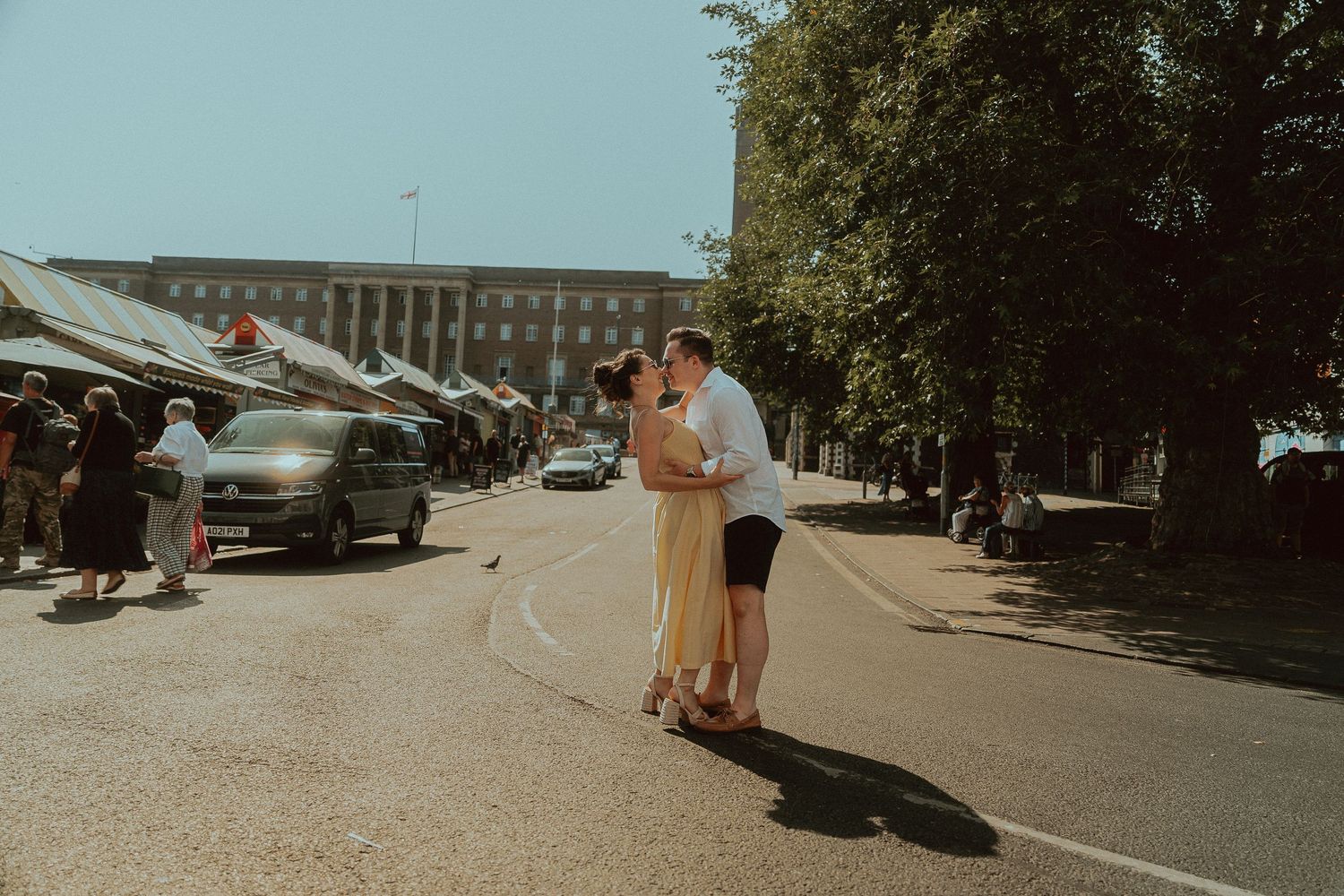
Norfolk is not only beaches, marshes and open countryside. There is also Norwich, a city with its own character, shaped by medieval streets, historic buildings, independent shops, cafés, restaurants, galleries and the River Wensum.
You can get married in Norwich itself. A city wedding might take place in a historic building, an intimate venue, a converted industrial space or somewhere tucked away among the older streets. The day could move from a ceremony to dinner, drinks and wandering through Norwich together, without needing to travel anywhere else.
For couples who want a little more variety, Norwich can also sit alongside the wider Norfolk landscape. You might spend part of the wedding experience in the city, then head towards the coast, countryside or Broads for a walk, a few days away or a quieter part of the celebration.
With direct rail links to London Liverpool Street and Cambridge, Norwich is also a practical choice for couples and guests travelling from elsewhere.
It offers a different atmosphere from the beaches and open fields, but it still belongs to the same county.
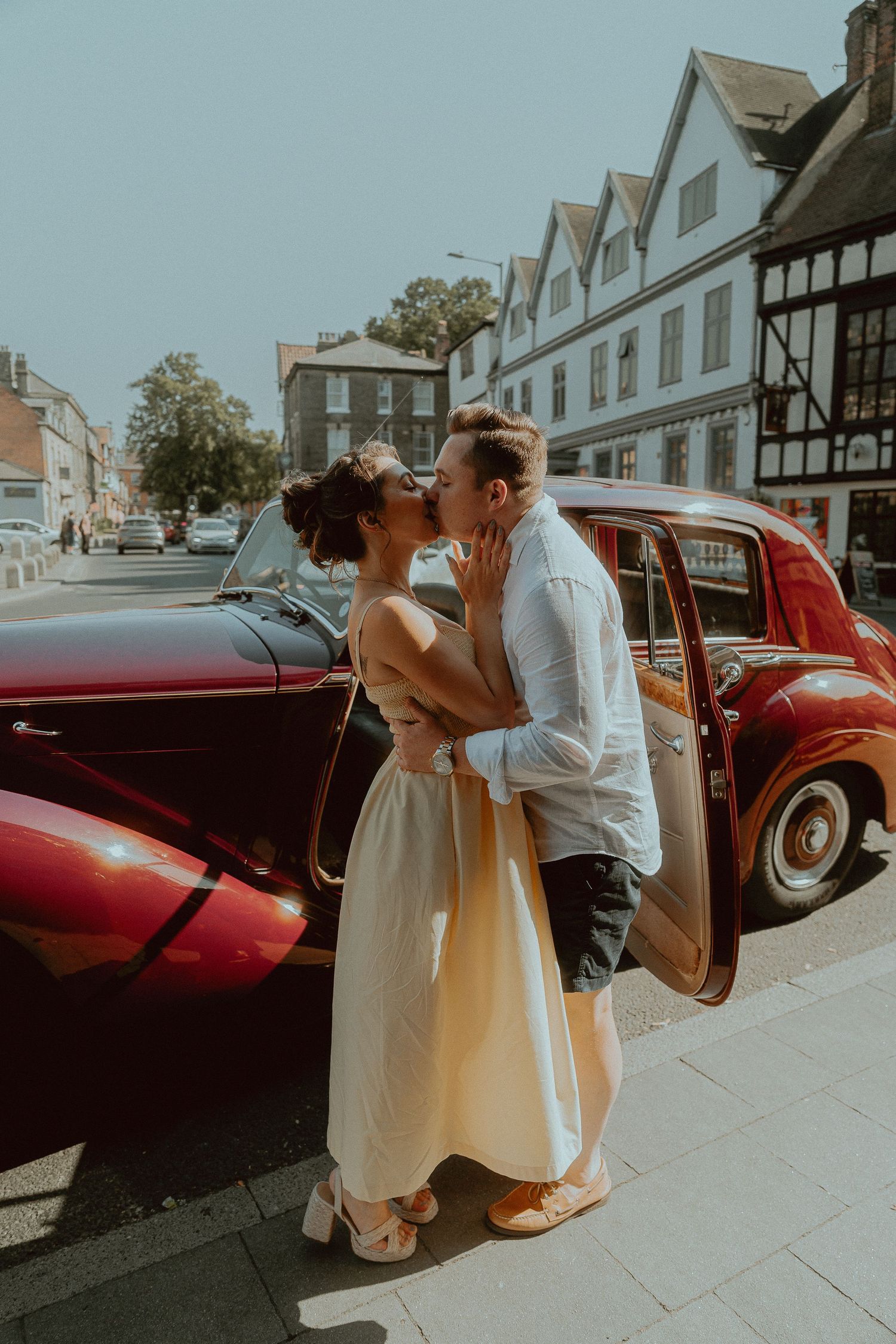
Norfolk does not have to mean rural. Sometimes it means getting married in the city, surrounded by the people you love, with everything you need within walking distance.

Best Seasons.
There is no single best time to get married in Norfolk.
The coast, countryside, Broads and city all change throughout the year, and each season brings a different kind of atmosphere. The right choice depends on the landscape you want, how much daylight you need, how comfortable you are with changing weather, and what you want to do around the wedding itself.
Spring in Norfolk
Spring brings longer days, fresh green growth and a sense that the county is opening up again.
The countryside around Blickling, Reepham and Aylsham becomes greener, while woodland paths and country lanes start to feel brighter. Along the coast, the beaches and marshes can still feel quiet, especially outside the busiest weekends.
Spring can be a lovely time for couples who want a wedding with a little more space around it. There is time for a walk before the ceremony, light that lasts into the evening, and fewer pressures to make the whole day fit around peak-season expectations. The weather can still be changeable, though. A spring wedding needs a plan that allows for wind, rain and cooler evenings.
Summer in Norfolk
Summer brings the longest, slowest days, dazzling sunsets and the greatest flexibility.
There is more time for outdoor ceremonies, coastal walks, boat trips on the Broads, drinks outside and photographs later in the evening. The beaches around Holkham, Wells-next-the-Sea and Brancaster can feel expansive, while the countryside and waterways are at their most active.
It is a natural choice for couples who want to spend a lot of the wedding outdoors or who are bringing guests for a longer stay.
The trade-off is that popular places can be busy, particularly during school holidays and warm weekends. If you want a quieter experience, an early ceremony, a weekday wedding or a less-visited location can make a real difference.
Summer does not have to mean fitting everything into one long day. It can also mean having time to enjoy the place before and after the wedding.
Choose the season for the experience
The best season is not necessarily the one with the highest chance of sunshine. It is the one that suits the kind of wedding you want to have.
If you want long outdoor days, late evenings and plenty of time to explore, summer may be the natural fit.
If you prefer quieter beaches, softer light and a slower pace, spring or autumn might suit you better.
If you are planning something intimate, atmospheric or centred around a city or indoor venue, winter could be exactly right.
Think about the whole experience, not just the ceremony. Where will you stay? What will you do the day before? Will your guests have time to explore? Do you want to walk, take a boat, visit Norwich, spend time by the sea or simply stay somewhere quiet together?
Norfolk changes with the seasons, but it never stops offering somewhere to go.
Autumn in Norfolk
Autumn changes the feeling of Norfolk. The light becomes softer, the evenings draw in and the countryside takes on warmer colours.
Woodland around Blickling and the Brecks can feel particularly atmospheric, while the coast often becomes quieter again after the summer.
Autumn suits couples who like a slower, more grounded atmosphere.
There may be rain, wind and cooler temperatures, but there can also be beautiful light, empty beaches and long stretches of countryside without much interruption.
It is worth thinking carefully about timings. The best light arrives earlier, and outdoor plans need to allow for shorter days. A flexible schedule can make the most of the season without forcing the day to follow a summer timetable.
Winter in Norfolk
Winter is not the obvious choice for everyone, but it can be one of the most distinctive.
The coast around Cromer, Sheringham and the north Norfolk beaches can feel open and dramatic in colder weather. The Broads become quieter, the countryside feels more spacious, and Norwich offers a warmer urban atmosphere with restaurants, historic buildings and places to gather indoors.
Winter can work particularly well for smaller weddings and elopements.
You might have a ceremony in the city, a cosy country house or an intimate venue, then head outside for a short walk while the light is low. You do not need to spend hours outdoors for the landscape to become part of the day.
The main considerations are shorter daylight, colder temperatures and the possibility of stronger weather.
But with a little planning, those conditions can become part of the atmosphere rather than something to avoid.

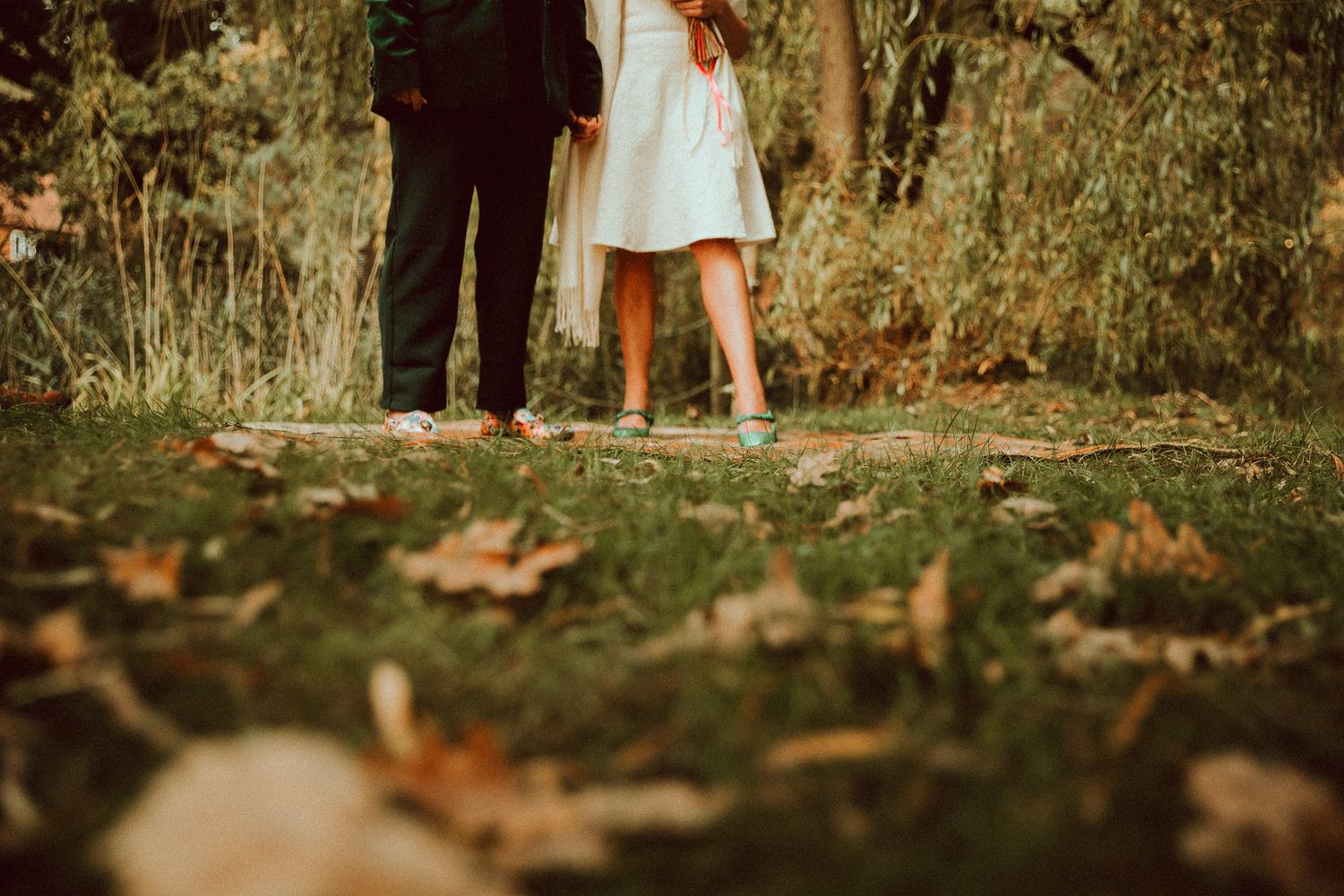
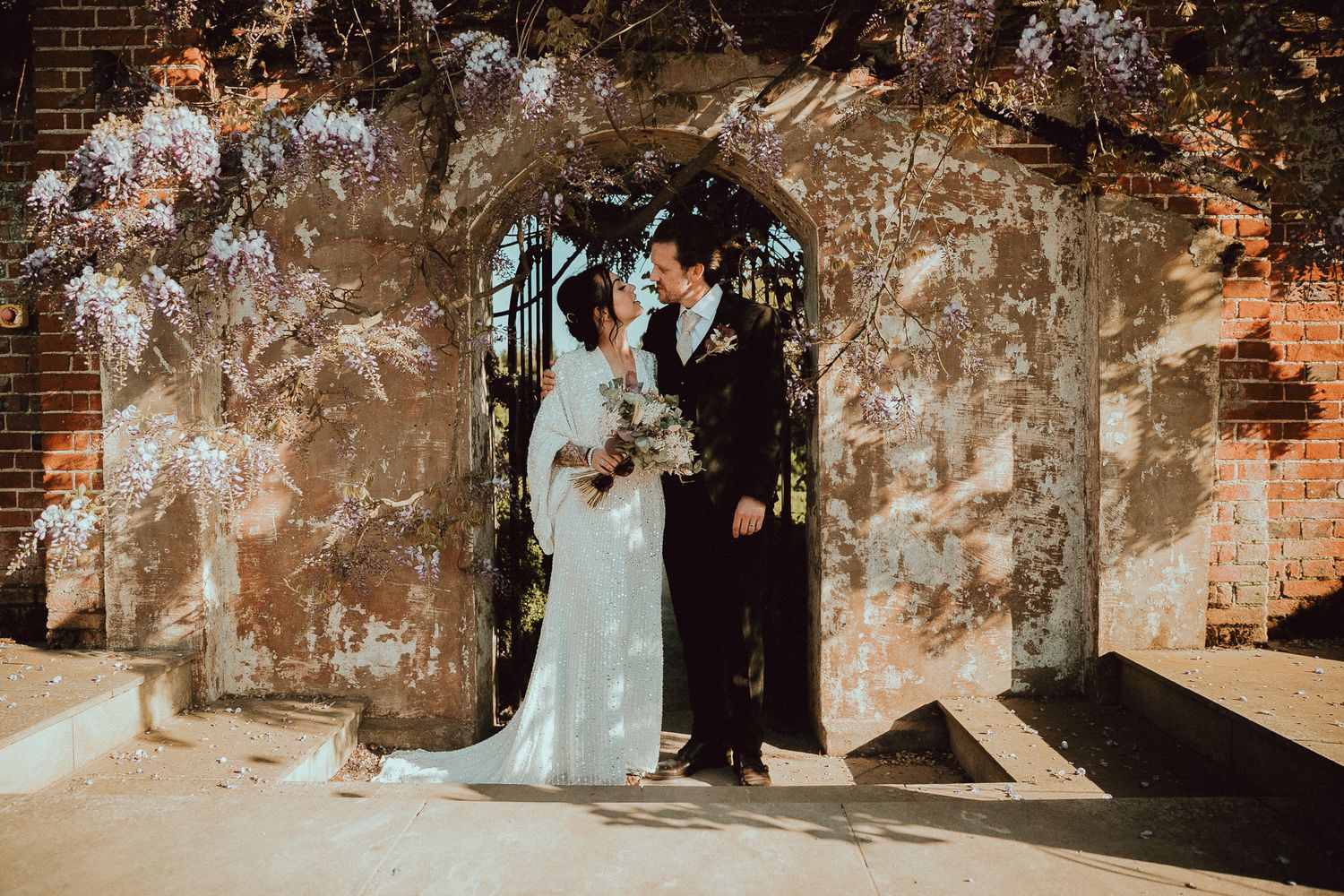
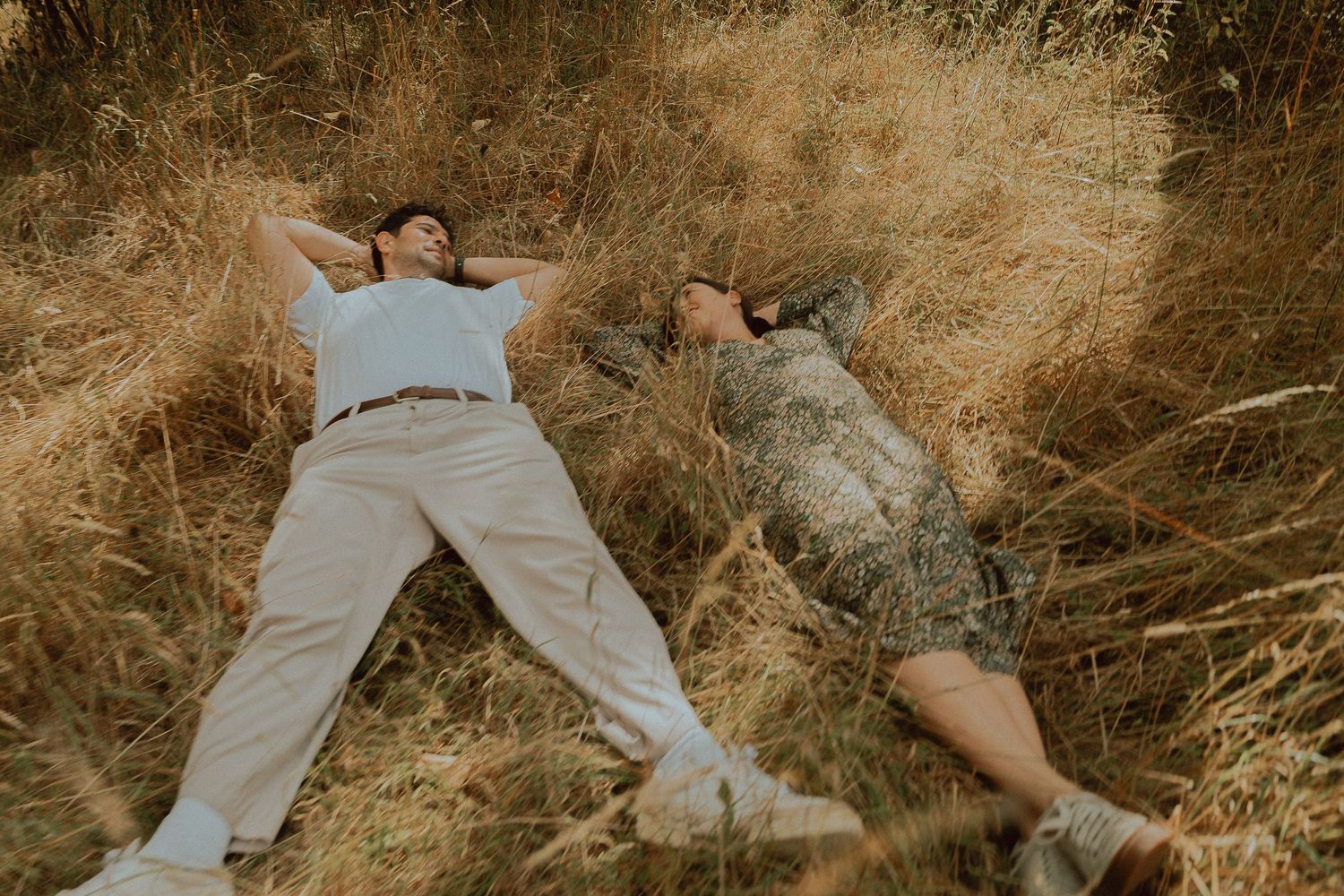
Norfolk Landscapes.
Norfolk is not one landscape.
It is a collection of different environments, each with its own atmosphere, pace and possibilities. The coast feels different from the Broads. The Broads feel different from the woodland and heathland of the Brecks. Even within those areas, the landscape can change quickly. This is where choosing a place becomes useful.
Not just because of how it looks, but because of how you might spend your time there.
The Broads
The Broads National Park is a landscape of rivers, lakes, reedbeds, grazing marshes, fen, woodland and ancient waterside villages. It is shaped as much by water as by land, with places such as Wroxham, Horning, Salhouse, Ranworth, Ludham, Potter Heigham and Hickling offering different ways into the area.
The landscape is often quieter than the coast.
There are winding waterways, historic windmills, small bridges, boatyards and long views across the marshes.
The rivers and broads create a sense of movement, but not necessarily urgency. This can suit couples who want a wedding experience built around slower days. A ceremony near the water. A boat trip with guests. A walk through reedbeds. A meal in a riverside village. A morning spent doing very little before the day begins.
The Broads is not only about boating. It is also about the spaces between the waterways, where footpaths, villages and quiet viewpoints allow you to experience the landscape on foot.
The Norfolk Coast
The Norfolk Coast is shaped by beaches, dunes, saltmarshes, shingle, cliffs and tidal creeks. It includes some of the county’s most recognisable places, from Holkham and Wells-next-the-Sea to Brancaster, Thornham, Blakeney, Cley-next-the-Sea, Salthouse, Cromer and Sheringham.
The character changes as you move along it.
Around Holkham and Wells, the landscape feels open and expansive, with wide beaches, pinewoods, dunes and grazing marshes.
Around Blakeney, Cley and Salthouse, the coast becomes more closely connected to saltmarsh, reedbeds, creeks and the movement of the tide.
Further east, around Cromer and Sheringham, beaches and cliffs meet traditional seaside towns, giving the landscape a more settled and recognisable character.
For a wedding or elopement, the coast can be the main setting or simply part of the wider experience.
You might get married near the sea, walk along the beach afterwards, or spend a few days exploring the villages, marshes and coastal paths without needing to turn every moment into a planned activity.
Heathland and open country
Heathland brings another texture to Norfolk.
The landscape is often lower, more open and less obviously cultivated, with sandy ground, gorse, grasses, scrub and scattered trees. Places such as Kelling Heath, Salthouse Heath, Wiveton Downs and the wider Brecks offer a different experience from the fields and woodland elsewhere in the county.
These places can feel especially spacious.
There may be fewer buildings, fewer obvious landmarks and less of the visual busyness that comes with a town or formal garden.
For couples planning an elopement, heathland can offer a feeling of being away from everything without necessarily requiring a long mountain hike or difficult journey.
It is worth remembering that these are living landscapes, often protected for their wildlife and habitats. The most meaningful way to experience them is usually to stay on established paths, respect seasonal restrictions and leave the landscape as you found it.
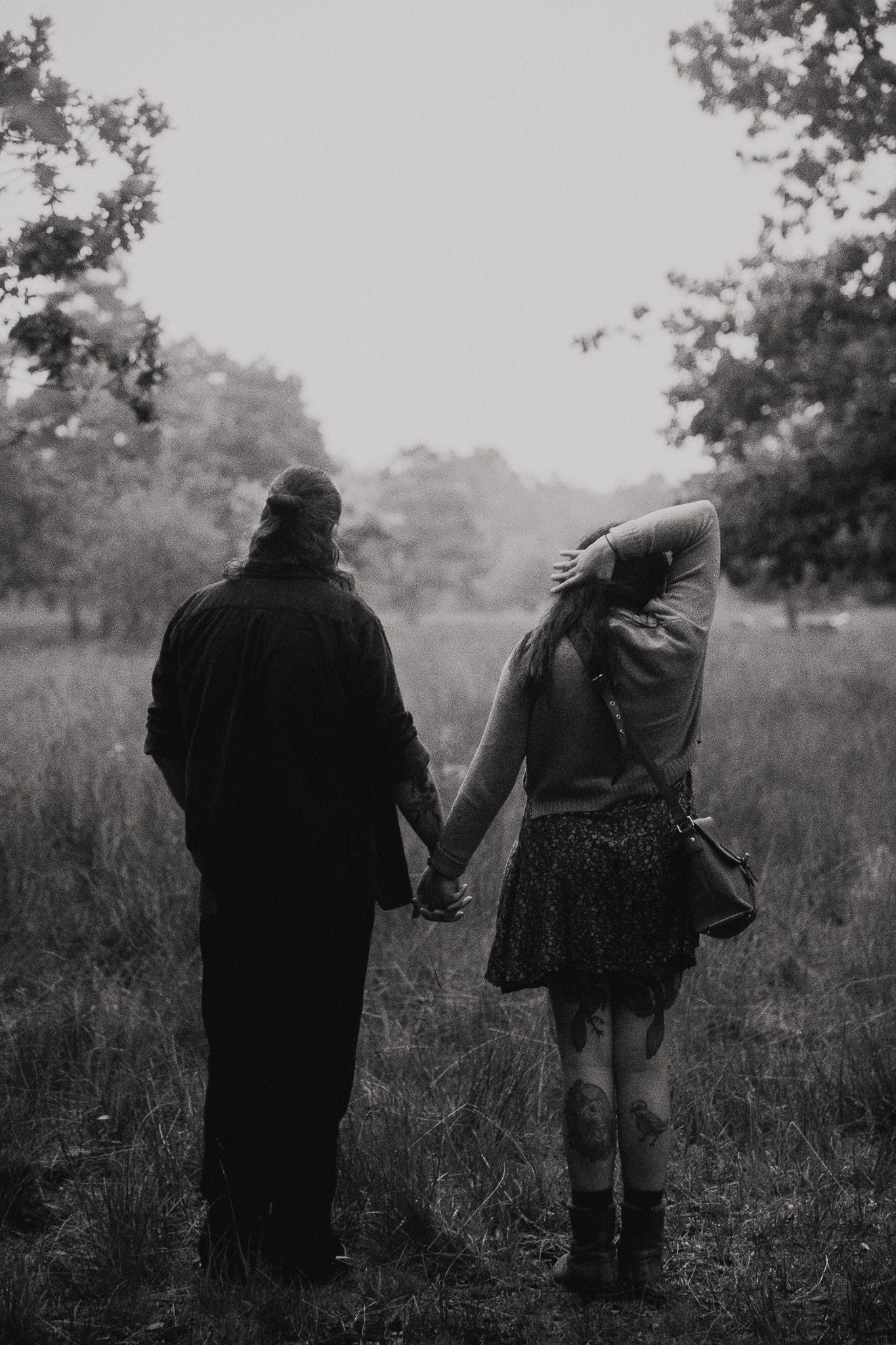
Woodland and pine forests
Norfolk has more woodland than its open horizons might initially suggest. There are ancient woods, parkland trees, managed forests and pinewoods close to the coast. Sheringham Park, Felbrigg Hall, Sandringham Estate and the woodland around Holkham each offer a different relationship between trees, paths, gardens and wider countryside.
In the Brecks, the landscape becomes more strongly associated with pine forest. Thetford Forest, around Thetford, Brandon and Lynford, is a large lowland forest of pine, broadleaf woodland and open heath. It feels very different from the marshes of the Broads or the exposed coastline.
Woodland can be particularly useful for couples who want a sense of privacy without travelling somewhere completely remote. It offers shade in summer, shelter from some of the wind, changing colour in autumn and a different kind of atmosphere in winter.
A woodland walk does not need to be an organised part of the wedding. It might simply be somewhere to go when you want to step away from the noise for a little while.


The landscape you choose changes the day
The landscape is not simply something that appears behind the photographs. It affects the practical shape of the wedding.
A coastal setting may bring wind, tides and long walks. A woodland setting may offer shelter and shade. The Broads may encourage boat trips and slower movement. Heathland may suit a quieter, more open experience. A city wedding may allow guests to walk between the ceremony, meal and evening plans. None of these is automatically better than the others.
The useful question is:
What kind of experience do we want this place to make possible?
Because the landscape you choose will influence more than how the day looks. It will influence how you move through it, what you do between the important moments, and what you remember when you return home.
Norfolk countryside
Between the coast, Broads and forests, much of Norfolk is made up of working countryside.
Fields, hedgerows, ancient churches, country lanes, villages and farm buildings create a landscape that can feel understated at first. Around Reepham, Aylsham, Blickling, Dereham and the villages north of Norwich, the countryside is shaped by agriculture, historic estates and small settlements. It is not always dramatic. That is part of its appeal.
A country wedding does not need a famous view behind it. Sometimes the landscape is a field, a line of trees, an old track, a church tower or the road leading away from the venue.
The countryside can be especially well suited to couples who want the day to feel settled and unforced.
There is room for long lunches, outdoor ceremonies, walks between parts of the day and evenings that continue without needing a particular destination.
Norwich & the River Wensum
Norwich adds an urban landscape to the county. The city is shaped by medieval streets, historic buildings, independent businesses and the River Wensum, which runs through and around the city. It offers a different kind of wedding setting, with historic venues, intimate spaces, converted buildings, restaurants and places to gather within walking distance. The river also connects Norwich to the wider landscape of Norfolk.
That makes Norwich an important part of the wider picture. Norfolk can mean a ceremony in the city, a dinner among its older streets, a walk beside the river, or a wedding that moves between urban and rural settings over several days. It does not have to mean choosing between city and countryside.
Planning Advice.
Getting married in Norfolk can be wonderfully simple, but the landscape you choose will shape how the day works.
A coastal elopement, a countryside wedding, a ceremony beside the Broads and a city wedding in Norwich will all need slightly different planning. The aim is not to control every detail.
It is to understand the place well enough that you can enjoy it.
Outdoor ceremonies
Norfolk is well suited to outdoor weddings, from gardens and private estates to woodland edges, meadows and waterside settings.
If you want a legally recognised civil ceremony outdoors, the venue needs to be approved for marriages and the outdoor area must meet the relevant requirements. Not every beautiful outdoor location can legally host the ceremony itself, so check what the venue offers before making plans.
Some couples choose to have the legal ceremony indoors, maybe at a registry office, then hold a more personal outdoor celebration, exchange vows, or spend time together outside afterwards.
That can give you the best of both worlds.
Norfolk elopements
Norfolk works particularly well for elopements because you do not need to travel far to experience different landscapes.
You could stay near Cromer, Sheringham, Holt, Wells-next-the-Sea, Wroxham or Norwich, then build the day around the coast, countryside, woodland or waterways.
An elopement does not have to mean climbing a mountain or finding somewhere completely remote.
It might be a quiet ceremony, a long walk, a meal somewhere memorable and time together without a packed schedule.
The most important decision is choosing a place that suits how you actually want to spend the day.
Travel and getting around
Norwich is the main transport hub for the county, with direct rail services to London Liverpool Street and connections to Cambridge and other parts of the country. Norwich station is also close to the city centre, making it practical for guests who are staying in the city.
Beyond Norwich, a car is often the easiest way to reach rural venues, coastal villages and quieter landscapes.
This is worth considering when choosing a venue.
A beautiful location may be perfect for the couple but more difficult for guests travelling without a car. If people are coming from elsewhere, think about accommodation, taxis, parking and how everyone will get home after the reception.
Norfolk is spacious, but that space can mean longer journeys between places.
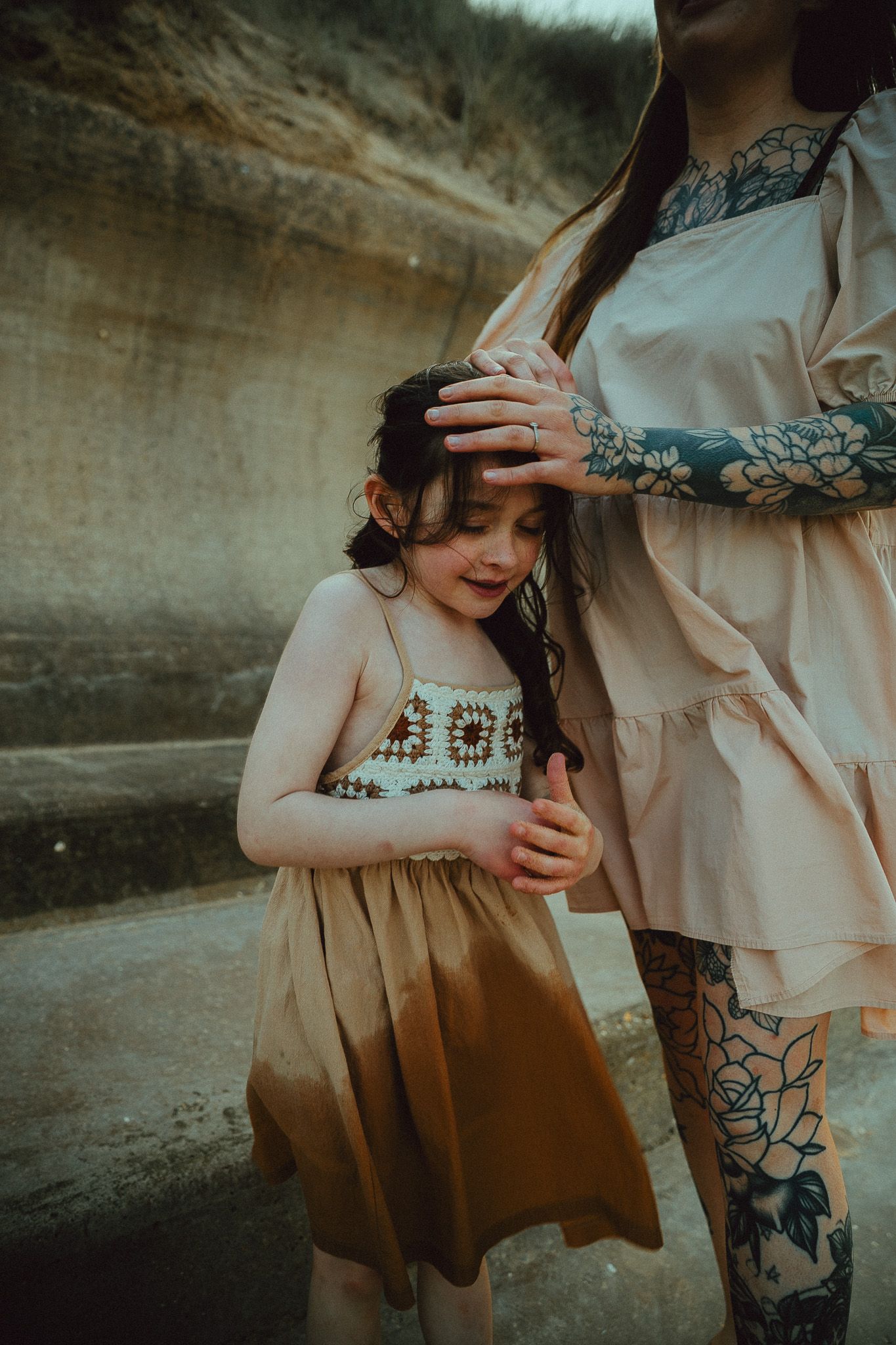
Weather and the coast
Norfolk weather can change quickly, particularly along the coast. Wind is often more important than rain. A day that looks calm inland can feel much more exposed beside the sea, on open heathland or across the marshes.
If you are planning coastal photographs or an outdoor ceremony, think about:
A sheltered alternative nearby
Warm layers and sensible footwear
Whether guests can comfortably reach the location
The time of day and available daylight
Wind direction, especially for dresses, decorations, confetti and sound
Tide times if your plans involve beaches, tidal creeks or coastal paths
Rain does not automatically ruin an outdoor wedding.
Sometimes it becomes part of the atmosphere. But it helps to have a plan that allows the day to continue without everyone feeling as though they are waiting for the weather to improve.


Leave room for the place
Norfolk does not need to be over-planned. You can make sensible arrangements while still leaving time to walk, explore, sit outside, change direction or stop somewhere because the light is good.
That is often where the best photographs happen.
Not because you have added another activity to the schedule, but because you have left enough room for the day to unfold.
Choose the place carefully, understand what it needs, then give yourself permission to enjoy being there.
Think about the wider stay
One of the best things about getting married in Norfolk is that the wedding does not have to be the only reason for the trip.
Guests might stay in Norwich, explore the coast around Wells-next-the-Sea or Blakeney, visit the Broads, walk through woodland or spend a few quiet days in the countryside.
You might choose to arrive early, stay an extra night or plan something simple for the day after the wedding.
A walk, a boat trip, a pub lunch or breakfast by the sea can become part of the memory of the wedding just as much as the ceremony itself.
Local considerations
Every venue and landscape will have its own practical details.
Before committing to a location, ask about:
- Permissions for ceremonies and photography
- Access for guests, suppliers and vehicles
- Parking and public transport
- Accessibility and walking distances
- Indoor spaces or shelter
- Noise restrictions and finish times
- Whether dogs are welcome
- Whether confetti, candles, fires or decorations are permitted
- Any restrictions around protected landscapes or public paths
If you are planning photographs somewhere outside the venue, check whether permission is needed and whether the location is suitable at the time of year you have chosen.
The most beautiful place is not always the most practical place for every part of the day.
Walking Routes.
Norfolk is a place best understood on foot.
A walk can take you from a village to the coast, through woodland, across open fields or along the edge of a river. It can be part of the wedding itself, something you do before the ceremony, or simply a way to spend time together while you are here. You do not need to be an experienced hiker.
Some of the best walks are gentle, short and close to where you are staying.
Coastal paths
The Norfolk Coast Path is one of the best ways to experience the county’s coastline. It passes through beaches, dunes, saltmarshes, shingle, woodland and cliff-top landscapes, linking places such as Holme-next-the-Sea, Brancaster, Holkham, Wells-next-the-Sea, Blakeney, Cley-next-the-Sea, Weybourne, Sheringham and Cromer. You could walk a small section rather than attempt the whole route.
A morning around Holkham, a quieter stretch near Blakeney, or the cliffs between Sheringham and Cromer can all offer a very different experience of the coast.
For couples, these walks can become part of the wedding story. A quiet walk before the day begins. A few minutes outside after the ceremony. Or a longer walk the following morning, when everything has slowed down.
Woodland and estate walks
Norfolk also has plenty of places to walk beneath trees rather than beneath the open sky. Sheringham Park combines woodland, parkland and coastal views, while Blickling Estate offers paths through historic parkland, fields and wooded areas.
These places can work well for couples who want landscape without the exposure of the coast.
They are also useful when the weather is changeable, or when guests would prefer a gentle walk rather than a long hike.
Countryside and village walks
Some of Norfolk’s most enjoyable walks begin in its villages. You might follow quiet lanes around Aylsham, explore the countryside near Reepham, walk beside the River Wensum, or use a village such as Wroxham, Horning, Burnham Market or Castle Acre as a base for a slower day.
These walks are less about reaching a dramatic viewpoint and more about noticing the details.
Old churches.
Field paths.
Country estates.
Small bridges.
Hedges, hedgerows and changing skies.
They are often the kind of walks that give a place its character.

The Broads
The Broads National Park offers a different kind of walking experience. Here, routes follow rivers, reedbeds, marshes, open water and quiet villages. Places such as How Hill, Ranworth, Salhouse Broad, Coltishall and Horstead provide opportunities for shorter walks, waterside exploring and slower days outside.
A walk around the Broads does not need to be an ambitious activity. It might be a stroll beside the water, a stop at a viewpoint, a boat trip followed by a walk, or an hour outside with the dog before dinner.
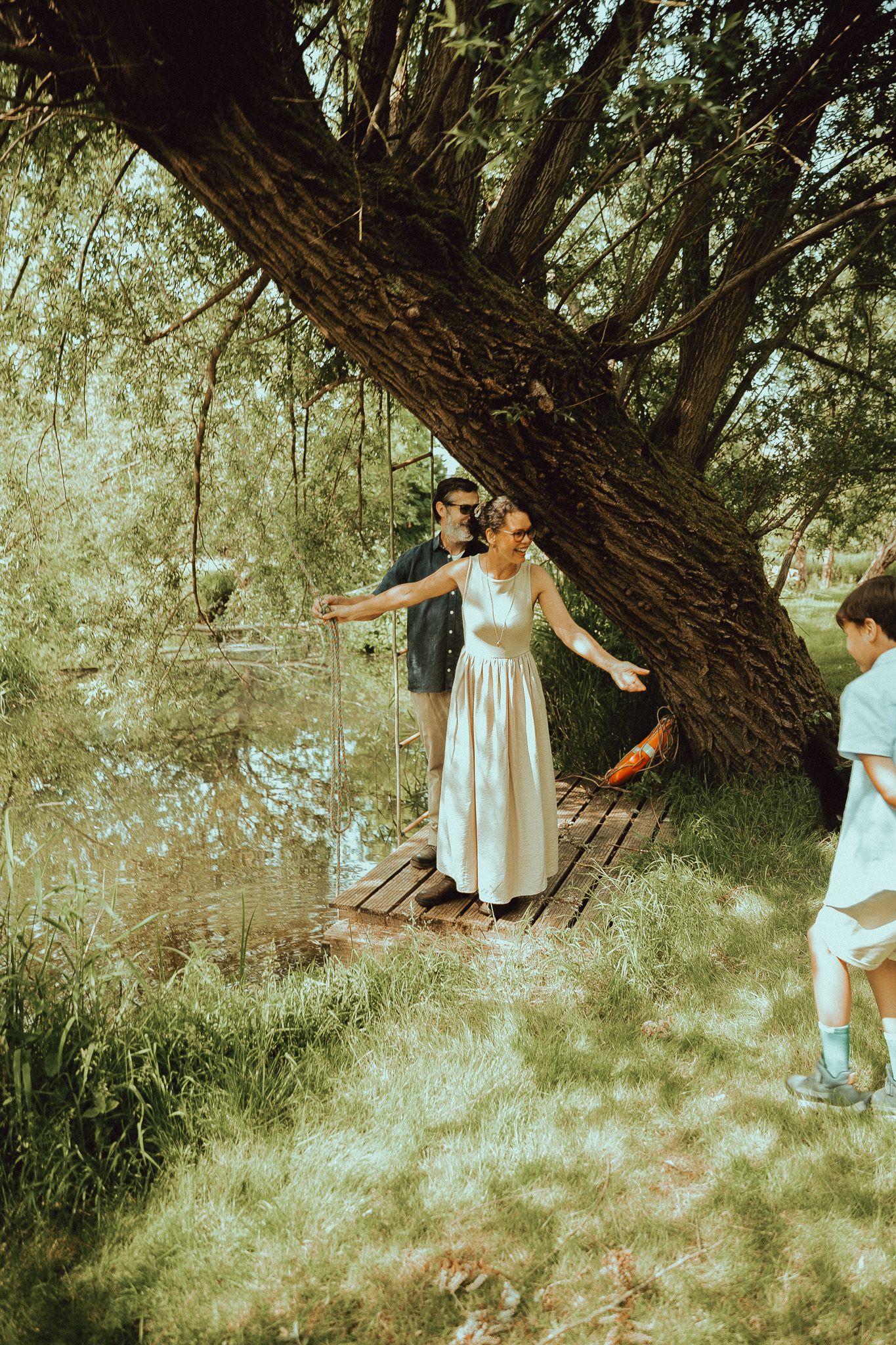
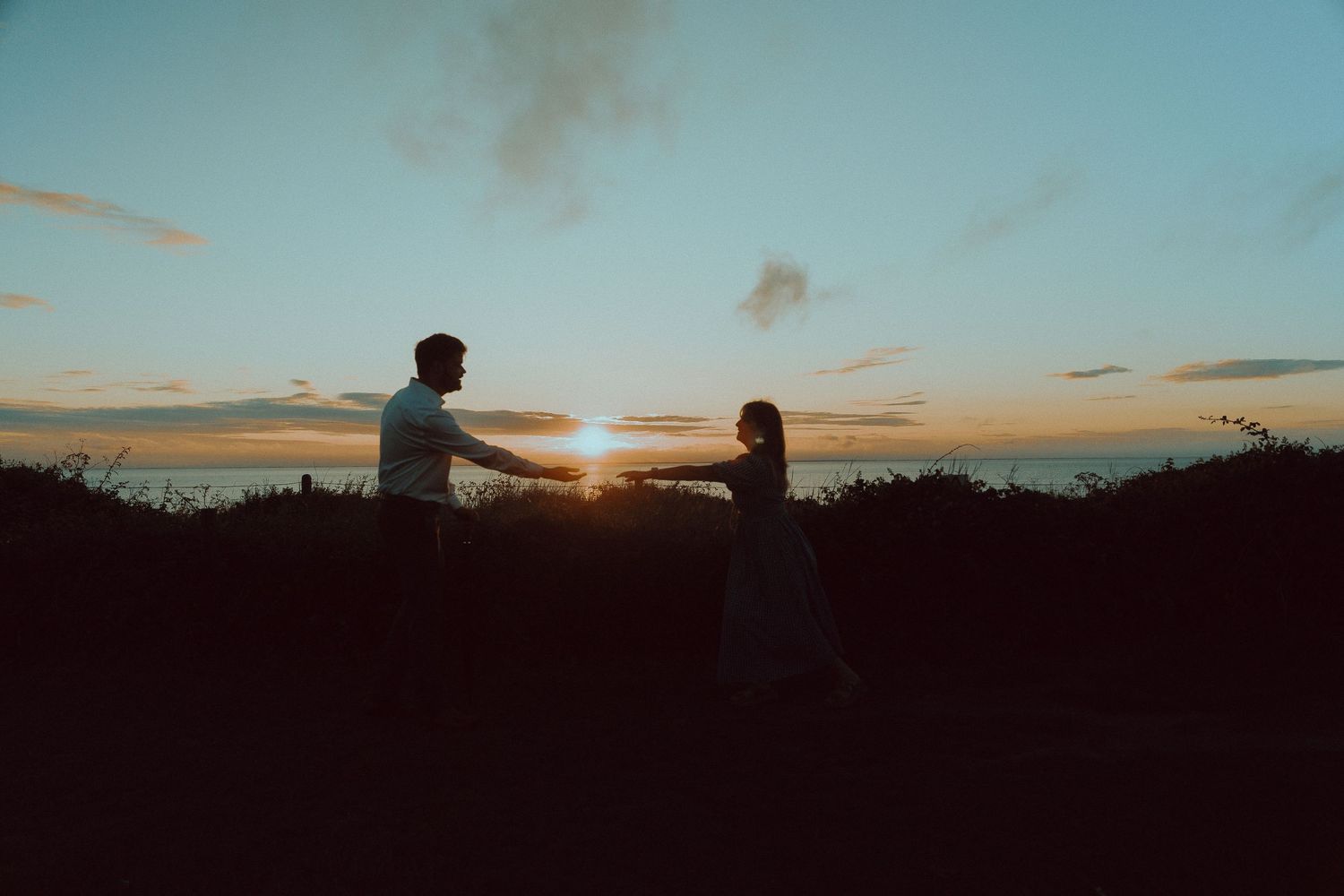
Sunrise and sunset walks
Some places are worth visiting at the edges of the day. The coast around Cromer, Sheringham and Holkham can feel completely different in the early morning, while the open countryside and waterways of the Broads become quieter as the light begins to change.
If you are planning an elopement or a smaller wedding, an early walk or evening wander can be a lovely way to experience Norfolk without adding another formal activity to the day.
You do not need to plan the perfect photograph. Just choose somewhere you would genuinely enjoy being, allow enough time to get there safely, and let the light, weather and landscape do what they do.
Sometimes the most memorable part of a place is how it feels before everyone else arrives, or after the day has started to settle.
Walks before or after the wedding
If you are staying in Norfolk for a few days, it is worth planning at least one walk that has nothing to do with the wedding schedule.
You could:
- Walk along the coast near Wells-next-the-Sea
- Explore the paths around Holkham National Nature Reserve
- Follow the river near Bramerton or Coltishall
- Visit Sheringham Park
- Walk around Blickling Estate
- Explore the waterways and villages of the Broads
- Take a quieter countryside walk near where you are staying
The right route depends on the season, weather, footwear, access and how much time you actually want to spend outside.
Walking as part of the photographs
A walk can also be a natural part of your wedding photographs. Not a formal portrait session. Not a photographer leading you from one viewpoint to another.
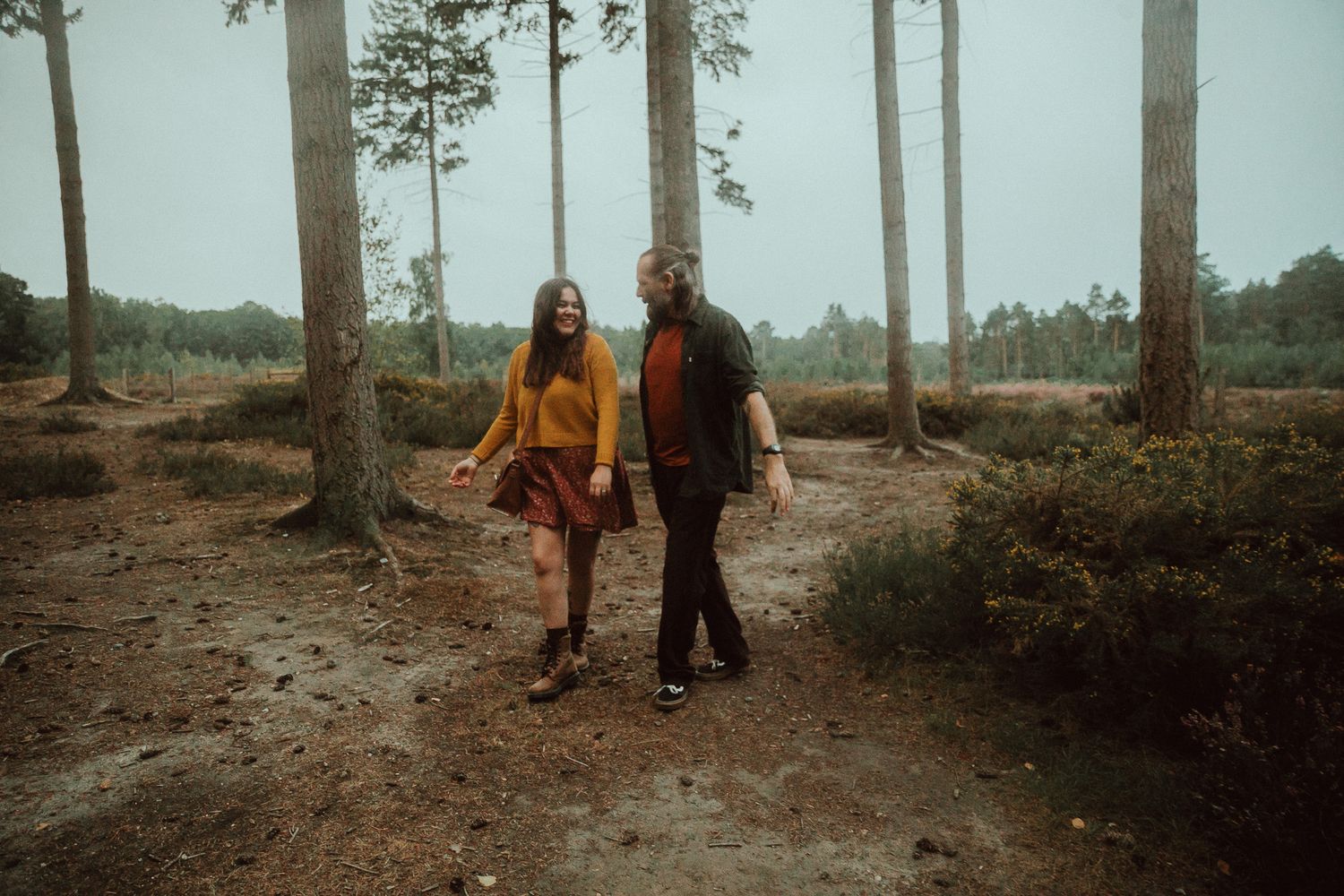
Just the two of you moving through somewhere that matters, with time to talk, look around and be together.
Sometimes the photographs come from the landscape itself. Sometimes they come from the way you walk through it. A hand held. A coat pulled tighter. Wind moving through the grass. A pause beside the water.
The walk does not need to be spectacular to be meaningful.
The point is not always where you end up. Sometimes it is having the time to experience the place together.
Hidden Places.
Norfolk has its very well-known places.
Holkham, Wells-next-the-Sea, Cromer, Blakeney and the Norfolk Broads are popular for good reason. They are beautiful, memorable and easy to recommend. But they are not the only places worth experiencing. Some of the most rewarding parts of Norfolk are quieter. A small stretch of beach away from the busiest access point. A footpath between fields. A woodland edge. A village green. A bend in the river where you can stop for a while without feeling as though you need to be anywhere else.
These places may not appear at the top of every search.
That is often part of their appeal.
Away from the obvious
A quieter location does not necessarily mean somewhere completely secret or remote. It might simply mean visiting a familiar area at a different time of day, taking a less direct route, or walking a little further from the main car park.
The coast can feel very different early in the morning. The Broads become quieter away from the busiest waterside spots. Countryside paths can offer a sense of space even when they are close to a village or town.
For couples, this can create room for the parts of a wedding day that do not need an audience.
A private conversation.
A walk together.
A few photographs without feeling watched.
Time to take in the landscape rather than move straight on to the next thing.
Quieter alternatives
Some of Norfolk’s best-known destinations have quieter surroundings worth exploring. Around Wells-next-the-Sea and Holkham, the wider landscape includes pine woodland, open heath, dunes and long stretches of coast. Around Blakeney and Cley-next-the-Sea, the marshes and smaller paths offer a different experience from the busiest village areas.
Further east, the coastline around Sheringham, Weybourne and Cromer changes constantly between woodland, cliffs, beaches and open sea.
Inland, places such as Reepham, Aylsham, Wymondham and the villages along the River Wensum offer a slower kind of Norfolk, with country lanes, field paths, old churches and quiet stretches of countryside.
The point is not that one place is better than another. It is that a location can become much more interesting when you take the time to understand what sits around it.
Hidden places for elopements
For an elopement, choosing somewhere quieter can change the whole feeling of the day. You might not need several locations, a detailed itinerary or a long list of things to do. Instead, you could choose one part of Norfolk and spend time getting to know it.
Stay near the coast and walk before breakfast. Choose a countryside base and explore the surrounding lanes. Spend a few days around the Broads, with time for the water, the villages and the landscape between them.
The location becomes more than somewhere to take photographs.
It becomes part of the experience you are remembering.
That can be especially valuable if you do not enjoy being the centre of attention. A quieter place can give you more freedom to move naturally, talk, pause and spend time together without feeling as though every moment needs to be observed.

The smaller details
Some places are memorable because of the view.
Others stay with you because of the details. An old lane leading towards a church. A weathered gate. A path through long grass. A quiet stretch of woodland. A view across fields just before the light disappears. Norfolk has plenty of these smaller moments.
They may not be the kind of locations you build an entire wedding around, but they can become meaningful parts of the experience, particularly when you are staying for a few days or planning a smaller celebration.
A walk to a village pub.
A quiet morning near the water.
A path discovered while looking for somewhere to take the dog.
A small beach visited after the main crowds have gone.
These are often the details that make a place feel lived in rather than simply visited.

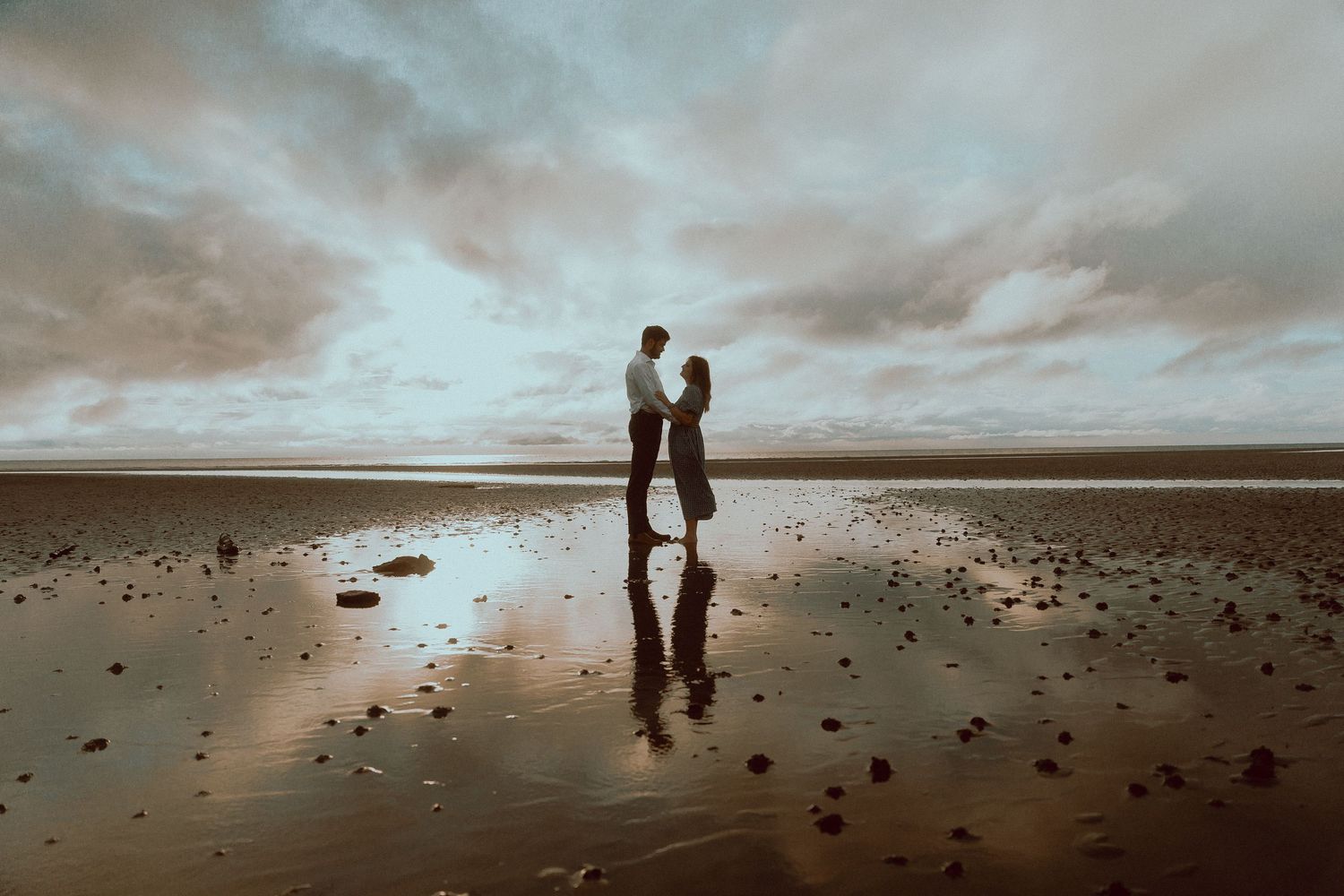
A different kind of photograph
Hidden places can also change the way photographs feel. Without crowds, busy backgrounds or the pressure to reach a famous viewpoint, there is often more room for quieter photographs.
The two of you walking rather than posing.
A moment beside the water. Wind moving through the grass. A pause beneath the trees. The landscape becoming part of the frame without taking over the story.
These photographs do not need to announce where you are. They can simply remind you how it felt to be there.
Sometimes the place that means the most is not the one everyone else has already found.
Finding somewhere that feels like your
The best location is not always the most impressive one. It might be somewhere that reminds you of a walk you took together, a place near your accommodation, or a landscape that feels familiar from childhood.
It might be a stretch of coast you have never visited before, but which gives you the feeling you were looking for.
You may want sea views, but not necessarily a famous beach. You may want woodland, but not a formal garden. You may want countryside, but still be close enough to a village for dinner afterwards.
There is no single definition of a hidden place.
It is simply somewhere that feels right for the way you want to spend your time.
Exploring thoughtfully
Quieter places still belong to someone. They may sit on private land, pass through working farmland, support wildlife, or form part of a landscape that local people use every day.
That means exploring with a little care. Stay on permitted paths. Respect signs and boundaries. Avoid blocking roads or entrances. Leave no trace, and be mindful of noise, dogs and other visitors.
Not every beautiful place needs to become a publicised wedding location. Some places are valuable precisely because they remain peaceful.
Real Stories.
Norfolk is not one single wedding setting.
It is city streets and historic buildings, quiet coastal villages, woodland paths, open countryside and places that feel completely removed from everyday life. The best way to understand those places is to see how real couples have experienced them.
Our Real Stories section connects the locations throughout this guide with actual weddings. Each story explores the couple, the setting, the atmosphere and the way the day unfolded, giving you a more useful sense of what getting married in a particular place might feel like. These are not client galleries or private image-delivery pages. They are public wedding stories, created to connect inspiration with practical information.
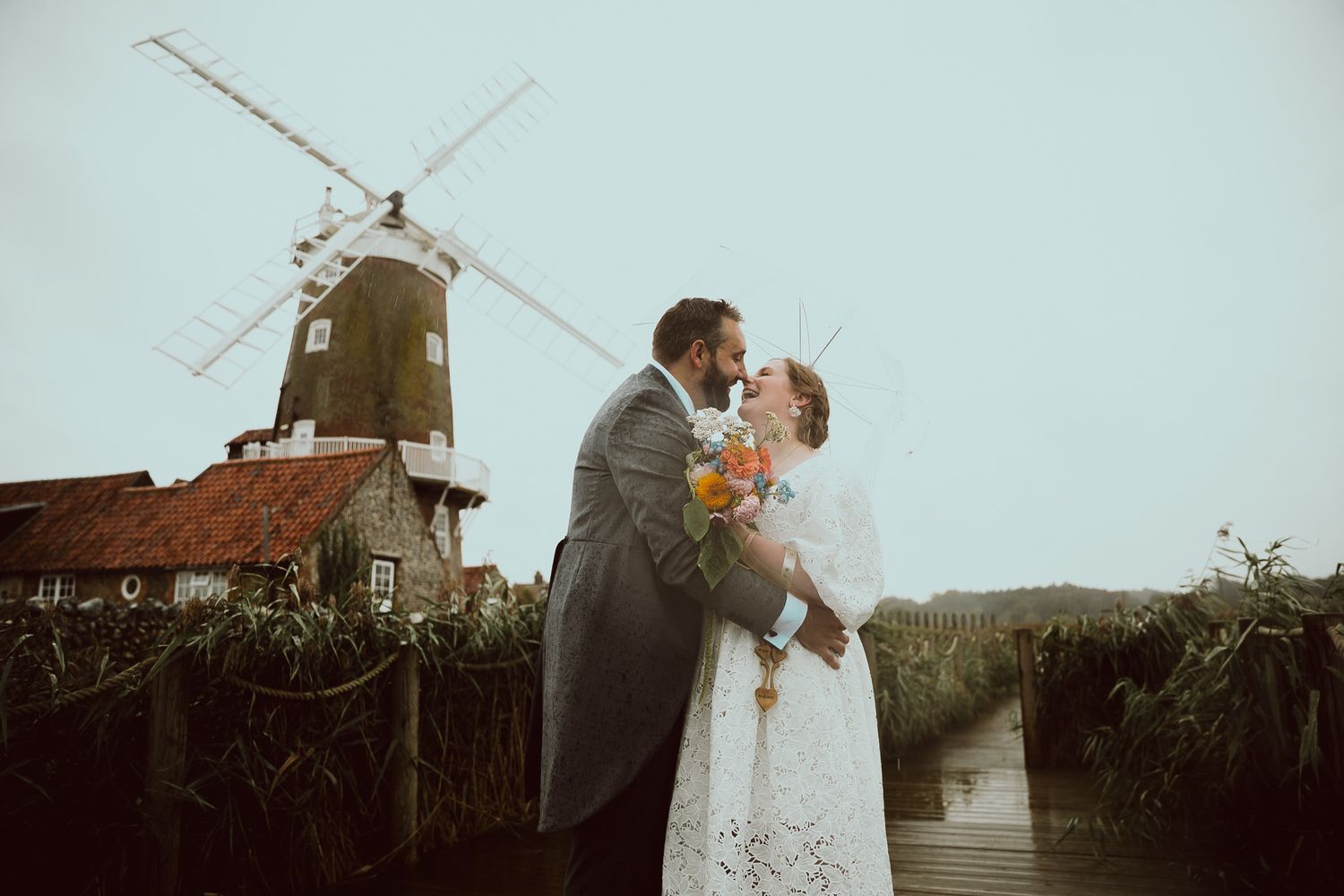
Carolyn + Paul, Cley Windmill
An intimate summer wedding at Cley Windmill, with two close friends as witnesses, a relaxed ceremony, portraits around the windmill and village, and a meal on the lawn.
With only a few people present, the day centred on the couple, their friendships and the character of the North Norfolk coast. It was quiet, personal and unhurried, with space for the experience to unfold naturally.

Ellena + Jacob, Norwich
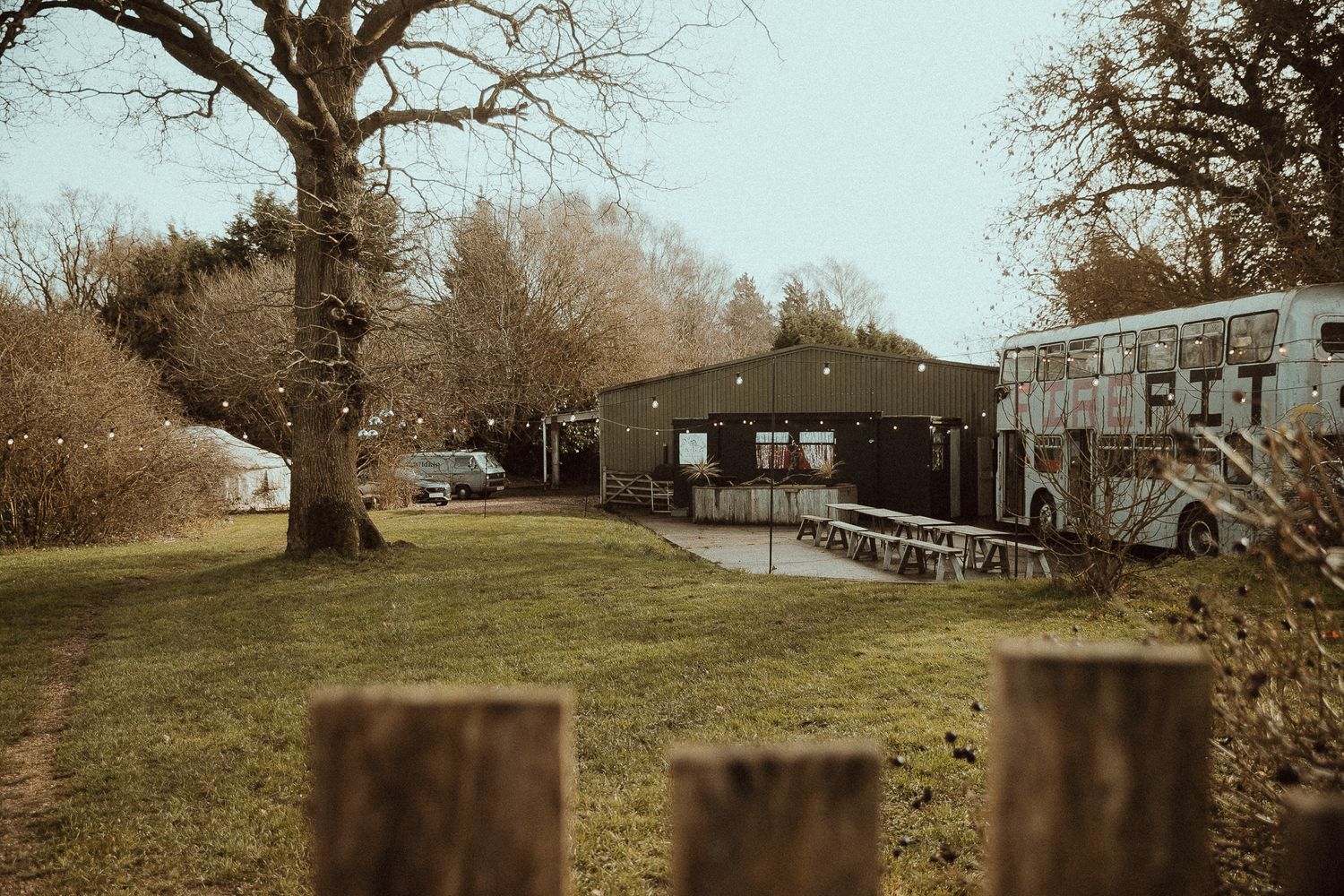
A lively city wedding that moved from The Flint Room to Norwich Arts Centre, taking in a vintage London bus, meaningful places around Norwich, lego flowers, parachute games and plenty of time with friends.
Their story shows how a Norwich wedding can be personal, energetic and deeply connected to everyday life, with the city becoming part of the celebration rather than simply a backdrop.

More than photographs
Each Real Story should offer more than a collection of finished images. It should show how the location worked, why it mattered to the couple, how the day moved through the space and what kind of coverage suited the experience.
From there, readers can explore the relevant Place, Field Guide, Coverage and related articles. That might mean discovering Norwich through a real city wedding, understanding the atmosphere of Cley through an intimate celebration, or seeing how woodland and water can shape an autumn wedding at Happy Valley.
There is no single right way to get married in Norfolk. The most meaningful celebrations are often the ones that make room for the people, places and small unexpected moments that matter most.
These stories are here to help you find a setting that feels right for you, imagine what your own day could become.
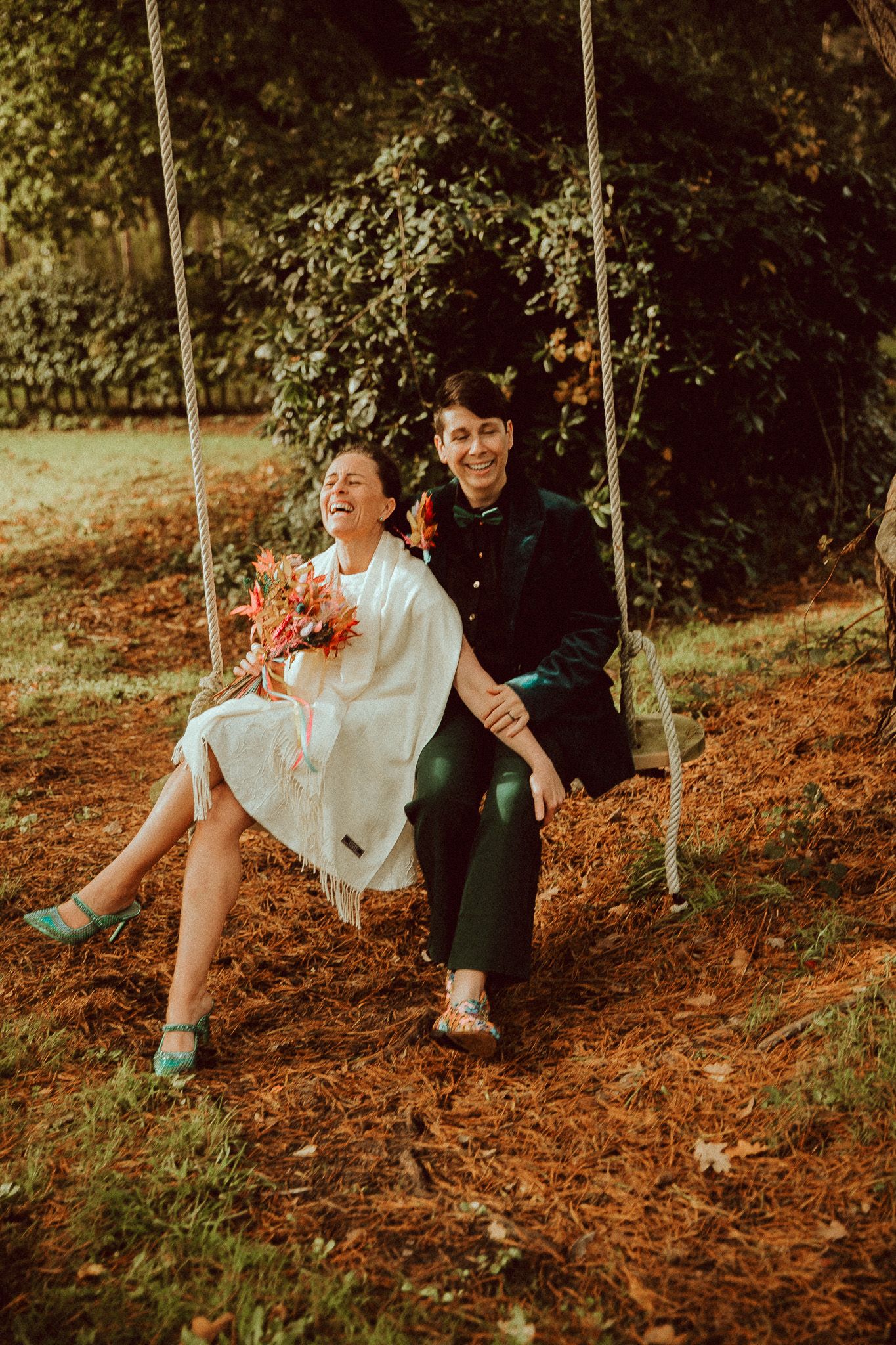
Zoe + Jo, Happy Valley
An autumn wedding surrounded by woodland, water and changing light at Happy Valley.
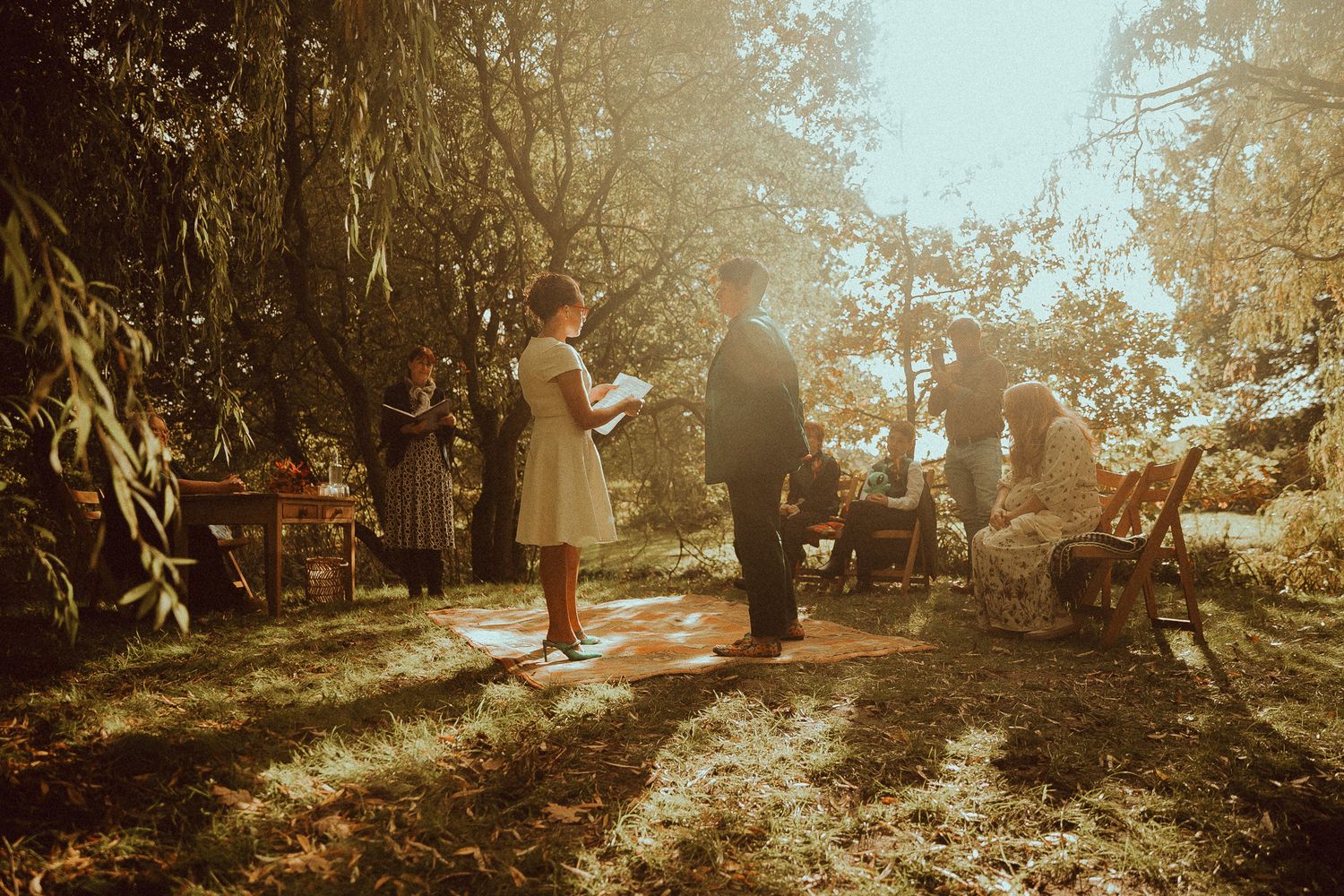
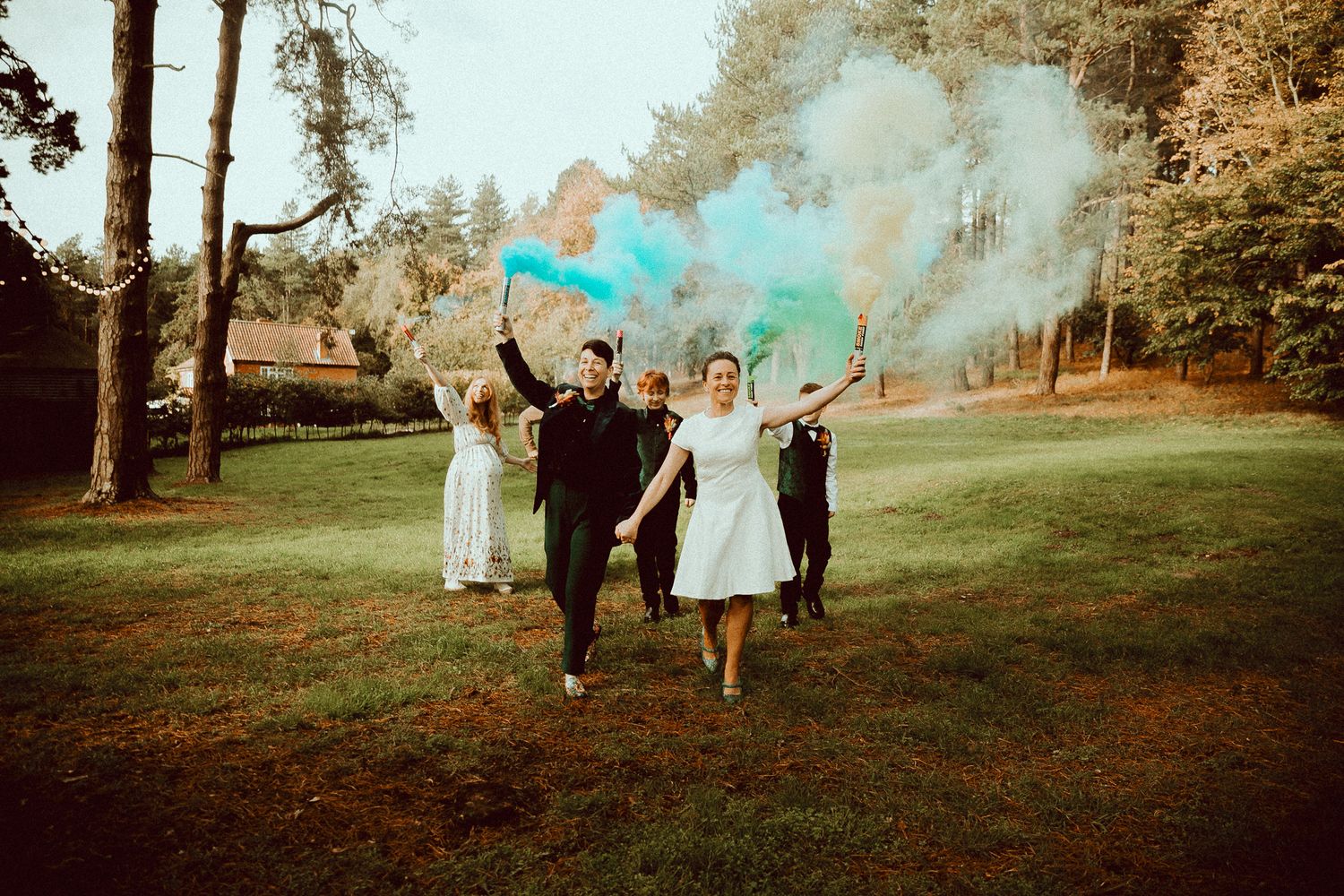
Their civil ceremony took place on the island in the middle of the lake, followed by time with family and friends, portraits among the pine trees and a dramatic evening with flares in the grounds.
Their story shows how a woodland wedding can move between intimacy, adventure and atmosphere, making the landscape an active part of the day.


What are the best places to get married in Norfolk?
There is no single best place to get married in Norfolk. It depends on the atmosphere you want and how you would like the day to unfold.
Norfolk offers coastal villages, wide beaches, historic buildings, woodland, lakes, countryside estates and the energy of Norwich. Some locations suit larger celebrations, while others are better for intimate weddings, elopements or a quieter day with a small group of people.
The best location is usually the one that feels right for you, rather than the one that simply looks impressive in photographs.
Are there intimate wedding and elopement locations in Norfolk?
Yes. Norfolk has plenty of settings that can work beautifully for smaller celebrations, from coastal villages and countryside locations to private gardens, historic buildings and woodland surroundings.
An intimate wedding does not need to feel like a reduced version of a larger wedding. With fewer guests, there can be more time to enjoy the location, spend meaningful time together and let the day unfold without rushing.
Do you photograph weddings throughout Norfolk?
Yes. Wildkin Weddings photographs weddings across Norfolk, including Norwich, the North Norfolk coast, rural Norfolk and countryside locations throughout the county.
Travel within Norfolk is included. If your wedding takes place elsewhere in the UK, travel and accommodation may need to be added depending on the location and length of coverage.
Do you photograph weddings in Norwich as well as rural Norfolk?
Yes. Norwich offers a completely different atmosphere from the coast or countryside, with historic streets, independent venues, city architecture, familiar places and plenty of opportunities for natural documentary photographs.
A Norwich wedding does not need to stay inside one venue. A ceremony, reception, walk through the city and portraits in meaningful places can all become part of the story.
Can you help us choose a wedding location?
Yes. If you are still deciding where to get married, we can talk through the kind of day you want and the locations that might suit it.
That could include how many guests you are inviting, whether you want a formal venue or something more relaxed, how much time you would like outdoors, whether you are planning an elopement and what kind of atmosphere matters most to you.
The aim is not to choose a location based only on how it photographs. It should also work practically and feel comfortable for the people who will be there.
What types of wedding locations work well for documentary photography?
Documentary photography can work in almost any setting, but locations with a sense of movement, character and connection often offer more opportunities for natural photographs.
That might be a city with places to walk, a coastal setting with changing weather and open landscapes, a woodland location with different pockets of light, or a venue where guests can move between indoor and outdoor spaces.
The most important thing is not having a perfect backdrop. It is having enough room for real moments to happen.
Can we have a relaxed wedding without spending the whole day taking photographs?
Absolutely. The photography should support the day, not take it over.
Depending on your plans, we can build in a short portrait session, photograph naturally as you spend time with guests, or use a longer walk through the location as part of the experience.
There is no need to spend hours posing. The approach can be adapted around the time you have available and the balance you want between photographs, celebration and simply being present.
Do you photograph weddings in bad weather?
Yes. Weather is part of the character of a Norfolk wedding, and it does not automatically mean the photographs need to move indoors.
Wind, rain, cloud, mist and changing light can all create atmosphere. We can work with the conditions, make use of sheltered areas when needed and adjust the plan without losing the feeling of the day.
The priority is always to keep you and your guests comfortable while making the most of the setting.
Can you include analogue photography or Super 8 film?
Yes. Analogue options can be added to your wedding coverage, including 35mm film, medium-format film, Polaroid and Super 8.
These formats bring a different texture and feeling to the final collection. They are particularly suited to personal details, fleeting moments, the atmosphere of a place and the parts of the day that do not need to feel perfectly polished.
Analogue coverage can be combined with digital photography or film, depending on the way you want your wedding story to be documented.
Do you use a drone at weddings?
Drone photography and filming may be possible where the location, weather, permissions and safety conditions allow.
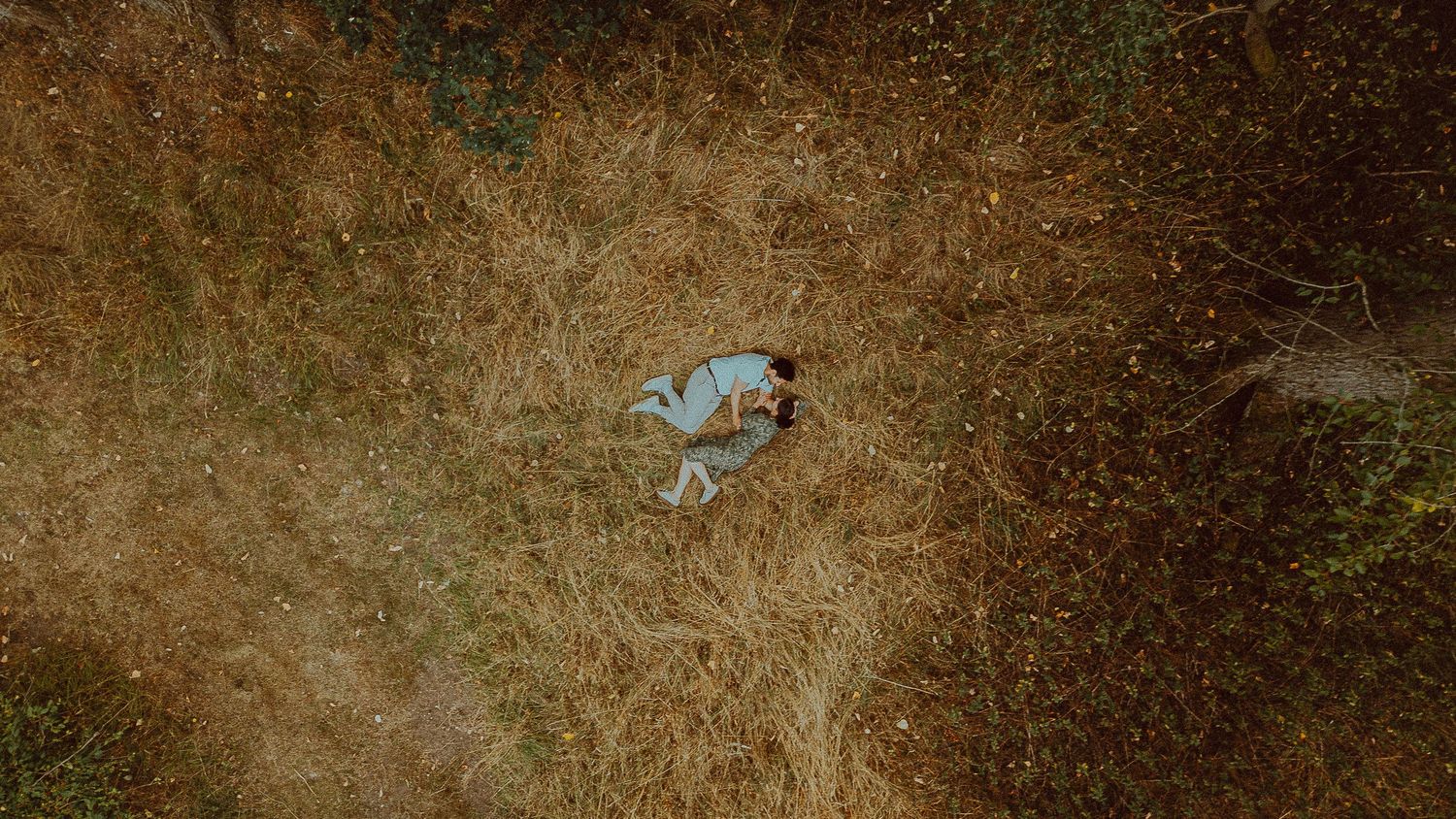
It can be particularly effective for showing the wider setting, such as a coastal landscape, woodland, lake or countryside venue. It is always considered as part of the wider coverage rather than used simply for the sake of getting an aerial photograph.
How do we choose the right amount of wedding coverage?
The right amount of coverage depends on the shape of your day and what you want to remember.
Half-day coverage can work well for smaller weddings, intimate celebrations, ceremonies followed by portraits, or couples who want the most meaningful parts of the day documented without full-day coverage.
Full-day coverage is better suited to weddings where you want the story to include getting ready, the ceremony, time with guests, speeches, dancing and the quieter moments in between.
We can talk through your plans and recommend an approach that fits the day, rather than asking you to choose a package before understanding what you need.
Can you photograph a wedding at a location that is not listed in this guide?
Yes. The Norfolk Places guide is intended to offer inspiration, not act as a complete list of every possible wedding location.
If you have a particular place in mind, we can look at how it might work for your plans, what permissions may be needed and how the photography could fit naturally around the day.
Some of the most meaningful wedding locations are not the most obvious ones.
More Notes
Every place has more to say.
The Norfolk Places guide introduces the landscapes, locations and possibilities across the county. These shorter articles explore the ideas behind them in more detail, helping you think about how a wedding might feel, move and take shape in a particular setting. The notes are inspired by real weddings, real locations and the questions couples often ask while planning.
You might enjoy exploring:
→ How to choose the right wedding location in Norfolk
A practical guide to considering landscape, atmosphere and the kind of experience you want your wedding to create.
→ A guide to finding a place that suits the atmosphere, scale and pace of your day
Exploring how the character and setting of a place can influence the way a wedding feels and unfolds.
→ Coastal Weddings in Norfolk | Wind, Rain, Light & Weather
Exploring wind, rain, light and the character they can bring to a wedding beside the sea.
→ Planning an intimate Norfolk elopement
Ideas for creating a meaningful celebration without needing a large guest list or traditional format.
→ Making space for the day to unfold
Why allowing time, movement and breathing room can make a wedding feel more natural.
→ The best seasons for a Norfolk wedding
Considering the different light, landscapes and atmosphere that each season brings.
→ Meaningful locations and personal wedding photographs
How familiar streets, favourite places and everyday surroundings can become part of the story.
→ Woodland, countryside and lakeside weddings
What to consider when choosing a more rural setting, from access and weather to the way guests move through the space.
→ How documentary photography works outdoors
Exploring how real moments can be photographed naturally, without turning the day into a series of poses.
→ Adding analogue photography to a Norfolk wedding
Discovering how 35mm film, Polaroid and Super 8 can bring a different texture and feeling to the final story.
→ How to choose a location for a Norfolk elopement
Thinking about landscape, atmosphere, accessibility and what you actually want the day to feel like.
→ Building a full day around a Norfolk elopement
Ideas for creating an elopement that feels like a whole experience rather than simply a shorter wedding.
→ The best seasons for a Norfolk elopement
Considering how changing light, weather and landscapes can shape an elopement throughout the year.
→ North Norfolk coastal weddings
Exploring the coastline, landscapes and character of getting married around North Norfolk.
→ Weddings in the Norfolk Broads
Looking at the waterways, open landscapes and changing light that make the Broads such a distinctive setting for a wedding.
→ Weddings in the Norfolk Brecks
Exploring the quieter landscapes, woodland and open countryside of the Brecks.
→ Countryside weddings around Norwich
Finding rural character and breathing space without travelling far from the city
Continue exploring
If you are drawn to the landscapes and relaxed atmosphere of Norfolk, there are a few other places worth exploring.
Discover more of the locations where we would love to tell your story, from nearby countryside and woodland to wild coastlines and dramatic mountain landscapes.
Suffolk
A natural next step from Norfolk, with quiet countryside, coastal villages and relaxed celebrations close to home.
The New Forest
Ancient woodland, open heathland and intimate weddings surrounded by nature.
→ Explore The New Forest
Devon & Cornwall
Wild coastlines, hidden beaches and adventurous weddings by the sea.
→ Explore Devon & Cornwall
scotland
Lochs, mountains and dramatic landscapes for couples drawn to something wilder.