Field Note
There is something different about getting married beside the sea. we feel connected to the coast, the sea and Mother Nature. But she's also untamed and dangerous if you cross her. A coastal wedding can feel like an adventure rather than a formal event that happens to have a beach somewhere nearby. It can be summer, friends, bare feet, swimming, sunbathing, music and food outside. As the evening comes in, you can watch the sun disappear towards the horizon, gather around a fire as the temperature drops, cook dinner together and, once it's properly dark, lie back and look for shooting stars. It doesn't have to be that elaborate. But the coast gives you something that is difficult to recreate anywhere else. And the weather is part of it.
You don't need perfect weather.
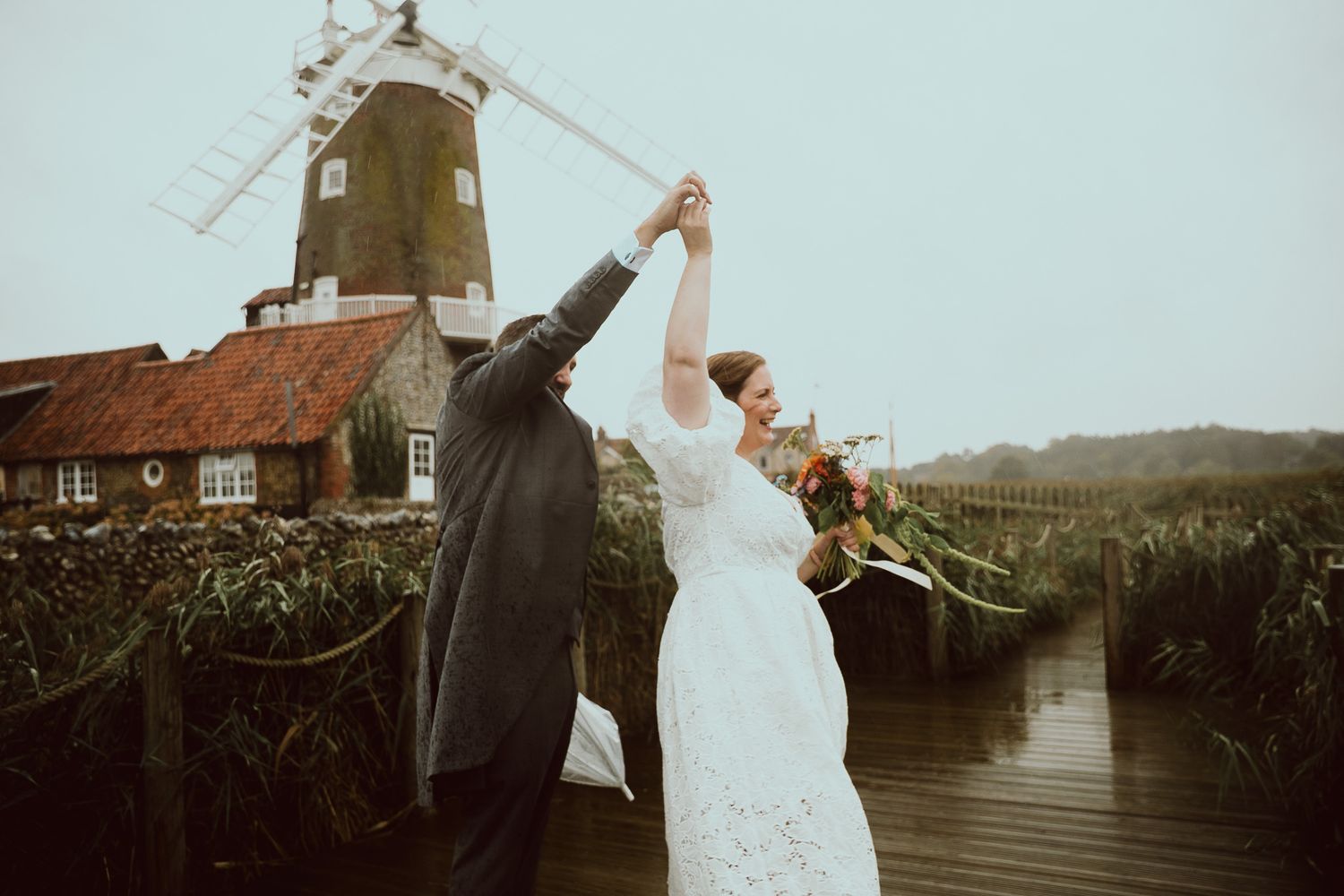
One of the biggest misconceptions I come across is that a coastal wedding in the UK needs to happen on a perfectly sunny summer's day. It really doesn't. In fact, we love rain. Rain with good light can be incredible. Storm clouds can make the sky dramatic. Wind can bring movement to a veil, a dress or someone's hair. Wet sand creates reflections. Grey weather can make everything feel more intimate. Weather changes the atmosphere. That's not necessarily something to fight. It's something you can photograph.
Cley Windmill, October 2025
We photographed Megan and Nick's wedding at Cley Windmill on 3 October 2025. There was a heavy autumn storm, and around 80 guests ended up piled inside the windmill. It would have been very easy for the weather to become the story everyone was worrying about. Instead, Megan and Nick embraced it. We went outside for their portraits in the rain. The result was cosy, atmospheric and completely appropriate for the day. The weather didn't ruin their photographs. It became part of them. That's something I think is worth remembering if you're planning a wedding on the coast. You don't need to wait for the weather to behave.
Wind can be brilliant
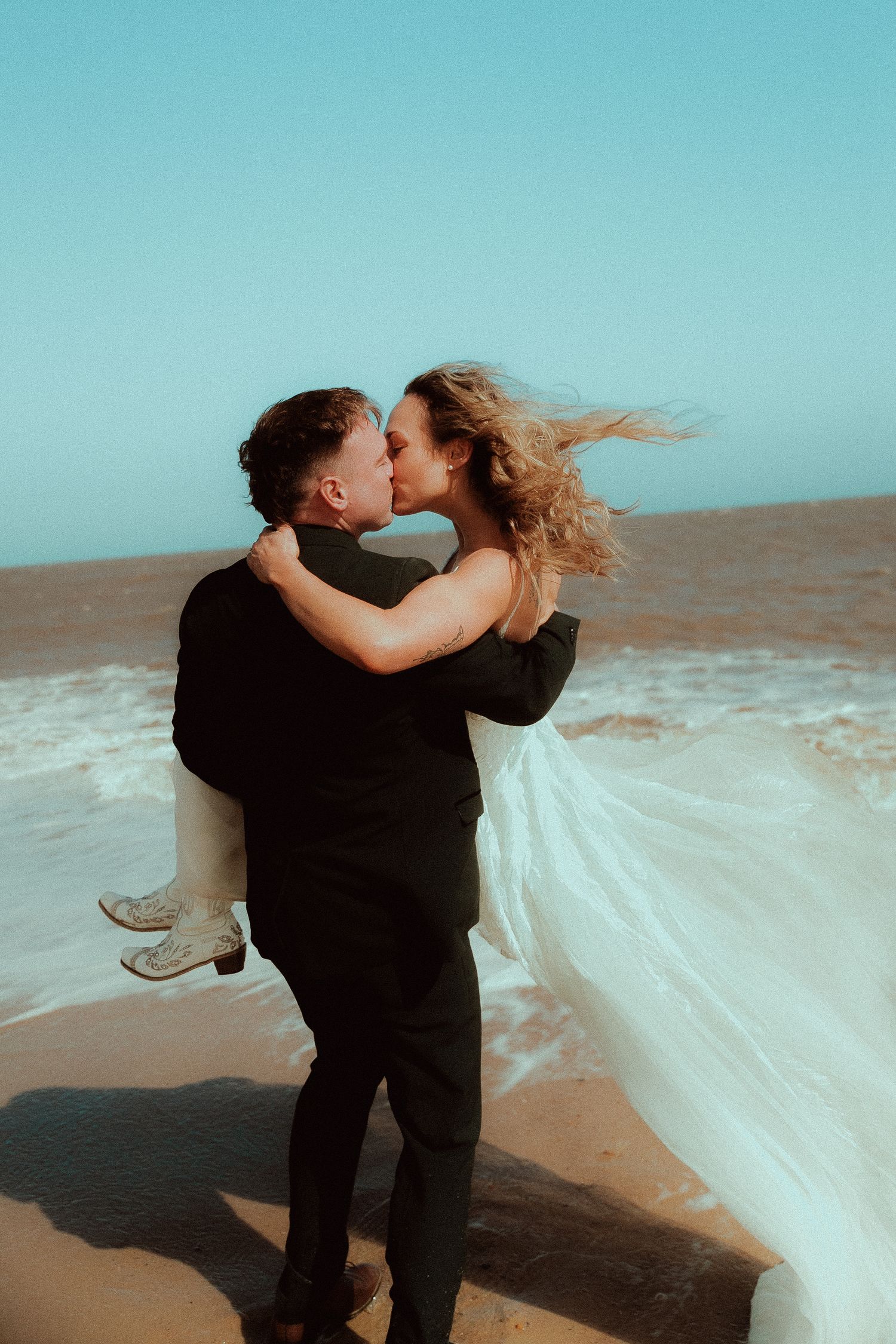
Wind gets a bad reputation at weddings. From a photographic point of view, I'm not sure it deserves it. A veil blowing in the wind. Hair moving. Sand blowing across the beach. A dress catching the breeze. Couples pulling in close together. A jacket being pulled over someone's head. Bare feet in the sand. Wellies in the rain. All of those things create movement and character.
Wind can make an image feel adventurous rather than posed. It's particularly brilliant for elopements, where the landscape and the experience can be part of the story.
For a large wedding, though, there's another side to it. Guests don't necessarily love standing around in strong wind and rain for hours. That's why the best coastal wedding isn't necessarily the one where everyone is exposed to the elements all day. It's the one where you've thought about how people will actually experience the weather.
Cliffs and dunes
These give you a wilder, more expansive feeling. There's more height, texture and drama, particularly when the weather moves in.
They're brilliant for an elopement where the landscape is part of the experience. Marsh and softer coastal landscapes These can feel quieter and softer. The landscape doesn't always scream "beach wedding", but you still get that sense of being close to the coast without necessarily standing directly beside the sea.
The point is that coastal doesn't have to mean one particular look.
Beaches
Beaches can feel open, summery and relaxed. They're great for barefoot wandering, swimming, paddling, running around, and simply spending time outside. They're also exposed. The weather can change quickly, and there isn't always somewhere to shelter.
The Norfolk coast isn't one thing
The coast changes dramatically as you travel around Norfolk. There are open beaches and dunes. Cliffs. Marshes. Villages and pubs right beside the water. Places where the sea feels enormous and exposed. Places where you're tucked away from it.
Cromer and Sheringham have a completely different character from a remote stretch of beach or dunes. That gives you lots of different ways to experience a coastal wedding.
If you're still deciding what sort of Norfolk setting might suit your wedding or elopement, our Norfolk guide is a useful starting point, particularly if you're drawn to different landscapes rather than a conventional venue.
Think about who you're bringing
This is where the dream of a remote beach wedding meets reality. I've got nothing against walking. In fact, for an elopement, I'd happily walk quite a long way to reach somewhere special. But if you're bringing 100 guests, including grandparents, that changes things.
Not everyone wants to walk a long distance across sand or uneven ground. Not everyone wants to stand in strong wind. Not everyone is going to be comfortable on a remote stretch of coastline with nowhere to sit and nowhere to shelter. That's not a reason not to have a coastal wedding. It just means you need to think about the scale of the day.
A remote beach might be perfect for two people and two witnesses. A coastal venue might make much more sense for 80 guests.
You can still have the sea, the landscape and the feeling without asking every guest to become an accidental expedition team.
For couples considering something smaller and more adventurous, I've written more about finding a place that suits the atmosphere, scale and pace of your day, rather than simply choosing the most obvious wedding venue. A Guide to Finding a Place That Suits the Atmosphere, Scale and Pace of Your Day.
The tide matters
If you're planning anything directly around the coast, know the tide. You don't want to arrive somewhere expecting a huge stretch of beach and discover that there's barely any sand left. Or worse, get cut off somewhere you weren't expecting to be cut off.
The tide can completely change the character of a coastal location throughout the day. If you're planning portraits, a walk, an elopement or any part of the day around the shoreline, it's worth understanding what the coast is actually going to look like when you're there.
And if you're going somewhere remote, don't rely on the idea that you'll simply figure it out when you arrive. The coast is beautiful. It is also not particularly interested in your wedding timetable.
Winter is a different proposition
I wouldn't automatically recommend a remote winter beach wedding in Norfolk. The wind, rain and huge swells can become dangerous.
That's different from having a coastal wedding at a venue that gives you somewhere warm and sheltered to return to.
Places such as Cley Windmill or Barn Drift can give you that relationship with the coast while still giving you somewhere to escape the weather.
For an adventurous elopement, winter can be incredible.
But adventure doesn't mean ignoring common sense.
There's a difference between embracing the weather and putting yourself in a dangerous situation.
The Wildkin lens.
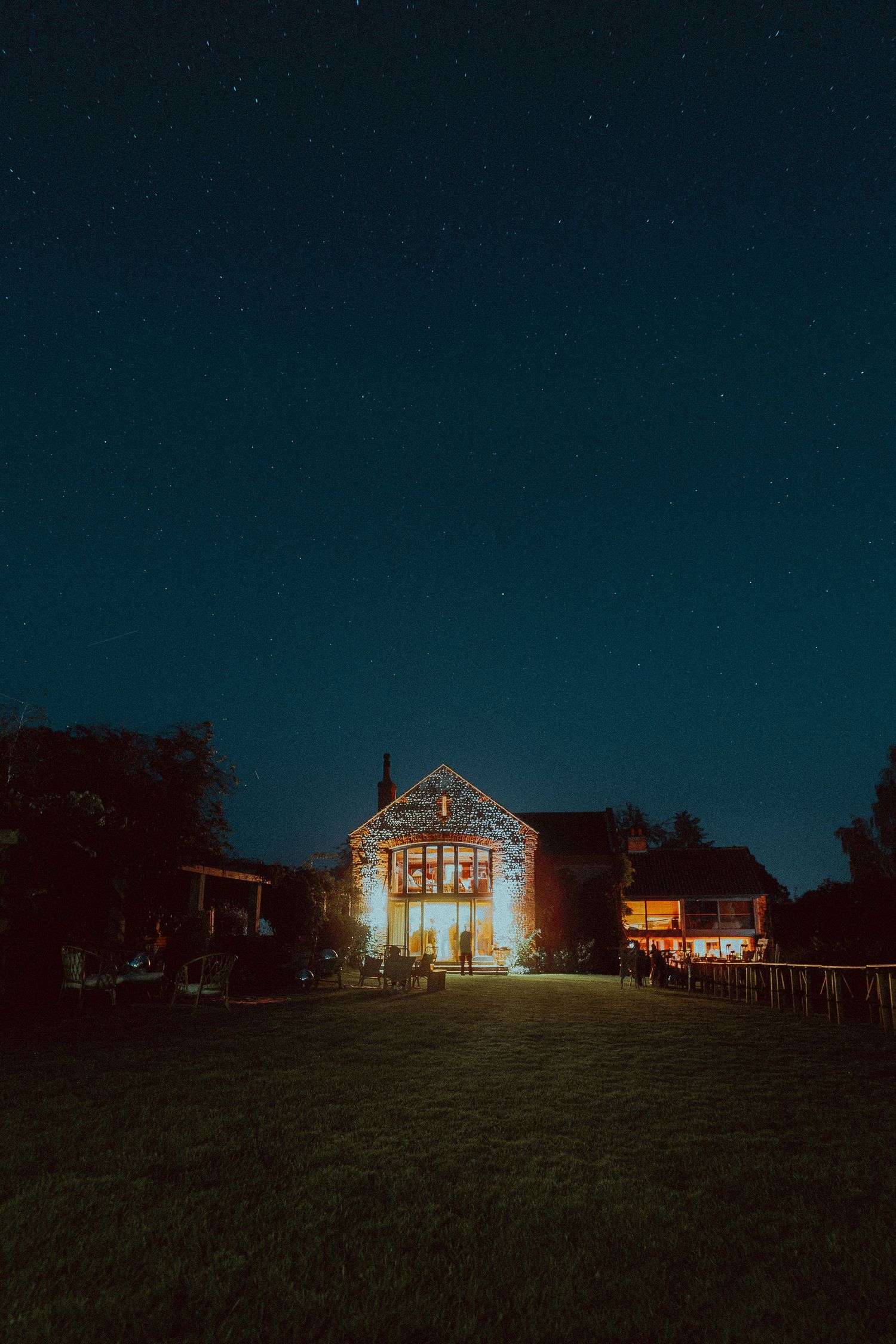
We don't photograph the coast as a backdrop. We photograph what happens when you put people somewhere wild and let them experience it. We don't need the sun to come out. We don't need you standing in the perfect patch of golden light. And we don't need the weather to play ball. Give us a couple who are happy to get wet, windswept, sandy, cold, barefoot or slightly ridiculous, and I'll find the photographs. The moments we're looking for are usually the ones you weren't planning. Pulling a jacket around each other when the temperature drops. Laughing when the wind catches the veil. Running towards the sea. Standing together watching the waves. Sitting around a fire long after the photographs were supposed to finish. The coast isn't a backdrop. It's part of the story. That's the way we want to capture it.
Don't build the day around the forecast
The weather forecast can become a bit of a rabbit hole. I've seen couples spend enormous amounts of energy worrying about what the weather might do. Then the day arrives, and the weather does something completely different anyway.
At some point, you've got to let it go. Plan for the eventualities. Bring sensible shoes. Bring layers. Have towels. Have umbrellas. Have blankets. Have waterproofs. Think about spare clothes if you're doing something particularly adventurous.
Think about getting changed. Think about muddy paths, sand, dunes, cliffs and accessibility. Know what the tide is doing. Then stop worrying about it. Once the wedding day arrives, go with it.
What happens when the sunset doesn't happen?
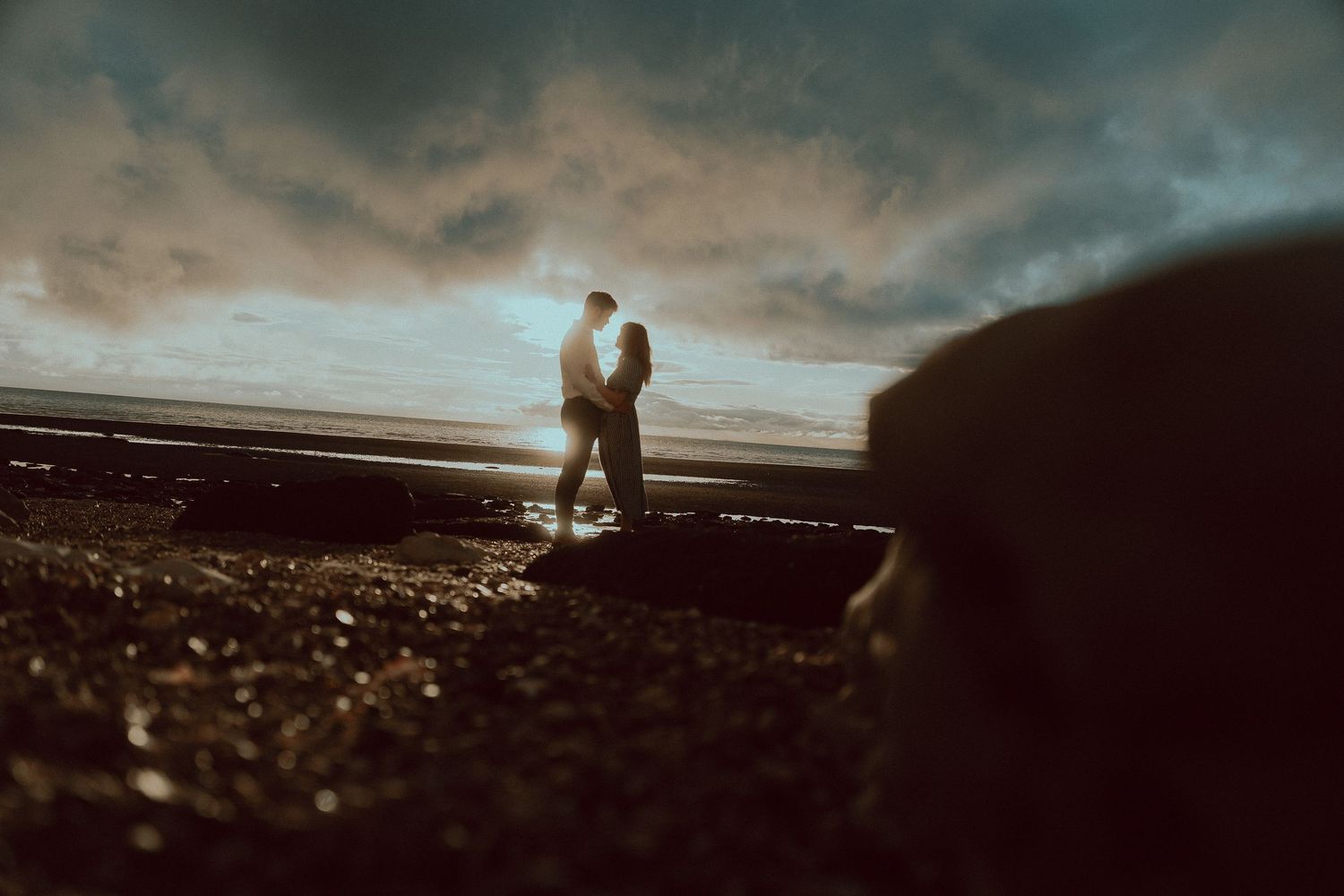
You might have imagined the classic coastal photograph. The two of you standing on the beach. The sun dropping towards the horizon. Perfect golden light. Then the clouds roll in. The sun disappears. That's fine. Keep going. I'll keep shooting.
We won't suddenly stop the day because the sunset we imagined didn't happen. Sometimes the best photographs happen in the conditions you weren't expecting.
We've seen this first-hand during a couple shoot with Ayna and Ben at Hunstanton. We had low summer light against storm clouds, and the contrast was incredible. That's the thing about coastal light. You don't always know what you're going to get. And that's part of the fun.
You should actually want to be there
There's a difference between choosing the coast because it looks good in photographs and choosing it because you genuinely want to spend your wedding day there. The latter is what will align us. We love capturing the couples who are happy to get their feet sandy. Who don't mind getting windswept. Who might run into the sea. Who'll walk barefoot. Who'll pull their partner close when the temperature drops. Who'll sit around a fire with their friends. Who'll look at the landscape and actually take it in. Because when you genuinely want to be there, it shows. You interact with the place. You stop performing for the camera. And that's when the photographs become interesting.
If you're interested in that more documentary approach, rather than spending the day being directed from one photograph to the next, our wedding photography approach explains a little more about how we work
Coastal weddings don't have to be conventional
A coastal wedding could be a ceremony followed by dinner at a venue near the sea. It could be a marquee. It could be a group of friends spending the day together outside. It could be an intimate elopement. It could be two people walking for an hour to reach a remote beach. It could be a day spent swimming, eating, drinking, sitting around a fire and watching the stars. The coast doesn't dictate what your wedding has to look like. It gives you somewhere to start.
If you're planning something small and adventurous, you don't necessarily need to turn it into a traditional wedding just because you're getting married. Make the day about the experience.
The coast is part of the story
That's probably what we love most about coastal weddings. The sea isn't just a backdrop. It's part of the day. The weather is part of the day. The wind is part of the day. The sand in your shoes is part of the day. The cold at the end of the evening is part of the day. The fire is part of the day. The landscape becomes something you experience together rather than something placed behind you for a photograph.
And that's exactly why we think coastal weddings can work so well for couples who don't want something conventional.
You're not trying to create a perfect environment. You're stepping into an environment that already exists and letting it shape the experience.
If you're getting married on the coast...
Plan for every eventuality. Then have fun. Don't spend the entire day looking at the forecast. Don't wait for perfect weather. Don't be afraid of rain. Don't assume wind is going to ruin your photographs. But do respect the sea. Think about your guests. Think about the tide. Think about shelter. Think about accessibility. And most importantly, choose the coast because you actually want to be there. If you do, the weather doesn't have to be something you fight. It can become part of the story. The weather. Plan for every eventuality, and have fun.
→ Explore Norfolk
If you're looking for somewhere by the sea, start with our Norfolk guide, where you can explore more of the landscapes and places that make Norfolk such an interesting place to get married.
→ How to Choose the Right Wedding Location in Norfolk
If you're still working out where your wedding should happen, read for more on finding somewhere that suits your people, the landscape and the way you want the day to unfold.
→ A guide to finding a place that suits the atmosphere, scale and pace of your day
Once you've found somewhere you like, this guide can help you work out whether the place itself fits the wedding you're imagining.
→ Documentary Weddings
If you're drawn to photographs that embrace the weather and let the day unfold around it, explore Documentary Weddings.
→ Norfolk WEDDING PHOTOGRAPHY
If you're looking for a Norfolk wedding photographer for a coastal wedding, you can explore more about how we photograph weddings across Norfolk.
→ Megan & Nick
You can also see this approach in practice, where the landscape and weather became part of the day rather than something to work around.
→ Enquire with us
If you're looking for a wedding photographer for a coastal wedding, or if you've found somewhere by the sea that feels like your place, tell us about your wedding.