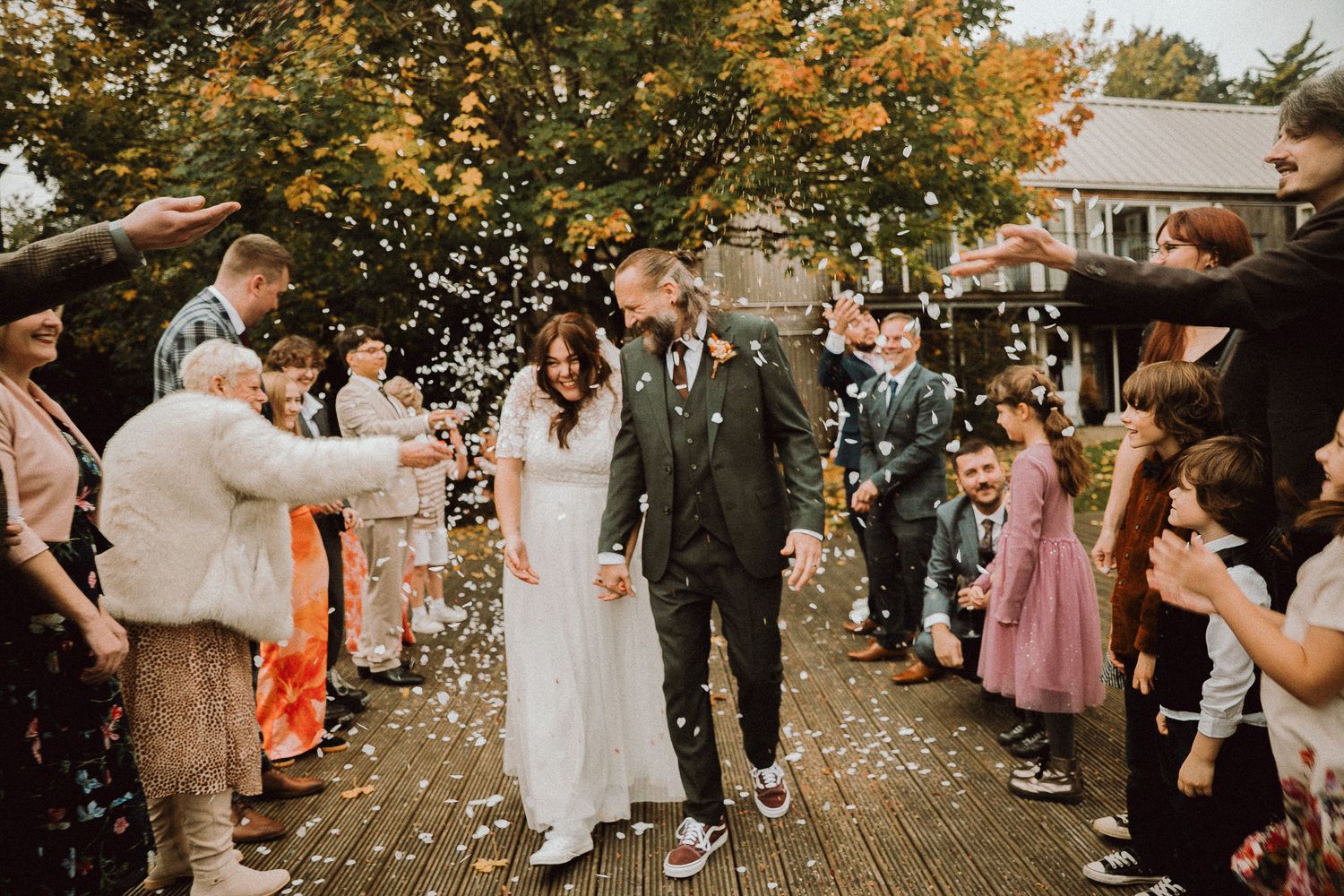
A gentle guide to honest storytelling, unposed moments, and choosing a quieter way of remembering your day
Documentary wedding photography is often talked about, but rarely explained properly. It’s sometimes used as a buzzword, sometimes confused with trends, and sometimes misunderstood as meaning “no portraits” or “no structure”.
In reality, it’s much simpler than that.
Documentary photography is about observing rather than directing. About letting moments unfold instead of manufacturing them. About recording what your day felt like, not just what it looked like.
This page is a gentle guide to what documentary wedding photography really means, how it feels to experience, and how to decide if this way of working is right for you.
A documentary approach to wedding photography
Documentary wedding photography is less about direction and more about attention. It suits couples who care about atmosphere, relationships, and moments unfolding naturally, rather than a rigid schedule or performance-led coverage.
This style often overlaps with smaller guest lists and flexible timelines, which is why many documentary-led couples also explore elopements or non-traditional wedding days.
For couples planning quieter, non-traditional days, this approach often overlaps with elopements. If you’re exploring that route, How to Elope in the UK explains how elopement days are commonly structured, from pace and place to emotional flow.
And if your plans lean more toward something shaped around place and quiet intention, you may find your way toward elopement photography in Norfolk, where the day is allowed to unfold more naturally.
What does documentary wedding photography really mean?
At its core, documentary wedding photography is about storytelling.
Rather than building a day around photographs, the photographer builds their photography around the day. They move quietly, pay attention, and respond to what’s actually happening rather than what should be happening.
This approach focuses on real interactions, real expressions, and real connections. It values small moments just as much as big ones.
It doesn’t mean there are no portraits. It doesn’t mean there is no structure. It simply means those things don’t dominate the experience.
For many couples, this approach feels more honest and more human.
For a more detailed explanation of how this approach works in practice, you can read our Field Note on
What documentary wedding photography feels like
More than anything, documentary photography is about atmosphere.
It feels calm. Unrushed. Spacious. It allows moments to breathe.
Rather than being constantly guided or interrupted, couples often find they can simply be present. Conversations continue. Laughter happens naturally. Emotion has room to arrive and leave without being forced.
When you look back at your images, they don’t just remind you of how things looked. They bring you back to how things felt.
Many couples who are drawn to this style are also drawn to slower, more tactile forms of storytelling, such as analogue wedding photography, where memory, texture, and imperfection are part of the beauty.
How to know if documentary is right for you
There is no “best” photography style. Only what fits you.
Documentary photography might be right for you if:
You value how your day feels more than how it looks on social media.
You’d rather be present than posed.
You feel uncomfortable performing for the camera.
You want to remember small moments as much as big ones.
It might not be right for you if:
You want a highly styled, editorial look.
You enjoy being directed constantly.
You want every moment to be visually perfect.
Neither is wrong. They are just different.
When moments are allowed to unfold
Our approach to documentary photography is rooted in slowness, sensitivity, and attention. We don’t arrive with a checklist of moments to manufacture. We arrive with curiosity. We pay attention to what’s happening, how people move, how light shifts, how conversations ebb and flow. We work quietly & step back when needed. We step in when something meaningful is unfolding. This way of working is shaped heavily by place. Slower, more grounded days, especially those rooted in familiar landscapes, lend themselves beautifully to this approach.
How we approach your coverage
Documentary work is rooted in observation. It’s about allowing moments to unfold without interference, trusting what happens rather than directing it. For most couples, this sits naturally within still photography. Some choose to extend that approach into motion, carrying the same philosophy into video You can explore both approaches below.
If you’re drawn to a quieter, more observational way of documenting a day, we can talk through what that might look like for you. There’s no pressure, just a conversation, and space to start quietly.


