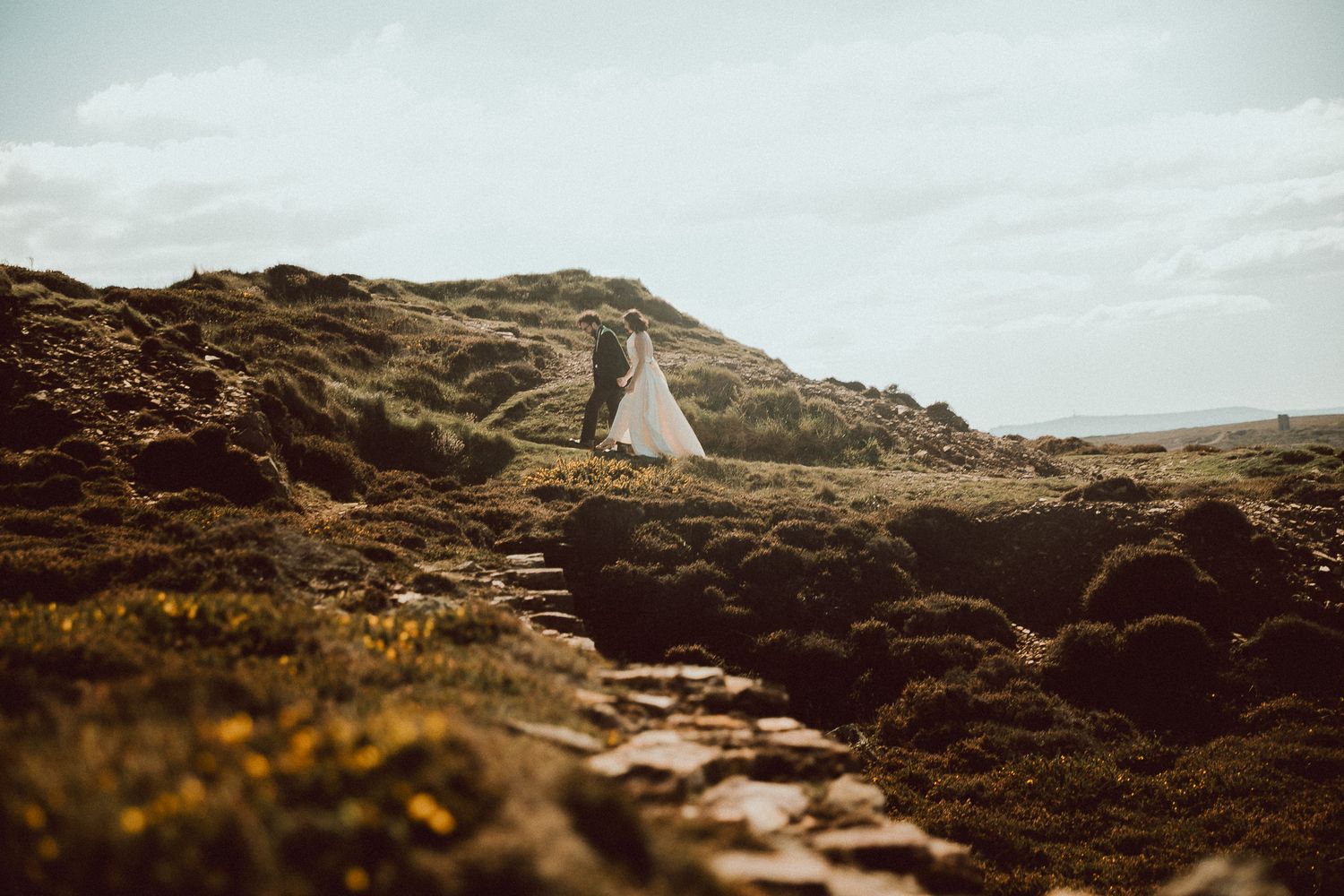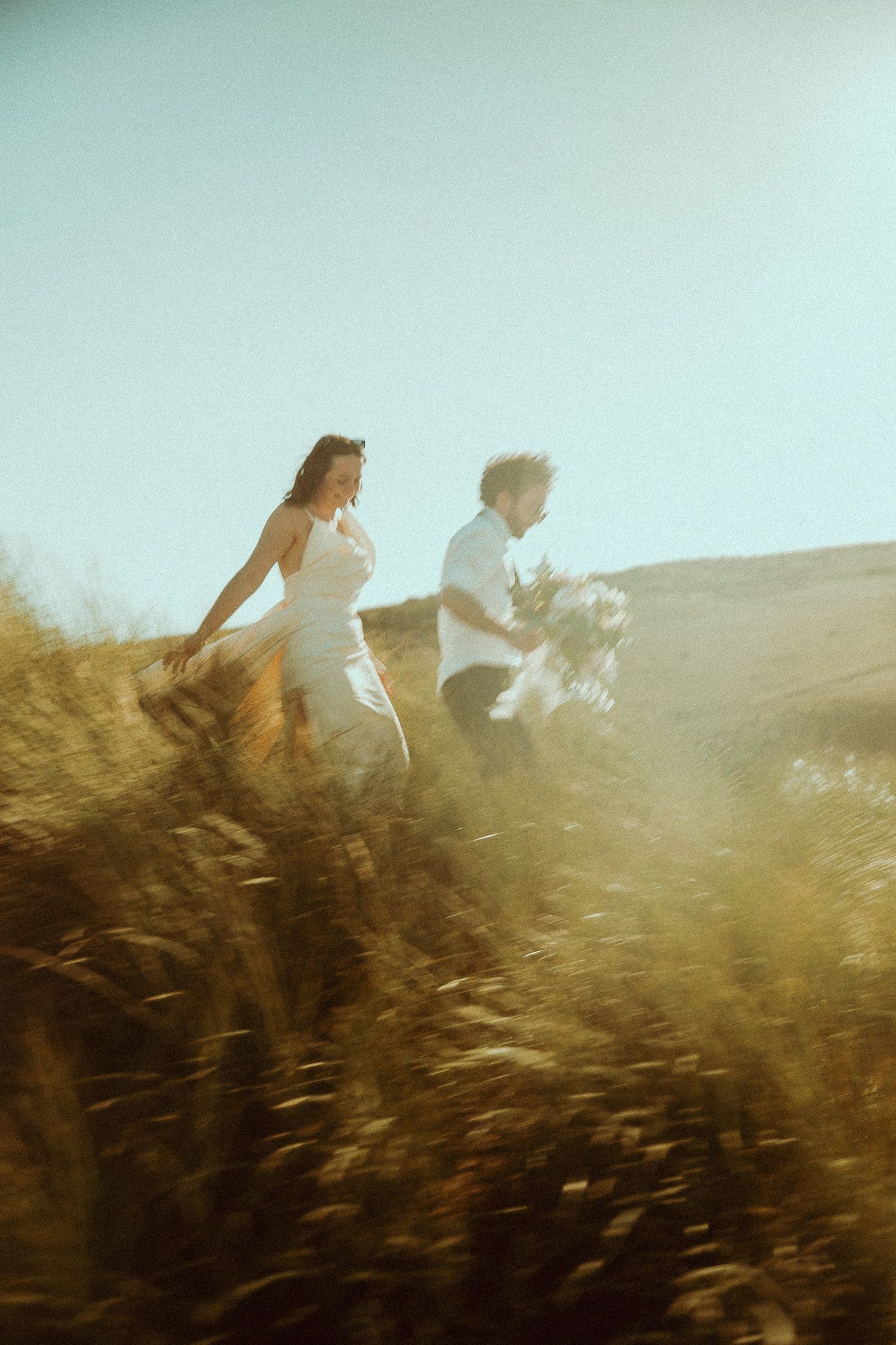
Elopement and destination wedding are two terms that are often used interchangeably. They appear side by side on Instagram. They’re grouped together in blog posts. Sometimes they’re even used to describe the same day. But while they can overlap, they’re not the same thing.
For couples trying to make sense of what kind of celebration they want, this overlap can create confusion. You might find yourselves drawn to the intimacy of an elopement, while also imagining a meaningful place abroad. Or you might love the idea of travelling, but feel unsure whether what you’re picturing still counts as eloping.
This post isn’t about labelling your day correctly. It’s about understanding the difference in experience between elopements and destination weddings, so you can choose the approach that genuinely fits how you want your wedding to feel.
What people usually mean by an elopement
When couples talk about eloping today, they’re usually describing an experience-led way of getting married.
Elopements are often small, sometimes just the two of you, and shaped around presence rather than performance. The day tends to move gently, without a strict timetable or a sense of needing to entertain others.
What defines an elopement isn’t secrecy or scale. It’s intention. The focus is on how the day feels to live, rather than how it looks from the outside.
Why these two ideas often get blurred together
Part of the confusion comes from how modern weddings are talked about online. Both elopements and destination weddings tend to move away from local venues, large guest lists, and rigid traditions. They’re often described using similar language: intentional, personal, meaningful.
From the outside, they can look similar. But similarity in appearance doesn’t always mean similarity in experience.
The difference usually shows up not in where the wedding happens, but in how the day is structured and who it’s shaped for.
What people usually mean by a destination wedding
A destination wedding, on the other hand, is usually defined by travel rather than structure. It’s a wedding that takes place away from home, often in another country or a location that feels like a getaway. Destination weddings often involve guests travelling together, staying nearby, and sharing a few days around the celebration. While destination weddings can be intimate, they often retain more of a traditional wedding framework. There’s usually a set ceremony time, planned events, and a structure designed to accommodate the people who have travelled to be there. The destination shapes the setting, but the day itself is often still guest-focused.
The difference in who the day is centred around
One of the clearest differences between elopements and destination weddings is who the day is designed for. Elopements are usually centred almost entirely around the couple. Decisions are made based on what feels meaningful, comfortable, or grounding for the two people getting married. Destination weddings, even smaller ones, tend to balance the couple’s experience with the experience of their guests. Timings, locations, and activities are often chosen with others in mind. Neither approach is better than the other. They simply reflect different priorities.
How pace and pressure tend to differ
Because elopements usually involve fewer people and fewer fixed moments, they often carry less pressure. There’s less sense of needing to be “on” all day. The pace can slow down when needed. Conversations aren’t interrupted by schedules. Destination weddings, while often relaxed compared to traditional local weddings, still tend to carry a sense of momentum. With guests travelling and plans in place, the day usually moves forward, whether it feels natural or not. For some couples, that structure feels reassuring. For others, it feels restrictive.
How these differences affect the emotional experience
The emotional tone of the day often follows the structure. Elopements tend to feel quieter and more inward. Without a crowd or a schedule to manage, emotions are often experienced more privately. There’s space to pause, reflect, and let moments land. Destination weddings can feel more communal. Emotions are shared. Moments are witnessed. The experience often feels expansive rather than contained. For many couples, this difference isn’t obvious at first. It only becomes clear when they imagine themselves inside the day rather than looking at it from the outside. The question stops being about what kind of wedding they’re having, and starts being about how they want to experience it.
Choosing based on feeling, not terminology
For many couples, the most helpful question isn’t “Is this an elopement or a destination wedding?” It’s “Who is this day for, and how do we want it to feel?” Some couples elope abroad. Some have destination weddings with only a handful of people. Some start with one idea and realise the other fits them better. What matters most is choosing the structure that supports the experience you want, rather than trying to fit your plans into a predefined category.
This broader philosophy sits at the heart of elopement photography in Norfolk, where intention and experience shape the day more than labels.
How elopements and destination weddings are documented
The way a day is structured often shapes how it’s documented. Elopements are usually documented in a more observational, documentary way. Coverage follows the flow of the day, focusing on atmosphere, movement, and small in-between moments. This approach aligns closely with documentary wedding photography, where the emphasis is on presence rather than direction. Destination weddings often include a mix of documentary coverage and more structured moments, reflecting the balance between experience and event.
Final thoughts
Elopements and destination weddings aren’t opposing choices. They’re different expressions of intention. Understanding the difference isn’t about getting the terminology right. It’s about recognising how structure, pace, and focus shape how a wedding day feels to live. When couples choose from that place, the decision tends to feel clearer, calmer, and far more personal.